
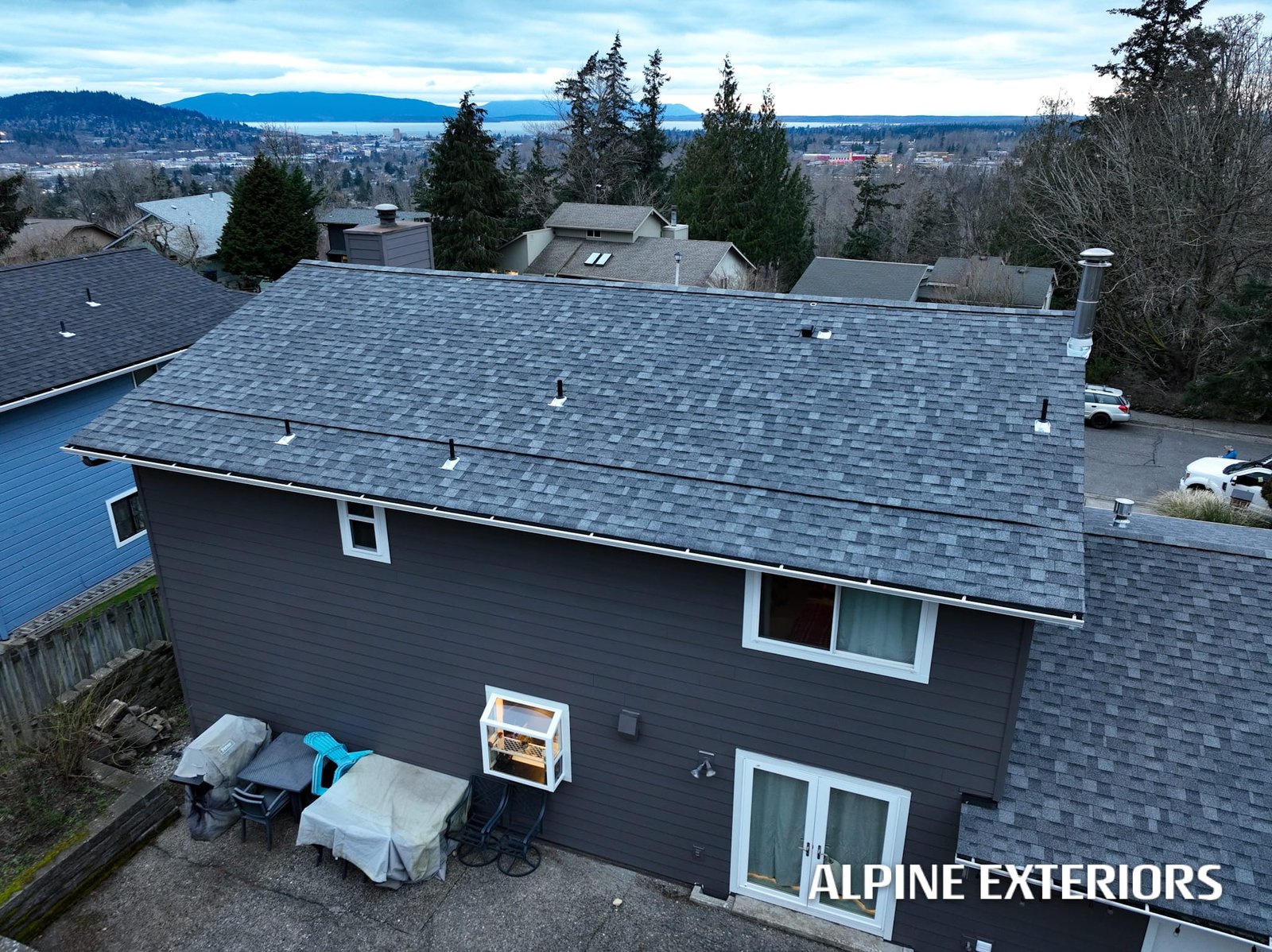
Granite Falls sits right where the Snohomish County lowlands give way to the Cascade foothills, and that location shapes almost everything about a roof replacement here. Homes tucked under second-growth fir and cedar deal with more shade, more needle and moss buildup, and occasionally more snow load than neighborhoods closer to Puget Sound. A straightforward roof tear-off and reinstall on an average single-family home usually takes one to three working days once the crew is on site, depending on the roof's size, pitch, and how many layers of old roofing have to come off. Steeper roofs, multiple dormers, or a switch to standing-seam metal roofing typically stretch that to four or five days.
The timeline that catches homeowners off guard isn't the install itself — it's everything before the crew shows up. Between scheduling, permitting where it applies, and ordering materials, most projects run three to six weeks from signed contract to first day of work, longer if you're choosing a less common roofing product or if you're scheduling during the busy late-summer window when contractors across Snohomish and Skagit counties are booked out. Alpine Exteriors builds weather buffer into every schedule for Granite Falls jobs, because this is a wetter, cooler stretch of the service area than the Skagit flats, and rain delays are the rule rather than the exception from October through April.
Most roof replacements in Granite Falls require a building permit, whether the property sits inside city limits or in unincorporated Snohomish County just outside them. Your contractor should confirm which jurisdiction applies to your address and pull the permit before tear-off begins — doing this out of order is a common source of delay and, on resale, a common source of headaches for the next owner. If your home is in one of the platted neighborhoods off the Mountain Loop Highway corridor or in a smaller development with an active homeowners association, check your covenants for roofing color or material restrictions before you finalize a product choice. Some associations limit shingle color palettes or restrict metal roofing on visible slopes.
Material lead time is the other piece worth planning around. Standard three-tab and architectural asphalt shingles in common colors are usually available within one to two weeks of ordering. Specialty products — standing-seam metal, synthetic cedar-look shakes, or an exact color match to an older, discontinued shingle line — can take four to eight weeks to arrive, sometimes longer if a manufacturer is running behind. If you know you'll need a new roof before the rainy season sets in, order early. Waiting until October to choose a less common material can push your install into the wettest months of the year.
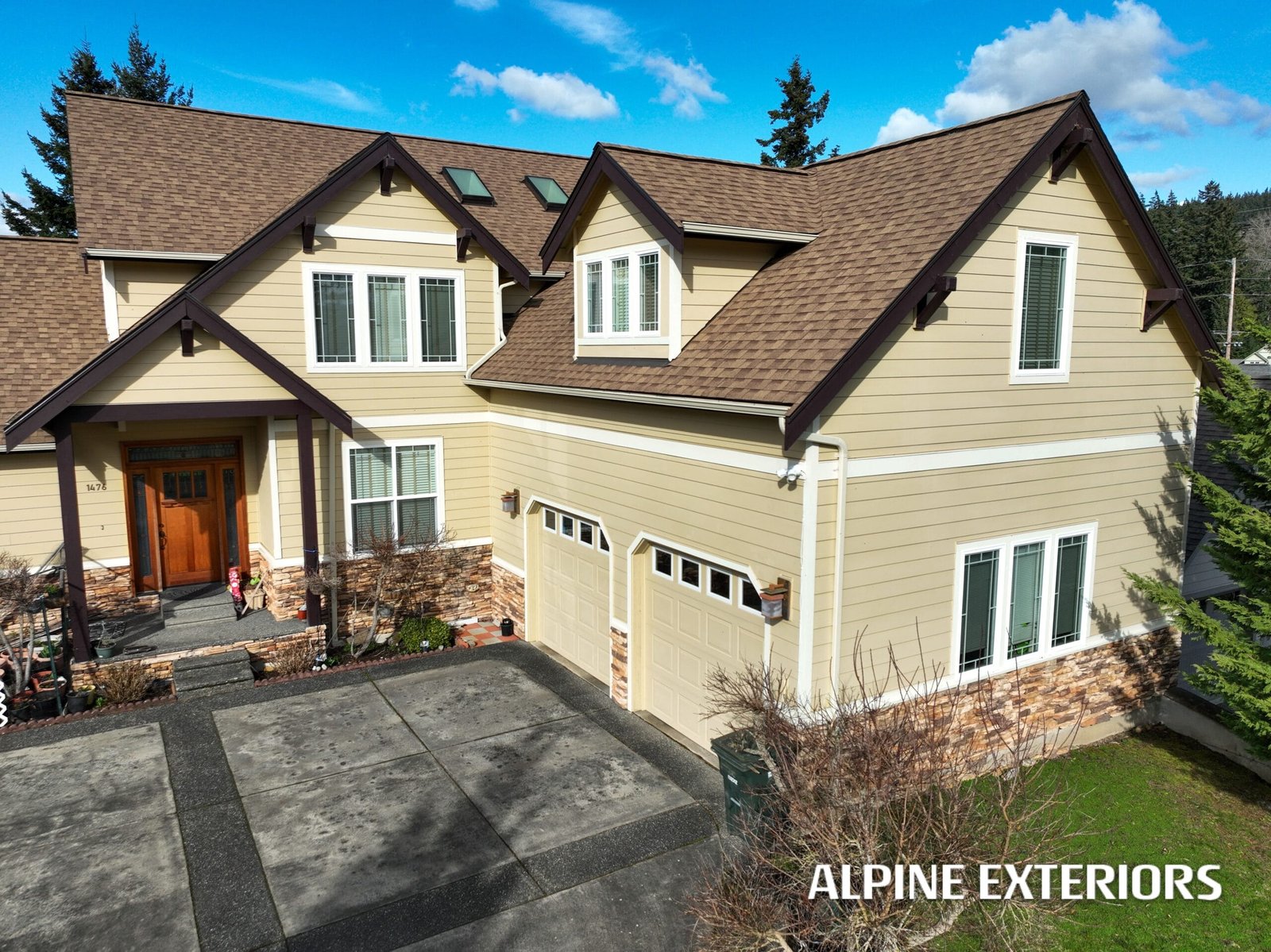
A residential roof replacement follows a fairly consistent sequence. Knowing the order helps you understand what the noise and activity on a given day actually mean.
| Stage | What happens | Typical duration |
|---|---|---|
| Site protection | Tarps over landscaping, plywood over walkways, dumpster or trailer placement, ladders and equipment staged | 1–2 hours |
| Tear-off | Old shingles, felt, and flashing stripped down to the roof deck | Half a day to a full day |
| Deck inspection and repair | Sheathing checked for rot or soft spots, damaged boards replaced | Varies by condition |
| Underlayment and ice barrier | Synthetic underlayment across the field; ice-and-water shield at eaves, valleys, and around penetrations | Half a day |
| Flashing | New step flashing, valley metal, and chimney or skylight flashing installed | Concurrent with underlayment |
| Roofing installation | New shingles or panels installed from the eaves up | 1–2 days |
| Ventilation and details | Ridge vent, soffit intake checks, pipe boots, ridge cap, cleanup | Half a day |
The deck inspection stage matters more in Granite Falls than it does on more exposed, sun-drenched roofs elsewhere in the service area. Roofs shaded by conifers for much of the day hold moisture longer, and moss that's been left to grow along shaded valleys and north-facing slopes can trap water against the sheathing for years without an obvious leak showing up inside. It's common to find a soft or delaminated section of decking under moss that looked cosmetic from the ground. Replacing that plywood or OSB before new roofing goes down is not an upsell — it's the difference between a roof that lasts its expected service life and one that fails early from the deck up.
Ice-and-water shield at the eaves and in valleys is worth calling out specifically because Granite Falls, sitting closer to the foothills than the rest of Alpine Exteriors' usual service area, sees more of the occasional freeze-thaw cycles and light snow events that cause ice damming on lower-pitched roofs. The Washington State Energy Code and standard roofing practice both call for this protection at vulnerable points, and it's cheap insurance against water backing up under shingles during a cold snap.
A little preparation on your end keeps the project moving and protects your property. Before your scheduled start date:
Once the new roofing, flashing, and ventilation are in, the crew's job isn't done until the site is clean and everything has been checked. That includes a magnet sweep of the driveway, walkways, and surrounding lawn to pick up stray roofing nails and staples — an easy step to skip but an important one, especially with kids or pets on the property. Tarps come down, gutters get cleared of debris that fell during tear-off, and the dumpster or trailer is hauled away.
Before the crew leaves for good, you should get a final walkthrough: a look at the finished roof from the ground (and from a ladder, if you want to see it up close), confirmation that all penetrations, vents, and flashing details are finished, and a chance to flag anything that doesn't look right. If a permit was pulled, the local building department will typically need to complete a final inspection before the permit closes out — your contractor should handle scheduling that and let you know once it's passed.
A new roof still needs occasional attention, particularly on a wooded Granite Falls lot. Falling needles and cones from surrounding conifers will accumulate in valleys and behind chimneys faster here than on an open, sunny roof, and that debris holds moisture that feeds moss growth over time. Plan on checking the roof and clearing gutters at least once a year, ideally in fall before the rainy season builds up, and address any new moss growth before it spreads rather than after.
Materials carry a manufacturer's warranty — typically limited lifetime coverage on the shingles themselves, prorated after the first years, with the exact terms depending on the product line you choose. Alpine Exteriors backs its installation work with its own workmanship warranty separate from the manufacturer's material coverage, and keeps a copy of your project paperwork, including the permit and final inspection record, on file. Alpine Exteriors holds Washington state contractor license ALPINI751OW; ask to see it, and ask what's covered under both warranties before work begins so there's no confusion later about what a leak or shingle failure falls under.
For an average single-family home, the physical tear-off and install usually takes one to three working days. Add in time for the estimate, contract, permit, and material ordering, and most homeowners are looking at three to six weeks between signing and the crew's first day on site — longer if you choose a specialty material or if rain pushes the schedule during the wetter months.
In most cases, yes. Whether your home falls inside city limits or in unincorporated Snohomish County determines which office issues the permit, and your contractor should confirm and pull it before work starts. Skipping this step can create problems later, particularly if you sell the home and a buyer's inspector asks for permit records that don't exist.
It can, but it takes more careful scheduling. Crews avoid opening up large sections of roof deck when heavy rain is forecast, and a project may be broken into smaller daily sections with the deck tarped and sealed each evening rather than left exposed overnight. Winter work is possible, but expect more schedule flexibility to be built in, and understand that a stretch of persistent rain can add days to the timeline.
Cost depends on the size and pitch of the roof, the material chosen, how much deck repair is needed, and access difficulty on a wooded or sloped lot. As a rough range, a standard asphalt shingle replacement on a typical single-family home often falls somewhere between $9,000 and $18,000, while metal roofing or a roof needing significant deck replacement can run higher. Getting a written, itemized estimate is the only reliable way to know your actual number.
If your roof in Granite Falls is showing granule loss, moss buildup in shaded valleys, or soft spots you can feel underfoot in the attic, it's worth getting an inspection before the next round of fall rain arrives. Alpine Exteriors serves roofing, window, deck, and gutter projects across Skagit, Island, and Whatcom counties and takes on roofing work in nearby Snohomish County communities like Granite Falls as well. Reach out for a written estimate that spells out the material, timeline, and warranty coverage in plain terms before any work begins.