
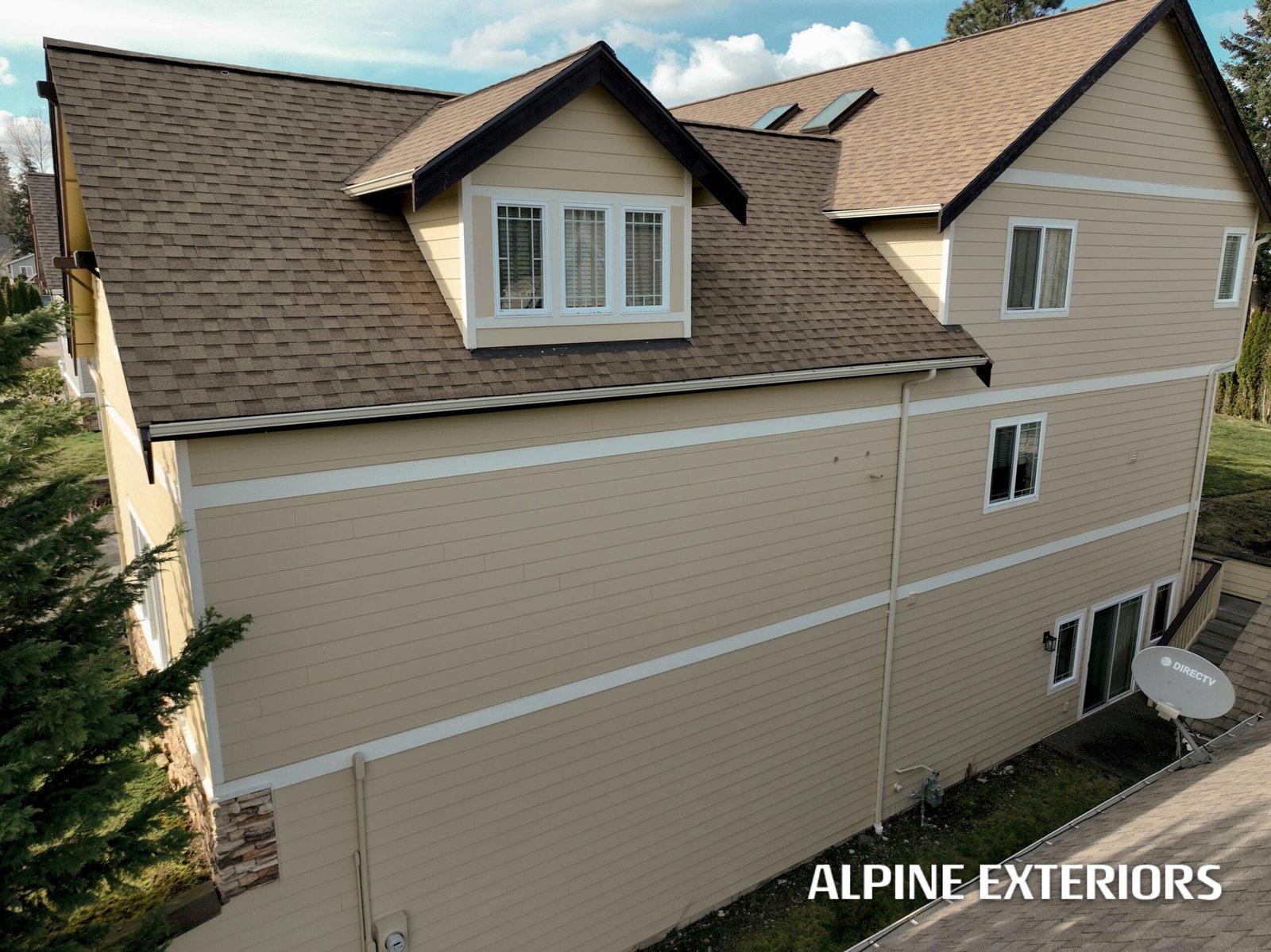
Clinton sits at the south end of Whidbey Island, right where the ferry lands from Mukilteo, and that position shapes the roofs here as much as anything else. Homes above the bluffs and along Humphrey Road, Cultus Bay Road and the neighborhoods near Deer Lagoon get a steady dose of salt-laden air off Possession Sound and the broader Puget Sound, while wooded lots under fir and big-leaf maple canopy stay damp and shaded for much of the year. That combination of marine air and shade is exactly what shortens the life of composition shingles and grows moss faster than homeowners expect. A straightforward tear-off and re-roof on an average Clinton house — roughly 20 to 35 squares, one story or one-and-a-half stories, asphalt composition shingle to asphalt composition shingle — typically runs two to four working days once the crew is actually on the roof. Add a layer of complexity, such as a steep pitch, multiple dormers, a switch to standing-seam metal, or rot discovered under the old shingles, and that stretches to five or more days.
The number that surprises most homeowners isn't the time on the roof — it's everything before it. From signed contract to first day of tear-off, four to eight weeks is a realistic window in this area once you account for permitting through Island County, material ordering, and scheduling around ferry-dependent deliveries. Alpine Exteriors walks every Clinton customer through that timeline up front, because a crew showing up to a driveway full of moving trucks or a locked gate helps no one, and because knowing the real schedule lets a homeowner plan around it instead of around a guess.
Clinton is unincorporated, so building permits for a roof replacement here go through Island County's Planning and Community Development department rather than a city hall. Most straightforward re-roofs qualify for an over-the-counter or short-turnaround permit, but the county still reviews for things like ice-and-water shield placement at eaves and valleys, minimum ventilation, and compliance with the Washington State Energy Code where insulation or roof assemblies are being altered, not just when shingles are swapped one-for-one. A licensed contractor pulling the permit under their own number — Alpine Exteriors operates under Washington contractor license ALPINI751OW — is generally faster and cleaner than a homeowner pulling it themselves, since the county already has the contractor's bond and insurance on file.
If the property sits inside one of Clinton's platted subdivisions or a waterfront association, check the CC&Rs or HOA architectural guidelines before ordering materials. Some associations restrict shingle color or require board approval for a switch to metal roofing, and that review can add one to three weeks if it isn't started early. It's also worth checking whether the lot falls within Island County's shoreline jurisdiction, which can add review steps for homes close to the bluff or waterline.
Material lead time is the other piece that catches people off guard. Standard asphalt composition shingles in common colors are usually available within a week or two from regional suppliers, but specialty products — designer laminate shingles, standing-seam metal in a custom color, or cedar shakes — can take three to six weeks to arrive, and everything coming to Whidbey Island ultimately has to cross the Clinton-Mukilteo ferry or come around by the Deception Pass bridge. That's not usually a bottleneck, but it does mean a supplier's mainland delivery estimate needs a buffer for the island leg, and a missed ferry reservation on a delivery truck can push a start date by a day. That buffer gets built into scheduling rather than promising a date the supply chain can't reliably hit.
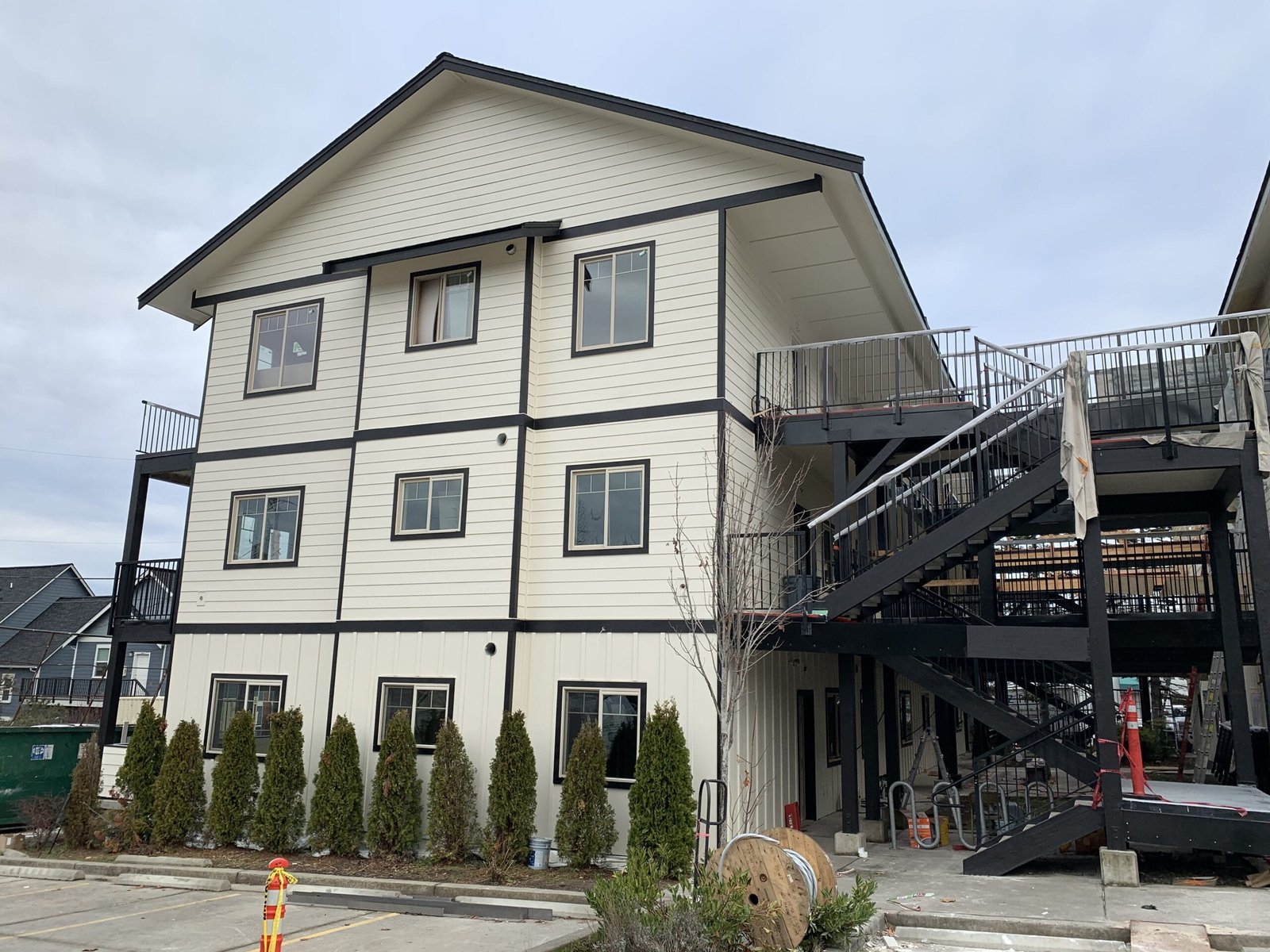
Every re-roof follows roughly the same sequence, though the details shift with pitch, layer count and whether decking needs replacing.
A few days of preparation on the homeowner's side makes the whole project smoother. Move vehicles out of the driveway and, if possible, out from under any trees near the house, since tear-off debris falls in a wide radius. Take down wall art, mirrors and anything fragile on shelves — the hammering and nail-gun vibration travels through the frame more than people expect. If there's an attic space, clear boxes or storage away from the areas directly under the roof, since dust and old nail debris can sift down between rafters during tear-off. Pets do better indoors or with a sitter for the noisiest days, and anyone working from home should plan for a loud few days rather than a quiet background hum.
Outside, flag or mark sprinkler heads, landscape lighting, and any fragile plantings near the foundation so tarps and ladder placement can work around them. If the home has solar panels, satellite dishes, or security cameras mounted on the roof or eaves, mention that during the estimate — some of that equipment needs a licensed electrician or the equipment owner to disconnect and remount it, which is worth scheduling ahead of the roofing crew rather than discovering on day one.
Once the roof is complete, the Island County building inspector signs off on the permit, confirming underlayment, flashing and ventilation were installed to code. The crew does its own quality check first — walking every slope, checking nail patterns, flashing seams and ridge details — before calling for the county inspection, so problems get caught internally rather than at the county's visit.
Cleanup is where a lot of contractors cut corners, and it's worth asking about specifically. A thorough crew does a final magnetic sweep of the entire yard, driveway and any garden beds for stray nails, breaks down and hauls off the old roofing debris, and removes all tarps, ladders and equipment. Gutters get checked and cleared of any shingle grit or debris that fell in during tear-off, since clogged downspouts are a common and avoidable callback. The final walkthrough is a chance to look at the roof from the ground with the crew lead, review any photos taken of the deck repairs or flashing work that's no longer visible, and get the permit and warranty paperwork in hand before the crew leaves.
A new roof in Clinton still needs occasional attention, mostly because of the same shade and moisture that wore out the old one. Roofs under heavy tree cover benefit from a moss treatment or gentle rinse every year or two, and gutters should be cleared at least twice a year — once in fall before the heavy winter rains set in, and again in late winter once the maples and alders have finished dropping. Avoid pressure washing the shingles directly; it strips granules and can void manufacturer coverage. After any significant wind event, a quick visual check from the ground for lifted shingles or displaced ridge cap is good practice, particularly on homes exposed to open wind off the flats or the water.
Warranty coverage on a typical Alpine Exteriors roof replacement includes the manufacturer's material warranty on the shingles or metal panels, which varies by product line, plus a separate workmanship warranty covering the installation itself. The specifics — length of coverage, what's prorated, what's excluded — are laid out in writing before the contract is signed, and it's worth reading that document rather than assuming all roofing warranties work the same way. Keep the paperwork, including the permit and any manufacturer registration, somewhere accessible; it matters at resale and if a warranty claim ever comes up.
Plan on the driveway and the immediate perimeter of the house being off-limits for equipment and material staging for the full length of the job, usually two to five days for a typical Clinton home. Vehicles can often return to the driveway overnight once the crew leaves for the day, but check with the crew lead each afternoon since an open, undried section of roof sometimes means equipment stays staged through an evening weather watch.
A like-for-like shingle replacement usually doesn't require touching insulation, but if the project involves changing the roof assembly, adding conditioned space, or if ventilation is found to be inadequate, the Washington State Energy Code requirements for the affected areas come into play. This gets flagged during the estimate if the existing attic ventilation or insulation looks like it won't meet current standards once the new roof goes on.
This is common enough in shaded, damp parts of Clinton that most estimates already include an allowance for it. When rot turns up, the crew photographs the damaged section, replaces it with matching plywood or plank decking, and that cost is either covered by the allowance already in the contract or presented as a clear add before the work continues — nothing gets replaced without the homeowner knowing first.
Roofing can and does happen through the fall and winter here, but crews work in smaller opened sections and watch the marine forecast closely to avoid leaving a deck exposed overnight. Late spring through early fall offers longer dry windows and generally faster progress, but a well-managed winter re-roof is not unusual on Whidbey Island and shouldn't be avoided if a roof is actively failing and can't wait for better weather.
A roof replacement is disruptive for a few days and then, done right, forgettable for the next couple of decades. Alpine Exteriors serves Clinton and the rest of Island, Skagit and Whatcom counties, and can walk your specific roof — its pitch, its tree cover, its exposure to wind and salt air — through a permit estimate, a realistic schedule and a written scope before any tarps go up. Reach out to schedule an on-site inspection and get a timeline built around your property, not a generic average.