
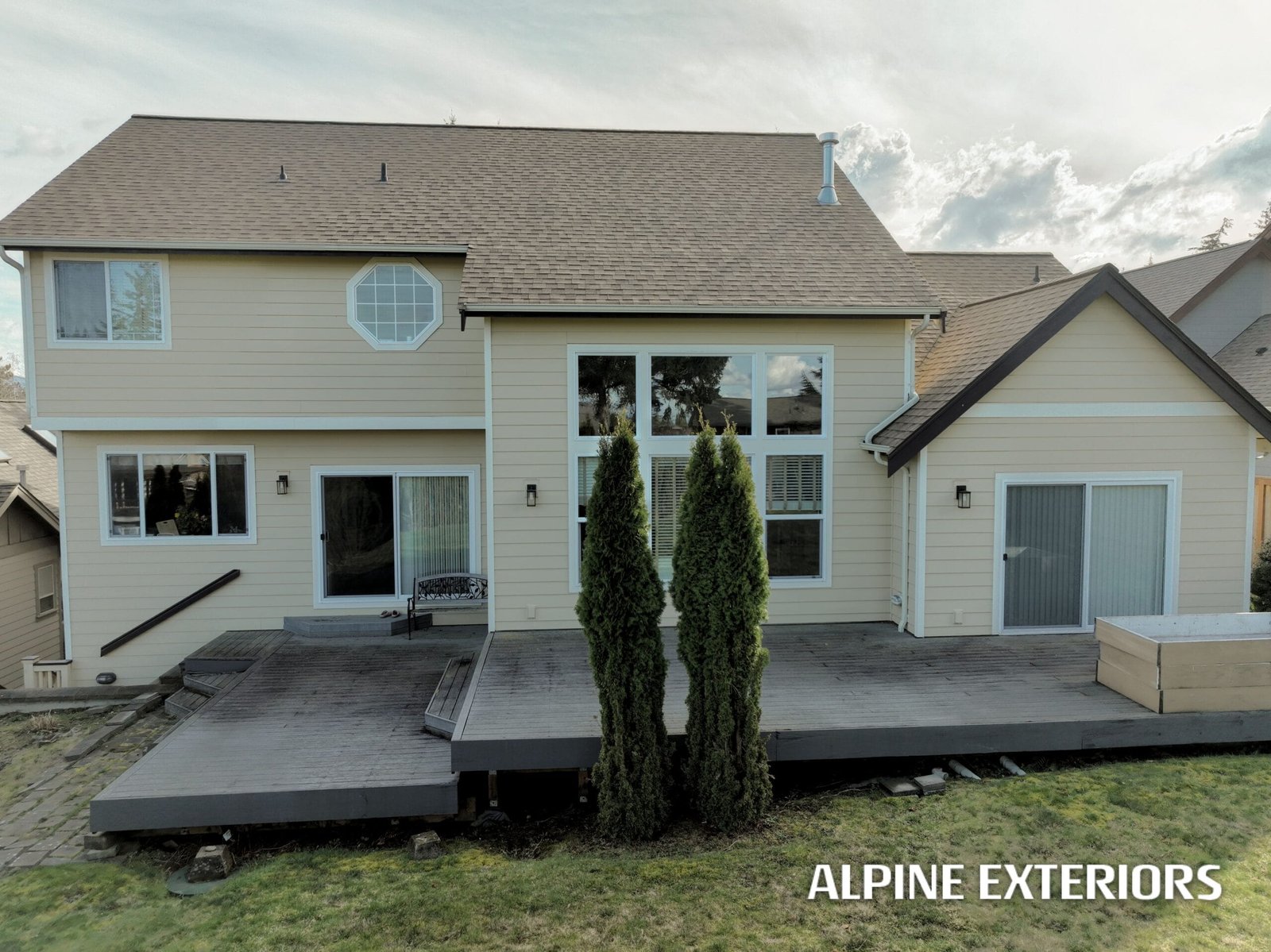
A deck rebuild sounds simple until you're standing on a twenty-year-old structure and realizing the ledger board is soft, the post bases are rusted through, and the decking has cupped from years of soaking up Skagit Valley rain. Most full rebuilds in this region run somewhere between two and five weeks from the day a crew arrives to the final walkthrough, though that window depends heavily on deck size, whether footings need to be replaced, and how many rain delays stack up in a given month. Homeowners in Mount Vernon, Burlington and Sedro-Woolley often plan rebuilds for the drier stretch between late spring and early fall, but Alpine Exteriors also works through the shoulder seasons when jobs are scheduled around it and materials are protected properly. The one honest caveat: nobody can promise a fixed number of dry days in this part of Washington, so a project quoted at three weeks can stretch if the weather turns uncooperative, and that's worth planning for rather than being surprised by.
Most deck rebuilds that involve new framing, altered footprint, or a deck more than 30 inches above grade require a permit under the Washington State Building Code as adopted by the local jurisdiction — Skagit County, Island County, Whatcom County, or the city building department in places like Anacortes, Mount Vernon or Bellingham. Simply swapping decking boards on an otherwise sound structure sometimes doesn't trigger a new permit, but touching the ledger, posts, footings or railings almost always does, and pulling the permit is not optional paperwork to skip — it protects the homeowner if there's ever an insurance question or a future sale. If the property sits inside a homeowners' association, particularly common in newer developments around Anacortes and Camano Island, HOA design review can add a week or two before a permit application even goes in, so it pays to start that conversation early.
Material lead times are the other variable people underestimate. Pressure-treated framing lumber is usually available quickly, but composite decking in specific colors, cable railing hardware, and certain fascia boards can take several weeks to arrive, especially in late spring when regional demand spikes. Materials are typically ordered as soon as a contract is signed, precisely because a rebuild scheduled for June can stall out waiting on a railing kit that's back-ordered. If a homeowner has their heart set on a specific composite line or a particular cedar grade, it's worth confirming availability before locking in a start date.
A typical rebuild moves through a predictable sequence, even though the exact days shift with weather and inspection scheduling:
On island properties — Camano Island, La Conner's waterfront lots, and similar sites near salt water — extra attention goes toward fastener and hardware selection, since salt air accelerates corrosion on standard fasteners faster than it does further inland.
A few weeks of preparation on the homeowner's side makes the job go faster and avoids surprises. Clear furniture, planters, grills and anything stored under or around the existing deck before demolition starts. If there's a hot tub or built-in feature on the deck, flag it early since disconnecting and protecting it takes coordination. Expect noise and some yard disruption during demolition and framing — dust and debris are normal, and driveway or side-yard access is often needed for material delivery and debris hauling. Pets and kids should be kept clear of the work zone for safety, and if the deck is the primary access to a door, a temporary set of steps or an alternate entry plan should be discussed with the crew ahead of time. Homeowners in wooded lots around Sedro-Woolley or the Whatcom County foothills should also expect the crew to flag any overhanging branches that create excess shade and moss buildup, since that same shade will affect how the new deck ages.
Once the final building inspection passes, the crew does a full site cleanup — removing scrap lumber, sweeping the deck surface, and hauling away debris rather than leaving it for the homeowner to deal with. The final walkthrough is where the homeowner and the crew go over the completed deck together: railing sturdiness, stair evenness, board spacing, drainage slope away from the house, and any punch-list items get addressed before the job is marked complete. This is the right time to ask questions about maintenance, because how a deck is cared for in its first year in this climate affects how well it holds up through the next decade of rain.
Wood decks in this region need periodic cleaning and, for cedar or fir, refinishing every couple of years to keep moisture from working into the grain — skipping that is the single fastest way to shorten a deck's life here. Composite decking needs far less upkeep but still benefits from a seasonal rinse to keep moss and algae from taking hold in shaded corners, which is common on lots tucked under Douglas fir or cedar canopy. Gutters and downspouts near the deck should be checked so runoff isn't dumping directly onto or under the new structure. The rebuild work is backed by a workmanship warranty, and materials carry their own manufacturer warranties, which vary by product — the specifics are covered in the written estimate rather than left as a vague promise. Alpine Exteriors holds Washington contractor license ALPINI751OW, and homeowners are welcome to verify that standing with the state before work begins.
In most cases, yes, if the work involves new footings, framing, ledger attachment or a deck height that exceeds the threshold set by the local building code. Simply replacing worn decking boards on an already-sound frame sometimes falls outside permit requirements, but that determination is made by the local jurisdiction, not by guesswork, so it's worth confirming before demolition starts.
Most rebuilds in Skagit, Island and Whatcom counties take two to five weeks from start to final inspection, depending on size, how much structural repair is needed, and inspector scheduling. Winter rain and occasional foothill snow or ice can add delays, so a quoted timeline should be treated as a target rather than a guarantee.
Costs vary widely based on square footage, decking material and how much structural work is required, but many rebuilds in this region land somewhere in the range of a few thousand dollars for a small, straightforward job up to well over twenty thousand for a large composite deck with new footings, railings and stairs. An accurate number only comes from an on-site estimate rather than a general rule of thumb.
It can — winter rebuilds happen regularly in this region — but persistent rain and shorter daylight hours mean winter projects are more likely to see weather-related delays than ones scheduled in the drier months. Concrete curing for footings also takes longer in cold temperatures, which can add time to that stage specifically.
If a deck in Mount Vernon, Anacortes, Bellingham, La Conner, Stanwood or Camano Island is showing soft boards, rusted hardware or a spongy ledger connection, it's worth having it looked at before another wet season sets in. Alpine Exteriors provides on-site estimates across Skagit, Island and Whatcom counties and can walk through permitting, materials and realistic scheduling for a rebuild suited to the property and its exposure to local weather.