
Clear Lake sits in that stretch of Skagit County where fir and cedar canopy shade half the rooflines in town, the Skagit flats funnel wind up from the valley, and the rain gauge stays busy from October through May. A roof replacement here isn't a one-day event, and any contractor who promises otherwise is glossing over the parts that actually protect your home. For a typical single-family roof in Clear Lake — say 1,800 to 2,600 square feet of roof area with a couple of valleys and a chimney — the on-roof work usually runs one to three days once the crew starts. The full process, from the first inspection to the final invoice, is closer to three to eight weeks, and material lead times or a stretch of wet weather can push that further.
Steeper pitches, multiple layers of old roofing, a lot of dormers, or a full deck replacement all add time. So does scheduling around a busy spring and fall install season, when most Skagit County roofing crews — Alpine Exteriors included — are booked out several weeks. Homeowners who start planning in late winter usually get first pick of installation dates before the calendar fills up.
| Roof scope | Typical on-roof work | Total process (quote to final invoice) |
|---|---|---|
| Simple gable roof, single layer tear-off, good deck | 1 day | 3–4 weeks |
| Average home, moderate valleys, one layer tear-off | 1–2 days | 4–6 weeks |
| Steep pitch, multiple dormers, or deck repair needed | 2–3 days | 5–8 weeks |
| Full re-deck or complex roofline (multiple additions) | 3–5 days | 6–10 weeks |
The paperwork stage feels slow compared to the actual tear-off, but skipping it causes far more delay than doing it right the first time. In unincorporated Skagit County, and inside city limits for Sedro-Woolley or Burlington if your Clear Lake address falls near those boundaries, a roofing permit confirms the work meets current building code, including the ventilation and underlayment requirements tied to the Washington State Energy Code. Your contractor should pull this permit, not hand it to you as homework, and should know which jurisdiction actually covers your parcel — Clear Lake addresses can sit inside county jurisdiction or close enough to Sedro-Woolley's boundary that it's worth confirming before work begins.
If your property sits inside an HOA or a planned community, check your covenants for shingle color and style restrictions before you fall in love with a sample. Some Skagit County developments limit choices to a narrow palette of grays and browns to keep streetscapes consistent, and a mismatched roof can trigger a costly do-over.
Material lead times are the other variable people underestimate. Standard three-tab and architectural shingles from major manufacturers like GAF or Owens Corning are usually in regional stock and ship within a week or two. Specialty colors, high-wind-rated lines, or metal roofing panels can take three to six weeks to arrive, especially during the spring rush when every roofing company in Whatcom and Skagit counties is ordering from the same distributors. Lock in your material choice early so the delivery date, not your contractor's crew schedule, becomes the limiting factor.
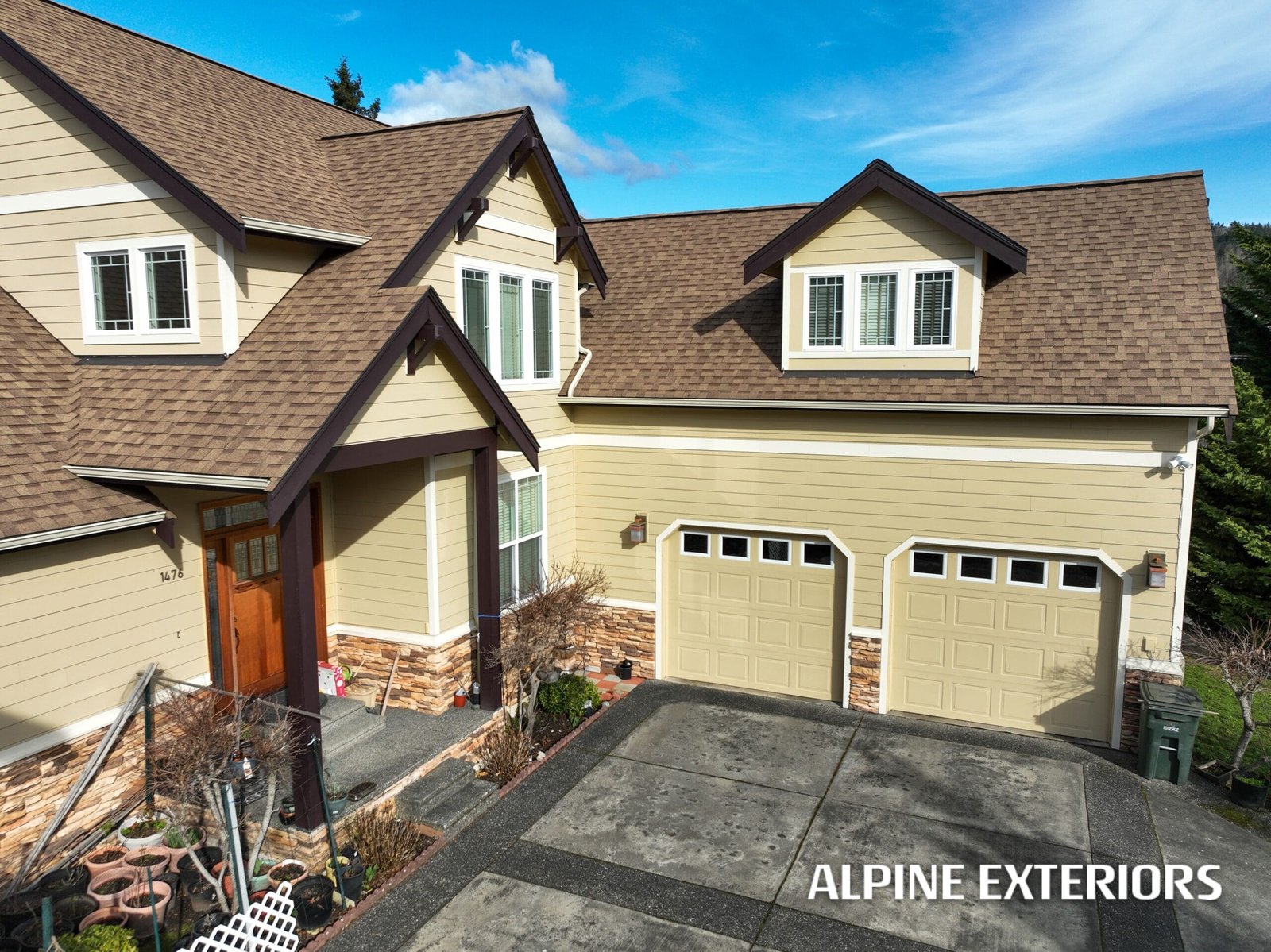
A correct roof replacement follows the same sequence whether the house is a 1970s rambler in Clear Lake or a newer build off Highway 9. Skipping or rushing any one of these stages is where cheap roofs fail early.
Before a single shingle comes off, the crew tarps landscaping, moves patio furniture and vehicles, and lays plywood or heavy tarp over gutters, walkways, decks and any window wells directly below the roofline. Skagit County homes with mature landscaping — rhododendrons, hydrangeas, vegetable beds — need this step taken seriously, because falling debris and dropped tools do real damage to plants and hardscape if the crew rushes past it.
The old roofing comes off down to the plywood or plank decking, usually in sections so the house is never left fully exposed for long. This is where surprises show up. Rot around old vent boots, soft plywood near valleys where moss has held moisture against the deck for years, or undersized rafters from a decades-old addition are all things found during tear-off, not before. A contractor cannot fully diagnose deck condition from the ground or even from a pre-bid walk on the roof — some damage is only visible once the old material is stripped away. Any rotted decking gets cut out and replaced with matching plywood before anything else goes down; laying new shingles over a soft deck just hides a structural problem under a fresh surface.
Once the deck is sound, the crew installs a synthetic underlayment across the whole roof — a tougher, more tear-resistant alternative to old-style felt paper that holds up better to the wind gusts common on exposed Clear Lake lots and on Camano Island and Whidbey properties closer to the Strait. In valleys, around chimneys, at eaves, and anywhere water tends to back up or pool, a self-adhering ice-and-water membrane goes down as a second layer of defense. This isn't optional in a region that sees hard winter rain and occasional freeze-thaw cycles in the Cascade foothills east of town; it's the layer that keeps a wind-driven leak or an ice dam from reaching the wood underneath.
New metal flashing goes in around chimneys, skylights, sidewalls and roof-to-wall transitions, and valley metal or woven shingle valleys are installed depending on the roof design and material chosen. Flashing failure, not shingle wear, is the single most common cause of a leak in an otherwise healthy-looking roof, so this step gets more attention from an experienced crew than it usually gets credit for.
Shingles go on course by course, starting at the eave with a starter strip and working up to the ridge, with valleys, hips and the ridge cap finished last. Correct nailing pattern and placement — the right number of nails, driven flush and in the manufacturer's nailing zone rather than too high or too low on the shingle — is what determines whether a roof holds up to wind gusts off the Skagit flats or starts losing tabs in the first hard blow. This is also the stage where a sloppy crew leaves stray nails scattered in the yard, which is why a magnetic nail sweep at the end of the job matters as much as the installation itself.
Ridge vents, soffit vents or power vents get installed or reconnected to meet the ventilation balance required for code compliance and to keep attic moisture from condensing against the new deck — a real concern in a climate where indoor humidity and cool, wet outside air meet at the roofline for most of the year. Pipe boots, vent flashing and any remaining trim details are finished before the crew calls the job complete.
You generally do not need to be home for a roof replacement, though many Clear Lake homeowners choose to be there for the start of tear-off and the final walkthrough. The crew works entirely on the exterior and roof, so they typically won't need access to the inside of your house — the exception is if attic access is needed to check for daylight gaps, water staining, or ventilation issues after tear-off, which your contractor should arrange with you in advance rather than showing up unannounced.
Garage access matters more than interior access. If your garage sits directly under part of the roofline being replaced, ask whether the crew needs it cleared or whether parking a vehicle elsewhere for the day makes sense — vibration and occasional debris fall are normal during tear-off directly overhead.
Rain is the one variable no contractor fully controls in this part of Washington. If weather turns mid-job, a properly run crew dries in exposed sections with underlayment or tarps before stopping work, so a partially torn-off roof is never left open overnight. Expect schedule flexibility around forecasted rain — a good crew would rather push the start date by a day than tear off a roof ahead of a storm system moving in off the coast.
Cleanup should happen continuously through the job, not just at the end. A tarp system under the work area catches most debris and old shingles as they come off, and a magnetic roller sweep across the lawn, driveway and flower beds picks up stray nails before they end up in a tire or a bare foot. Gutters get cleared of granules and debris that fell during tear-off, since a clogged gutter undermines the very drainage the new roof depends on.
Once installation wraps, expect a final inspection where the crew — or in some cases a separate quality-control visit — checks that every ridge cap is sealed, every nail is set correctly, flashing is tight, and no low spots or lifted tabs were missed. Reputable contractors walk the property with you afterward, point out what was done, note any deck repairs that were found and completed, and answer questions before considering the job finished. If your jurisdiction requires a final building permit inspection, that gets scheduled and closed out as part of this stage — don't sign off as complete until it has passed.
A new roof is not maintenance-free, especially under Clear Lake's tree cover. Moss and moisture are the two things that shorten a shingle roof's life fastest in this part of Skagit County, and shaded, north-facing slopes are the most vulnerable. A yearly check — clearing needles and debris out of valleys and gutters, trimming back branches that overhang the roofline, and treating early moss growth before it works under shingle tabs — does more to extend roof life than any single product choice.
Manufacturer warranties on shingles from GAF, Owens Corning and similar brands typically cover material defects for 25 to 50 years depending on the product line, often with a stronger algae-resistance warranty on shingles built with copper- or zinc-infused granules aimed at exactly the moss problem common on shaded Pacific Northwest roofs. Workmanship warranties are separate and vary by contractor — ask specifically what is covered, for how long, and whether it's backed by the installer or requires filing directly with the manufacturer. Alpine Exteriors provides a written workmanship warranty alongside manufacturer material coverage and stands behind installation issues that show up after the job is done, which matters more than a warranty number on paper if something ever needs a follow-up visit.
| Shingle option | Best suited for | Trade-off |
|---|---|---|
| Standard architectural asphalt (GAF, Owens Corning) | Most Clear Lake homes, moderate budget | Needs periodic moss treatment on shaded slopes |
| Algae-resistant architectural shingle | North-facing roofs under fir or cedar canopy | Slightly higher material cost upfront |
| High-wind-rated shingle line | Open lots on the Skagit flats, Camano Island, near the Strait | Longer lead time, narrower color selection |
| Standing-seam metal | Steep pitches, long-term low-maintenance goals | Higher material and labor cost, longer lead time |
Most single-family homes are torn off, dried in, and fully re-shingled in one to three days once the crew is on-site, assuming no extended deck repair and no weather delays. The bigger time investment is everything before that — inspection, permits, material lead time and scheduling — which usually adds three to six weeks ahead of the actual installation.
No, you don't need to be present for the work itself, since the crew operates entirely outside on the roof and immediate yard area. Many homeowners choose to be around for the start of the day and the final walkthrough so they can see the completed work and ask questions directly, but it isn't required for the job to proceed.
Typically not for the roof itself. If your contractor needs to check attic ventilation or look for daylight and water staining after tear-off, they'll ask in advance rather than assuming access. Garage access is more likely to matter if part of the roofline sits directly above it, since vibration and occasional falling debris during tear-off are normal in that zone.
A properly run crew never leaves a torn-off section of roof exposed overnight or ahead of incoming rain. Sections are dried in with underlayment as they're opened up, and if weather turns mid-day, exposed areas get tarped and sealed before the crew stops. Expect your contractor to watch the forecast closely and adjust the schedule rather than race a storm system, which is common practice for roofing in a region where winter rain arrives on short notice.
Every Clear Lake roof carries its own combination of shade, slope and exposure, and the right process — from deck inspection through underlayment, flashing and final cleanup — is what actually determines whether a new roof performs for its full expected lifespan or starts showing problems in five years. Alpine Exteriors works roofing, siding, windows, decks and gutters across Skagit, Island and Whatcom counties, from Mount Vernon and Burlington to Anacortes, La Conner, Stanwood, Camano Island and Bellingham. If you're weighing a roof replacement in Clear Lake or anywhere nearby, contact Alpine Exteriors for an on-site inspection and a straightforward, written estimate before you commit to a timeline or a material.