
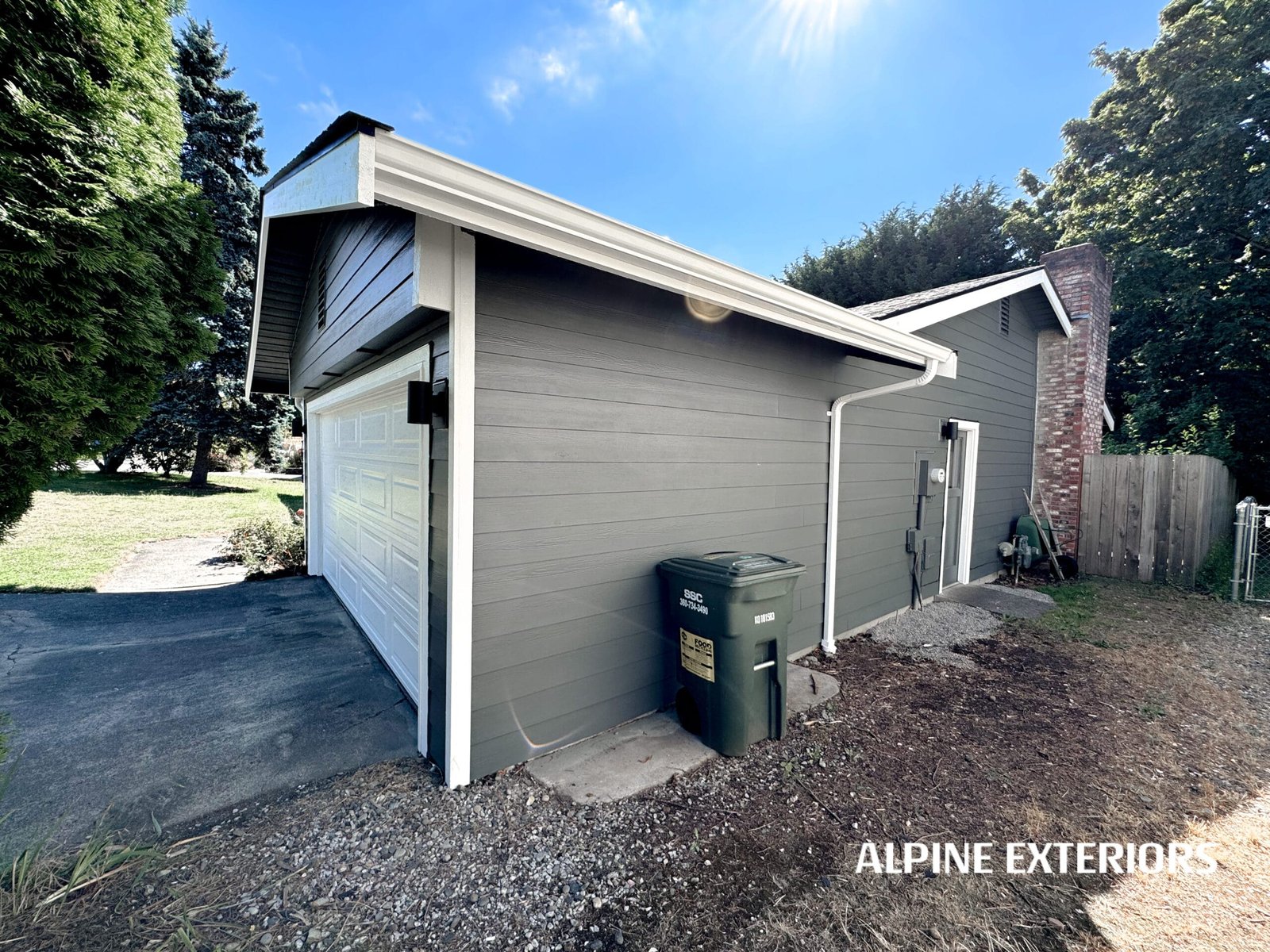
Most Camano Island homes need larger gutters and downspouts than a standard builder-grade install, because the island gets long stretches of steady winter rain funneling off roofs shaded by fir and cedar canopy. Undersized 5-inch gutters with sparse 2x3 downspouts often overflow at the corners during a heavy December storm, and that overflow is a leading cause of the crawlspace moisture problems we see on service calls around Camano, Utsalady, Mabana and Elger Bay.
Getting this right is less about buying a premium product and more about matching gutter and downspout capacity to your actual roof area, keeping the system clear of needle debris through the fall and winter drop, and making sure water that leaves the downspout actually travels away from the foundation instead of soaking into the soil next to a crawlspace vent.
Gutter sizing comes down to two numbers: how much roof area drains into a given run of gutter, and how much of that water a downspout can actually carry away per minute during a heavy rain event. A standard 5-inch K-style gutter paired with a single 2x3 downspout is adequate for a lot of homes in drier parts of the state, but on Camano Island, where winter storms can drop rain steadily for days at a time, that combination is frequently the weak link. When a long roof valley or a large gable dumps concentrated flow into one corner, a 5-inch gutter can visibly overshoot even when it looks clean and properly pitched.
The practical fix is usually one of three things: upsizing to a 6-inch gutter on the runs that collect valley or multi-roof-plane flow, adding a second downspout instead of relying on one to serve an entire elevation, or switching from a 2x3 downspout to a 3x4 downspout, which moves noticeably more water for the same footprint. None of this is exotic — it is standard sheet-metal work — but it does require actually measuring roof area and pitch rather than copying whatever the previous gutter happened to be.
Downspout placement matters as much as size. Water that dumps out of a downspout six inches from the foundation on a crawlspace home is functionally the same as a leak — it will find its way toward the footing and, on a lot of Camano properties, into the crawlspace itself. Extensions, tight-lined pipe to daylight, or a properly sized drywell (where soil conditions allow infiltration) all move that water somewhere it can't come back to haunt the house.
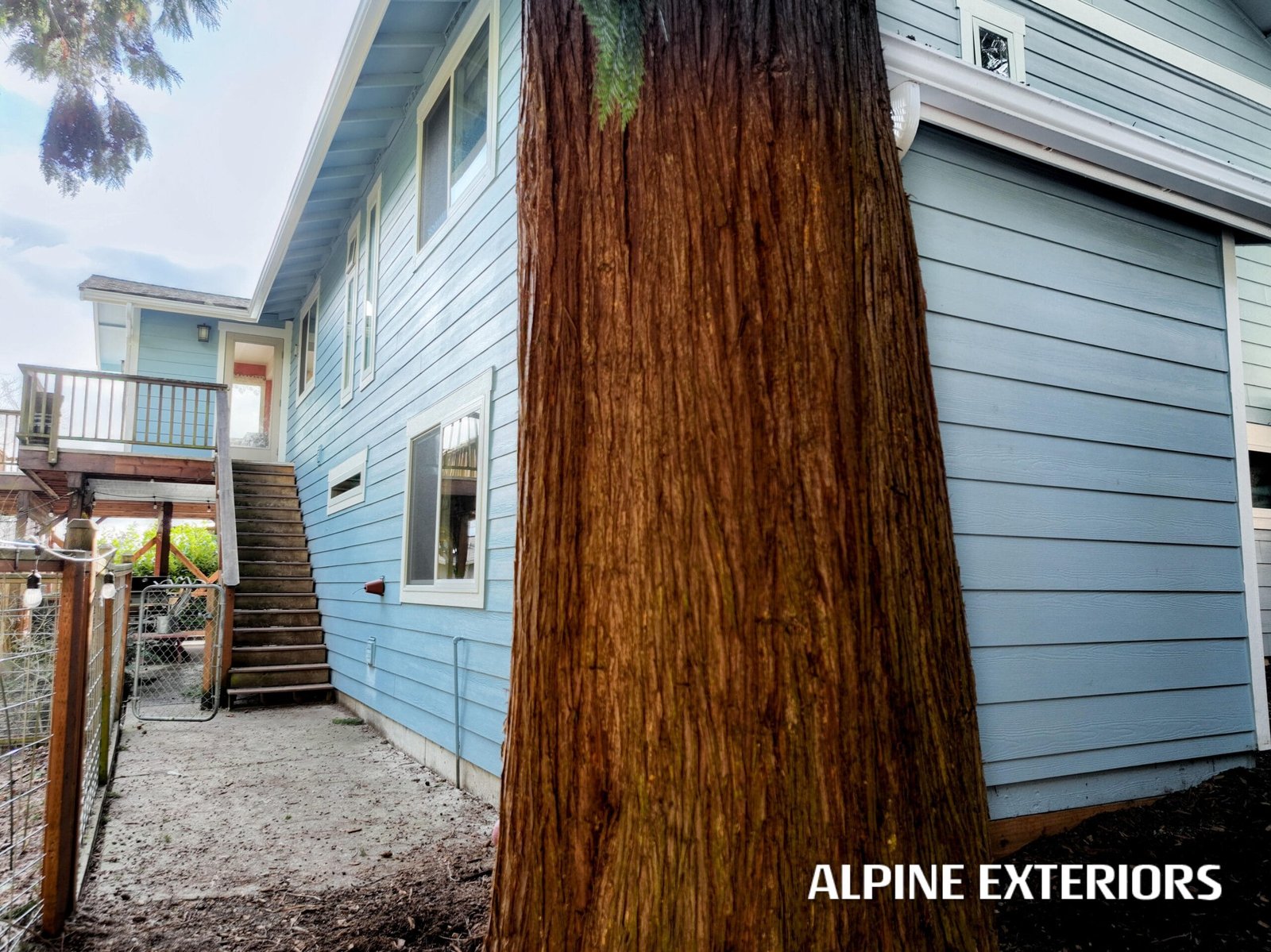
Camano Island sits between Saratoga Passage and Port Susan, and that geography shapes three things that don't show up the same way on a dry-side house or even on a mainland Skagit County property a few miles inland. First is the sheer volume of steady winter rain — the island's wet season runs roughly October through March, and it's rarely a dramatic downpour so much as day after day of moderate, sustained rainfall that keeps every gutter and downspout working continuously rather than in short bursts. Systems that are marginally undersized don't fail during one storm; they fail slowly, as water finds every low spot and gap over weeks of nonstop moisture.
Second is the tree canopy. A large share of Camano's housing stock sits under or near mature Douglas fir and Western red cedar, and both drop needles and small debris almost year-round, with a heavier flush in fall and after windstorms. Fir needles are worse than broadleaf debris for gutters because they don't just sit on top of leaf mats — they wash down and pack into downspout throats and elbows, where they're much harder to spot and much harder to clear than a clogged run of open gutter. Homes on shaded, north-facing roof planes also tend to grow moss over time, and moss holds moisture against shingles and sheds granules into the gutter system, adding to the debris load.
Third is wind and salt exposure. Camano is fully exposed to wind coming off the Skagit flats and up Saratoga Passage and Port Susan, and waterfront and bluff-top homes get regular salt-laden air off the Sound. That combination shortens the life of galvanized steel gutter components and cheap fasteners, and it puts real load on gutter hangers — spike-and-ferrule hangers that were fine when installed tend to work loose over a few wind seasons, letting a gutter sag and pull away from the fascia exactly where water needs it to be tight. Finally, while the Skagit and Whatcom foothills see occasional snow and icing in cold snaps, Camano's low elevation and marine exposure mean snow and ice are infrequent here — the bigger cold-weather risk on the island is a clogged, water-logged gutter freezing solid during a hard freeze, not classic ice-damming from heavy roof snow load.
Start with an honest look at your roof, not just your gutters. Walk the property (or have someone go up safely) and note which elevations sit under fir or cedar canopy, where roof valleys concentrate flow, and whether any downspouts currently discharge within a couple of feet of a crawlspace vent or the foundation itself. That inspection tells you more about what needs to change than the age or appearance of the gutters alone.
Alpine Exteriors sizes gutter and downspout systems for the actual roof and canopy conditions on each Camano Island property rather than defaulting to a standard kit, and we look at downspout discharge points and crawlspace vents as part of the same visit — a gutter system that overflows or dumps water next to the house is a drainage problem, not just a cosmetic one. It's also fair to say gutters alone won't fix a crawlspace that already has a standing moisture problem from grading, a high water table, or a failed vapor barrier; in those cases the gutter and downspout work is necessary but not sufficient, and it's worth having someone look at the crawlspace directly rather than assuming new gutters will solve everything.
Not always — a smaller, simple roof with good pitch and no valleys can perform fine with a well-installed 5-inch system. But on roofs with valleys, multiple intersecting planes, or a large collection area feeding one corner, 6-inch gutters (or an added downspout) handle the sustained winter rain typical of the island noticeably better, and we size that case by case rather than as a blanket upgrade.
Twice a year is a reasonable baseline for most tree-covered lots on Camano — once after the heavier fall needle and leaf drop, and again toward late winter before spring growth adds more debris. Homes with dense overhanging canopy or a history of downspout clogs sometimes need a mid-winter check as well, since packed needles in a downspout elbow aren't visible from the ground.
Yes, and it's one of the more common contributors we see. When a gutter overflows or a downspout discharges too close to the foundation, that water saturates the soil right where a crawlspace vent or a low spot in the foundation can let moisture in. Fixing the gutter and downspout routing often measurably reduces crawlspace dampness even before any other moisture-control work is done.
It's a minor concern compared to the Skagit and Whatcom foothills, since Camano's low elevation and marine exposure mean sustained snow and ice are uncommon. The more realistic cold-weather risk here is a gutter already loaded with standing water and debris freezing solid during a hard cold snap, which is another reason keeping the system clear and properly draining matters more than upsizing purely for ice.
If your gutters overflow during a normal winter storm, your downspouts dump water within a few feet of the house, or you've noticed dampness under the floor, it's worth having someone walk the roofline and the crawlspace access together rather than treating them as separate problems. Alpine Exteriors is a licensed Washington contractor (ALPINI751OW) serving Camano Island alongside the rest of Island, Skagit and Whatcom counties, and we're happy to take a look at your current gutter sizing, downspout routing and crawlspace ventilation and give you a straightforward, no-pressure assessment of what actually needs to change.