

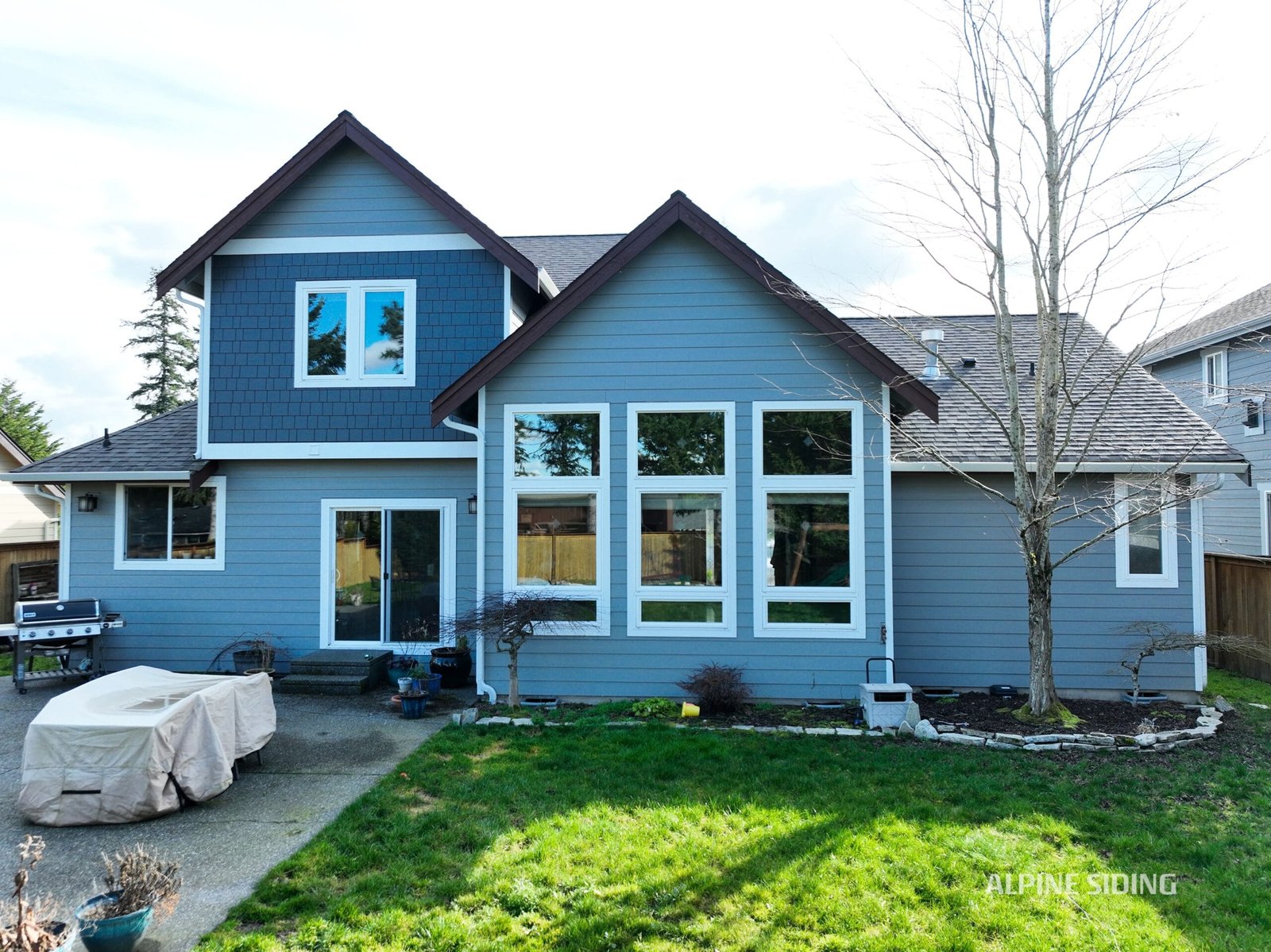
The clearest sign is water sheeting over the top of the gutter at the exact point where two runs meet — the inside corner, usually formed where a roof valley or an L-shaped wall brings two planes of roof together. Instead of draining evenly along the trough, water pools right at that miter joint and spills over the front lip during a hard rain. Underneath, you'll often see a vertical streak or a splash line on the siding, mulch or gravel scooped out of the bed below, and sometimes moss or dark staining creeping down the fascia board above the corner.
Get on a ladder, or have someone check for you, and look at the corner itself. Standing water, a buildup of fir needles, alder leaves or moss clumps wedged into the miter, or a visible sag where the corner has pulled slightly away from the fascia are all common findings. In a cold snap you may also see a small ridge of ice forming right at that corner before anywhere else in the run — a useful clue about how this failure tends to behave here, and worth checking on the next freeze if you've already noticed daytime overflow.
Inside corners are the narrowest, most turbulent point in any gutter system by design — two streams of water converge into one channel and change direction at the same spot. Even a well-built system can bottleneck there under the right conditions, and this part of Washington gives it plenty of them.
The Skagit Valley and the lowlands around Mount Vernon, Burlington and La Conner see long stretches of steady winter rain along with the occasional heavy downpour that dumps a lot of volume in a short window. A corner that drains fine in a light drizzle can be overwhelmed in that kind of event if the outlet or downspout on that run is even slightly undersized or partially blocked.
Moss is a bigger factor here than in drier climates. Roofs shaded by fir, cedar or big-leaf maple — common on lots around Sedro-Woolley, Bellingham and the wooded parts of Camano Island — stay damp longer and grow moss on north-facing slopes. That moss sheds in clumps during rain and washes down into the gutters, and it tends to snag right at the inside corner where the water flow changes direction, creating a small dam that backs water up and over the edge.
Wind is the third piece. Gusts funneling off the Skagit flats and off the Strait of Juan de Fuca push rain sideways and carry loose needles and leaf litter into open gutter runs even where guards are installed, and that debris again concentrates at corners rather than spreading evenly. On the islands and immediate shoreline — Anacortes, La Conner, Camano Island — salt-laden air speeds up corrosion on gutter hangers, screws and the sealant bead at miter joints. A corroded hanger lets the corner sag just enough to create a low spot that never fully drains, and a failed sealant joint lets water seep out from behind rather than over the front, which can look similar from the ground but is a different repair.
Up toward the foothills east of Sedro-Woolley and in the higher parts of Whatcom County, occasional snow and hard freezes add ice damming to the mix. Warm air escaping through poorly insulated or under-ventilated attic space melts snow on the roof, which refreezes at the colder eave and inside corner, building a small dam that traps meltwater behind it until it finds the path of least resistance — over the top of the gutter. Attic ventilation requirements under the Washington State Energy Code exist partly to limit this kind of uneven roof-surface temperature, so a home that's out of compliance on soffit or ridge venting is more prone to this failure mode in a cold snap.
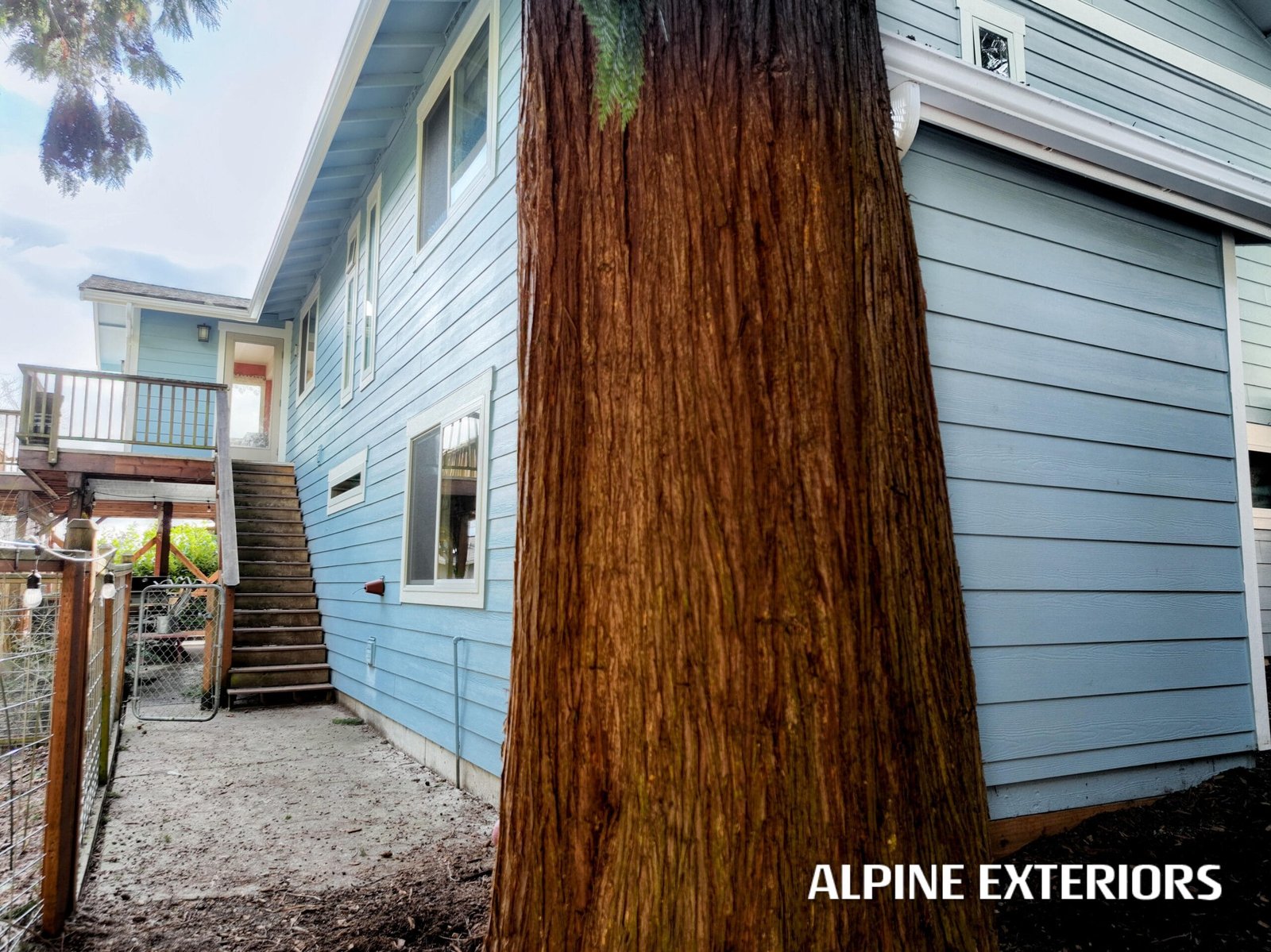
It depends on how often it's happening and what it's doing to the building. Overflow that only shows up during the single heaviest storm of the year, with no staining or soft fascia, is worth watching but isn't an emergency — note it and plan a cleaning or minor repair before the next wet season. Overflow that happens in ordinary rain, or that's gotten worse over a season or two, is a different matter. Water repeatedly dumping at one spot along the foundation line can saturate the soil there, and over time that undermines landscaping and can contribute to crawlspace moisture on homes without good grading.
More urgent is any sign the water is getting behind the gutter rather than just over it — soft or discolored fascia board, staining on the soffit, or paint bubbling on the wall below the corner. That points to moisture reaching wood framing, which left alone leads to rot and, eventually, a larger repair than the gutter itself. In the foothill areas where ice damming is a factor, a corner that's building visible ice each freeze should be addressed before the next cold snap, since the weight and prying action of an ice dam can pull hangers loose or crack a sealant joint outright, turning a maintenance item into an active leak.
A single inside corner overflowing because of debris or a failed sealant bead is usually a modest, targeted repair: clear it out, re-seat the joint, add a hanger or two if the corner has sagged, and reseal with a gutter-grade sealant rated for this climate. That kind of fix runs from a small out-of-pocket cost for a straightforward corner up to a larger bill if fascia repair is needed behind it — a real range rather than a fixed price, since access, roof pitch and the extent of any wood damage all move the number.
Replacement makes more sense when the corner problem is a symptom of an older system failing in more than one place — sagging runs, chalky or brittle sealant throughout, downspouts undersized for the roof area they serve, or galvanized steel gutters visibly rusting, which is common on older homes in the salt air near Anacortes and the islands. Seamless aluminum gutters, formed on site to the exact run length, cut down on the number of joints in the system and hold up better long-term in this climate, though they cost more upfront than a patch repair.
Honestly, a sealant-only fix on an old, corroded system is often a short-term fix rather than a real solution, and it's worth knowing that before spending money on it. Alpine Exteriors will tell you plainly which category a given corner falls into rather than defaulting to the bigger job.
Inside corners carry the combined flow of two roof planes through the narrowest part of the system, so they're the first place to show trouble when there's even a small amount of debris, a minor sag, or an undersized downspout. The rest of the run can look fine because it's only handling water from one plane and has more capacity to spare.
Clearing debris out of a corner and checking for obvious sag is reasonable homeowner maintenance if you're comfortable on a ladder. Resealing a joint or replacing a hanger is more involved and easy to get wrong in a way that just moves the leak somewhere else. If there's any sign of soft fascia or the corner has sagged noticeably, it's worth having it looked at professionally before resealing over a problem that needs more than sealant.
They help a lot with leaf and needle load, which is a major contributor here, but they aren't a complete fix on their own. Guards can still let fine debris and moss fragments through, and they don't address a sagging hanger, a corroded joint, or an undersized downspout. Guards work best as one piece of a broader maintenance plan rather than a standalone solution.
Given how long the wet season runs here, twice a year is a reasonable baseline for most homes — once in fall before leaf and needle drop peaks, and once in late winter after the heaviest rain has passed. Homes on Camano Island, in La Conner or along the Anacortes shoreline, where salt air accelerates corrosion, and homes in the foothills that see occasional ice, benefit from an additional check going into the coldest part of winter.
An overflowing inside corner is rarely just a gutter problem — it's usually telling you something about the roof, the fascia behind it, or how the system was built to handle this region's rain, wind and moss. Alpine Exteriors serves Mount Vernon, Anacortes, Burlington, Sedro-Woolley, La Conner, Stanwood, Camano Island and Bellingham, and can inspect the corner, the fascia behind it, and the roof surface feeding it to tell you honestly whether you're looking at a quick repair or something more. Alpine Exteriors is licensed in Washington under contractor license ALPINI751OW. If a corner has been overflowing at your place, reach out before the next heavy rain to get it looked at.



