
Most attic and skylight moisture problems in Concrete homes come down to one thing: warm, humid indoor air is reaching a cold roof deck faster than the attic can vent it back out. Fix the airflow — balanced intake at the eaves, unobstructed exhaust up high, and a skylight that is actually flashed and insulated for a cold, wet foothill climate — and most of the staining, dripping, and moss growth homeowners in Concrete call us about clears up within a season or two.
It is rarely one dramatic leak. It is usually a chain of small gaps — a clogged soffit vent, an unsealed attic hatch, a bath fan dumping moist air into the attic instead of outside — that add up over a wet Skagit County winter until they show up as a brown ring on the ceiling or fogged glass on a skylight.
Every home generates water vapor: showers, cooking, laundry, breathing, and in a lot of Concrete homes, a wood stove running most of the winter. In a well-ventilated attic, that moisture-laden air stays in the living space or exits through bath and kitchen fans that are ducted straight outside. In a poorly ventilated one, it drifts up through recessed lights, attic hatches, plumbing chases, and top plates, hits the cold underside of the roof sheathing, and condenses — the same way a cold glass sweats on a humid day. Over a winter, that repeated condensation soaks insulation, stains ceiling drywall, and can eventually rot sheathing or grow mold, none of which shows up as an obvious "leak" at first.
The Washington State Energy Code sets minimum attic insulation levels and ventilation ratios for exactly this reason — typically a ratio of net free vent area to attic floor area, split between intake (soffit vents) and exhaust (ridge or roof vents), with an allowance for a reduced ratio when a proper vapor retarder is installed on the ceiling. The code exists because unvented, under-insulated attics are a predictable moisture problem, not a rare one.
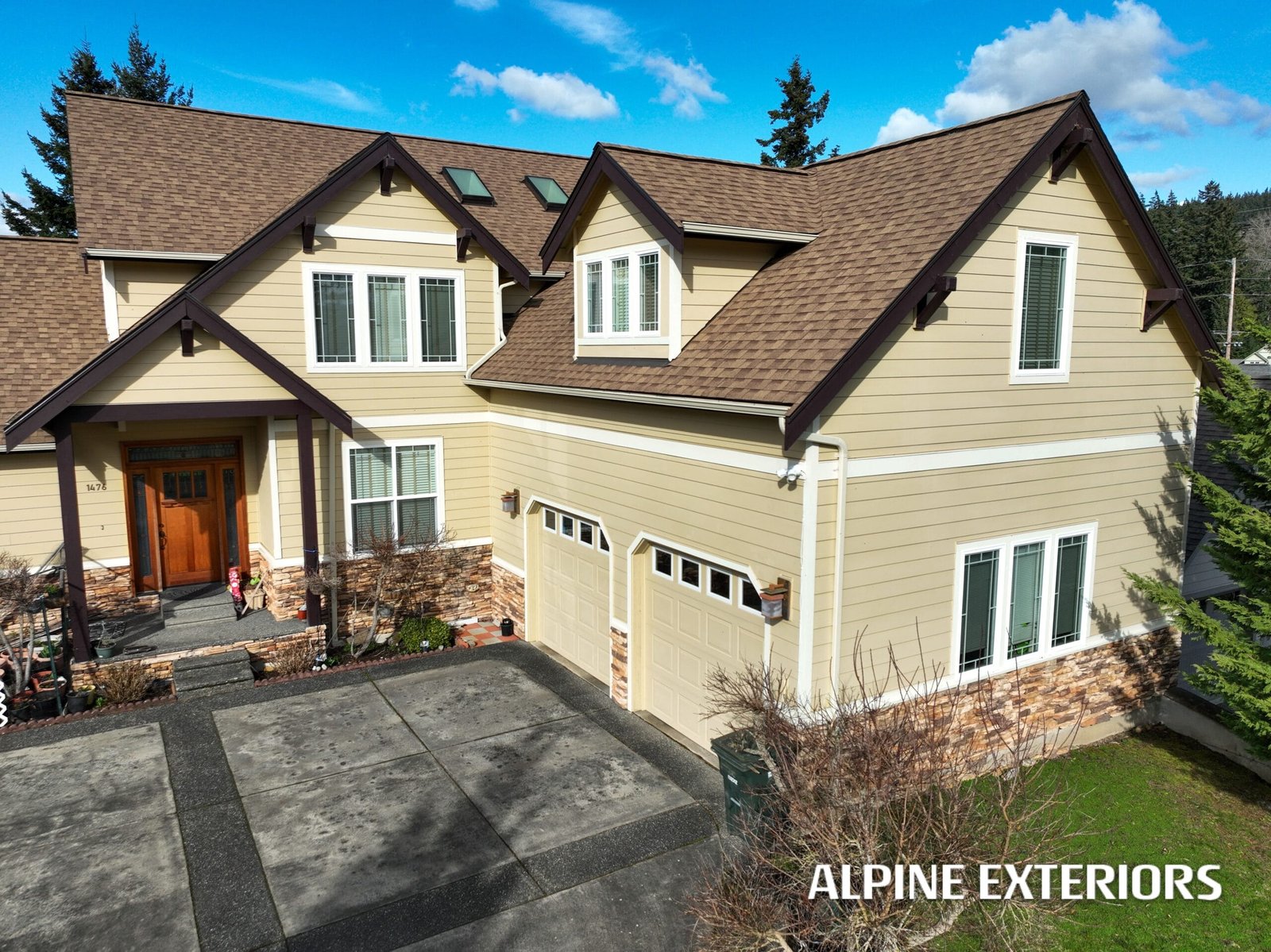
Skylights add a second failure point. A skylight installed on a vaulted or cathedral ceiling usually has no attic space above it to buffer temperature swings — the glazing and frame sit close to the cold roof deck, which makes them prone to condensation dripping down the inside of the shaft in cold weather, especially if the shaft isn't insulated and air-sealed the same way the surrounding ceiling is. Separately, skylights leak at the flashing, not usually through the glass itself. A curb-mounted skylight needs step flashing and a proper counter-flashing or saddle above the curb to shed water around it in heavy, sustained rain; a skylight that was installed quickly with just roofing cement and no real flashing kit will eventually leak, often years after it was put in.
Concrete sits up in the Skagit River valley at the edge of the North Cascades foothills, and that location changes the math compared with Mount Vernon, Burlington, or the coastal parts of our service area. Elevation and the mountains right behind town mean more orographic rainfall — the same weather system that drops a moderate amount of rain on the valley floor tends to dump more on Concrete — and colder overnight temperatures for more of the year, which widens the gap between warm indoor air and cold roof sheathing and makes condensation more likely, not less.
Most homes in and around Concrete sit under heavy stands of Douglas fir, cedar, and hemlock. That canopy keeps north- and east-facing roof slopes shaded for much of the day, which is exactly the condition moss needs to take hold. Moss holds moisture against shingles and shakes, works its way under the tabs, and — just as importantly for this topic — needles and debris from that same canopy clog soffit vents and gutters far faster than they do on an open lot in Anacortes or on Camano Island. A soffit vent packed with fir needles isn't drawing air anymore; it's just a hole in the eave.
Winters in the foothills also bring occasional snow and a hard freeze that the Skagit flats or the islands rarely see. That doesn't usually mean serious ice damming the way a colder climate would, but a poorly vented attic that's warm enough to melt a thin layer of snow on the roof, only to refreeze at a colder eave, can still form ridges of ice that back water up under shingles. It's an intermittent problem here, not a constant one, but it shows up almost exclusively on homes with weak attic ventilation and thin eave insulation — which is the same underlying issue as the condensation problem, just triggered by snow instead of rain.
A few things actually move the needle, and a few common assumptions don't hold up.
Be honest about drawbacks going in: a ridge vent isn't achievable on every roofline, especially cut-up hip roofs common on some Concrete homes, so intake/exhaust balance sometimes has to be solved with a mix of vent types. Skylight reflashing can be done without full replacement if the unit itself is sound, but on an older single-pane skylight, reflashing without addressing the condensation-prone glazing just delays the next problem. And moss removal without shade or airflow changes is a maintenance task you'll be repeating, not a permanent fix. Alpine Exteriors walks homeowners through which of these actually apply to their roof before recommending work, because a full ventilation retrofit isn't always what a given attic needs.
Cost ranges vary a lot depending on roof complexity and attic access, but as a general guide: soffit and ridge vent corrections typically run from a few hundred dollars up to a couple thousand on a larger or harder-to-access roof; skylight reflashing is usually a modest line item per unit, while full skylight replacement (unit plus flashing) runs into the low thousands per skylight depending on size and roof pitch. Any contractor quoting exact numbers before seeing your attic and roof in person is guessing.
It depends heavily on what's wrong and how the roof is built. Clearing and re-opening existing soffit vents is inexpensive; adding new vent openings, upgrading to a continuous ridge vent, or correcting a roof with no real intake path at all costs more because it involves cutting into the roof deck or soffit material. Get a specific number after an inspection rather than relying on a rough estimate, since a simple attic and a cut-up roofline with multiple valleys can differ significantly in labor.
Not all of them. If the glazing unit itself is sound, isn't fogged between panes, and isn't badly condensing on the inside, reflashing with a proper step-and-counter-flashing kit can solve a leak without replacing the whole skylight. If the unit is older, single-pane, or the shaft is uninsulated and condensing heavily every winter, replacement with a better-insulated unit and a properly insulated shaft is usually the more durable fix, since reflashing alone won't stop condensation coming from the glazing itself.
Moss itself is common on shaded roofs around Concrete and isn't automatically an emergency, but it's worth taking seriously. Moss holds moisture against roofing material longer than it would otherwise sit, and heavy growth can lift shingle tabs or shake edges over time, which shortens the roof's service life. It's also a sign that a section of roof stays wet and shaded most of the day, which is often the same section where soffit vents are getting blocked by the same debris — so moss and ventilation problems frequently show up together.
Clearing debris off existing soffit vents and making sure a bath fan actually vents outside are reasonable homeowner tasks. Cutting new vent openings, adding or modifying a ridge vent, or reflashing a skylight involve working on the roof deck itself and getting the balance and code-required ratios right — get that wrong and you can end up pulling conditioned air out of the house or creating a new leak path. That work is worth having a licensed contractor handle.
If you're seeing fogged skylight glass, a musty smell in an upstairs closet, moss creeping across a shaded slope, or just want a straight answer on whether your attic is ventilated the way the Washington State Energy Code intends, Alpine Exteriors serves Concrete and the rest of Skagit, Island, and Whatcom counties and can walk your attic and roof with you before recommending anything. Alpine Exteriors holds Washington contractor license ALPINI751OW and works on roofing, skylights, gutters, and the ventilation details that tie them together — reach out for an inspection and a plain-language explanation of what your home actually needs.