
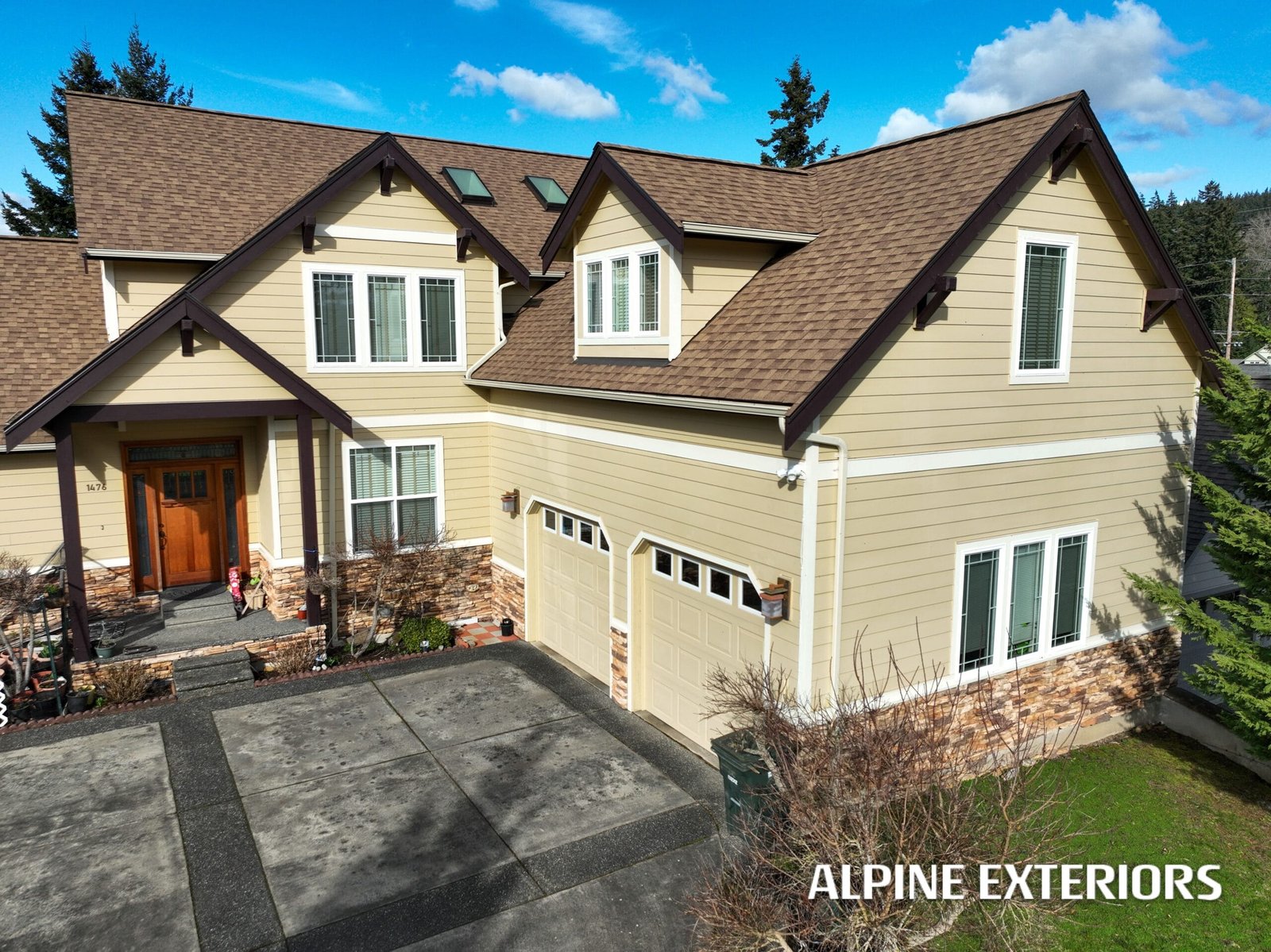
In Clear Lake, moss and roof damage come from the same root cause: shade from tall conifers combined with months of steady Pacific rainfall that never fully dries between storms. Keep the roof surface clear of needle litter and moss, and make sure the attic underneath can breathe, and a roof in this part of Skagit County will comfortably reach its rated lifespan. Ignore either one and moss, trapped moisture, and slow rot will shorten it by years.
Moss doesn't attack a roof the way people sometimes picture it. It's not eating through shingles. What it does is hold water against the roofing material for far longer than the material was designed to sit wet. Moss spores need organic debris and shade to establish, and Clear Lake supplies both in abundance — fir needles, cedar litter, and cone scale collect in valleys, behind chimneys, and along the lower courses of shaded, north- and east-facing slopes, and that debris stays damp for days at a time under the tree canopy that surrounds most lots along the Highway 9 corridor.
Once a colony gets a foothold, it spreads by lifting shingle tabs and shake edges as its root-like rhizoids work into the material, which lets wind-driven rain get underneath the roofing rather than shedding off the top of it. On composition shingles this shows up as accelerated granule loss and curling. On cedar shake, which is still common on older homes in this area, it shows up as soft, dark, spongy wood at the butt ends — a much more expensive problem to catch late, since rotten shake has to be replaced rather than treated.
The rain pattern matters as much as the moss itself. Skagit County doesn't get short, hard downpours that flush a roof clean and then dry out in the sun the way a summer thunderstorm might elsewhere. From roughly October through April, Clear Lake sits under a long stretch of light-to-moderate frontal rain moving in off the Pacific, punctuated by low valley fog that rolls up from the Skagit River bottomland overnight. A roof here can go weeks without a real dry-out period, even on days when it isn't actively raining, because the humidity and shade keep the surface damp. That persistent dampness — not any single storm — is what lets moss establish in the first place and keeps it thriving once it has.
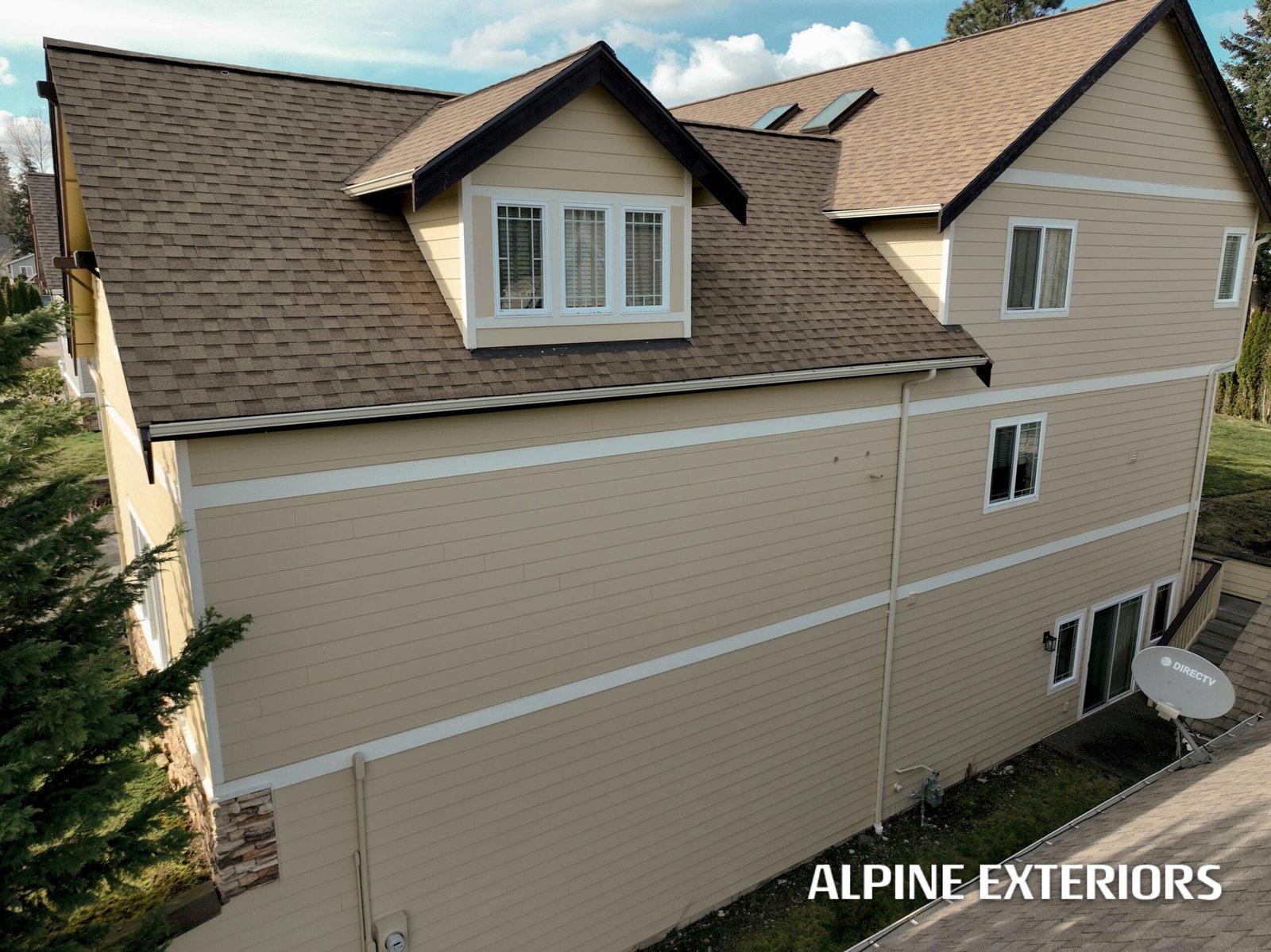
Clear Lake sits in a specific spot within Alpine Exteriors' service area, and it behaves differently than the towns just a few miles away on the open valley floor. Mount Vernon, Burlington, and La Conner sit out on the flatter Skagit farmland, where wind and open sun keep roofs comparatively dry between storms. Clear Lake, by contrast, is tucked into second-growth timber closer to the Cascade foothills, and most homes here are shaded by mature Douglas fir and cedar rather than sitting in open farmland. That tree cover is good for wind protection but bad for roof moisture — it's the main reason moss pressure is noticeably heavier here than on a similarly aged roof out on Fir Island.
Wind is also a different story here than it is on the water. Out on the Skagit flats and around Anacortes and the islands, homes deal with steady wind off the flats and the Strait of Juan de Fuca, and homes on Camano Island and near Anacortes deal with salt-laden air that accelerates corrosion on fasteners, flashing, and gutter hardware. Clear Lake is inland and tree-sheltered, so salt exposure isn't a real factor here the way it is for coastal Alpine customers — but the trade-off is less airflow across the roof deck, which means less natural drying and more standing moisture.
The foothill elevation also gives Clear Lake slightly colder winter nights than Mount Vernon or Burlington. It's not a heavy-snow climate, but a handful of nights each winter drop below freezing, and the area sees occasional light snow or a glaze of ice that the valley floor misses entirely. That matters for gutters: water sitting in a needle-clogged gutter can freeze overnight in Clear Lake on nights when it wouldn't in downtown Mount Vernon, and a frozen, blocked gutter is what backs water up under the first course of roofing.
One more regional factor worth naming honestly: Washington's building code environment. The Washington State Energy Code sets minimum insulation and ventilation requirements for the attic assembly beneath a roof, and those requirements have gotten stricter over successive code cycles. Many older Clear Lake homes were built to an earlier version of that code and have less attic ventilation than a new build would require today. A tighter, less-ventilated attic holds more warm, moist air against the underside of the roof deck, which can encourage condensation and, indirectly, make the moss and moisture problem on the outside worse rather than better. This isn't unique to Clear Lake, but the combination of an older housing stock and heavy tree shade makes it more consequential here than in a newer, sunnier subdivision.
None of this requires panic, and it doesn't mean tearing off a functional roof early. It means treating moss and moisture as routine maintenance items rather than emergencies you deal with after they've already caused a leak.
On cost: moss treatment and gutter cleaning are inexpensive relative to the damage they prevent, typically a few hundred dollars per visit depending on roof size and access. Full roof replacement is a much larger investment — for an asphalt shingle roof on a typical Clear Lake home, homeowners should generally expect a range in the high single digits to low five figures depending on size, pitch, and material, with cedar shake and standing-seam metal running higher. Alpine Exteriors will tell a homeowner honestly when a roof still has useful life left and only needs maintenance, rather than pushing a replacement that isn't needed yet — that's a drawback worth naming about the industry in general: not every contractor gives that answer, so it's worth asking directly during an inspection.
It's more than cosmetic once it's established. A light dusting of moss spores on a roof isn't urgent, but visible moss patches mean the material underneath has been staying wet longer than it should, and moss rhizoids physically lift shingle tabs and shake edges as they grow, which lets wind-driven rain get underneath the roofing. Left long enough, that leads to granule loss on composition shingles or soft, rotting wood at shake butt ends, both of which are genuine damage rather than just an appearance issue.
It depends heavily on how much shade a given roof gets. A roof under heavy fir or cedar canopy in Clear Lake often needs moss treatment every one to two years, while a roof with more open exposure might go three or more years between treatments. The honest answer is that there's no single fixed interval — it's worth having a contractor look at the specific slopes on your roof and set a schedule based on actual moss pressure rather than a generic calendar.
Yes, and it's one of the more underrated fixes available. Reducing shade and debris fall even modestly slows how quickly moss re-establishes after a treatment, and it reduces the volume of needle litter that clogs gutters and valleys in the first place. It won't eliminate the need for periodic treatment on a heavily wooded lot, but it stretches the interval between treatments and reduces gutter maintenance at the same time.
It affects the assembly under the roofing more than the shingles themselves. The Washington State Energy Code sets minimum requirements for attic insulation and ventilation, and when a roof is replaced, that's often the right time to bring an under-ventilated attic up to current code, since the roofing has to come off anyway. This matters in Clear Lake specifically because older homes here frequently have less attic airflow than current code calls for, and improving that during a re-roof reduces condensation risk on the underside of the new roof deck.
If you're in Clear Lake, Sedro-Woolley, Mount Vernon, or anywhere else in Skagit, Island, or Whatcom County and you're not sure whether what's on your roof is routine moss or an early sign of a bigger problem, that's a straightforward thing to have looked at before the wet season is in full swing. Alpine Exteriors is a licensed Washington contractor (license ALPINI751OW) that works on roofing, gutters, windows, and decks across this region, and can walk your specific roof, tell you honestly what's maintenance versus what's damage, and give you a real cost range either way. Reach out to schedule an inspection before the fall rains set in.