

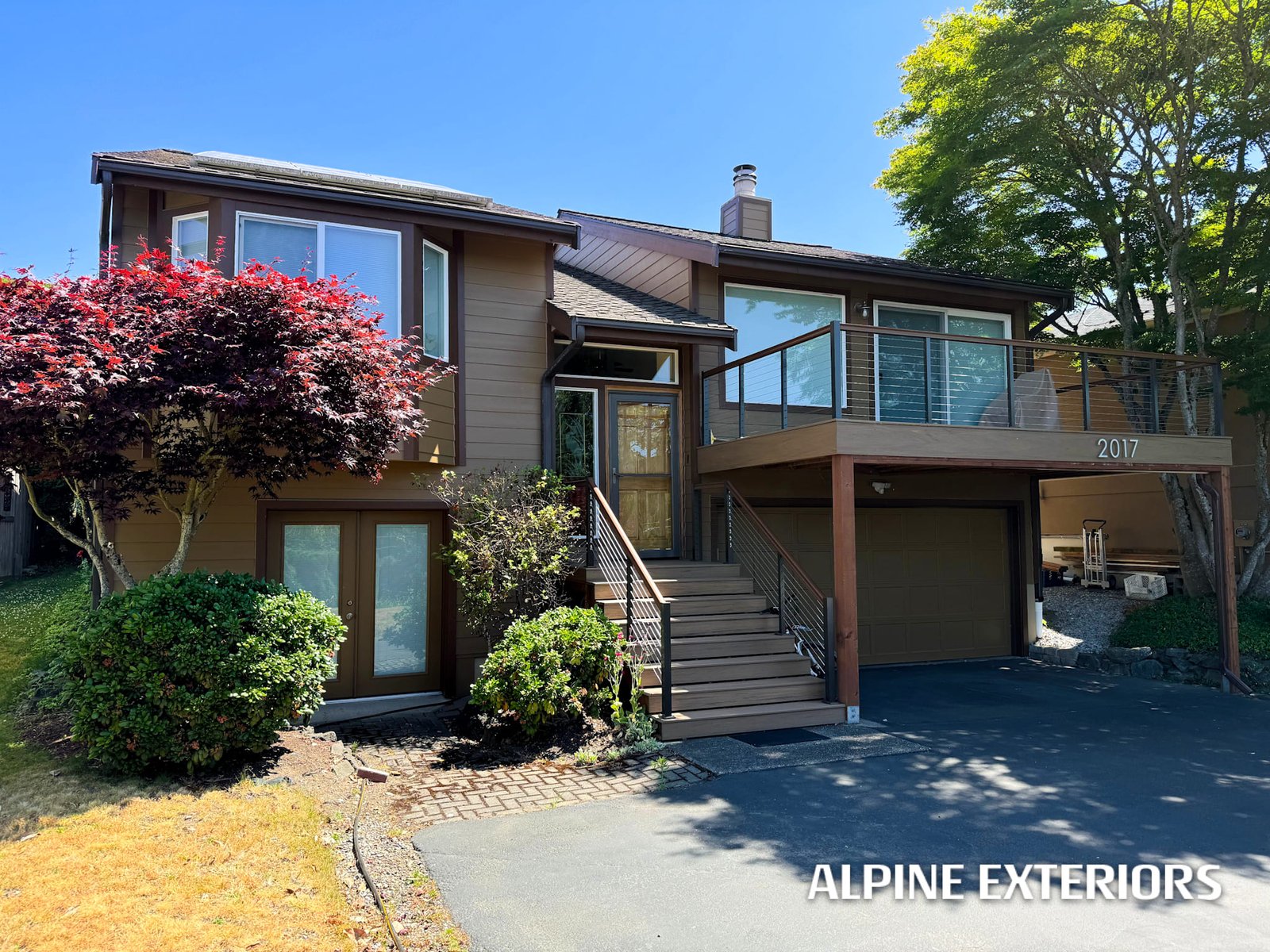
Burlington sits in the flattest, wettest stretch of Skagit County — low elevation, close to the river, and exposed to wind that funnels down the valley off the Sound. A roof here has to shed a lot of rain for a lot of months, resist moss on the shaded north slopes near the trees along Fountain Street and out toward Avon, and hold its seal through wind gusts that pick up across the open farmland north of town. That's the set of demands that matters, and the “best” roof for a Burlington home is the one matched to those specific demands, not the one with the flashiest brochure.
This page walks through the roofing materials we actually see holding up — and failing — on homes in Burlington, Mount Vernon, and the surrounding Skagit flats, with honest pros and cons for each. Alpine Exteriors has worked on roofs across Skagit, Island, and Whatcom counties long enough to have opinions about what's worth the money here and what isn't, and we'd rather tell you the tradeoffs upfront than sell you on a material that isn't right for your house.
For most Burlington homes, a well-installed asphalt composition shingle rated for high wind, or a standing-seam metal roof, are the two options we recommend most often. Asphalt shingles remain the practical default for straightforward reroofs and budget-conscious projects — the material itself is inexpensive, contractors here are deeply familiar with it, and modern architectural shingles rated for higher wind speeds perform well against the gusts that come through the valley. Standing-seam metal costs more upfront but sheds our long rainy season almost effortlessly, resists moss better than any shingle product, and on the islands and closer to Bellingham Bay it handles salt air with far less maintenance than most alternatives.
Where a home sits matters as much as what it's made of. A house tucked under fir trees on a shaded lot needs a roofing strategy built around moss and debris, not just wind rating. A house out in the open flats near Burlington-Edison High School or along the I-5 corridor needs a strategy built around wind uplift and proper flashing at every penetration. We size the recommendation to the lot, not just the zip code.
We're not ranking roofing materials by national popularity or by what's cheapest to install. The criteria below are the ones that actually determine whether a roof performs well on a Skagit County house over the long haul:
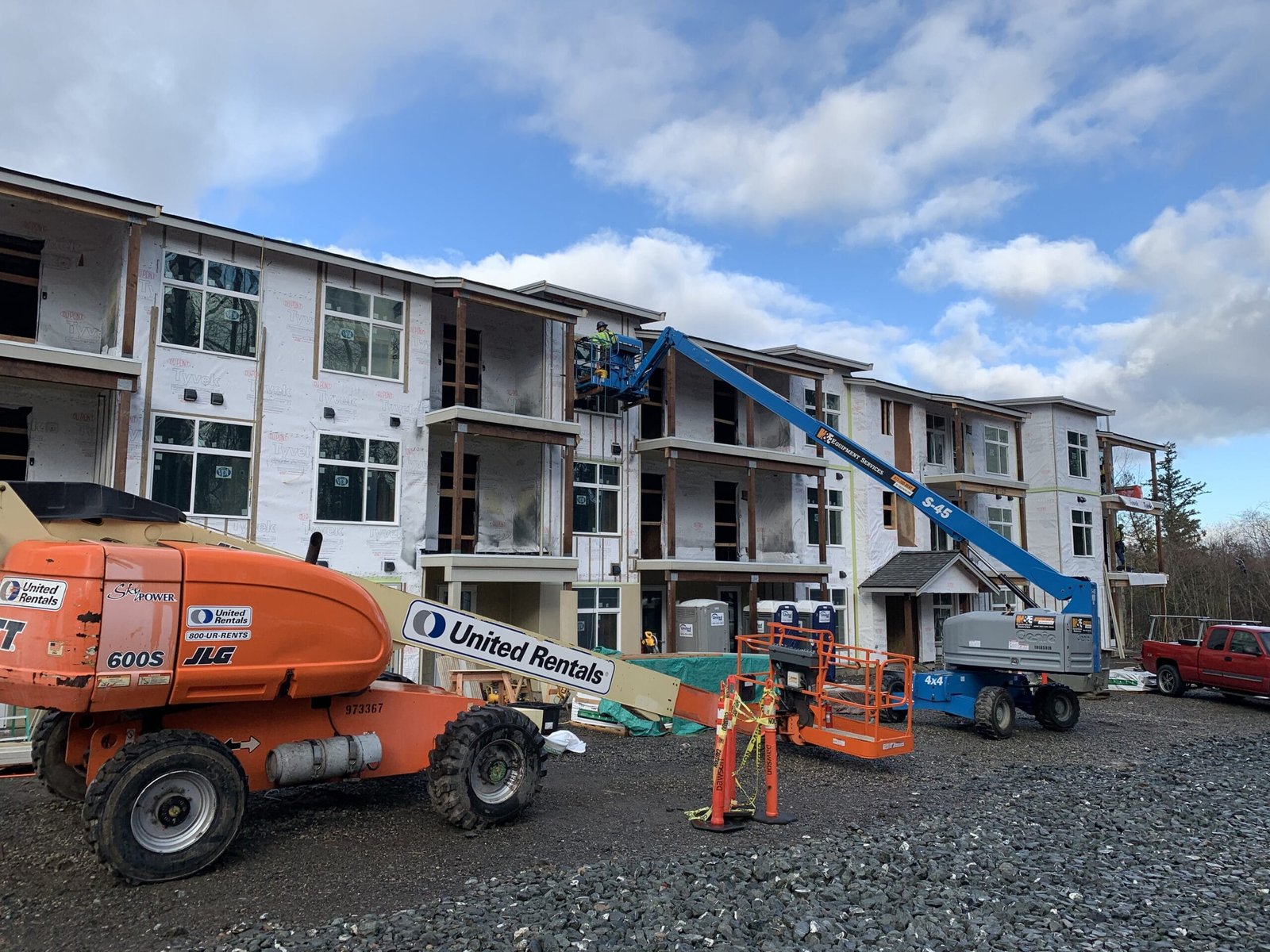
Asphalt shingles are still the most common roofing material we install on Burlington homes, and for good reason. Architectural (dimensional) shingles rated for higher wind speeds — commonly in the 110-130 mph rated range depending on manufacturer — hold up well against the gusts that come off the flats, and the material is forgiving to install correctly around the valleys, dormers, and chimney details common on Skagit County homes.
Pros: Lower material and installation cost than metal or tile; wide availability of contractors and replacement material; straightforward repairs if a section is damaged; broad range of colors that suit both older farmhouses and newer builds in the area; typically a 25-40 year manufacturer warranty on architectural lines.
Cons: More susceptible to moss growth on shaded slopes than metal, especially without zinc or copper strips at the ridge; shorter realistic lifespan in our wet climate than the warranty numbers suggest, particularly on north-facing roofs that stay damp; granule loss over time on older roofs can accelerate wear; algae staining is common on homes near trees if not addressed.
For a straightforward reroof on a budget, or for a rental or resale-focused project, quality architectural shingles installed with proper underlayment and ice-and-water shield at the eaves and valleys remain a sound choice for Burlington.
Metal roofing has become more common on Skagit County homes over the past several years, and it's the material we recommend most often when a homeowner is planning to stay in the house long-term or wants the lowest-maintenance option available.
Pros: Excellent rain shedding with almost no seams for water to find; steep slope factor makes moss far less likely to establish compared to shingles; long service life, often 40-60 years for the panel itself; performs well in wind when installed with the correct clip spacing and fastening; on Camano Island and coastal Whatcom homes, coated steel or aluminum resists salt-air corrosion far better than exposed-fastener panels or bare metal.
Cons: Meaningfully higher upfront cost than asphalt, often close to double depending on panel profile and roof complexity; installation requires a crew genuinely experienced with standing-seam detailing — poor work here shows up as leaks at penetrations and ridge caps; can be noisier in heavy rain without proper decking and insulation underneath; color and panel availability can mean longer lead times than shingles.
Metal is a strong fit for homes where the roof has a simple, steep pitch and few penetrations, and for owners who value decades of low maintenance over the lower initial price of shingles.
Cedar shake has real regional history here — it's the traditional look on a lot of older Skagit Valley farmhouses — and it's worth being honest about where it fits and where it doesn't anymore.
Pros: Distinctive, traditional appearance that suits older or historic-style homes in Burlington and La Conner particularly well; breathable material that can perform reasonably if properly ventilated; natural insulating properties.
Cons: This is the material most vulnerable to moss and moisture damage in our climate. Shaded roofs in a wet valley are close to the worst-case environment for wood shake, and without diligent moss treatment and periodic maintenance, shakes can rot, cup, and split years ahead of their theoretical lifespan. Many insurers have grown reluctant to write policies on wood roofs, or charge more for them, which is a real cost to factor in. Maintenance is not optional with this material — it's ongoing.
We install wood shake when a homeowner specifically wants the look for a historic or character home and understands the maintenance commitment. We don't recommend it as a low-effort choice, because in this climate it isn't one.
Synthetic shingle and shake products, made from engineered polymers, have improved significantly and are worth considering for homeowners who want a wood-shake or slate look without wood's maintenance burden.
Pros: Resists moss and moisture better than real wood; lighter weight than slate or tile, which simplifies structural requirements on a reroof; consistent, moss-resistant surface that holds up well through repeated wet-dry cycles; good wind resistance in quality products.
Cons: Material cost is closer to metal than to standard asphalt, without always matching metal's longevity; product quality varies a lot between manufacturers, so this is a category where the specific product matters more than the category itself; fewer local installers have deep experience with every synthetic product line, which can affect workmanship quality.
Synthetic products are a reasonable middle option for homeowners who want a specific aesthetic and better weather resistance than asphalt, but we'd steer a purely budget-driven decision toward architectural shingles instead.
Tile roofing is uncommon on Skagit County homes, and there's a practical reason for that beyond aesthetics.
Pros: Very long service life; excellent fire resistance; distinctive look that some homeowners want for a specific architectural style.
Cons: Heavy — most older Burlington homes were not framed with tile's weight in mind, and structural reinforcement adds real cost to a reroof; the style doesn't match the majority of homes in the area, which affects resale expectations; individual tiles can crack in freeze-thaw conditions during the occasional cold snap in the foothills; a niche product locally, meaning fewer contractors and replacement tiles are readily available.
We rarely recommend tile for this region unless a home was specifically designed for it. The structural and maintenance tradeoffs usually outweigh the benefits here.
A few choices show up in this region that we'd steer most homeowners away from, based on what we see fail:
It depends heavily on the roof's exposure. A roof with good sun exposure and airflow may go years with minimal moss, while a shaded north-facing slope near mature trees can show moss growth within a season or two of a cleaning. Zinc or copper ridge strips help slow regrowth on shingle roofs, and periodic gentle cleaning (never high-pressure washing, which damages granules) extends the interval between treatments.
The material can often stay the same, but the installation detail matters more on open, exposed lots. That means confirming the shingle's wind rating matches the site, using the manufacturer's high-wind nailing pattern rather than the standard pattern, and paying close attention to ridge cap and flashing attachment, since those are typically where wind damage starts.
A straight like-for-like reroof generally doesn't trigger a full energy code review, but if the project involves adding insulation, changing the roof assembly, or is part of a larger addition or renovation, the Washington State Energy Code's requirements for insulation and ventilation in the roof assembly can apply. It's worth confirming scope with your contractor and the local building department before work begins so the permit and inspection go smoothly.
It depends on your time horizon. If you're planning to stay in the home for decades, metal's low maintenance and long service life often make the higher upfront cost pay off, especially on a shaded lot where moss would otherwise be a recurring expense with shingles. If you're renovating for near-term resale or working with a tighter budget, a quality architectural shingle roof is a reasonable and honest choice that won't hurt resale value in this market.
The right roof for a Burlington home comes down to your specific lot — how much shade it gets, how exposed it is to wind off the flats, your budget, and how long you plan to stay. Alpine Exteriors, WA contractor license ALPINI751OW, has installed and repaired roofs across Skagit, Island, and Whatcom counties long enough to know which materials actually hold up here and which ones look good in a showroom and disappoint on a real roof. If you're weighing your options for a Burlington reroof, we're glad to walk your specific property, talk through honest tradeoffs for your situation, and give you a straightforward assessment before you commit to a material.



