
If you're finding water beading on the inside of your skylight glass on cold mornings, dark moss creeping across the north-facing slope of your roof, or a musty smell when you open the attic hatch, the underlying cause is almost always trapped moisture and poor airflow, not a failed roof. Most of the time the fix is restoring a balanced path for air to move through the attic, not tearing off shingles or replacing the skylight itself.
That doesn't mean every case is simple. Sometimes what looks like condensation is actually a slow flashing leak that's been misdiagnosed for years, and sometimes the roof and the ventilation both need attention at once. But for the majority of homes we look at around Big Lake, the pattern is the same: warm, moist household air is finding its way into a cold attic space and has nowhere to go.
Warm air holds more moisture than cold air. In a Skagit County winter, the air inside a heated living space is almost always warmer and more humid than the air trapped in an unheated attic above it. Warm air also rises — this is the stack effect — so that moisture-laden air is constantly pushing upward through any gap it can find: recessed can lights that aren't airtight-rated, the attic hatch, plumbing stacks, and especially the shaft around a skylight, which cuts straight through the insulation layer and gives warm air a shortcut to a cold surface.
When that warm air reaches the attic, it meets cold roof sheathing and cold skylight glass or the metal frame around it. The moisture condenses out, the same way it does on a cold glass of water on a summer day. If there's enough airflow moving through the attic, cool dry outside air entering low at the soffits and warm moist air exiting high at the ridge or through roof vents, that moisture gets carried out before it can do damage. If the airflow path is blocked, the moisture just sits there.
A few specific things we see over and over in this area:
Left alone, this cycle does real damage over a few winters: sheathing delaminates, insulation loses R-value once it's damp and compressed, nails rust and telegraph through as dark spots on the underside of the roof deck, and mold or mildew can take hold on the framing. On the outside, a roof that's staying cold and damp because it's shaded and poorly vented is also exactly the kind of roof that grows moss fastest.
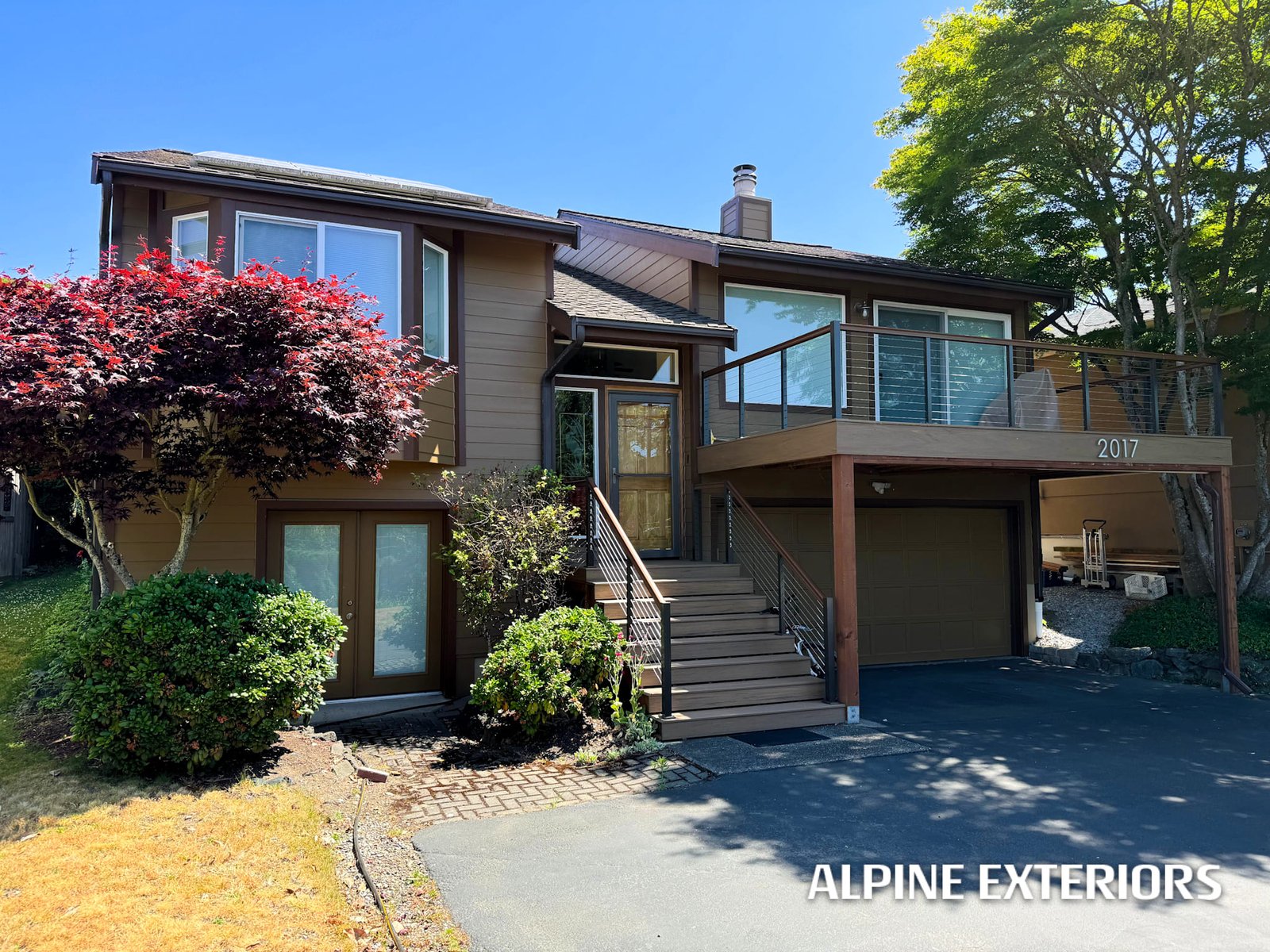
Big Lake sits in a pocket that combines a few conditions that don't show up together everywhere in western Washington. The lake itself keeps ambient humidity higher than you'd find on more open, wind-exposed ground, and a lot of the homes around it sit under mature fir and cedar canopy that blocks direct sun from ever hitting large parts of the roof. A roof that never dries out between rain events is a roof where moss gets a foothold, and where a marginal ventilation problem turns into a real one faster than it would on an open, sunny lot.
Skagit Valley's winter rain totals are heavy and sustained rather than occasional, so any weakness in a roof or ventilation system gets tested repeatedly over months, not during one or two storms a year. Wind is also a factor here in a different way than most people expect: the funnel effect across the open Skagit flats and the wind coming off the Strait of Juan de Fuca can drive rain sideways and push it up under ridge caps and around poorly sealed vents, especially on homes closer to Big Lake's more exposed shorelines.
Homes on the islands and closer to salt water, Camano Island, La Conner, parts of Anacortes, deal with salt air accelerating corrosion on vent hoods, flashing and skylight frames, which is a maintenance factor Big Lake homes further inland mostly avoid. What Big Lake does share with the Cascade foothill communities is the occasional stretch of hard freeze or light snow; it's not a major snow-load region, but a few cold snaps a winter are enough to create ice damming on a roof that's already running warm from attic heat loss, which backs water up under the shingles at the eaves.
The Washington State Energy Code also matters more here than a lot of homeowners realize. The code sets minimum insulation R-values for ceilings and attics and has specific requirements for ventilated versus unvented (hot roof) attic assemblies. A lot of older Big Lake homes were insulated to a standard from decades ago and have never been brought up to current code levels, which means the attic is often both under-insulated and under-ventilated at the same time, a combination that makes condensation problems worse, not just more likely.
Start in the attic, not on the roof. On a cold morning, look for frost or damp staining on the underside of the sheathing, especially right around any skylight shaft, bath fan duct, or can light. That tells you where moisture is actually condensing, which is more useful than guessing from the outside.
Check that soffit vents are open and unobstructed from inside the attic, not just visible from the ground. It's extremely common for blown-in insulation to bury the lower few feet of roof slope right where the soffit vents are, cutting off intake air completely even though the vents themselves look fine from the driveway.
Confirm every bathroom and kitchen exhaust fan actually terminates outside the building envelope through a dedicated vent hood, not into the attic or a soffit that just recirculates the air back in. This is a cheap fix relative to the damage it prevents.
Have the intake-to-exhaust ratio checked. Washington's energy code and most manufacturer specifications generally work from roughly 1 square foot of net free vent area per 150 to 300 square feet of attic floor, split between intake and exhaust. Adding exhaust vents without matching intake is one of the more common mistakes we see corrected on Big Lake roofs; it doesn't fix ventilation, it just moves the problem.
For skylights specifically, ask whether the light well is insulated to the same standard as the surrounding ceiling and whether the flashing has been resealed recently. A well-insulated shaft under a modern double or triple-pane skylight will condense far less than an older single-pane unit dropped into an uninsulated chute, and improving the shaft insulation is often a more cost-effective fix than replacing the skylight itself.
Deal with moss as a symptom, not just a cosmetic problem. Moss on a shaded north slope holds moisture against the shingles and shortens roof life; zinc or copper strips near the ridge and periodic soft washing help, but they don't replace fixing the airflow and shade issues underneath.
Be honest about the drawbacks before spending money: ventilation upgrades won't undo sheathing that's already rotted or insulation that's already compressed and moldy — that material needs to come out first. An unvented hot-roof approach using closed-cell spray foam is a legitimate alternative under the energy code, but it costs meaningfully more than a standard vented assembly and isn't the right call for every home. And no amount of attic ventilation will fix a skylight that's actually leaking through failed flashing; that's a roofing repair, not an airflow fix, and the two problems can look identical from the ceiling below until someone gets into the attic and checks both.
Alpine Exteriors inspects the whole assembly together, roof, attic ventilation, insulation and skylights, because on a Big Lake home treating them as separate problems usually means fixing one symptom while the actual cause keeps working on the others.
No. Water beading or frosting on the inside of a skylight, especially on cold mornings, is very often condensation from warm, humid household air hitting cold glass or an uninsulated frame, not a failure in the flashing or seal. The two can look similar from below, which is why it's worth having someone check the attic side of the skylight shaft before assuming the unit itself has failed.
It depends entirely on what's needed. Clearing blocked soffit vents and rerouting a bath fan to vent outside is a relatively small repair, often in the low hundreds of dollars per fan or vent. Adding proper ridge and soffit venting across a whole roof, or bringing insulation up to current energy code levels, is a larger project that can run from a few hundred to a few thousand dollars depending on attic size and access. A roof-and-ventilation inspection up front is worth doing before assuming you need the larger fix.
Better ventilation helps a roof dry out faster after rain, which does slow moss regrowth over time, but it won't remove moss that's already established or fix a slope that gets little to no direct sun. Moss control on shaded Big Lake roofs usually needs both: improved airflow underneath and periodic cleaning or zinc strip treatment on top.
Many straightforward repairs, like adding soffit vents or rerouting an exhaust fan, don't require a permit, but replacing a skylight or making changes that affect the roof structure or insulation levels can trigger permit requirements under local building codes and the Washington State Energy Code. It's worth confirming with the local jurisdiction or with your contractor before work starts, since requirements can vary between unincorporated Skagit County and incorporated cities like Mount Vernon or Anacortes.
If your Big Lake home has fogged skylights, musty attic air, or moss holding on through the summer, it's worth having someone look at the whole system rather than guessing at a single fix. Alpine Exteriors is a licensed Washington contractor (ALPINI751OW) serving Big Lake and the rest of Skagit, Island and Whatcom counties, and we walk the attic and the roof together before recommending any repair. Reach out to schedule an assessment and get a straight answer about what's actually causing the moisture in your home.