

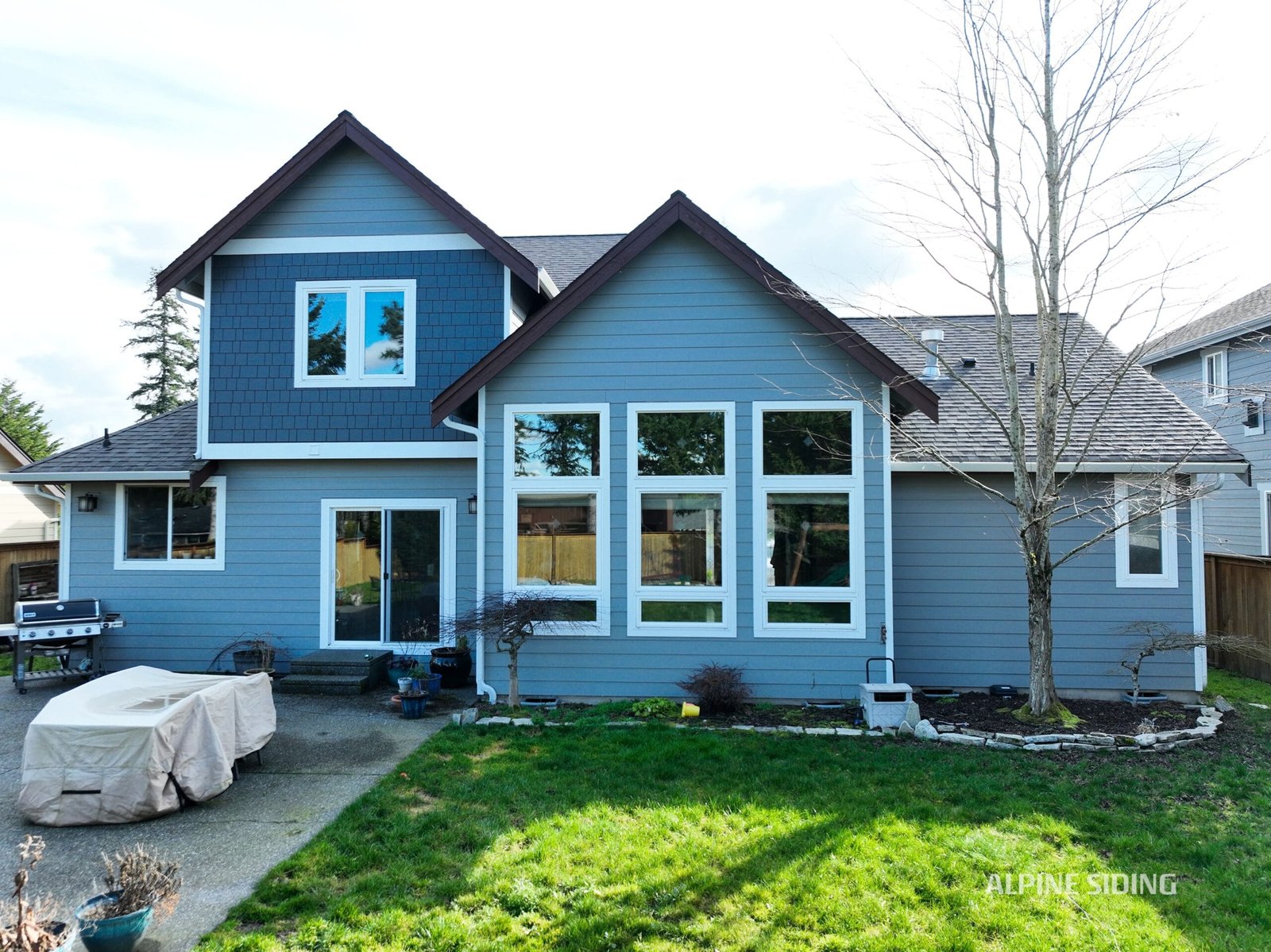
Lyman sits where the Skagit Valley starts climbing into the Cascade foothills, and that location shapes almost every roofing decision here. Homes are tucked under fir and cedar canopy more often than out on the open flats near Mount Vernon, rainfall totals run higher than the coastal towns, and winter can bring a wet snow or an ice event that the valley floor rarely sees. None of this is extreme weather by national standards, but it is a specific combination — persistent shade and moisture, occasional freeze-thaw, and a lot of standing timber overhead — that some roofing materials handle better than others. This guide walks through the options we install and repair most often in Lyman and the surrounding foothill communities, what actually holds up, and where we've seen homeowners spend money on the wrong fix.
For most Lyman properties, a algae-resistant architectural asphalt shingle or a standing seam metal roof is the more sensible choice, and the right one depends on how shaded your lot is and how long you plan to own the home. If your roofline sits under heavy conifer cover — common along the Lyman-Hamilton Highway and the wooded lots north of town — a metal roof's smooth, hard surface sheds moss and needle debris far more effectively than shingles ever will, and it holds up well through the region's wetter winters. If your lot gets reasonable sun exposure and you want a lower upfront cost, a algae-resistant (copper- or zinc-granule) architectural shingle is a solid, proven choice that performs well for a couple of decades with routine moss control. Cedar shake has real aesthetic appeal in a wooded, rural setting like Lyman, but it demands more upkeep than most owners want to commit to given the shade and moisture here. We'll walk through why below, material by material, with the honest tradeoffs — not just the sales pitch.
Roofing reviews that don't account for local conditions aren't much use, so here's what we actually weighed for a foothill town like Lyman:
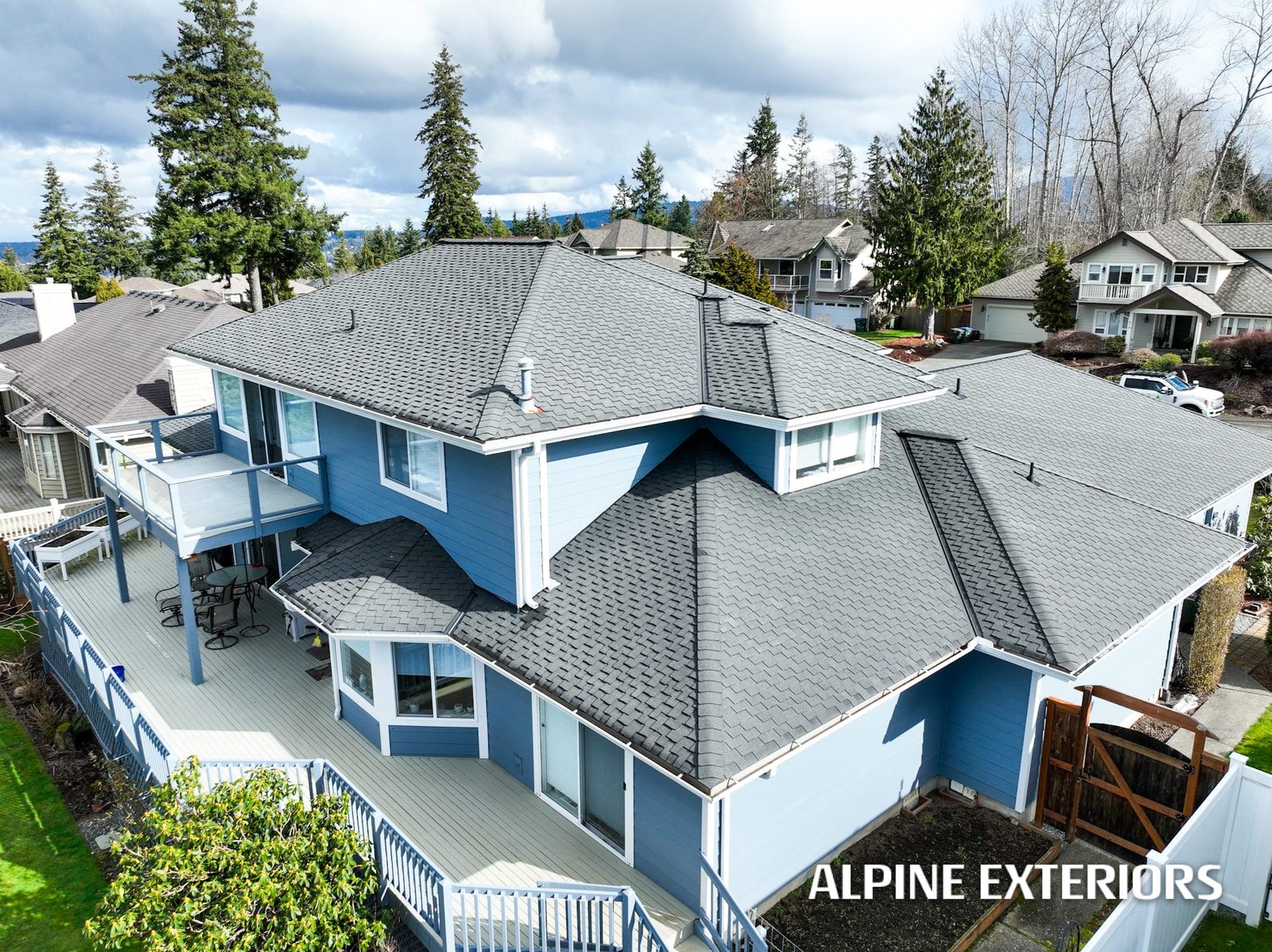
Architectural (dimensional) asphalt shingles remain the most common roofing material we install in and around Lyman, and for good reason — they're a known quantity, widely available, and reasonably priced. Look specifically for algae-resistant shingles, which use copper or zinc granules to slow moss and algae growth; on a standard shingle, shaded Lyman roofs can show moss within a few years, while algae-resistant lines noticeably extend that window.
Metal roofing has become increasingly common on newer builds and remodels around Lyman, and it's often the better long-term answer for heavily shaded, tree-covered lots. The smooth panel surface gives moss spores far less to grip onto, and snow and rain both shed off a metal roof more readily than off a textured shingle surface, which reduces the standing-moisture conditions that let moss establish in the first place.
Cedar has an obvious appeal in a heavily wooded area like Lyman — it fits the rural, forested character of the town, and Western red cedar is a regional material with a long history in this valley. That said, we install less of it than we used to, and we're honest with clients about why.
Synthetic shingles — engineered from polymer or rubber composites to mimic slate or shake — have shown up more in this region over the past several years, and they're worth a look for Lyman properties that want a shake-like look without cedar's maintenance load.
A few choices come up in Lyman that we'd steer most homeowners away from. Unrated, builder-grade three-tab shingles are still sold as a budget option, but they hold up noticeably worse under this area's moss pressure and shorter freeze-thaw cycles than an architectural, algae-resistant product, and the price difference rarely justifies the shorter lifespan. We'd also caution against any roofing assembly installed without attention to ridge and soffit ventilation — skipping proper ventilation doesn't just risk a Washington State Energy Code compliance issue, it also traps moisture in the attic, which accelerates sheathing rot and interior moss-related staining, especially under Lyman's tree cover. Finally, be wary of any contractor recommending a full tear-off and reroof without first inspecting the decking and ventilation — on older Lyman homes, the underlying structure is often the real issue, and a new roof over compromised sheathing won't last regardless of the material on top.
On a shaded lot, plan on inspecting for moss at least once a year, typically after the wet season, and treating or physically removing growth before it works under shingle edges. Sun-exposed roofs can often go longer between treatments, but given how much of Lyman sits under tree cover, annual attention is the safer default regardless of material.
Lyman doesn't need the heavy-snow-load engineering you'd see higher in the Cascades, but because it's closer to the foothills than the valley floor, it does see occasional wet snow and freeze-thaw cycles that the coastal parts of Skagit County rarely get. We recommend ice-and-water shield underlayment at eaves and valleys on any reroof here, regardless of which finish material you choose.
It depends on your timeline and your lot's shade level. On a heavily wooded property where moss and moisture are constant issues, the extra upfront cost of metal often pays for itself in reduced maintenance and a much longer service life. On a more open, sun-exposed lot, a quality algae-resistant asphalt shingle can be a perfectly reasonable and less expensive choice.
Any reroof or new construction in Washington needs to account for the Washington State Energy Code's insulation and ventilation requirements, which affect how your attic is vented and how the roofing assembly is detailed at the ridge and soffits. This is worth discussing with your contractor before work starts, since retrofitting ventilation after the fact is more disruptive than planning for it upfront.
Every Lyman property is a little different — how much shade it gets, how old the decking is, whether the attic is properly vented — and that's usually more important to the right roofing decision than any general ranking of materials. Alpine Exteriors has worked on homes throughout Skagit, Island and Whatcom counties, from the open flats around Mount Vernon and Burlington to the wooded foothill lots near Lyman and Sedro-Woolley, and we're licensed in Washington under contractor license ALPINI751OW. If you'd like a straightforward, on-site look at your roof's condition and an honest recommendation rather than a one-size-fits-all pitch, reach out to Alpine Exteriors for an assessment.



