
If you're seeing damp insulation, dark streaking on your roof sheathing, or water beading on the inside of a skylight in a home near Edison, the most common cause is an attic that isn't moving enough air, not a leak. Fix the airflow path first — intake at the eaves, exhaust at the ridge, and a skylight that's properly flashed and insulated around its shaft — and most of the moisture problems homeowners blame on "old roofs" or "bad windows" clear up on their own.
That doesn't mean every case is a ventilation problem. Roof leaks, plumbing vent leaks, and bathroom fans that dead-end in the attic instead of venting outside all mimic the same symptoms, so a proper diagnosis matters before anyone starts cutting vents or replacing a skylight.
Warm, moist air rises. In a Skagit County house, that air comes from cooking, showers, laundry, breathing, and — this time of year especially — from wet firewood, mudrooms, and boots drying by the door. If that air finds its way into the attic through can lights, bath fan ducting, attic hatches, or gaps around plumbing stacks, and the attic itself is cold and poorly vented, the moisture condenses on the first cold surface it hits. That's usually the underside of the roof sheathing, the nails poking through it, or the metal flashing around a skylight curb.
A correctly built attic has two things working together: an air barrier at the ceiling plane that keeps household moisture out of the attic in the first place, and a ventilation path that flushes out whatever moisture does get in before it can condense. The Washington State Energy Code sets minimum net free ventilation area for attics — generally a ratio of attic floor area to vent opening, with a reduced ratio allowed when at least half the vent area is high (ridge or gable) and half is low (soffit), and a vapor retarder is installed on the warm side of the ceiling. In practice this means soffit vents that are actually open — not painted shut or blocked by insulation baffles that got kicked out of place — and a ridge or roof vent that lets that air escape at the top. Skylights complicate this because the shaft that runs from the roof down to the ceiling opening interrupts the attic's airflow and needs its own insulation and air sealing, separate from the rest of the ceiling.
Condensation on a skylight itself — beads of water on the inside of the glass on a cold morning — is usually a sign of an older single-pane or double-pane unit, or a shaft that isn't insulated to the same standard as the surrounding ceiling. It's rarely a sign the skylight is failing structurally, but it is a sign of ongoing moisture that will eventually stain the drywall around the opening if it isn't addressed.
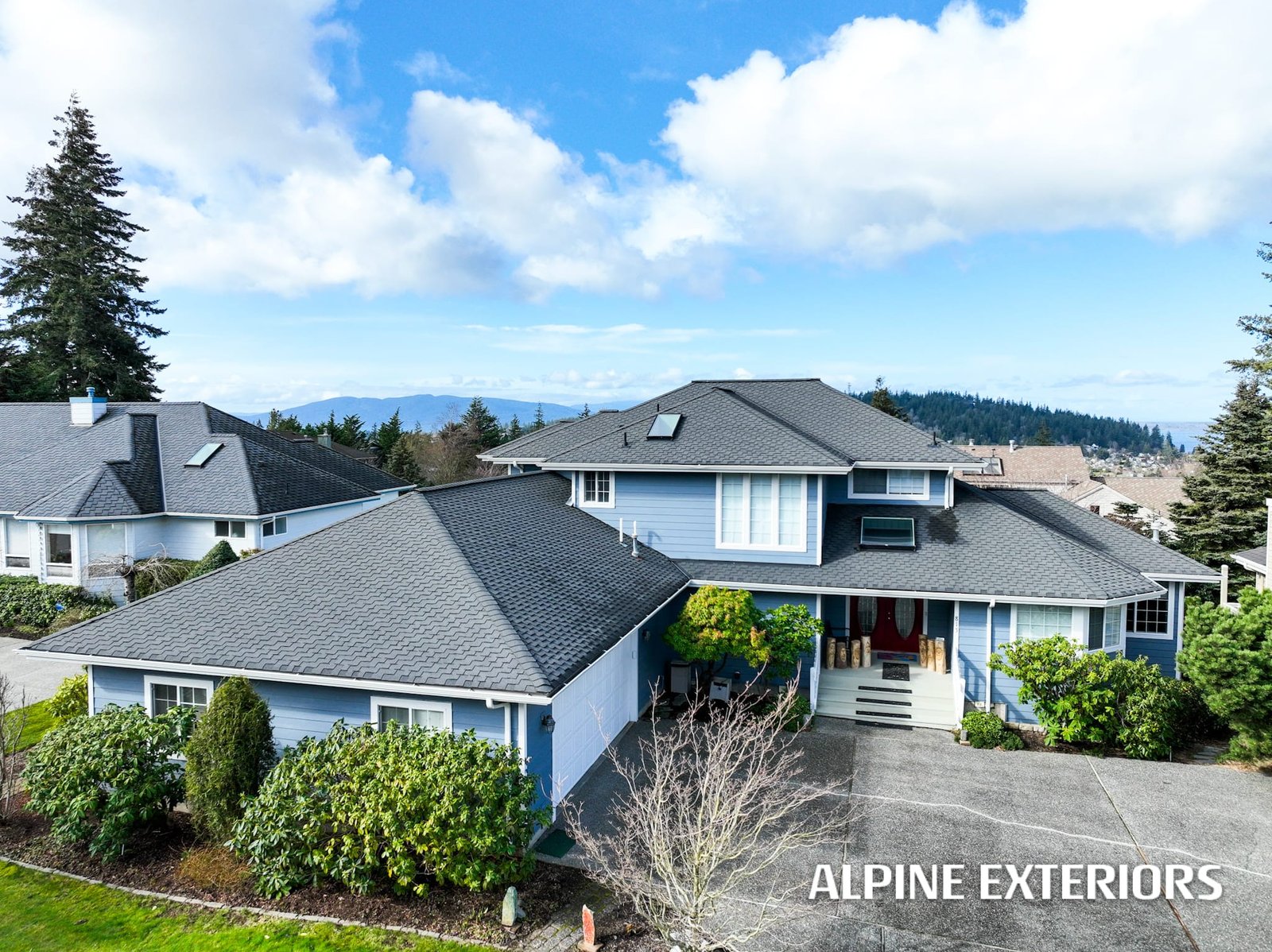
Edison sits low and open on the Skagit flats, close to Samish Bay and Padilla Bay, with very little in the way of hills or windbreaks between the farmland and the water. That combination brings a few conditions we plan around specifically:
None of this is exotic — it's the normal working condition for a coastal-adjacent farming community in the Pacific Northwest. But it does mean a ventilation or flashing detail that performs fine in a drier or more sheltered part of the state can underperform out here.
Start with a look, not a purchase. Most attic moisture problems are diagnosable by someone who knows what they're looking at, and the fix is often cheaper than homeowners expect once the actual cause is identified.
Alpine Exteriors walks attics and roof lines across Skagit, Island and Whatcom counties regularly enough to know the difference between a cosmetic issue and one that's actively damaging the structure, and we'd rather tell a homeowner "you don't need a new roof, you need three more soffit vents" than sell a bigger job than the house actually needs.
No. Condensation forms when warm, moist household air reaches a cold surface inside a poorly ventilated attic, and it can look very similar to a leak — dark staining, damp sheathing, even dripping on a cold enough morning. A roofer or inspector needs to check for an actual water entry point versus a ventilation and air-sealing issue before assuming the roof itself has failed, because the fixes are completely different and one is far less expensive than the other.
That's almost always condensation on the interior glass surface, caused by warm indoor air meeting a cold pane, often made worse by an under-insulated skylight shaft. It's uncomfortable and can eventually stain the surrounding drywall if it drips regularly, but it's a different problem than a flashing leak, and it's usually solved by improving insulation around the shaft or, in older units, upgrading the glazing.
Moss holds moisture against the roofing material longer than a bare, sun-exposed roof would, which can shorten shingle life over time and adds to the overall moisture load a roof and attic have to manage — especially on shaded lots toward the wooded edges of Edison and Bow. It's not usually an emergency, but it's worth addressing with proper removal and a look at what's keeping that section of roof shaded and damp longer than the rest.
The Washington State Energy Code sets a minimum ratio of vent opening to attic floor area, with a reduced ratio allowed when the vents are split between high (ridge or gable) and low (soffit) locations and a vapor retarder is present on the ceiling. The right number for a specific house depends on its attic size, existing vent count, and roof design, so it's worth having someone measure your actual attic rather than guessing from a rule of thumb.
If you're dealing with a damp attic, a foggy skylight, or moss that keeps coming back on a shaded roof anywhere from Edison and the Skagit flats out to Anacortes, La Conner, Mount Vernon or Bellingham, it's worth having someone look at the whole system — roof, ventilation and skylight — rather than patching one symptom at a time. Alpine Exteriors is a licensed Washington contractor (ALPINI751OW) serving Skagit, Island and Whatcom counties, and we're glad to walk your attic, explain what we find in plain terms, and give you options that match what your house actually needs.