

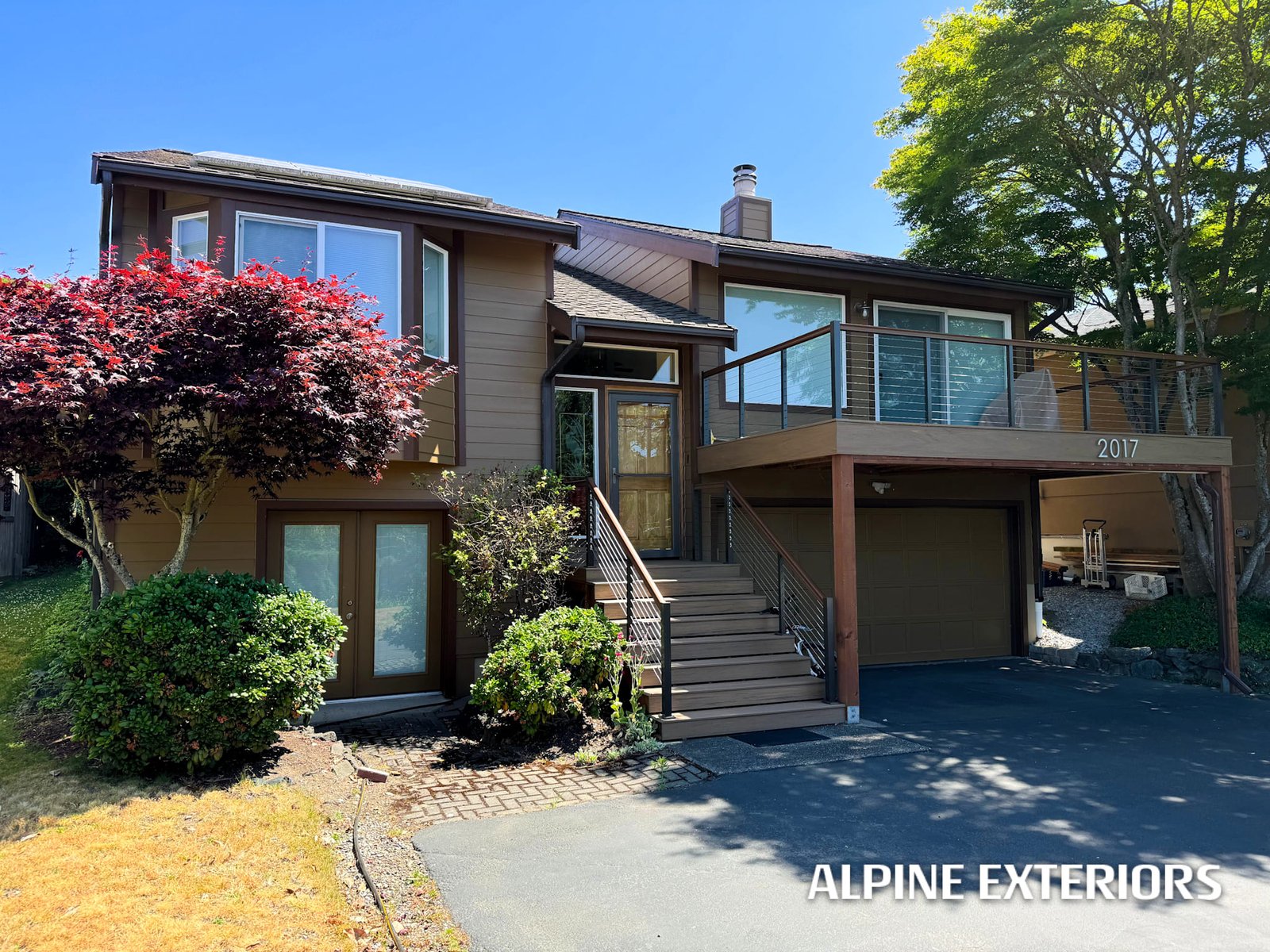
After a windstorm moves through Conway, check your roof, gutters and windows from the ground first, photograph anything that looks wrong, and get a written inspection before you sign anything with an insurance adjuster or a contractor. Most storm damage here comes from wind-driven rain finding a weak point and from tree limbs coming down on roofs, gutters and siding, not from the wind itself tearing a house apart.
Conway sits low in the Skagit River floodplain between Mount Vernon and Stanwood, right where the valley funnels wind off the open farmland to the west. That funneling effect is the part people underestimate. A storm that barely ruffles trees in a sheltered neighborhood up in Sedro-Woolley can hit a Conway rooftop broadside because there's nothing between the field edge and the eaves to slow it down. The damage that follows is rarely dramatic. It's a handful of lifted or cracked shingles at a hip or ridge, a gutter section pulled loose where wind got under it, or a section of ridge cap that's been walking loose for two winters and finally gave way.
The bigger contributor, honestly, is the trees. Conway and the lower valley have a lot of mature cottonwood, big-leaf maple and alder along the river corridor and old fence lines, and those species drop limbs in wind more readily than fir or cedar. A limb doesn't need to be huge to do real damage — a branch the size of a fence post falling from twenty feet can crack composition shingles, dent gutters, or punch through an older skylight. After a storm, walk the yard and look up before you look at the roof. If you see fresh breaks in the canopy over the house, assume something landed on the roof even if you can't see it from the ground.
Rain is the third piece, and it's the one that causes the most expensive damage precisely because it's invisible for weeks. Skagit Valley winters deliver sustained, soaking rain rather than short bursts, and wind-driven rain finds any gap that opened during the storm — a lifted shingle tab, a nail that backed out, flashing that pulled a quarter inch away from a chimney or dormer. Water doesn't need a hole to get in; it needs a path, and a storm creates paths that don't show up as a stain on the ceiling until the insulation above it has been wet for a month.
Conway isn't a hurricane zone and isn't rated for the kind of wind-mitigation programs you'd see in a coastal hurricane state, so none of that applies here — there's no wind mitigation inspection form or storm-shutter credit to chase. What actually matters locally is a different set of conditions:
None of this is coastal salt-air corrosion or hurricane wind loading — Conway is inland on the flats, not on the Sound or the Strait, so that's not the risk profile to plan around. The risk here is moisture management on an older roof system that's been carrying moss and shade stress for years, hit by a wind event that finds its weakest point.
Start with a ground-level walk of the property, not a ladder. Look for shingle pieces or granules in the gutters and on the lawn, gutters hanging at an odd angle, siding that's visibly cracked or pulled away, and any limb contact with the roof or a window. Take photos with a wide shot and a close-up of anything that looks off, and note the date. If you have gutters full of debris after the storm, that's worth clearing regardless — a clogged gutter during the next rain event will overflow behind the fascia and start a rot problem that has nothing to do with the original storm.
If you suspect roof damage, don't get on the roof yourself, especially if it's wet or mossy — that combination is genuinely dangerous and it's not worth the fall risk to confirm what a contractor can check safely. Call for a professional inspection instead. A reputable contractor should walk the roof, check flashing at every penetration (chimney, vents, skylights), check the ridge and hips, and give you a written summary of what they found, not just a verbal pitch for a full replacement.
On the insurance side, most homeowner policies in Washington cover sudden wind and impact damage — a limb through the roof, wind-lifted shingles — but they typically don't cover damage that built up gradually from years of neglected moss or a slow leak that predates the storm. That distinction matters because adjusters are trained to look for it. Document the storm date, keep any weather service records or local news mentions of the event, and get your contractor's written inspection report before or alongside the adjuster's visit. If your insurer's estimate looks low relative to what a licensed contractor found on the roof, ask for a re-inspection with your contractor present — that's a normal, expected step, not an adversarial one.
Where a repair does turn into a larger project — say a section of roof needs to be opened up, or storm-cracked windows need replacing — that's also the moment to think about code compliance rather than just matching what was there. Washington State Energy Code sets minimum insulation and window U-factor requirements for replacement work, and a contractor pulling permits for storm repair should be building to current code on the affected section, not just patching like-for-like. It's a good opportunity to tighten up an older window or roof assembly at the same time you're already paying for the repair.
Alpine Exteriors handles this kind of storm-response work across Skagit and Whatcom counties — roofing, gutters, windows and decks — and can do the inspection, document the damage for your claim, and carry out the repair under WA contractor license ALPINI751OW. Get more than one inspection if you're not confident in the first one; a second opinion costs you nothing but time and it's the best check against either an inflated repair scope or a lowballed insurance estimate.
Fresh storm damage tends to be localized and sudden — a cluster of lifted or cracked shingles near a ridge or hip, a dented or torn gutter section, debris in the yard that matches missing roofing material. General wear looks different: curling shingle edges spread evenly across a slope, moss coverage that's been building for seasons, or granule loss that's consistent rather than concentrated. If you're not sure which you're looking at, that's exactly the kind of call a written inspection is for — a contractor can usually tell the difference on sight, and it matters for your insurance claim.
In most standard Washington homeowner policies, sudden damage from a falling limb during a storm is covered, since it's an abrupt, identifiable event rather than gradual deterioration. Coverage details vary by policy and carrier, so this isn't a guarantee for your specific plan — check your policy language and talk to your adjuster. What helps your claim regardless of carrier is documentation: photos, the storm date, and a contractor's written inspection describing exactly what happened.
Shaded, north-facing roof sections in Conway — especially under mature trees along the river corridor — stay damp longer than sun-exposed slopes, and moss takes hold in that moisture. Moss holds water against the shingle surface, which makes the material more brittle over time and less able to flex under wind load or limb impact without cracking. Moss removal and a periodic roof cleaning aren't cosmetic extras here; they're part of keeping a roof resilient before the next storm rather than after.
That depends on the roof's age, how localized the damage is, and what an inspection turns up once the affected area is opened up. A roof with years of useful life left and an isolated impact point is usually a straightforward repair. A roof that was already near the end of its service life, with moss damage and brittle shingles across multiple slopes, may make a full replacement the more sound long-term choice even if the storm only touched one section. A contractor who's honest with you will tell you which situation you're in rather than defaulting to the bigger job.
If a recent storm left you with a damaged roof, torn gutters or a cracked window in Conway or anywhere in the Skagit, Island or Whatcom county service area, Alpine Exteriors can inspect the damage, document it for your insurance claim, and get the repair done right. Reach out for a straightforward, no-pressure assessment before you commit to a claim or a contractor.



