
Edison sits out on the Skagit flats, a few minutes from Samish Bay and the sloughs that drain into Padilla Bay, surrounded by farmland with almost nothing to break the wind. That combination of open exposure, damp marine air, and a genuinely wet winter makes roofing choices here a little different than they'd be a few miles inland in Sedro-Woolley or up in the Bellingham foothills. This guide walks through what actually holds up on Edison roofs, what we've seen fail early, and how to think about the tradeoffs before you commit to a material.
For most Edison homes, a heavyweight architectural asphalt shingle rated for high wind is the sensible default — it balances cost, wind performance, and ease of repair, and it's what most roofing crews in Skagit County are set up to install and warranty correctly. If your home sits fully exposed to the flats with nothing around it to cut the wind, or you're planning to stay in the house for decades and want to minimize maintenance trips up a ladder, standing seam metal earns its higher upfront cost through wind performance and moss resistance. If your lot is shaded by big-leaf maple or fir and moss has been a recurring headache on a previous roof, a synthetic composite shingle or shake gives you the look of cedar with a lot less upkeep. Straight cedar shake still has a place here for homes where the look matters more than anything else, but it asks for more attention than most owners want to give it.
We weighed each option against the conditions that actually show up on an Edison roof over a normal Skagit Valley winter, not generic national ratings:
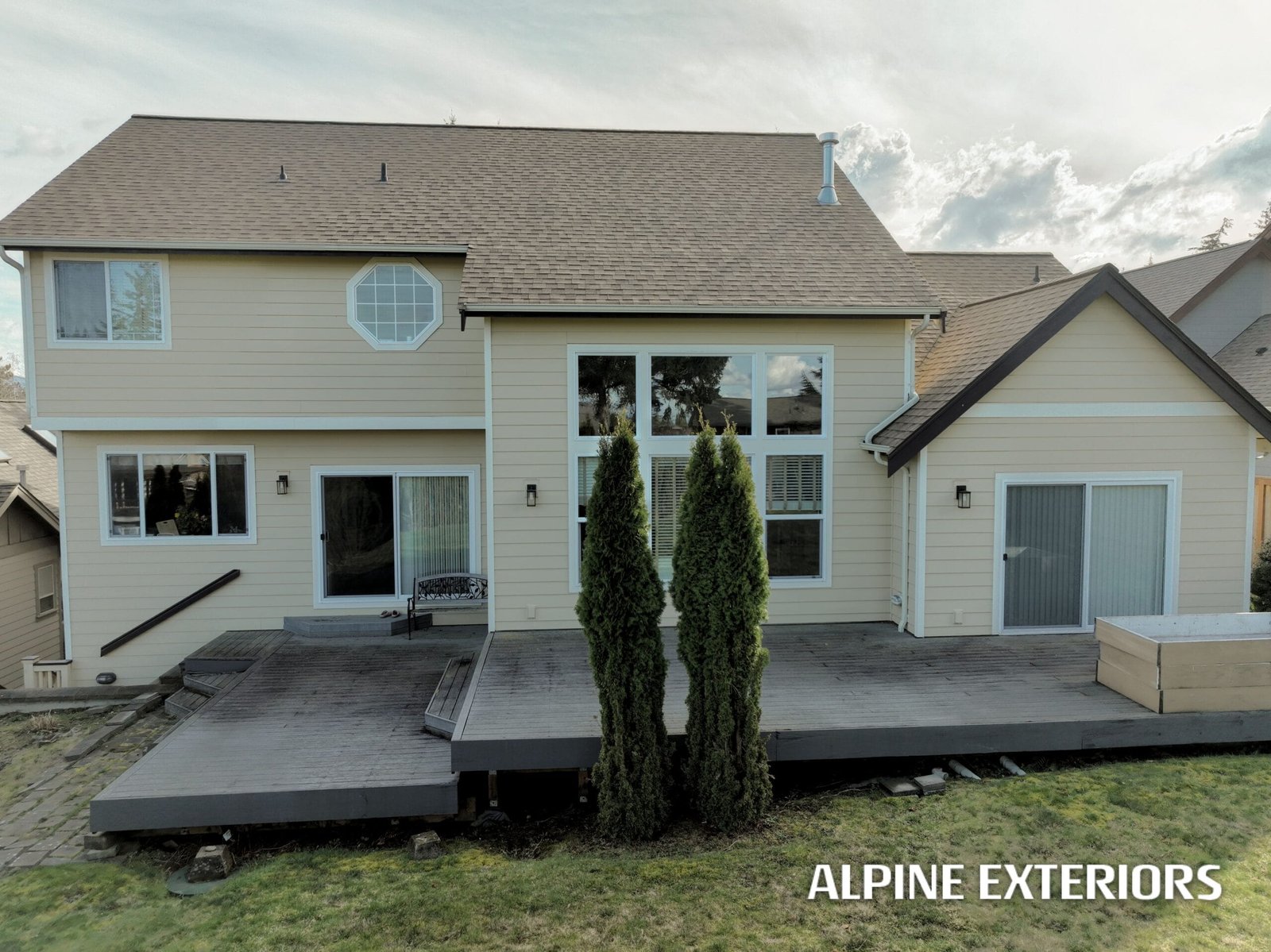
This is the roof on the majority of homes in Mount Vernon, Burlington and out here in Edison, and for good reason. A good architectural shingle rated for high wind — look for a Class F or comparable rating and confirm the fastening schedule matches an exposed-lot installation — handles the gusts off the flats reasonably well when it's installed with the right nailing pattern and starter strips. Cost sits in the middle of the pack, roughly a third to half the price of standing seam metal for a comparable roof, and almost every insurer and lender is familiar with it. The honest downside is moss: asphalt granules give algae and moss something to grab onto, and on a shaded Edison lot you'll likely need periodic soft-washing or zinc/copper strip treatment to keep growth in check. Shingles also have the shortest realistic lifespan of the options here, typically landing in the 20-to-30-year range in this climate rather than the higher end of manufacturer claims, which assume drier climates.
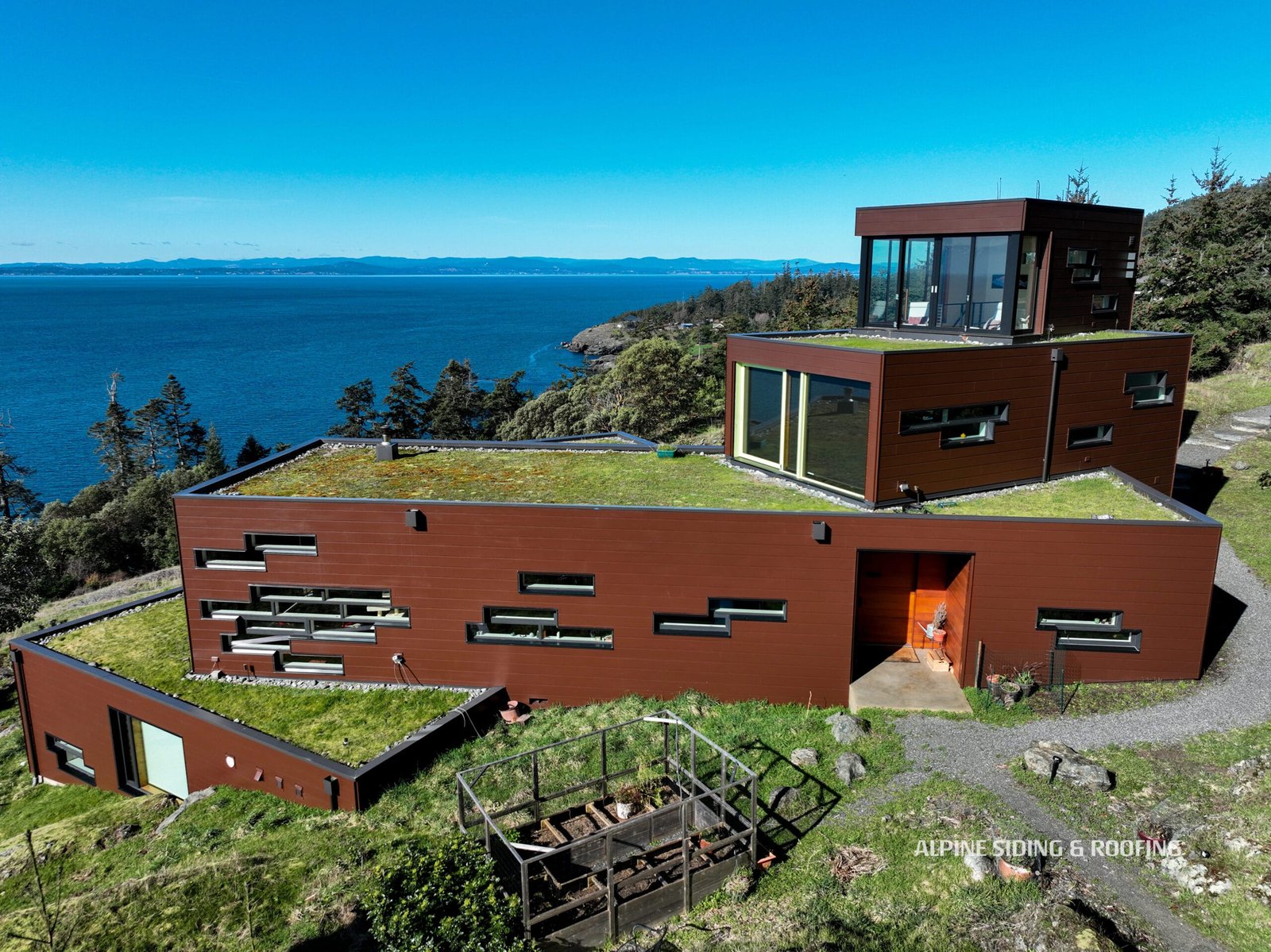
Metal is the strongest performer against wind of anything on this list, which matters on a flat, exposed lot with no windbreak. Properly installed standing seam sheds moss far better than shingles or wood because there's no granulated surface for spores to colonize, and it handles the steady rain of a Skagit winter without the freeze-thaw wear that affects a Bellingham foothill roof with more frequent ice. It's also the most energy-code-friendly option when paired with proper venting, since metal roofs are compatible with vented nail-base or standing-seam-over-purlin assemblies that satisfy the Washington State Energy Code's ventilation requirements without much extra work. The tradeoffs are real, though: it costs meaningfully more upfront than shingles, it's noisier in a hard rain unless you add a solid substrate underneath, and repairs after storm damage or a satellite dish install require someone who actually knows standing seam — not every general roofer does clean metal work.
These are polymer or rubber-composite products molded to look like cedar shake or slate, and they've gotten genuinely good over the last several years. They resist moss better than real cedar, hold up well to wind when installed with the manufacturer's clip system, and don't need the periodic treatment cedar does. For a shaded Edison property where you want the traditional Pacific Northwest shake look without babysitting it, this is often the best-value pick. The downside is upfront cost — it runs close to or sometimes above standing seam metal depending on the product line — and the market is newer, so warranty terms and manufacturer track records vary more than they do for asphalt or metal. Ask for the specific product's wind rating and confirm your installer has laid that exact system before.
Cedar has deep roots in this region and still looks right on a lot of Skagit Valley farmhouses and older homes. Untreated or poorly maintained cedar is also the single fastest path to a moss problem we see in this area — the wood itself holds moisture, and on a shaded Edison lot near the sloughs it can start growing moss within a few years without regular cleaning and a fire-retardant/preservative treatment. Cedar also has the shortest realistic lifespan of any option here in a consistently wet climate, and treatment and moss removal add an ongoing cost that a lot of owners don't budget for upfront. It's a legitimate choice for a fully sun-exposed roof with good airflow and an owner willing to maintain it, but it's the option we recommend with the most caveats.
It depends heavily on how shaded your lot is. A roof under maple or fir cover near the sloughs may need moss treatment or gentle removal every one to two years, while a fully sun-exposed roof out on open farmland might go three to five years between treatments. Zinc or copper strips near the ridge can slow regrowth between cleanings on any material.
Not directly in terms of picking shingles versus metal versus cedar, but it does set requirements for attic insulation and ventilation that your roof assembly has to work with. A roofing contractor who understands how your chosen material interacts with baffles, vents and insulation depth will keep you code-compliant and help avoid trapped moisture underneath the roof deck.
It can, if the installation doesn't match the wind rating the manufacturer requires for an exposed site. Most shingle warranties specify a minimum nailing pattern and sometimes a higher-wind-rated product line for open, unsheltered lots — worth confirming with your installer before work starts rather than after a claim is denied.
A typical single-family roof tear-off and replacement takes two to four days of actual work once started, but scheduling around a Skagit Valley winter often means building in extra flexibility, since crews won't tear off a roof deck with heavy rain in the forecast. Late spring through early fall is generally the most predictable window, though a lot of reroofing still happens successfully in the shoulder seasons with the right planning.
Alpine Exteriors has worked on homes across Skagit, Island and Whatcom counties, including plenty of properties out on the flats around Edison, Bow and La Conner where wind exposure and moisture are the two things a roof has to get right. We'll walk your specific lot, talk through which of these materials actually fits your budget and maintenance appetite, and make sure the installation matches the wind and ventilation conditions your home actually faces rather than a generic spec sheet. Alpine Exteriors is licensed in Washington under contractor license ALPINI751OW — reach out for a straightforward, on-site look at your roof and an honest recommendation, no pressure either way.