
For most homes in Mount Vernon, Burlington, Sedro-Woolley and the rest of the Skagit valley, a metal standing-seam roof or a heavy-grade laminated composition (asphalt) shingle are the two roof types that hold up best against our long, wet winters. Metal wins on sheer water-shedding ability and lifespan in a moss-prone climate; composition shingle wins on upfront cost and on blending into the older, closer-set roof lines you see in a lot of Mount Vernon and Sedro-Woolley neighborhoods. On the islands — Anacortes, La Conner, Camano Island — salt-laden air off the Strait and Skagit Bay pushes the answer further toward metal or a well-maintained architectural shingle with corrosion-resistant fasteners, because cheap galvanized hardware degrades faster that close to salt water. Cedar shake looks right on some of the older farmhouses out toward La Conner, but it is the option that needs the most honest conversation about upkeep, which we get into below.
There is no single roof that is correct for every roofline, budget and HOA rule in Skagit, Island and Whatcom counties, so treat this as a starting point for a conversation with a roofer who has actually worked on your street — not a substitute for one.
We weighed every roofing material against the conditions that actually show up on a service call around here, not generic "best roofing materials" checklists written for a different climate.
Standing-seam metal is the option we most often recommend for homes with heavy tree cover or waterfront exposure. The long, continuous panels and concealed fasteners give water almost nowhere to sit, which matters when a roof stays damp for days at a stretch through a typical Skagit winter. Steep-pitched metal also sheds moss spores and needle debris better than a rougher-textured shingle, so north-facing roofs in Burlington or Sedro-Woolley that fight moss every year tend to stay cleaner longer under metal.
Pros: excellent water-shedding on long, steady rain events; strong wind uplift resistance when installed with proper clip spacing; sheds moss and debris better than most shingle profiles; long service life, often 40-plus years with basic upkeep; available in coatings suited to coastal exposure for Anacortes, La Conner and Camano Island homes.
Cons: the highest upfront material and labor cost of the options here; noise during heavy rain unless the assembly includes proper underlayment and decking; a poor-quality install with the wrong fastener type near salt air will corrode faster than the panel itself, so the installer's coastal experience matters as much as the product; not every HOA or historic-character neighborhood in Mount Vernon or La Conner will approve the look without discussion.
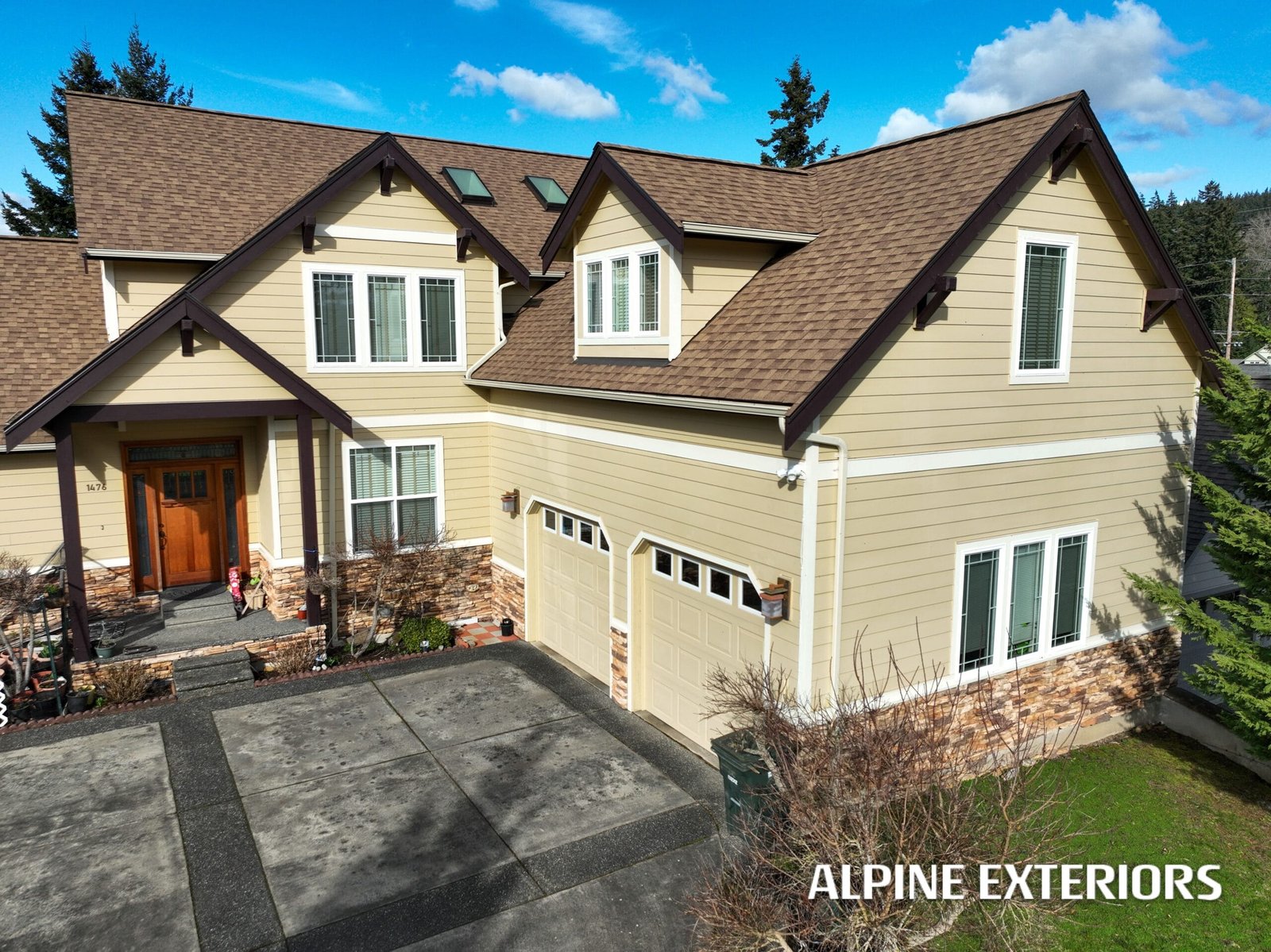
A heavier, laminated architectural shingle — not the thinner three-tab product — is the most common re-roof we install across Mount Vernon, Burlington and Stanwood, and for good reason: it's a proven, moderately priced option that most roofing crews in this region know how to detail correctly around valleys, skylights and chimneys, which matters more to a rain-tight roof than the shingle brand itself.
Pros: lower material cost than metal or cedar; wide color and style selection that matches the traditional roof lines common in older Skagit valley neighborhoods; straightforward repairs if a section is damaged by a falling limb; a wide range of local roofing crews are experienced installing and repairing it correctly.
Cons: shorter lifespan than metal, typically 20 to 30 years depending on product grade and exposure; algae and moss growth on shaded, low-slope sections requires more regular cleaning than metal; standard fasteners and flashing on lower-grade shingle packages can corrode faster on Anacortes or Camano Island homes unless upgraded hardware is specified; wind-rated versions are worth the modest upcharge for anyone on the open Skagit flats or near the water.
Cedar has real appeal on the older farmhouse-style homes around La Conner and parts of Whatcom County, and it's a natural, breathable material that can look right at home in this region when it's well maintained. But it is also the option where honesty matters most: cedar is the highest-maintenance roof on this list in a climate this wet.
Pros: distinctive, traditional look that suits older and farmhouse-style homes; naturally insulating; can be a good fit architecturally in La Conner and similar older neighborhoods.
Cons: the most moss-prone material we install in shaded, low-airflow settings, which describes a lot of tree-covered lots in Sedro-Woolley and Burlington; needs regular treatment and cleaning to resist rot given how many consecutive wet months this region sees; shorter practical lifespan than metal when maintenance lapses; higher fire-code and insurance scrutiny in some jurisdictions; generally the most expensive option to maintain over its lifespan even when the initial install cost is comparable to a mid-grade shingle.
Not every roof in Skagit or Island County is a steep pitch — porch roofs, additions and some newer modern-style homes near Anacortes and Bellingham use low-slope sections where standard shingles aren't appropriate. For those, a TPO or modified bitumen membrane is usually the right call rather than trying to force a steep-slope material onto a low-pitch deck.
Pros: purpose-built for standing water and slow drainage, which low-slope sections deal with constantly in a region with this much sustained rainfall; seamless membrane reduces leak points on flat or nearly flat sections.
Cons: not a substitute for steep-slope roofing on the main structure; membrane seams and flashing details require an installer who specifically works with low-slope systems; UV and foot-traffic damage can shorten lifespan without periodic inspection.
A few choices that work fine in drier climates cause predictable problems in Skagit, Island and Whatcom counties:
For homes with heavy tree cover, waterfront exposure, or a history of moss and leak problems, most homeowners find the added upfront cost pays off in fewer moss treatments, less repair work and a roof that outlasts a shingle re-roof by a decade or more. For a straightforward, well-ventilated roof in a less exposed spot, a quality architectural shingle can be a perfectly reasonable and more budget-friendly choice — it depends on your specific roof and site conditions.
It depends heavily on tree cover and roof pitch, but shaded roofs in Burlington, Sedro-Woolley and similar tree-lined areas generally need a moss inspection at least once a year, with treatment or removal as soon as growth appears rather than waiting until it's visibly thick. Catching it early is far less work — and far less risky for the roof deck underneath — than removing an established colony.
Yes, generally. Homes within roughly a mile or two of saltwater exposure benefit from stainless steel or specially coated fasteners and flashing rather than standard galvanized hardware, since salt air accelerates corrosion. It's a modest cost increase during installation that avoids a much costlier early repair.
Roof assemblies in this region fall under the Washington State Energy Code, which sets requirements for insulation and, indirectly, for ventilation performance as part of the whole building envelope. Local jurisdictions in Skagit, Island and Whatcom counties may layer on their own permit and inspection requirements, so it's worth confirming what applies to your specific address before work begins.
Every roofline, tree canopy and wind exposure in Skagit, Island and Whatcom counties is a little different, and the right material for a shaded lot in Sedro-Woolley isn't necessarily the right one for a waterfront home in Anacortes or La Conner. Alpine Exteriors (WA contractor license ALPINI751OW) has worked on roofs across Mount Vernon, Burlington, Sedro-Woolley, La Conner, Stanwood, Camano Island and Bellingham, and we'll walk your specific roof with you and give you an honest read on what it actually needs — not just the material we'd rather sell. Reach out to Alpine Exteriors to schedule a roof evaluation and get a real cost range for your home.