
La Conner sits where the Swinomish Channel meets open farmland, which means a roof here has to deal with two very different pressures at once: the damp, tree-shaded lots common through the Skagit Valley, and the open-water wind and salt air that comes off the channel and Puget Sound. Add in a genuinely wet winter, and the question of "best roofing" in this town has real, specific answers instead of generic ones. This guide walks through what actually holds up in La Conner, Mount Vernon, Anacortes, Burlington, Sedro-Woolley, Stanwood, Camano Island and Bellingham, and where each option falls short.
For most La Conner homes, a mid- to high-grade architectural (dimensional) asphalt shingle with an algae-resistant (AR) rating is the most sensible default. It's proven in wet, moss-prone Pacific Northwest climates, it's available in wind-rated versions that suit the open exposure of the Skagit flats, and it's the option most local roofing crews install and warranty confidently. Where a homeowner wants a longer-term investment — especially on a waterfront or channel-facing lot where salt air and wind are more aggressive — standing seam metal roofing is the other strong pick. It sheds moss almost entirely, handles wind uplift well when installed with the right clip spacing, and tends to outlast shingles by decades, at a meaningfully higher upfront cost. Everything else covered below — cedar shake, synthetic/composite shingle, and low-slope membrane for additions — has a legitimate place, but for a typical single-family home in La Conner or nearby Anacortes, those two options cover the vast majority of good outcomes. We install and service most of these systems at Alpine Exteriors, and the honest truth is that the "best" choice depends more on your roof's shade exposure, slope, and how long you plan to own the home than on any single product being universally superior.
Not every rating on a shingle wrapper is relevant in Skagit County. These are the factors that actually predict how a roof performs on a La Conner house:
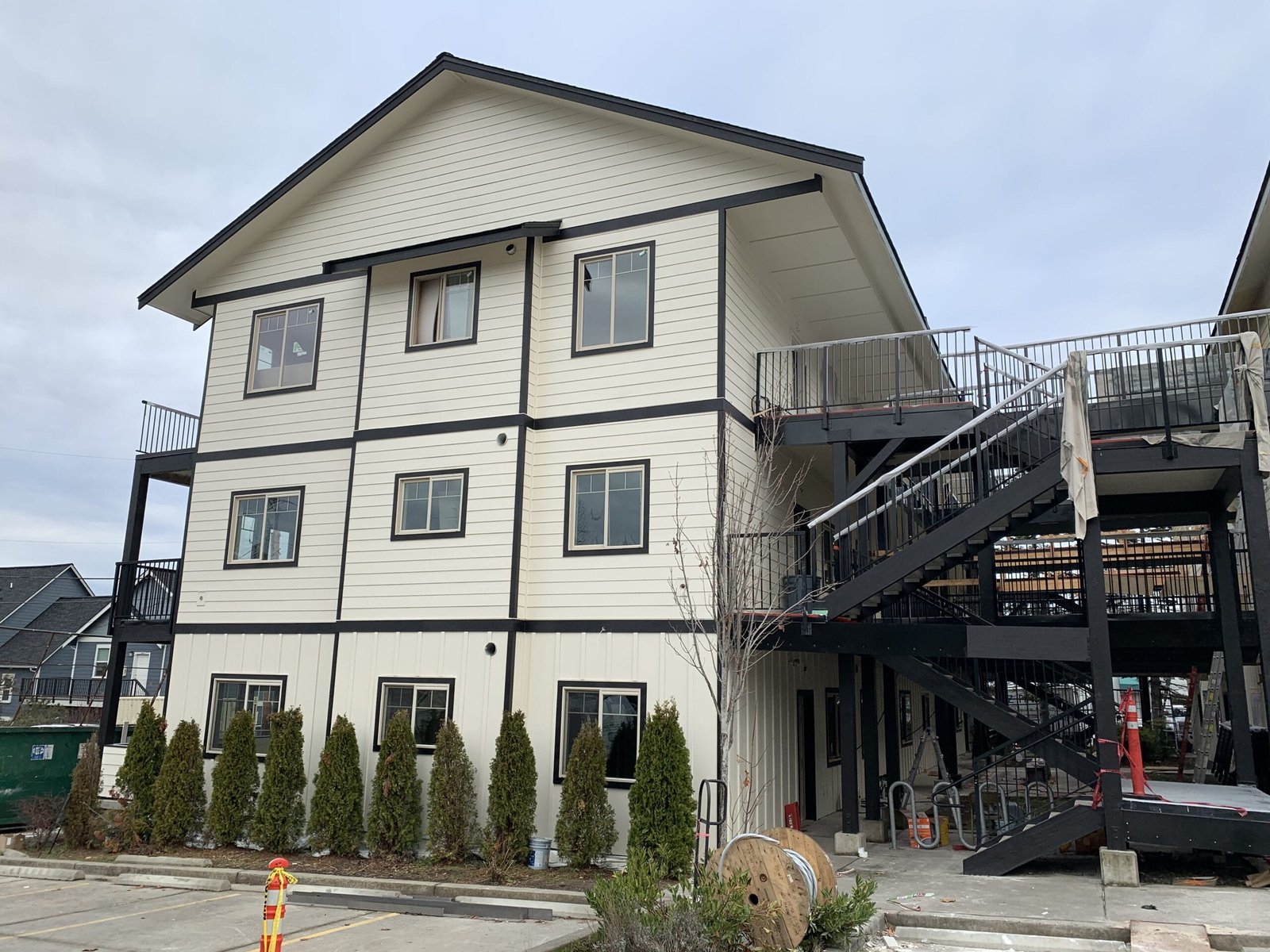
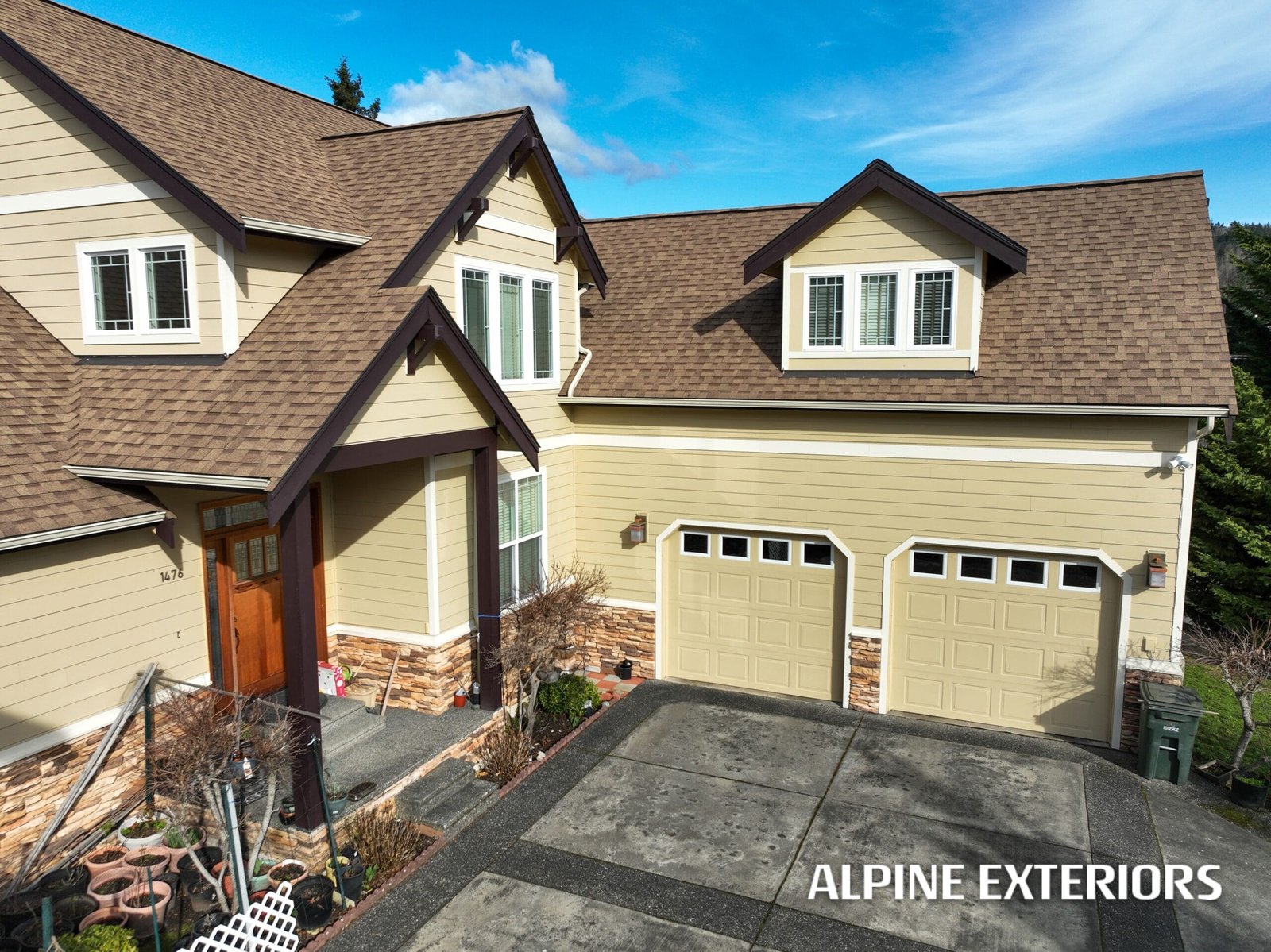
This is the workhorse choice across Skagit and Whatcom counties, and for good reason. Architectural shingles are thicker and heavier than old-style three-tab shingles, they resist wind uplift better, and most manufacturers offer algae-resistant (AR) versions with copper or zinc granules that slow moss and algae growth on shaded roofs. Installed cost typically runs in the moderate range compared to metal or cedar, and most local roofing crews, including our own, can install and repair them without any specialty sourcing.
Pros: reasonable upfront cost, wide style and color selection, good wind ratings available, straightforward repairs, AR granules genuinely slow moss regrowth on shaded slopes.
Cons: even AR-rated shingles will eventually grow moss on heavily shaded, north-facing roofs and need periodic treatment or gentle cleaning; lifespan is shorter than metal; in the wettest, most shaded lots around La Conner and Burlington, algae staining can return within a few years even on a quality product.
Still sold, still cheaper, and still installed on older homes throughout the region — but worth naming plainly as the weakest performer for this climate.
Pros: lowest material cost, simple installation, fine for a detached shed or low-stakes structure.
Cons: lower wind rating than architectural shingles, which matters on exposed lots along the Skagit flats; thinner profile sheds moisture less effectively; shortest realistic lifespan of any option here. We don't recommend it as the primary roof on a full-exposure home near the water.
Metal is the strongest performer against the two conditions that damage roofs fastest here: standing water and moss. Its smooth, continuous panels give moss almost nothing to grip, it sheds heavy rain quickly, and a properly installed system with concealed fasteners and correctly spaced clips handles wind uplift better than shingles. On salt-air lots near the channel or on Camano Island, choose a coated steel or aluminum panel system rather than bare galvanized, and confirm the fastener and flashing hardware is rated for coastal exposure.
Pros: excellent moss resistance, strong wind performance, long service life, good match for the region's rainfall.
Cons: meaningfully higher upfront cost than shingles; installation quality matters enormously — a poorly detailed metal roof can actually leak more than shingles at penetrations and valleys; can be noisier in heavy rain without proper underlayment; near-salt installations need corrosion-resistant hardware or you're trading one maintenance problem for another.
Cedar has a long history in the Pacific Northwest and still shows up on older La Conner homes and historic-district properties where the look matters. It's worth including honestly rather than dismissing it, but it's the option we recommend most cautiously in this specific climate.
Pros: authentic regional look, especially valued on older or historic homes; breathable material that can perform reasonably when well ventilated and maintained.
Cons: highest maintenance burden of any option here — cedar in a shaded, damp environment is exactly the combination that accelerates moss, moisture retention, and eventual rot; needs regular treatment and inspection; higher material and labor cost; shorter practical lifespan in wet shade than in a drier climate. For a shaded lot, we'd steer most homeowners toward a synthetic shake product instead if the cedar look is the goal.
These polymer or rubber-composite products mimic the look of cedar shake or slate without the moisture-absorption problem. They've become a reasonable middle ground for homeowners in Anacortes and Mount Vernon who want a traditional look with less maintenance.
Pros: resists moisture absorption far better than real wood, good impact resistance, often carries strong wind ratings, low ongoing maintenance.
Cons: higher cost than standard asphalt shingles; fewer local crews have deep experience with every brand, so installer familiarity is worth checking; product quality varies more between manufacturers than with asphalt shingles, so warranty terms deserve a close read.
Plenty of homes here have a low-slope porch, dormer, or addition roof that isn't suited to shingles or metal panels at all. TPO or EPDM membrane is the right tool for those sections specifically, not for a full main roof.
Pros: handles standing water and low slopes far better than shingle products, reasonably priced for the square footage involved, straightforward to repair in sections.
Cons: seams and edge flashing are the weak point and need a competent installer; not a substitute for a main roofing system on typical pitched sections; UV and foot-traffic wear can shorten lifespan if not maintained.
A few choices come up often enough in this area that they're worth flagging directly.
On a heavily shaded, north-facing roof under fir or maple cover, even a good algae-resistant shingle can show new moss growth within two to four years, and untreated wood shake can be faster than that. Sunnier, more exposed roofs go much longer between treatments. Zinc or copper strips installed near the ridge can extend the interval by slowly inhibiting regrowth as rain washes over the metal.
Yes, to a degree. It doesn't rule out any material outright, but it does mean fastener and flashing choice matters more than it would further inland. On channel-facing or waterfront lots, we recommend confirming that any exposed metal hardware, whether on a shingle or metal roof, is specified for coastal or salt-air exposure rather than standard-grade steel.
There's no single number that fits every property, since exposure varies a lot between a sheltered in-town lot and an open field-facing roof, but homeowners on more exposed sites should ask their installer for the shingle's specific wind rating and confirm the fastening pattern used matches manufacturer requirements for that rating — under-driven or missing nails void wind performance far more often than the product itself failing.
The Washington State Energy Code sets insulation and air-sealing standards for the building envelope, and proper attic or roof-deck ventilation is what keeps that insulation from trapping moisture against the underside of the roof sheathing. In our rainfall pattern, inadequate ventilation is one of the more common causes of hidden deck rot, so it's worth confirming your roofer is addressing venting as part of any full roof replacement, not just the shingles themselves.
Every one of these materials can be the right call on the right house — the honest answer depends on your roof's shade, slope, and exposure to wind and salt air, not on a single product being best for everyone in Skagit County. Alpine Exteriors is a licensed Washington contractor (license ALPINI751OW) working roofing, windows, decks and gutters throughout Mount Vernon, Anacortes, Burlington, Sedro-Woolley, La Conner, Stanwood, Camano Island and Bellingham. If you want a straightforward read on what your specific roof needs — including how much moss or wind exposure you're actually dealing with — reach out to Alpine Exteriors for an on-site look before you decide.