

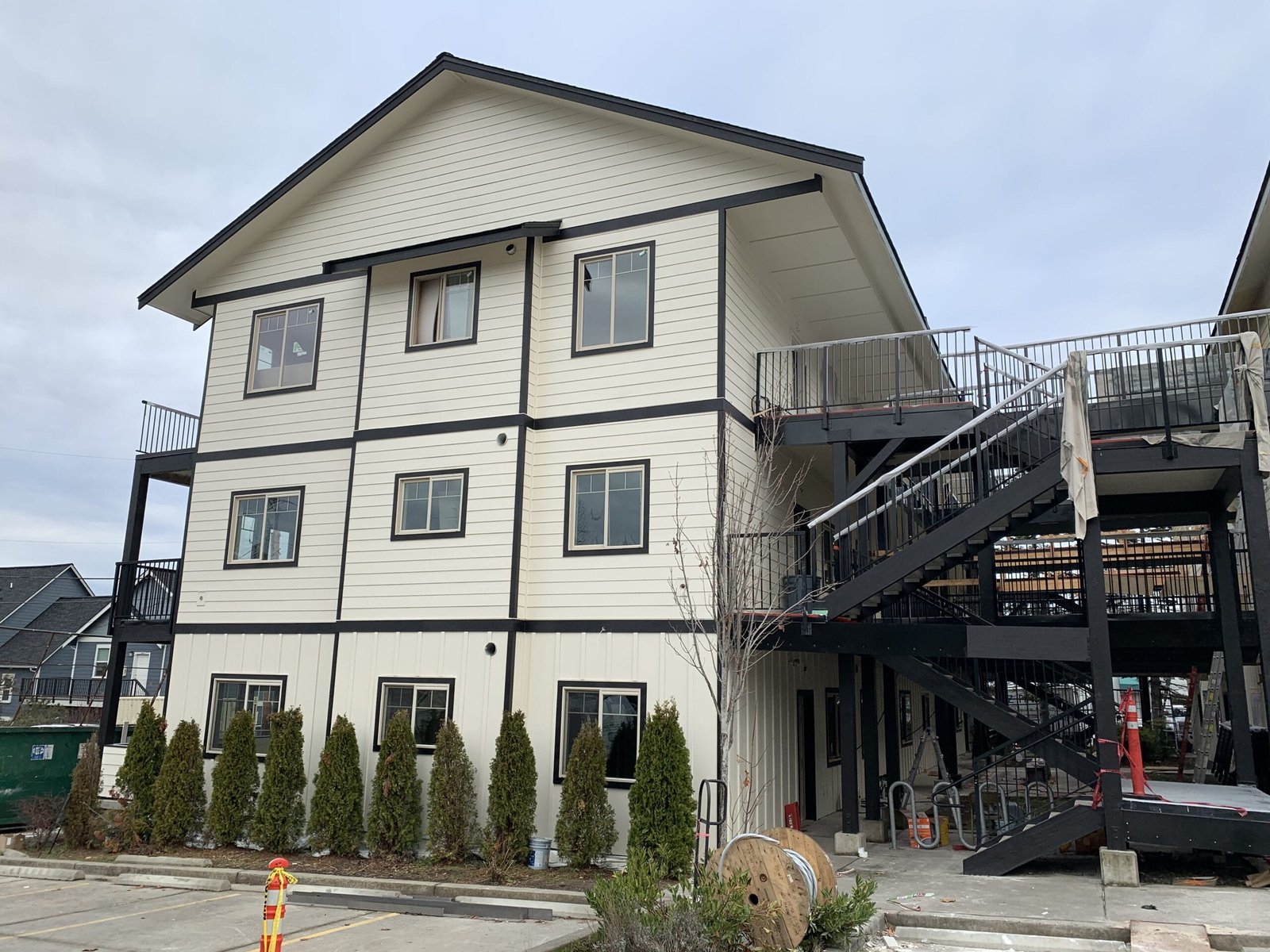
Freeland sits low on Whidbey Island, wrapped by Holmes Harbor on one side and open to weather rolling in off the Strait of Juan de Fuca on the other. That combination — salt air, wind that doesn't let up for days, and rain that can fall steadily from October through April — puts real demands on a roof that a lot of general "best roofing" guides never mention. Alpine Exteriors works on roofs across Island, Skagit and Whatcom counties, and Freeland's mix of tree cover, coastal exposure and older housing stock is its own case. This page walks through what actually holds up here, what tends to fail early, and how to think through the choice without a sales pitch attached to it.
For most Freeland homes, a heavyweight architectural asphalt composition shingle rated for high wind is the practical default — it's the best balance of upfront cost, availability of qualified installers, and performance against the wind and rain this area sees most years. For homes closer to the water, under heavy fir or cedar canopy, or where the owner is planning to stay 30-plus years and wants to stop thinking about the roof, a standing seam metal roof is usually the better long-term pick despite the higher installation cost. Synthetic composite shakes and tiles — including products like Brava — are a reasonable middle option when a homeowner wants the look of cedar shake or slate without the maintenance burden that comes with the real material in a wet climate. Real cedar shake and clay or concrete tile both have narrower cases where they make sense here, covered below, but neither is a default recommendation for this area.
There's no single "best" roofing material in the abstract — the right answer depends on what the roof has to survive and what the homeowner actually wants to manage. For Freeland specifically, we weighed each option against:
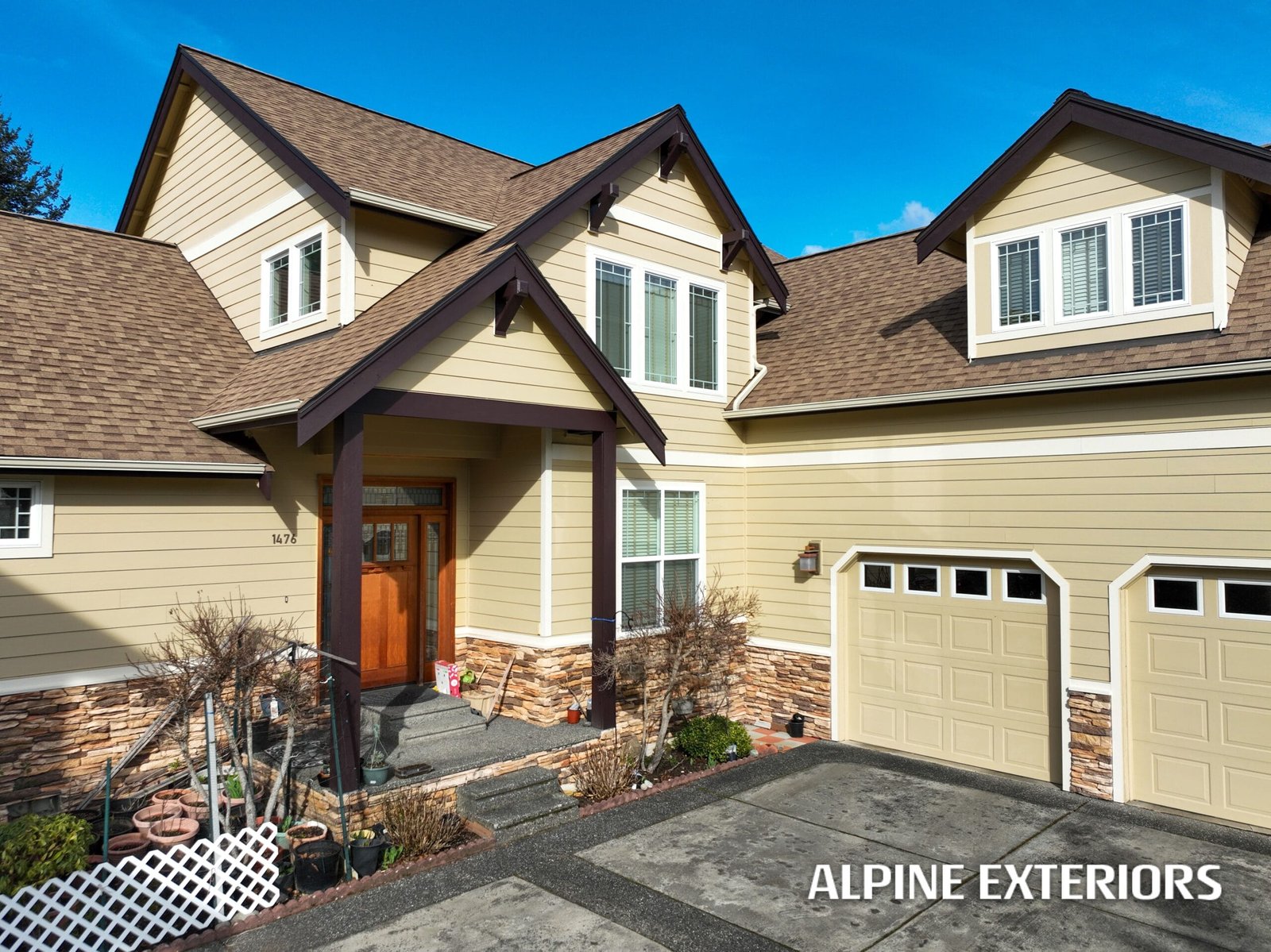
This is what's on the majority of roofs across Freeland, Langley and the rest of Whidbey Island, and for good reason. A heavyweight architectural shingle — not the cheapest three-tab product — rated for 110 to 130 mph winds handles the gusts this area sees in a typical winter storm season without curling or lifting at the edges, provided the installer nails it correctly and uses the right starter strip and ridge cap detail.
Pros: Lower installed cost than metal or tile, wide product and color selection, straightforward installation replacement when it does eventually wear out, and most licensed roofing crews in the region are well practiced with it. Insurance carriers are also familiar with asphalt shingle claims, which simplifies things if storm damage does occur.
Cons: Asphalt shingles are the material most susceptible to moss colonization in shaded, damp conditions — the algae and moss get a foothold in the granule surface and, left untreated, can shorten the roof's life by lifting shingle edges as roots work into the seams. Expect a working lifespan in the 20 to 30 year range in this climate, shorter than metal or quality composite, and the roof will likely need at least one professional cleaning or treatment cycle in its life if the lot has tree cover.
Metal roofing has become a lot more common on newer builds and remodels on Whidbey Island over the past decade, and it's worth the look for anyone planning to stay put. The panels shed rain and snow fast, which matters both for the steady winter rain and for the occasional wet snow or ice that reaches the island's higher ground.
Pros: Long service life, often 40 to 50-plus years with a good coating, strong wind uplift resistance when installed with the correct clip spacing, and a smooth surface that gives moss far less to grip onto than a shingle's textured surface. It also plays well with the Washington State Energy Code when paired with proper attic or roof-deck insulation, since the reflective coatings available on many panel products help with cooling-season heat gain, even though heating load dominates here more than cooling load does.
Cons: The installation cost is meaningfully higher than asphalt — often two to three times as much upfront — and not every roofing crew in the region does standing seam well, so it's worth confirming a contractor's specific metal roofing experience rather than assuming general roofing know-how transfers directly. Near the water, fastener and flashing material needs to be chosen carefully; the wrong metal combination can lead to galvanic corrosion in a salt-air environment faster than most homeowners expect.
Composite roofing products, including Brava roof tiles, are engineered to mimic the look of cedar shake or slate while resisting the rot, splitting and moss uptake that make real wood shake a poor fit for this climate. They're a genuinely good option for a homeowner who wants that traditional Pacific Northwest shake look on a home in La Conner, Coupeville or Freeland without accepting real cedar's maintenance schedule.
Pros: Good wind ratings, resistance to moisture absorption that keeps moss and algae from taking hold as readily as they do on wood, and a long product warranty on most quality composite lines. They also hold up well to the freeze-thaw cycles the region sees during the occasional cold snap, without the cracking risk that clay tile carries.
Cons: Cost sits close to or above metal roofing depending on the product line, and the range of installers who are certified or experienced with composite shake systems in this part of Washington is smaller than for asphalt. It's a strong option, but it's a specialty install — get references specific to the product, not just general roofing experience.
Real cedar shake looks the part of a Pacific Northwest home, and it's genuinely traditional in this region, but in a climate with this much sustained moisture and this much tree shade, untreated or poorly maintained cedar shake is one of the fastest roofs to develop moss, rot and eventual leaks. If a homeowner wants that look, the composite alternatives above deliver it with far less upkeep — real cedar shake is only a sound choice with a disciplined annual maintenance and treatment schedule, and most homeowners underestimate that commitment.
Clay and concrete tile are also worth a caution here, not because they perform poorly against rain, but because most Freeland-area homes weren't framed to carry tile's weight without structural reinforcement, and the freeze-thaw cycles during an occasional cold snap can crack unglazed tile over time. It's not that tile can't work — it's that it usually adds structural cost that erases any advantage over metal or composite.
Lightweight three-tab shingles, the cheapest asphalt option, are also worth avoiding on anything close to the water or in an open, wind-exposed lot. They're rated for lower wind speeds than architectural shingles and tend to be the first roofs to lose material in a strong winter blow. The cost difference versus a heavyweight architectural shingle is small enough that it isn't worth the added risk.
Before work begins, a reputable contractor inspects the existing roof deck, not just the shingles on top of it, since a lot of moisture damage in this climate happens at the decking level under an otherwise intact-looking roof. From there, the typical sequence runs:
A well-run job also includes clear communication about arrival time and daily progress, since Island County's weather windows for roofing work can close quickly in the wet season and a homeowner deserves to know if a storm is pushing the schedule.
Not every roofing question in Freeland is about full replacement. Wind off the Strait can lift shingle tabs, tear off ridge cap, or drive rain up under flashing during a hard blow, and homeowners across the island deal with storm damage repairs every winter. If a roof leak shows up after a storm, documenting the damage with photos before any tarping or temporary repair helps considerably if an insurance claim follows. Most homeowners insurance policies in Washington cover sudden storm damage, though coverage details and deductibles vary by carrier, so it's worth calling the insurance company early in the process rather than after repairs are already underway. A contractor who's handled insurance claims before can usually provide the kind of documentation an adjuster expects, which speeds up approval.
For a suspected leak that isn't obviously storm-related, the honest advice is: don't wait. A slow leak in this climate, where the roof rarely gets a long dry stretch to reveal or self-limit damage, can soak insulation and framing for months before it shows up as a ceiling stain. Getting someone out to inspect the roof and trace the source, even a modest repair, is almost always cheaper than the deck and interior repair bill that follows a delay.
Because moss and moisture are the defining threat to roofs in this part of Washington, cleaning deserves its own mention rather than a footnote. A proper roof cleaning uses low-pressure rinsing and appropriate treatment products rather than a pressure washer, which can strip granules off asphalt shingles and shorten the roof's life faster than the moss it was meant to remove. Zinc or copper strips installed near the ridge can help slow moss regrowth between cleanings by letting rain carry trace metal down the roof slope, though they're a supplement to cleaning, not a replacement for it. Homes under heavy tree cover in Freeland should plan on inspection and, if needed, cleaning every one to two years; homes in more open, sun-exposed lots can usually go longer between treatments.
Roofing and insulation are connected more closely than most homeowners realize. The Washington State Energy Code sets minimum insulation and ventilation requirements for roof assemblies on new construction and major re-roofing projects, and a re-roof is often the most cost-effective time to address attic insulation gaps, since the deck is already exposed. Proper ventilation also protects the new roof itself — a poorly ventilated attic traps moisture that condenses against the underside of the roof deck, which can rot sheathing from the inside even under a roof that's holding up fine on the outside. Improving insulation and ventilation during a re-roof is one of the more overlooked ways to get real value out of the project beyond curb appeal.
Because a roof rarely fails in isolation from the rest of a home's exterior, it's worth thinking about roofing alongside a few related systems, especially if scaffolding or a crew is already on site.
Gutters. A roof only performs as well as the system that carries water away from it. High-performance gutter systems with properly sized downspouts matter more here than in a drier climate, since undersized or clogged gutters during a heavy winter rain event send water straight down the siding and into the foundation area. Gutter guards can cut down on the leaf and needle debris common under Whidbey Island's tree cover, though they still need periodic checking.
Siding. Coastal weather, driving rain and salt air all take a toll on siding the same way they do on a roof, and durable siding installation or replacement done around the same time as a roof project can address water intrusion points where the two systems meet, like roof-to-wall flashing.
Windows. Older single-pane or early dual-pane windows are common in Freeland's older housing stock, and modern window upgrades improve both energy performance under the Washington State Energy Code and comfort during the cold, damp months. Window flashing done poorly is also a common source of water intrusion that gets blamed on the roof.
Decks. Outdoor living space matters on Whidbey Island, and custom deck building that accounts for the region's rain — proper drainage, rot-resistant or composite decking, and correctly flashed ledger connections — avoids the rot problems that undersized or poorly built decks develop within a few wet seasons.
A few questions separate a contractor who actually understands this region from one applying generic advice:
Alpine Exteriors handles roofing, siding, windows, decks and gutters as connected parts of the same exterior system across Skagit, Island and Whatcom counties, from Mount Vernon and Anacortes to Camano Island, Stanwood and the Whidbey Island communities including Freeland. Every project starts with an in-person inspection, not a desktop estimate, because the roofs that fail early here almost always had something the satellite photo couldn't show.
It depends on the extent and location of the damage relative to the roof's overall age and condition. A single damaged area on an otherwise sound roof under 15 years old is usually a repair. Widespread granule loss, multiple soft spots in the decking, or a roof already past two-thirds of its expected lifespan is usually a sign that a repair will be a short-term fix at best, and a full roof replacement makes more financial sense than repeated patching. An honest contractor will tell you which situation you're in rather than defaulting to the bigger job.
Cost varies with roof size, pitch, material choice and how much deck repair is needed underneath, so any number given without an in-person inspection is a rough placeholder. As a general range, asphalt shingle replacement on an average single-family home in this region tends to fall in the lower-to-middle five figures, while standing seam metal or composite systems typically run notably higher due to material and labor costs. Getting a written, itemized estimate after an in-person inspection is the only way to get a number that actually applies to a specific home.
Yes — a full roof replacement in Island County generally requires a building permit, and that filing is handled directly as part of the project rather than left to the homeowner. Once permitted and scheduled, most single-family roof replacements take one to three working days on site, weather permitting; larger or more complex roofs, or ones needing significant deck repair, can take longer. Washington's wet-season weather windows sometimes push the schedule, and a contractor should communicate that clearly rather than let a homeowner guess.
Don't wait for it to get worse. Document any visible staining, dripping or damp spots with photos, note when you first noticed it, and avoid running large amounts of water near the affected area until it's inspected. Call a roofing contractor to inspect the roof and trace the source, since the entry point is often several feet from where the water shows up inside. If a recent storm is the likely cause, keep the documentation for a potential insurance claim before any temporary repair changes the visible damage.
If you're weighing roofing options for a home in Freeland or elsewhere on Whidbey Island, Alpine Exteriors (WA contractor license ALPINI751OW) can walk your roof in person, talk through what actually fits your home's exposure and budget, and give you a straight answer rather than a one-size-fits-all recommendation. The same crews handle siding, windows, decks and gutters, so if your roofing project overlaps with other exterior work, it can be planned and scheduled together. Reach out to schedule an inspection and get a written estimate before your next wet season arrives.



