Best Roofing for Camano Island Homes, Island County
Updated August 2026 · Alpine Exteriors · WA contractor license ALPINI751OW
The Short Answer
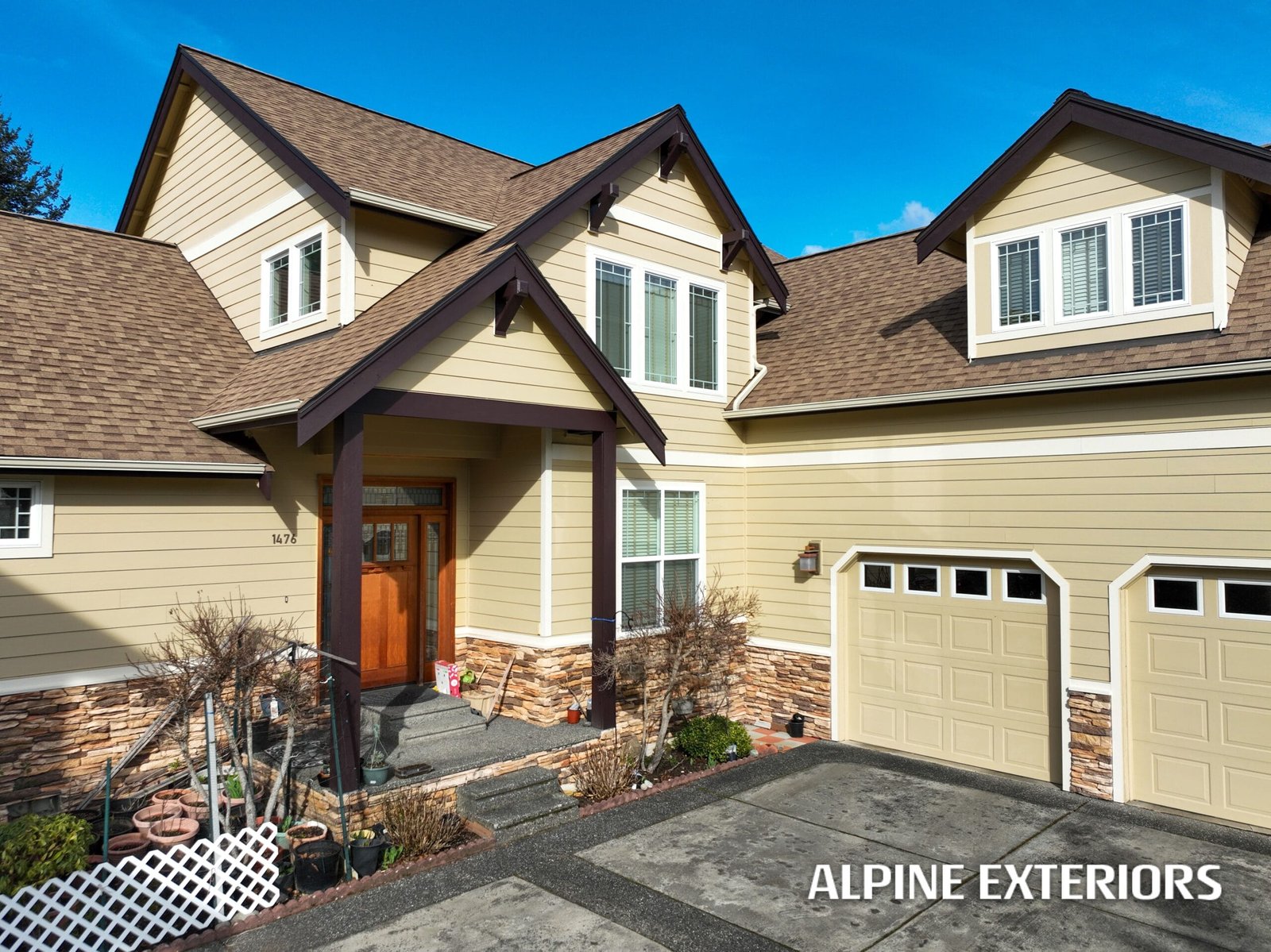
For most homes on Camano Island, the two roofing materials that hold up best over time are standing seam metal and heavier laminated (architectural) composition shingles rated for high wind. Both handle the marine air, the near-constant winter rain, and the wind that comes off the Saratoga Passage and Port Susan without much drama, and both meet the wind and weather-resistance expectations most Island County inspectors and insurers look for on the island. Standing seam metal tends to win on shaded, moss-prone lots and for owners planning to stay 25+ years; laminated composition shingle wins on upfront cost and on homes with complex rooflines where metal detailing gets expensive. Cedar shake still has a place aesthetically but needs an owner willing to keep up with moss and moisture maintenance in a marine climate. Alpine Exteriors installs and repairs all of these across Camano Island, and honestly, the "best" choice usually comes down to how long you plan to own the house and how much shade your roof sits under, not brand loyalty to one material.
How We Judged
Camano Island's roofing conditions are a specific mix, and they set the criteria that actually matter here more than a generic "best roofing materials" list would:
- Wind exposure. Homes on bluffs and open shoreline lots facing Saratoga Passage, Port Susan, or the open water toward the Strait catch steady wind and periodic gusts. Fastening pattern and wind rating matter more here than on a sheltered inland lot in Stanwood or Burlington.
- Moss and shade. Camano Island has a lot of mature Douglas fir and cedar canopy, and shaded north-facing slopes stay damp for days after a storm. Moss growth is one of the most common roofing complaints we see on the island, and some materials resist it far better than others.
- Sustained winter rain, not intense downpours. This region doesn't get hurricane-force rain events; what it gets is weeks of steady, moderate rain from fall through spring. The failure mode to design against is slow water intrusion at aging flashing, valleys, and nail penetrations, not a single catastrophic storm.
- Salt air on shoreline and near-shoreline lots. Camano is surrounded by saltwater, so unprotected steel fasteners and lower-grade flashing corrode faster on waterfront and near-waterfront properties than they would a few miles inland.
- Washington State Energy Code compliance. Any full re-roof that touches insulation, ventilation, or the building envelope needs to work within current Washington State Energy Code requirements for the region, which affects underlayment, ventilation design, and sometimes insulation upgrades at the same time.
- Occasional snow load in a foothill-adjacent climate. Camano doesn't see snow every winter, but the Skagit and Whatcom foothills nearby remind us that a wet, heavy snow event is possible every few years, and roofs should be able to shed that weight without ponding at valleys or low-slope sections.
- Real-world lifespan versus upfront cost. We weighed installed cost ranges against how many years of maintenance-free service an owner can realistically expect in this climate, not manufacturer marketing numbers.
Standing Seam Metal Roofing
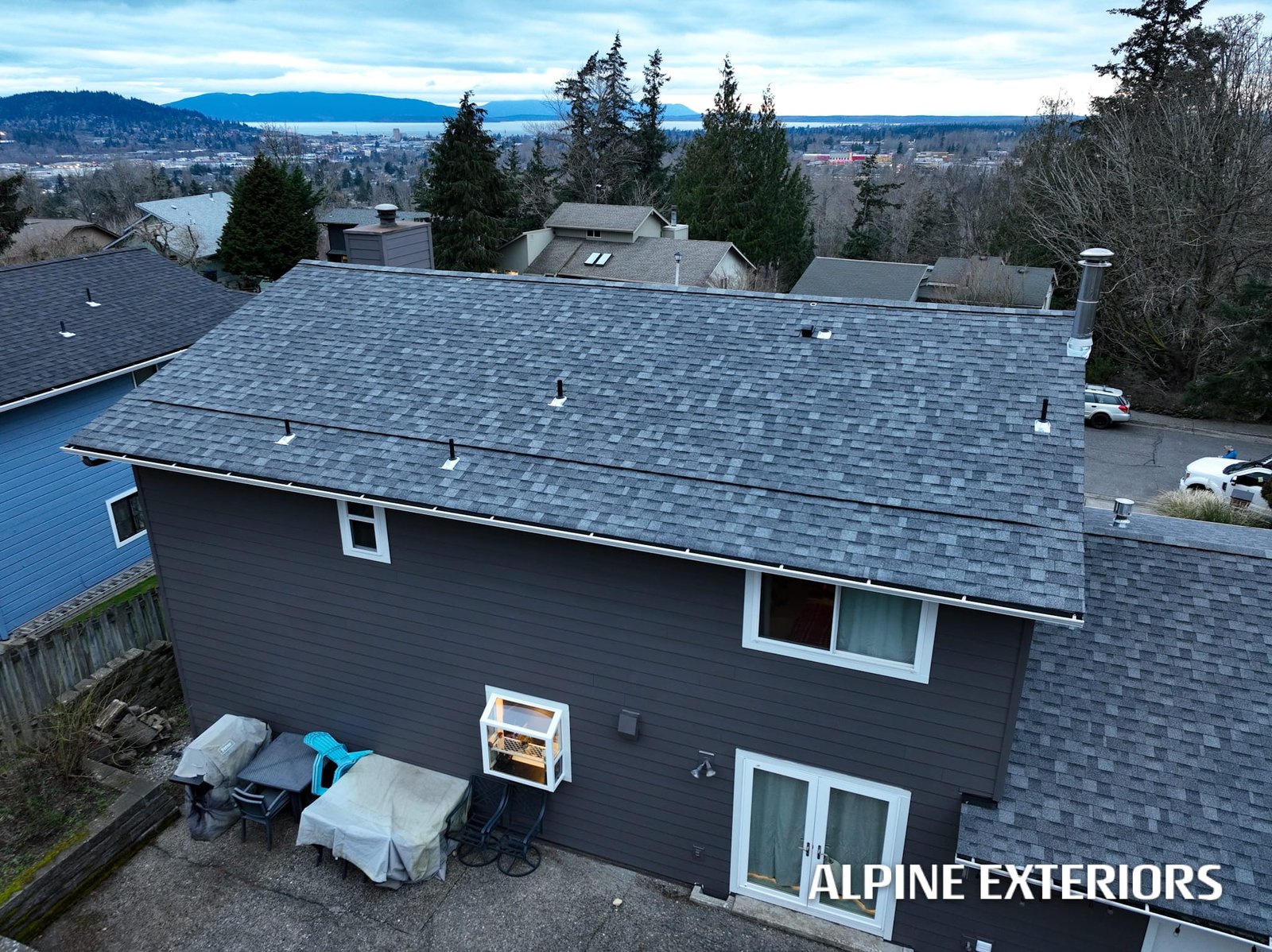
Standing seam metal is, in our experience, the strongest overall performer for Camano Island's mix of wind, moss exposure, and salt air, provided it's installed by a crew that details the flashing and fastening correctly.
- Pros: Sheds moisture fast, so shaded roofs stay drier and grow far less moss than shingle roofs under the same tree canopy. Concealed-fastener panels handle wind uplift well on exposed bluff and shoreline lots. With a quality coating system, metal resists salt-air corrosion better than most other options. It's also a strong fit for solar-ready roofs and pairs well with steep pitches common on older Camano cabins and newer builds alike.
- Cons: Highest upfront cost of the common options, often by a wide margin over composition shingle. Panel noise during rain can bother some owners, though a solid deck and proper underlayment mostly resolve this. Dents from fallen branches (common under Camano's fir canopy) are possible with lighter-gauge panels, and repairs to a damaged panel section aren't as simple as swapping a few shingles. Complex rooflines with lots of dormers or valleys drive labor cost up further.
Laminated (Architectural) Composition Shingle, High-Wind Rated
For most Camano Island homes, this is the practical middle ground, and it's what we recommend more often than any other single product when a homeowner asks us to just tell them what to pick.
- Pros: Meaningfully lower installed cost than metal, with a wide range of colors and profiles that suit both older Camano cottages and newer construction. Modern architectural shingles carry wind ratings well suited to the gusts this area sees, especially when installed with the manufacturer's high-wind nailing pattern and starter strip. Repairs are straightforward and inexpensive compared with metal. Good compatibility with standard Washington State Energy Code ventilation and underlayment requirements.
- Cons: Grows moss faster than metal on shaded, north-facing slopes unless the owner keeps up with cleaning or chooses a granule treated to resist algae and moss growth. Shorter realistic service life than metal in this climate, particularly on roofs that stay damp under heavy tree cover. Granule loss accelerates over time in areas with constant moisture exposure, which is most of Camano Island's tree-covered lots.
Cedar Shake and Shingle
Cedar has real history on Camano Island and the wider Puget Sound region, and it still looks right on a lot of the island's older and more rustic homes.
- Pros: Natural material that fits the aesthetic of wooded Camano lots and older waterfront cabins better than almost anything else. Decent natural insulating value. When properly treated and maintained, it can last a long time in this climate.
- Cons: This is the material most affected by Camano's shade and moisture combination — cedar left untreated on a damp, shaded slope will grow moss and can rot at the butt ends faster than in drier climates. It requires real ongoing maintenance: periodic cleaning, treatment, and inspection that many owners underestimate when they choose it. Higher fire-code scrutiny in some situations compared with Class A-rated composition or metal. Upfront and lifetime cost can rival or exceed metal once maintenance is factored in.
Standard 3-Tab Composition Shingle
Still common on older Camano homes and sometimes offered as a lower-cost option, but we're honest with clients that it's rarely the right call for a full replacement here anymore.
- Pros: Lowest upfront material cost of any option on this list. Simple, familiar installation.
- Cons: Lower wind ratings than architectural shingle, which matters on Camano's more exposed bluff and shoreline lots. Shorter service life overall, and it shows moss and granule wear faster than laminated shingle. For most homeowners planning to stay in their house more than a few years, the modest upfront savings over architectural shingle don't hold up against the shorter lifespan in this wet, shaded climate.
What to Avoid Here and Why
A few choices that work fine elsewhere cause predictable problems on Camano Island specifically. Unsealed or uncoated fasteners and flashing on waterfront and near-waterfront lots corrode faster in salt air than most homeowners expect, leading to early leaks at penetrations well before the roofing material itself fails. Low-slope roofing without adequate ventilation or a properly designed underlayment system tends to trap moisture under our long stretches of steady winter rain, which can cause sheathing rot that isn't visible until it's advanced. We'd also steer most owners away from choosing a roofing material based purely on the lowest bid without checking the wind rating and fastening pattern specified for the installation, since a technically wind-rated shingle installed with a standard nailing pattern doesn't perform the same as one installed to its high-wind spec. Finally, skipping moss treatment or roof cleaning on a shaded lot for years at a stretch is one of the more common ways we see otherwise sound roofs shorten their own lifespan on this island — moss holds moisture against the roofing surface long after the rain has stopped.
FAQ
Does Camano Island's climate really require a different roof than a home in Mount Vernon or Burlington?
Not a fundamentally different roof, but different priorities. Camano's shoreline exposure to wind off Saratoga Passage and Port Susan, combined with heavier tree canopy and shade on many lots, pushes moss resistance and wind rating higher on the priority list than they might be for a more sheltered, less wooded lot further inland in Skagit County. The underlying materials and code requirements are the same across our service area; the emphasis shifts based on each property's specific exposure.
How much does moss actually shorten a roof's life on Camano Island?
It varies a lot by how much shade a roof gets and how consistently it's cleaned, but sustained moss growth is one of the most common reasons we see composition shingle roofs on shaded Camano lots need attention earlier than their rated lifespan would suggest. Moss holds moisture against the shingle surface, which accelerates granule loss and can work under shingle edges over time. Regular cleaning and, where appropriate, zinc or copper strips near the ridge can meaningfully slow this down.
Do I need a special permit or inspection for a re-roof in Island County?
Most straightforward like-for-like re-roofs in unincorporated Island County and within Camano Island's local jurisdiction require a building permit, and any work that changes the roof structure, insulation, or ventilation needs to meet current Washington State Energy Code requirements. Requirements can vary by scope of work, so we confirm the specific permit and inspection path for each project before work starts rather than assuming one blanket answer covers every job.
What roofing cost range should I expect for a typical Camano Island home?
Costs vary widely with roof size, pitch, complexity, and material, so we don't publish flat numbers that don't reflect a specific home. As a general pattern, laminated composition shingle typically comes in well below standing seam metal for the same roof, with cedar shake often landing between the two once installation and finishing are factored in, and standard 3-tab shingle as the lowest upfront option. We provide a written, itemized estimate specific to your roof after an on-site assessment rather than a rough range that may not reflect your home's actual conditions.
Ready to Talk Through Your Options?
If you're weighing roofing materials for a home on Camano Island, Alpine Exteriors can walk your roof with you, point out where shade, wind exposure, or salt air should influence the decision, and give you an honest, itemized estimate for the options that actually make sense for your property. We hold Washington contractor license ALPINI751OW and serve Camano Island alongside the rest of Island, Skagit, and Whatcom counties. Reach out to schedule an on-site roof assessment and get a straight answer on what will actually hold up on your specific lot.
Want a straight answer for your home? Alpine Exteriors gives free on-site assessments across Mount Vernon, Anacortes, Burlington, Sedro-Woolley, La Conner, Stanwood, Camano Island and Bellingham.
Call (855) 743-4649 or
request an estimate.





