
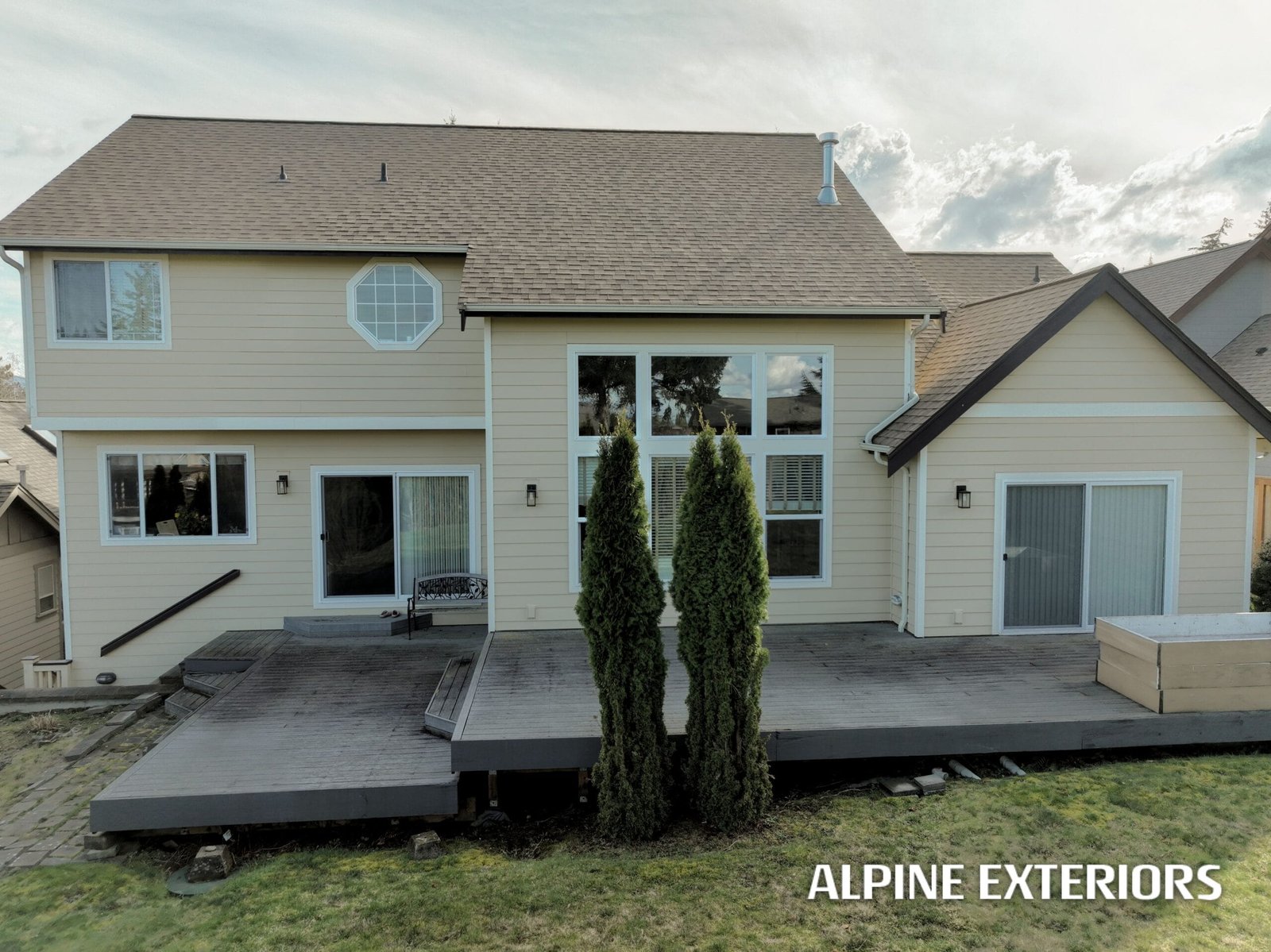
For most homes in and around Coupeville, a well-installed architectural (dimensional) asphalt composition shingle with a high wind rating is the roof that best balances cost, durability and upkeep given the wind coming off Admiralty Inlet and the Strait of Juan de Fuca. Where budget allows, standing seam metal is the stronger long-term choice, especially on exposed bluff-top lots or homes near Ebey's Landing where wind-driven rain hits the roof plane directly. On the older farmhouses and Victorian-era homes scattered through Coupeville's historic core, cedar shake or a synthetic shake that mimics it often makes more sense than either option, because it matches the look the neighborhood is known for. There is no single 'best' roof for every lot here — the right answer depends on how exposed the roof is to wind, how much shade and moss pressure it sees from surrounding fir and madrona trees, and whether the home sits inside a historic district with its own expectations. Alpine Exteriors walks each of those factors through with homeowners before recommending a material, rather than defaulting to whatever is cheapest to install that week.
Coupeville sits on Whidbey Island's central bluff, largely open to wind off Penn Cove and the Strait, with less tree cover than the more forested parts of Island and Skagit counties but still enough shaded, moisture-holding roof sections on wooded lots to grow moss. Winters bring long stretches of steady rain rather than short violent storms, so a roof here has to shed sustained moisture over months, not survive a single event. Occasional cold snaps can bring light snow or ice, though nothing like the heavier snow loads seen in the Cascade foothills to the east. Because Coupeville sits close to saltwater on nearly every side, salt-laden air is a real factor for fasteners, flashing and any exposed metal. We judged each roofing option against those specific conditions:
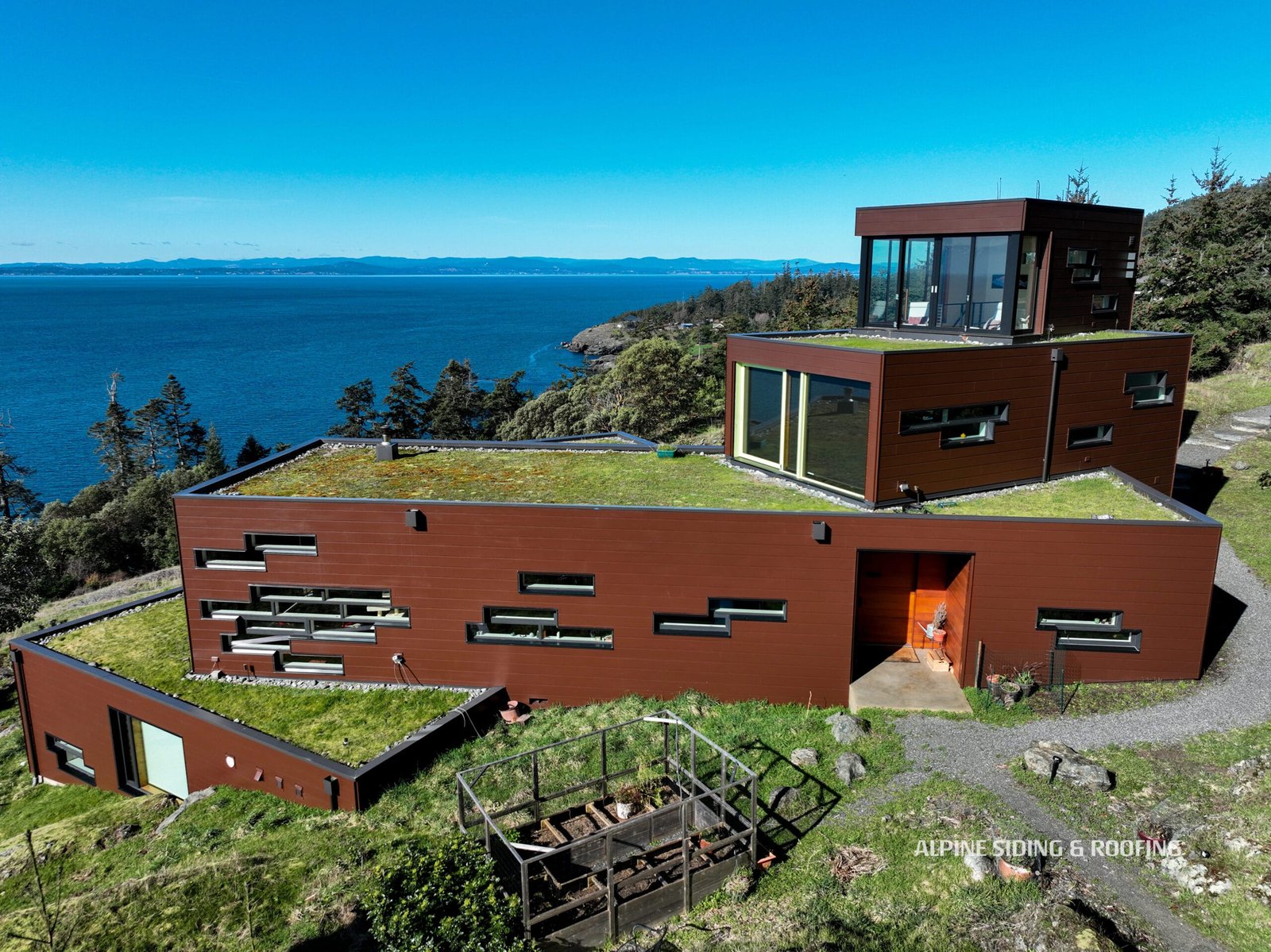
Architectural shingles are the roof most Coupeville homeowners end up choosing, and for good reason. Modern dimensional shingles carry wind ratings well suited to the gusts that come across the flats and off the water, especially when installed with the manufacturer's specified nailing pattern and starter strip rather than a builder-grade shortcut. Many lines now include algae-resistant granules, which helps on the north- and east-facing slopes that stay damp under tree cover longer into the day. Cost sits in the middle of the range — typically less than metal, more than the cheapest 3-tab product — and most reputable manufacturers back them with warranties in the 30-year-plus range, though real-world life expectancy in this climate tends to run somewhat shorter than a dry-climate installation because of the constant moisture exposure. The honest drawback is that asphalt shingles are still the option most likely to need moss treatment and periodic granule-loss monitoring, and they are not the material that best complements Coupeville's older architecture if curb appeal and historic character matter to a particular buyer.
Standing seam metal is the strongest performer here against wind-driven rain, because the concealed-fastener panel seams simply don't give water anywhere to enter the way a shingle tab can lift at the edge in a sustained gust. It sheds rain fast, resists moss better than asphalt on shaded roof faces, and holds up well against decades of salt air when the panels and fasteners are a coastal-rated finish. It's also a natural aesthetic fit for the working-farm and maritime look common around Coupeville and Ebey's Landing National Historical Reserve. The tradeoffs are real: the upfront material and labor cost runs meaningfully higher than asphalt, panels can oil-can (show subtle waviness) if the substrate isn't flat or the installer rushes the job, and without proper underlayment and attic insulation a metal roof can be noisier in heavy rain than most homeowners expect. It is a strong long-term investment, not a budget option.
For homes inside or near Coupeville's historic district, cedar shake is often the material that keeps a house looking like it belongs on the street. It's a good insulator, breathes well, and has genuine period authenticity that synthetic products only approximate. But cedar is also the highest-maintenance option on this list in a climate this wet: shaded sections need periodic moss and lichen treatment, the wood needs to be kept clear of overhanging fir needles and debris that trap moisture, and without diligent upkeep a shake roof here can start showing rot and split shakes well before a comparably priced asphalt or metal roof would show equivalent wear. Cedar also costs more than architectural asphalt and, depending on the specific product and treatment, some insurers price it differently than other materials. It's the right call when historic accuracy matters and the owner is prepared to maintain it; it's the wrong call for anyone who wants to install a roof and not think about it again for two decades.
Composite shake and synthetic slate products have improved enough that, from the street, several lines are difficult to distinguish from the real thing, while shedding most of cedar's maintenance burden. They typically carry strong wind ratings, resist moss better than natural wood, and hold their color and shape well in sustained wet weather. This makes them a genuine option for a Coupeville homeowner who wants the historic-district look without committing to cedar's upkeep schedule. The honest caveats: they cost more than asphalt shingles, the track record on some newer composite products is shorter than the multi-decade history asphalt and metal have, and a few historic-district design review boards are stricter about approving synthetic materials than others, so it's worth checking before assuming a composite product will be approved for a home inside the district boundary.
Many of the farmhouses and cottages around Coupeville have a low-slope porch roof, mudroom addition, or dormer that a standard shingle or shake roof isn't designed for. On those sections, a TPO or EPDM membrane is usually the right call rather than forcing a steep-slope material onto a flat or nearly flat plane. These membranes handle standing water from long rain events far better than shingles do at a low pitch, and a properly seamed and flashed membrane roof holds up well to salt air. The drawback is purely aesthetic and practical — membrane roofing is a utilitarian, not decorative, material, so it's typically limited to porches, additions and outbuildings rather than the main roof plane of a historic home.
Moss is more than a cosmetic issue on Coupeville roofs. It holds rainwater against the roofing surface long after the rest of the roof has dried, which softens asphalt granule adhesion, promotes rot in wood shakes, and can work its way under shingle tabs and shake courses over time. On shaded, north-facing or tree-covered roof sections it's worth a yearly look and gentle removal rather than letting it establish for several seasons.
Standing seam metal generally performs best against sustained wind and wind-driven rain because its concealed fasteners and interlocking seams give water fewer entry points than a shingle or shake edge. Architectural asphalt shingles with a strong wind rating and correct installation are the more budget-friendly option that still holds up well on most Coupeville lots, though very exposed bluff-top or waterfront sites benefit the most from metal's added wind performance.
Homes within Coupeville's historic core may fall under design review that considers roofing material and appearance as part of maintaining the district's character, so it's worth confirming with the town before finalizing a material choice, particularly if switching from the home's original roofing type. Homes outside the historic boundary typically only need a standard building permit for a re-roof.
A roof replacement is a natural time to address attic insulation, air sealing and ventilation, all of which the Washington State Energy Code addresses for residential construction. Bringing attic insulation levels and vent baffles up to current code requirements during a re-roof typically costs less than doing it as a separate project later, and it helps the new roofing material perform as intended by keeping moisture-laden interior air from condensing against the roof deck.
The right roof for a Coupeville home depends on how exposed the lot is, how much shade and moss pressure the roof faces, whether the property sits in the historic district, and what the homeowner actually wants to maintain over the next 20 years. Alpine Exteriors, WA contractor license ALPINI751OW, serves roofing, window, deck and gutter projects across Skagit, Island and Whatcom counties, including Whidbey Island communities like Coupeville and neighboring Camano Island. If you're weighing asphalt against metal, cedar against a synthetic alternative, or just want an honest look at what your current roof has left in it, Alpine Exteriors can walk the roof with you and lay out real options and real tradeoffs before you commit to a material.