
For most homes in Bow — the farmland and shoreline pocket of Skagit County tucked between Edison, Samish Bay and Bow Hill — the two roofing materials that hold up best over the long run are architectural (dimensional) asphalt shingles and standing seam metal roofing. Architectural shingles are the practical default for most properties: they carry a real wind rating, are available with algae-resistant granules, and a licensed local crew can install or repair them quickly between rounds of rain. Standing seam metal earns its higher price tag on homes with steep, shaded rooflines under the fir and cedar canopy along Bow Hill Road, or on properties close enough to Samish Bay that salt-tinged air is a genuine factor — it sheds moss better, sheds rain fast, and its fastener and flashing hardware can be specified to resist corrosion.
Synthetic composite shake is a legitimate middle option if you want the look of cedar without the upkeep. Real cedar shake still has a place on some Bow homes, but mostly for owners willing to stay on top of moss treatment and ventilation. Clay and concrete tile, by contrast, rarely make sense on this stretch of the county, for reasons we get into below. None of these materials is universally "best" — the right pick depends on your roof's slope, how much shade it sits under, how exposed it is to wind off the flats, and how much upkeep you actually want to take on. Alpine Exteriors installs and repairs all of the materials below across Skagit, Island and Whatcom counties, and this page reflects what we actually see hold up — and fail — on Bow roofs, rather than a manufacturer's brochure.
We did not rank these materials on price alone. Six factors specific to Bow and the surrounding flats shaped the comparison:
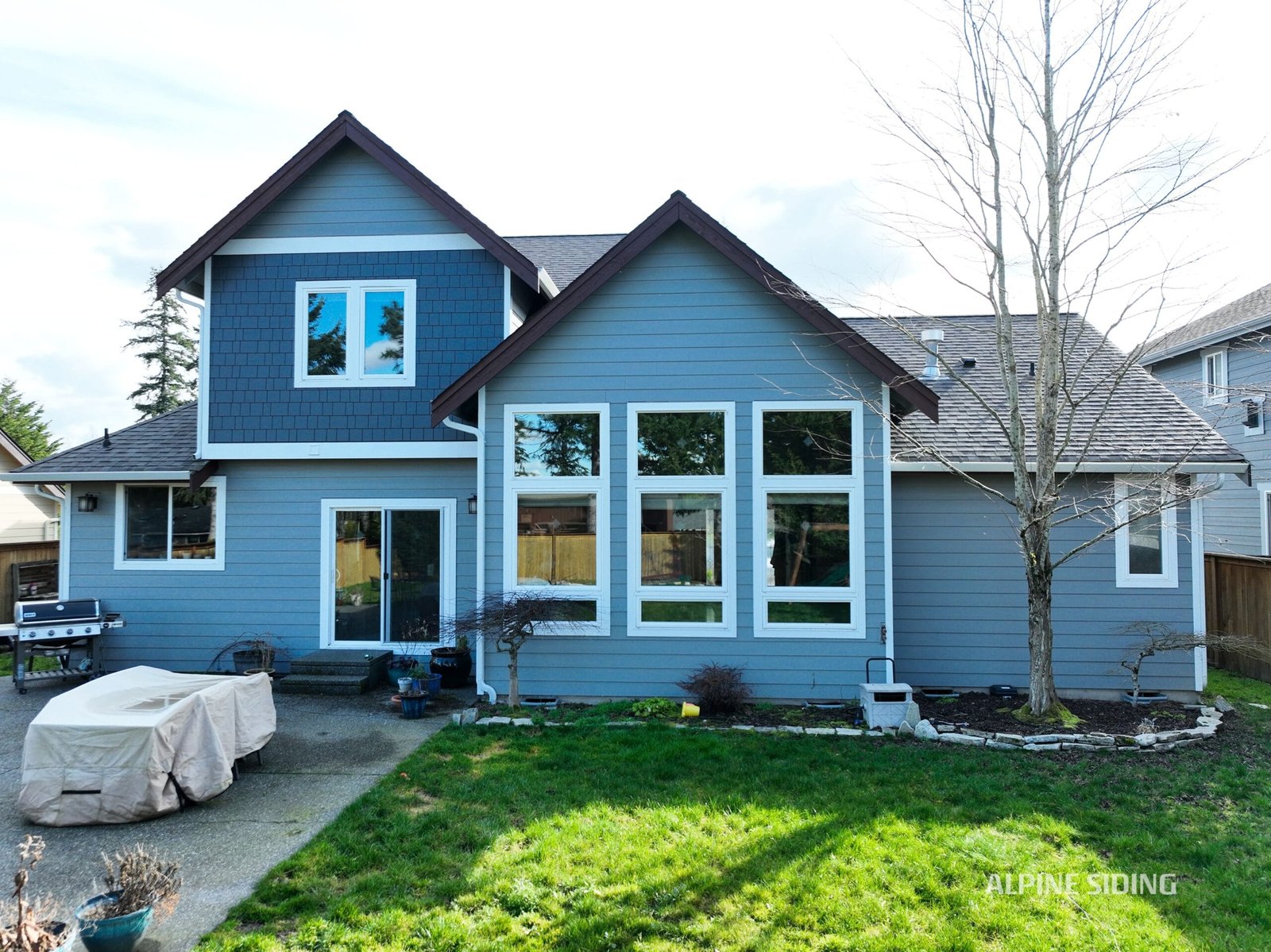
Architectural (dimensional) shingles are the most common roofing material we install in Bow, for good reason: they're cost-effective, come in a wide range of colors that suit the farmhouse and craftsman styles common in the area, and most manufacturers now offer algae-resistant (AR) granule lines that slow moss and algae staining. The honest caveat is that AR granules slow moss — they don't prevent it — on a roof plane sitting under a dense fir canopy, so a shaded lot along Bow Hill Road will still need periodic treatment no matter what shingle is on it. Standard three-tab shingles are also a poor fit for this exposure; their wind rating is lower than architectural shingles and they're more likely to lift at the tabs when wind comes off the open flats. Properly installed with the correct nailing pattern and starter strip, architectural shingles handle Bow weather well and remain the most budget-friendly option, though their realistic lifespan of roughly twenty to thirty years trails standing seam metal.
Standing seam metal is the material that best answers Bow's long wet season: it sheds rain fast with no exposed fasteners for water to work into over time, and it resists moss and algae better than asphalt simply because there's no granulated organic surface for spores to colonize — though algae can still take hold on horizontal dirt buildup that never gets cleaned off. It also handles an occasional icy snap well, since ice tends to slide off a smooth metal panel rather than dam the way it can on a textured surface, and it can be specified with corrosion-resistant fasteners and coatings that hold up to salt-tinged air near the bay. The tradeoffs are real: it carries the highest upfront cost of the common options, and it genuinely needs an experienced crew — panel spacing, expansion allowance and fastener choice all matter more here than with shingles. Rain noise on an uninsulated roof deck can be noticeable, though solid sheathing and proper underlayment, which a Washington State Energy Code-compliant assembly already calls for, largely solve that. Matching an old panel run after storm damage can also mean reordering a custom color if the original has weathered or is no longer stocked.
Polymer or rubber composite shake products have gotten good enough to mimic the look many older Bow and Edison-area farmhouses were built with, while sidestepping most of the maintenance real cedar demands. They resist moss noticeably better than wood, and most lines carry strong wind and impact ratings, which suits the open exposure around the flats. Because each piece is manufactured rather than cut from a log, they also age more consistently than real shake, so a later repair blends in more cleanly. Where synthetic shake asks more of you is cost — it typically lands in the mid-to-upper range, closer to metal than to shingles — and fewer local installers have deep hands-on experience with it compared with shingles, so it's worth asking a contractor directly about their synthetic shake project history before committing. Some homeowners restoring a historic look also notice the finish reads slightly less organic than real cedar up close.
Cedar has an authentic look that genuinely suits some of the older farmhouses around Bow and Edison, and on a well-ventilated, mostly sun-exposed roof plane it can perform reasonably well. This is also the material most likely to disappoint in Bow specifically, though, because the same shade and moisture that make the area lush also feed moss and rot in untreated wood. Cedar needs regular moss treatment, cleaning and occasional shake replacement to come anywhere near its potential lifespan, and it's more vulnerable to wind-driven rain working into butt joints than shingles or metal if it isn't detailed carefully. Fire-insurance considerations are also worth a conversation with your carrier unless treated or rated cedar products are used. We still install cedar when a homeowner wants the look and understands the upkeep it requires, but we don't sell it as a low-maintenance choice in this climate, because it isn't one.
Clay and concrete tile are materials we rarely recommend for Bow, and it's worth explaining why rather than just leaving them off the list. Most homes in this area weren't framed to carry tile's weight, so retrofitting the structural support needed adds significant cost before a single tile goes on the roof. Clay in particular is vulnerable to cracking over years of freeze-thaw cycling during an occasional cold snap unless the specific product is rated for it. And tile simply isn't part of the traditional building stock in this part of Skagit County, so the cost premium doesn't buy the same regional fit here that it would in a warmer, drier climate. We'll quote tile for a homeowner with an already-engineered roof structure who wants it, but it isn't a default recommendation for a Bow home.
On a roof under mature fir or cedar cover — common along Bow Hill Road and toward Edison — plan on inspecting for moss at least once a year and treating it as soon as growth appears, rather than waiting until it's visible from the street. Roofs on open, sun-exposed lots can often go longer between treatments. Zinc or copper strips near the ridge provide ongoing protection between cleanings and are worth the modest upfront cost on any shaded roof.
If your property sits on open farmland or near the water with little tree or structure windbreak, yes — architectural shingles rated for higher wind speeds, installed with the correct nailing pattern and starter strip, are worth the modest cost difference over standard shingles, and standing seam metal performs well in this exposure by design. A sheltered, tree-lined lot closer to town has more flexibility.
For a shaded, moss-prone roof or a home near enough to the bay that salt air is a real factor, metal often pays for itself over the life of the roof through lower moss and algae maintenance, fast rain shedding, and a longer realistic lifespan than asphalt. For an open, sun-exposed roof on a tighter budget, a good architectural shingle can be the more practical choice — metal isn't automatically the better answer for every Bow home.
The code governs how the roof assembly is insulated and ventilated, not just which shingle or panel you choose, so a re-roof is a reasonable time to confirm your attic or roof-deck ventilation and insulation meet current requirements. Proper ventilation also happens to be one of the best defenses against the moisture and moss problems that shorten roof life in this part of Skagit County, so it's worth doing right rather than treating it as paperwork.
Every Bow property is a little different — how much shade it sits under, how exposed it is to wind off the flats, how close it is to Samish Bay's salt air. Alpine Exteriors (WA contractor license ALPINI751OW) has installed and repaired roofing across Skagit, Island and Whatcom counties, including Mount Vernon, Anacortes, Burlington, Sedro-Woolley, La Conner, Stanwood, Camano Island and Bellingham, and we're happy to walk your roof, point out what's actually working against it, and lay out honest options rather than a single default recommendation. Reach out to Alpine Exteriors for a no-pressure roof assessment before your next re-roof or repair.