
Most attic moisture and skylight condensation problems in Stanwood homes come down to one thing: warm, humid indoor air finding its way into a cold attic space that isn't moving enough outside air through to carry that moisture back out. Fix the balance between how much air comes in through soffit vents, how much leaves through ridge or roof vents, and how much warm air is leaking up from the living space in the first place, and most of the dripping, staining and musty attic smells stop.
An attic is supposed to stay close to outdoor temperature and humidity, not indoor. When that balance breaks down — usually because bathroom fans vent into the attic instead of outside, recessed lights and attic hatches leak warm air upward, or the vent openings are undersized, blocked by blown-in insulation, or painted shut — the attic effectively becomes a second, uncontrolled layer of the house. Moist indoor air rises into that cold space, hits the underside of the roof sheathing on a cold night, and condenses. Over a winter, that shows up as dark water stains on the sheathing, rusted nail heads poking through the roof deck, a musty smell when you open the attic hatch, or — in the worst cases — soft, delaminating plywood that has to be replaced along with the roofing above it.
Skylights complicate this because the shaft between the roof opening and the ceiling below is its own small, often poorly insulated chase running through that same attic or cathedral ceiling space. A skylight with a low-quality curb, an old thermal break, or a shaft that wasn't insulated and air-sealed when it was installed will condense on the inside of the glass or plastic dome on cold, still mornings, and that moisture drips down the shaft onto the drywall or trim below. Homeowners often assume this means the skylight is leaking from outside. Sometimes it is — old flashing and cracked skylight seals do fail — but just as often the skylight itself is fine and the real problem is warm, moist household air condensing on a cold surface, the same mechanism as attic condensation, just happening in miniature inside the light shaft.
The Washington State Energy Code sets minimum requirements for both insulation levels and for controlling air leakage into attic spaces, and the International Residential Code — which Washington's code is built on — sets attic ventilation ratios, typically one square foot of net free vent area for every 150 square feet of attic floor, or 1:300 when a vapor retarder is properly installed on the warm side of the ceiling. Those numbers exist because the code writers understood exactly this failure mode: cold Pacific Northwest attics accumulate moisture unless there's a real, unobstructed path for outside air to flush it out.
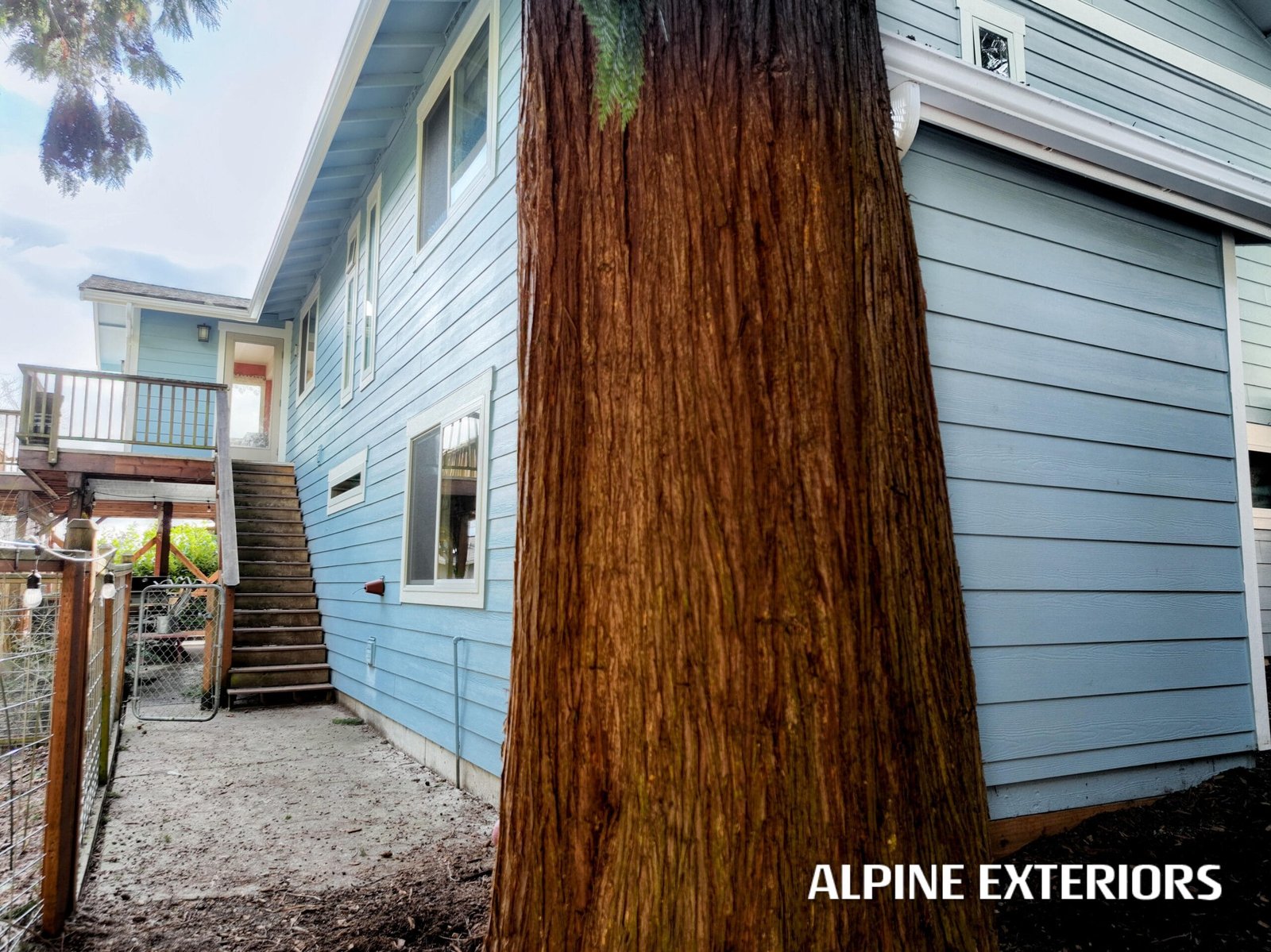
Stanwood sits at the edge of Snohomish County right where the Skagit flats give way to Port Susan and the Stillaguamish delta, close enough to Alpine Exteriors' Skagit and Island County service area that we work on homes here regularly, including many just across the Highway 532 corridor toward Camano Island. That location brings a specific mix of conditions that shapes how attic and skylight problems show up locally.
None of these conditions are extreme on their own, but together they mean attic ventilation and skylight detailing in Stanwood have less margin for error than they might in a drier, more sheltered climate. A ventilation setup that's "close enough" in a dry inland location tends to actually cause visible problems here within a few winters.
Start by looking, not by guessing. On a cold winter morning, pop the attic hatch and check for frost or dampness on the underside of the roof sheathing near the ridge, dark staining around nails, and any insulation that looks compacted, dark, or damp rather than fluffy. Check that soffit vents are actually open to the attic and not blocked by insulation that was blown in without baffles to hold a clear air channel. Look at bathroom and kitchen exhaust fans from outside the house — if you can't find a roof or wall cap where they terminate, there's a real chance they're dumping straight into the attic, which is one of the most common causes of serious attic moisture in this region.
For skylights, check the shaft walls for staining or a slightly damp feel on cold mornings, and note whether condensation forms on the inside of the glazing itself versus dripping from the frame or the drywall return. Condensation on the glazing points toward an insulation or air-sealing issue in the shaft; moisture at the frame or flashing line points more toward a seal or flashing issue that may need a roofer's inspection rather than an insulation fix.
Beyond that initial check, a few things are worth doing before they become bigger repairs:
It's also worth being honest about the limits here. Adding vents alone won't fix a moisture problem that's really being driven by an unvented bath fan or a major air leak from the living space — in some cases more ventilation without fixing the source just moves cold, damp air around a still-leaky attic. And no amount of attic ventilation will stop a skylight that has a genuinely failed seal or degraded flashing from leaking; that's a roofing repair, not a ventilation one. Getting the diagnosis right before spending money on either fix is worth the extra hour it takes.
No. In this area, attic moisture is more often condensation from warm household air reaching a cold attic than it is water coming through the roofing itself, especially on days when there's no active rain but the attic still feels damp. That said, moss-covered or shaded roof slopes here do develop real leaks around vent boots and flashing over time, so a thorough check should rule out an exterior source before assuming it's purely a ventilation and air-sealing issue.
Clear, cold nights let the skylight glazing and the surrounding shaft lose heat fastest, which is exactly when the temperature difference between indoor humidity and the cold surface is largest and condensation is most likely to form. If it happens mainly on those still, frosty mornings rather than during actual rain, that pattern points toward condensation from indoor moisture rather than an external leak, though both should still be checked.
It's usually both working together rather than one or the other. Ventilation moves air through the attic to carry moisture out, while insulation and air-sealing keep warm, moist household air from reaching the attic in the first place; an attic with plenty of vents but poor air-sealing below it, or good insulation but blocked soffit vents, will still show moisture problems. A proper evaluation looks at intake venting, exhaust venting, insulation depth and coverage, and air leakage points together, since the Washington State Energy Code treats them as a connected system rather than separate items.
An annual check, ideally in fall before the heavy rain sets in, is a reasonable baseline for most Stanwood homes, with a closer look every few years for roofs with significant moss growth or heavy tree cover, since debris and moss hold moisture against flashing longer here than on more exposed, sun-exposed slopes. Homes closer to Port Susan or Camano Island benefit from checking vent hardware and skylight fasteners a bit more often given the added corrosion exposure from salt-tinged air.
If your attic smells musty, you're seeing stains on the sheathing, or a skylight keeps dripping on cold mornings, it's worth having someone look at the whole system — venting, insulation, air-sealing and the roofing itself — rather than patching one symptom at a time. Alpine Exteriors, licensed in Washington as ALPINI751OW, works on homes throughout Stanwood and the surrounding Skagit, Island and Whatcom county communities and can walk your attic and skylights with you, explain what's actually driving the moisture, and lay out straightforward options for fixing it. Reach out to schedule a visit before winter rains put the next season of moisture to the test.