
In Clinton, the roofs that fail early almost always fail from the same two things: moss holding moisture against shaded shingles, and years of steady Puget Sound rain finding a small gap and turning it into a big one. Regular moss removal, clear gutters, and an inspection every year or two after a wind event will add real years to a roof's service life here.
Clinton sits on the southern end of Whidbey Island, wedged between the Possession Sound side of the island and the ferry run over to Mukilteo. It gets less rain than Seattle in raw numbers, but the rain that does fall tends to arrive as long, low-intensity systems that can sit over the island for days at a time between October and April. That kind of rain does not damage a roof the way a short, hard downpour does. It damages a roof by staying. Water sits in valleys, lingers under moss mats, and seeps into any seam that has opened even a sixteenth of an inch, then it does that again the next week, and the week after. A roof that would shrug off an occasional heavy storm in a drier climate can develop rot, delaminated sheathing, or stained ceiling drywall in Clinton simply because the moisture never really goes away for six months of the year.
Moss is the other half of the story, and it is largely a function of tree cover. Much of Clinton and the surrounding Cultus Bay, Deer Lagoon and Glendale-area properties sit under mature Douglas fir, western red cedar and big-leaf maple canopy, which is part of what makes Whidbey Island desirable to live on and part of what makes north- and west-facing roof slopes here grow moss faster than almost anywhere else in Washington. Moss is not just cosmetic. As it grows, it lifts shingle tabs at the edges, holds a wet mat against the roofing material through the wet months, and its root structure works into the granule surface of asphalt shingles or the wood fibers of a cedar roof. A roof that looks fine from the driveway can have moss doing quiet structural damage on the back slope that nobody sees until there is a stain on the bedroom ceiling.
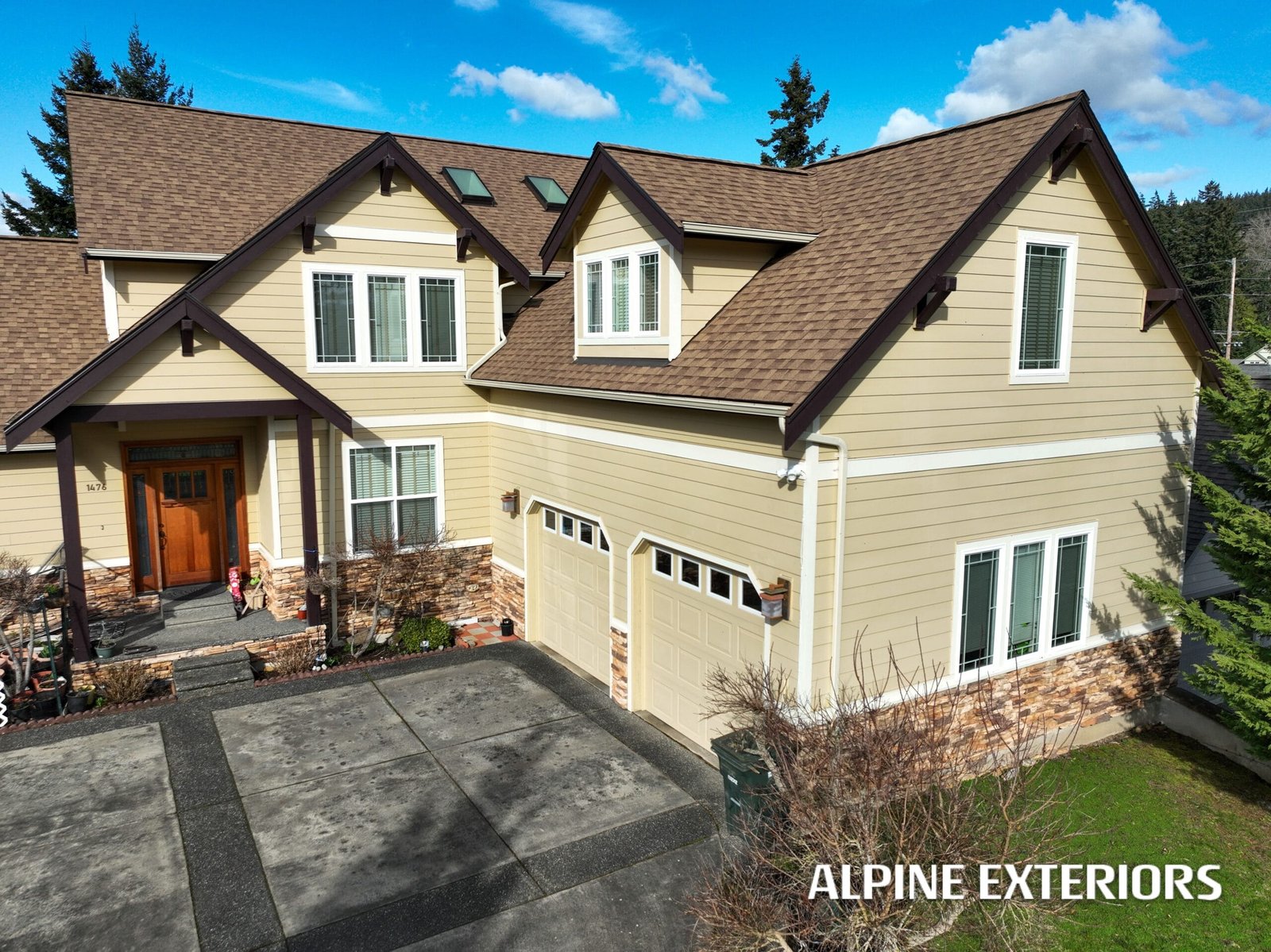
A few conditions specific to Clinton and the rest of Island County change how a roof should be built and maintained, and they are worth naming individually because a roofer who normally works inland doesn't always account for them.
None of these are extreme conditions individually. What makes Island County roofs age the way they do is the combination — wet, shaded, salty and occasionally windy, repeated every winter for the life of the roof.
Most of what protects a Clinton roof is unglamorous maintenance rather than expensive intervention, at least until a roof is genuinely near the end of its service life. A practical yearly routine looks like this:
It's also worth being honest about the limits of maintenance. A roof that's already past its expected lifespan, or one where the sheathing underneath has started to rot, is not something moss removal or a gutter cleaning will fix. At that point the more cost-effective move is usually a full or partial re-roof rather than continuing to patch a roof that's structurally tired — and a good inspection should tell you honestly which situation you're in rather than upselling a repair a homeowner doesn't need or downplaying one they do.
For roofs under heavy tree cover — which describes a large share of Clinton and the Whidbey Island interior — once a year is a reasonable baseline, ideally in late summer or early fall before the wet season sets in. Roofs with more sun exposure, such as some waterfront properties with fewer overhanging trees, may only need attention every two to three years. The right interval really depends on how much shade and organic debris a specific roof collects, which is something an in-person look at the property will tell you better than a generic schedule.
Yes, though the effect is more pronounced the closer a home sits to the water. Clinton and the rest of Whidbey and Camano Island are exposed to salt-laden air off Puget Sound, Saratoga Passage and the Strait of Juan de Fuca, and that air accelerates corrosion on exposed metal — nail heads, flashing, gutter hangers and ridge vent hardware in particular. It's one of the reasons material and fastener choice matters more here than it would for an identical roof built 30 miles inland.
It's a real problem, not just an appearance issue. Moss holds moisture against the roofing surface for extended periods, which on asphalt shingles degrades the granule layer that protects against UV and weather, and on wood shingles or shakes it can accelerate rot. As moss mats grow thicker they also lift shingle edges slightly, which gives wind and wind-driven rain more to work with during a winter storm.
A repair addresses a localized problem — a section of damaged flashing, a handful of lifted shingles, a small area of moss damage — on a roof that is otherwise sound. A re-roof is appropriate when the roofing material is broadly past its useful life, when there's widespread moss or water damage across multiple slopes, or when the underlying sheathing has started to deteriorate. An honest inspection should look at the roof's age, material condition and any signs of moisture in the attic before recommending one over the other, rather than defaulting to the larger job.
Alpine Exteriors has worked on homes across Skagit, Island and Whatcom counties long enough to know that a roof in Clinton ages differently than one in Mount Vernon or Bellingham, and that the maintenance plan should reflect that. If it's been a while since your roof was inspected, or you've noticed moss building up on a shaded slope, Alpine Exteriors can take a look, tell you plainly what shape it's in, and lay out repair or replacement options without guesswork. Alpine Exteriors holds Washington state contractor license ALPINI751OW and also handles windows, decks and gutters for homeowners across the same service area, so a roof inspection can be paired with a broader look at the exterior if that's useful. Reach out to schedule a visit and get a straight answer about what your roof actually needs.