


Bow sits in a stretch of Skagit County that most contractors describe as "rural but not remote" — flat farmland toward the Samish flats, wooded rises toward Edison and Allen, and a handful of properties close enough to Samish Bay and Padilla Bay to pick up real salt air off the water. That mix matters for a roof replacement because the same job in Bow can face wind-driven rain one week and dead calm the next, moss creep under fir and cedar canopy on one lot and almost none on the open-field lot next door. There is no single "typical" Bow roof, but there is a typical process, and knowing it ahead of time keeps the project from feeling like a mystery happening on top of your house.
For a straightforward asphalt composition shingle tear-off and replacement on an average single-family home, the on-site work usually runs two to four days once the crew starts, weather permitting. Metal roofing, tile, or homes with steep pitches, multiple dormers, or extensive water damage under the old roofing can push that to a week or more. What surprises most homeowners isn't the time on the roof — it's the lead time before the crew ever shows up. Between scheduling, permitting, and material ordering, four to eight weeks between signing a contract and the first day of work is common in this part of Skagit County, longer during the busy late-spring and summer months when every roofing crew in the county is booked out.
Bow is unincorporated, so roofing permits go through Skagit County rather than a city building department. Most straightforward re-roofs qualify for an over-the-counter or online permit, but the county will still want to know the roofing material, the number of layers being removed, and in some cases proof that the work meets current Washington State Energy Code requirements for insulation and attic or roof-deck ventilation — this comes up often on older Bow homes where the attic was never properly vented to begin with, and a re-roof is the natural point to correct it. A licensed contractor pulls this permit as a matter of course; if a bid doesn't mention it, ask.
Most Bow properties are standalone acreage or small subdivisions without an HOA, but the newer developments closer to Bow Hill Road and toward Edison sometimes do have design covenants governing roof color or material. It's worth a five-minute check of your CC&Rs before ordering materials, because swapping a shingle color after the order is placed adds real delay.
Material lead time is the other piece that catches people off guard. Standard architectural asphalt shingles in common colors are usually in regional stock and ship within a week or two. Specialty products — standing-seam metal in a custom color, synthetic slate, or certain high-wind-rated shingle lines — can run four to six weeks out from the manufacturer, and rural delivery to Bow sometimes adds a day or two versus a Mount Vernon or Burlington address simply because of freight routing. If your project has a hard deadline, order-sensitive materials should be locked in as early as possible.
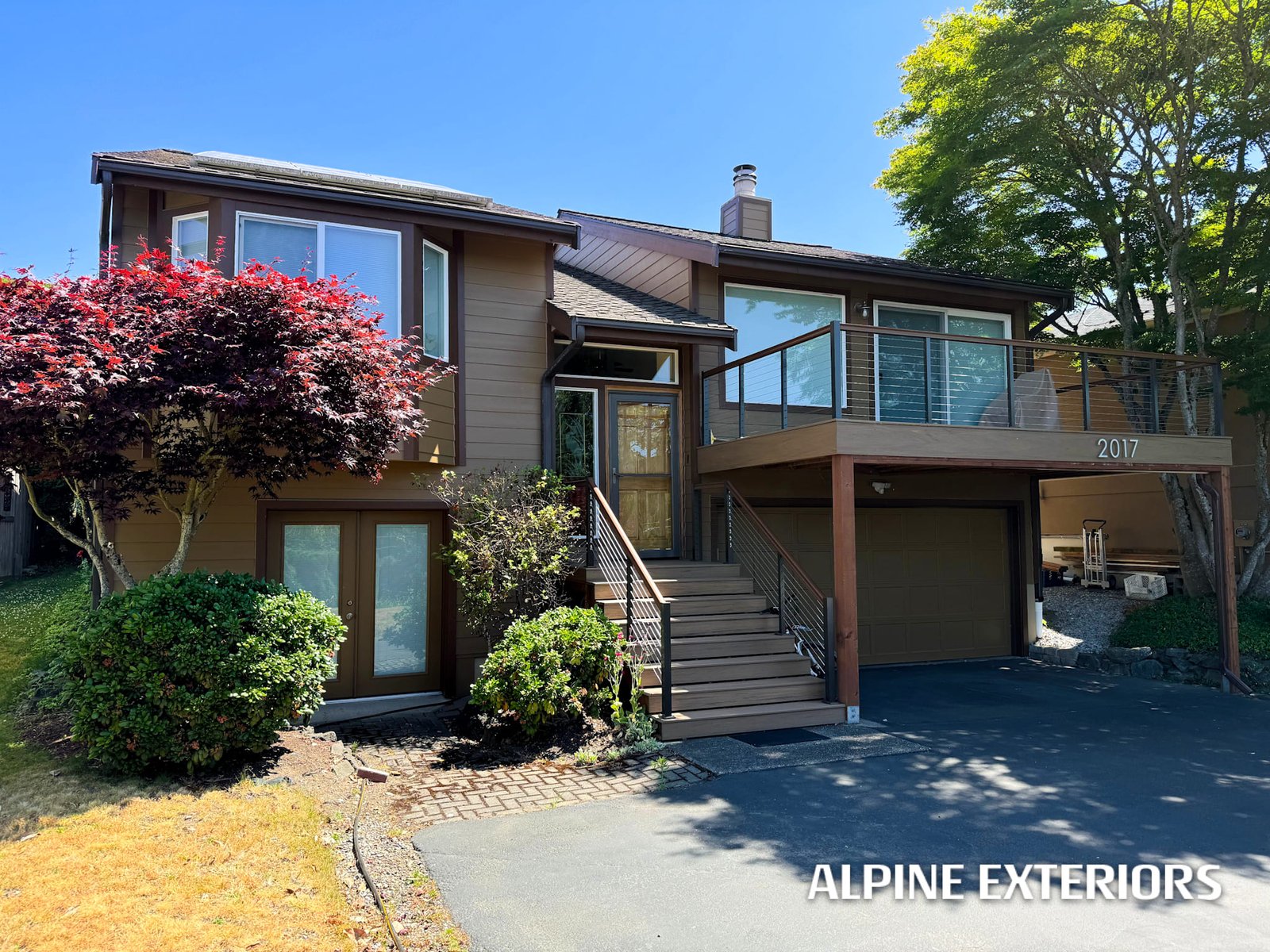
A roof replacement in this area generally moves through the same sequence regardless of the material chosen, though the details shift with the product:
A few days ahead of the start date, move vehicles out of the driveway and garage if the crew needs access for material delivery and a dumpster or trailer. Take down wall art, mirrors, and anything fragile hanging on interior walls, since the hammering and nail-gun impact travels through the framing and can jar loose items. If you have pets, plan for the noise — a full day of tear-off is stressful for most dogs and cats, and an open gate during material staging is an easy way for a pet to get out. Trim back any tree limbs overhanging the roofline if you can do so safely; it gives the crew clearer access and reduces the moss and debris that ends up back on the roof within a season. Finally, expect a work zone: ladders against the house, a dumpster or trailer on the property for the duration, and nails on the ground despite everyone's best efforts with a magnetic sweep — a final magnetic sweep of the yard and driveway should be part of any reputable contractor's cleanup, but it's still worth checking bare feet and pet paws for the first week or two.
Once installation is complete, the crew does a top-to-bottom check of flashing, fasteners, and ridge lines before calling the job done. If a county permit was pulled, a building inspector may need to sign off, which the contractor should coordinate. Cleanup should include a magnetic nail sweep of the yard, driveway, and any garden beds, removal of the dumpster or debris trailer, and a walk-around to confirm gutters weren't left full of old shingle grit. Alpine Exteriors walks the property with the homeowner at the end of the job, points out anything worth knowing — a repaired deck section, a new vent, a spot where a tree limb should be kept trimmed back — and answers questions before calling the project finished. This final walkthrough is also the right time to raise anything that doesn't look right; it's much easier to address before the crew leaves the site.
A new roof in Skagit County still needs occasional attention. Gutters should be cleared at least twice a year, more often on lots with overhanging fir or maple, since clogged gutters back water up under the eaves during the heavy winter rain this area gets. Moss can return within a few years on shaded, north-facing slopes even with a new roof, especially on properties tucked into tree cover toward Allen or along Bow Hill; zinc or copper strips near the ridge and periodic gentle cleaning help slow regrowth without damaging the shingles. Materials typically carry a manufacturer's product warranty separate from the contractor's workmanship warranty, and it's worth understanding the difference — a manufacturer warranty covers defective shingles, while a workmanship warranty from Alpine Exteriors covers installation errors like flashing leaks. Keep the paperwork for both, and don't skip periodic visual checks after major windstorms, since wind off the Skagit flats can lift a compromised shingle edge even on a roof that's otherwise sound.
You don't need to be present for the entire job, but it helps to be reachable, especially on tear-off day when the crew may find deck damage that changes the scope, and at the start and end for walkthroughs. Many Bow homeowners work from elsewhere during the loudest days and simply coordinate access by phone.
Yes, and in this part of Skagit County it's worth planning around it. Roofing crews avoid tearing off a roof when heavy rain is forecast, since an open deck can't sit exposed overnight. Scheduling generally builds in some flexibility for this, and a contractor should communicate promptly if a weather delay pushes your start date.
This happens fairly often, particularly on older homes or roofs that have had moss or trapped moisture for years. Rotted sheathing or damaged framing gets addressed as a change to the original scope, with the added cost and material explained before the repair is made, not after.
It depends heavily on material, pitch, shade, and exposure. A well-installed asphalt shingle roof commonly lasts in the 20 to 30 year range in Western Washington conditions, while metal roofing typically runs longer. Homes with heavy tree cover and persistent moss tend toward the shorter end unless gutters and moss growth are kept up with over the years.
If you're weighing a roof replacement on your Bow property, Alpine Exteriors can walk the roof, explain what condition it's actually in, and lay out a realistic timeline and cost range before any contract is signed. Alpine Exteriors holds Washington contractor license ALPINI751OW and works throughout Skagit, Island, and Whatcom counties, including Mount Vernon, Burlington, Sedro-Woolley, Anacortes, and La Conner. Reach out to schedule an on-site inspection and get a straightforward, written estimate for your roof.



