

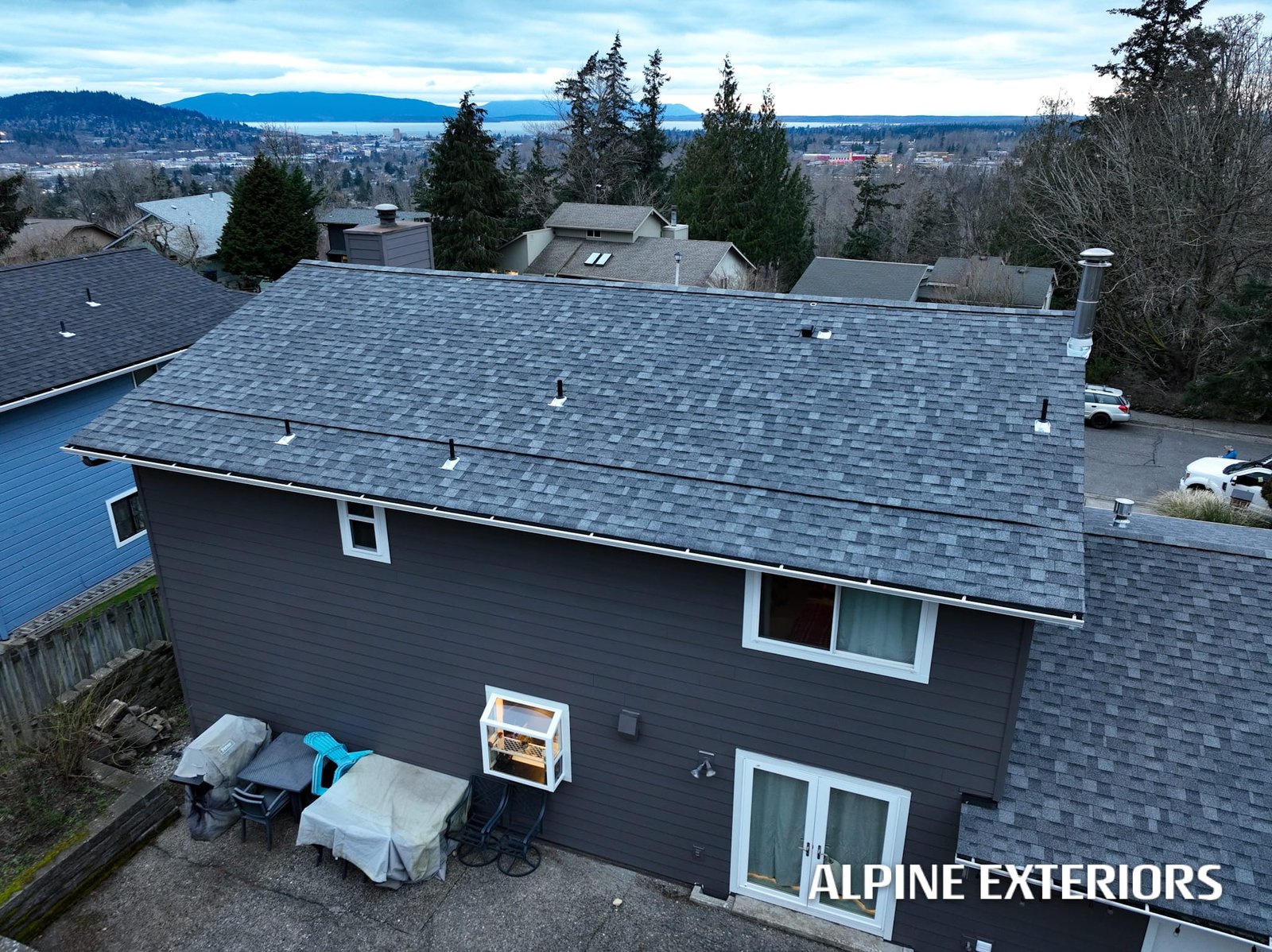
A cool roof is a roofing surface engineered to reflect more sunlight and release absorbed heat faster than a standard dark roof, which keeps the roof deck and attic cooler on sunny days. In most of the country that translates into lower summer air-conditioning bills, but here in Skagit, Island and Whatcom counties, where summers are short and mild, the energy-savings case is weaker than the marketing usually suggests.
That doesn't mean cool roofing has no place on a Mount Vernon or Anacortes home — it just means the reason to choose one locally is usually different from the reason a homeowner in a hot, sunny climate would choose one.
"Cool roof" isn't a single product, it's a performance category. A roofing material earns the label based on two properties: solar reflectance (how much sunlight it bounces away rather than absorbs) and thermal emittance (how efficiently it releases the heat it does absorb). Products are typically rated with a Solar Reflectance Index, and many carry an ENERGY STAR rating for roofing. You'll see the technology show up in a few forms:
In a hot climate, a cool roof lowers attic temperatures enough to measurably cut cooling load, which is the whole point of the category. That's the context the concept was built for, and it's worth understanding before deciding whether it earns its keep on a roof in Burlington or Sedro-Woolley.
Western Washington's climate doesn't stress a roof the way a hot southern climate does, and it doesn't stress it the way a hurricane-prone coast does either — we simply don't get those wind events here. What we do get is a specific, well-known set of conditions that should actually drive roofing decisions in Skagit, Island and Whatcom counties:
None of these are heat-driven problems, which is why a cool roof's headline benefit — reduced attic heat gain — has less to offer here than in a climate with long, intense summers. The Washington State Energy Code, which governs the energy performance of homes built or re-roofed in this region, is built around that same reality: it puts its emphasis on wall and attic insulation levels, air sealing and glazing performance rather than on roof solar reflectance, because reflectance isn't where this climate loses or gains most of its energy.
If summer cooling costs aren't the primary driver in this climate, that doesn't mean color and reflectivity are irrelevant — it means they should be weighed against the problems that actually show up on a Skagit or Whatcom County roof.
Alpine Exteriors walks homeowners through this tradeoff during a roof inspection or estimate — what actually needs solving on your roof, whether that's moss remediation, ventilation, flashing repair or material choice, rather than defaulting to whatever is being marketed hardest that season.
Some, but modestly. Our summers are short and mild compared to the climates cool roofing was originally developed for, so the reduction in attic heat gain is real but small relative to what proper insulation and air sealing accomplish under the Washington State Energy Code. Most homeowners here see more value from attic insulation upgrades than from roof reflectance alone.
Not directly — reflectivity and moss resistance are two different properties. Moss thrives in shade and moisture regardless of how reflective the shingle is, so if moss is your main concern, an algae-resistant shingle with copper or zinc granules, along with better sun exposure and airflow where possible, addresses the actual cause more directly than a cool-roof product would.
No. The Washington State Energy Code sets performance requirements for insulation, air sealing and window/door efficiency, but it does not mandate a specific roof color or solar reflectance rating for residential roofs in this region. Roof color and reflectance remain a homeowner choice here, not a code requirement.
The reflective coating itself isn't especially vulnerable to salt air, but the same corrosion risk that affects any roofing system near saltwater — fasteners, flashing, gutter hardware — applies equally to cool-roof products. On waterfront properties, choosing corrosion-resistant hardware and metal components matters more than the reflectance rating of the roofing material itself.
Whether a cool roof is worth the upgrade depends on your home's orientation, shading, current roof condition and the problems it's actually facing — not a generic recommendation. Alpine Exteriors, WA contractor license ALPINI751OW, serves Mount Vernon, Anacortes, Burlington, Sedro-Woolley, La Conner, Stanwood, Camano Island and Bellingham, and can walk your roof with you to lay out real options and real tradeoffs before you spend a dollar on a re-roof.



