
In Bow, the two things that shorten a roof's life faster than anything else are moss on shaded, north-facing slopes and the sheer volume of rain the roof has to shed every winter. Neither problem is dramatic in the first year or two, but left alone through a few wet seasons they compound into lifted shingles, soft decking, and leaks that tend to show up during the worst storm of the year rather than on a convenient dry afternoon.
The fix is not complicated, but it does require doing the right things on a schedule instead of waiting for a stain to appear on the ceiling. That means periodic moss treatment, gutter maintenance that matches how much tree cover surrounds the house, and an honest look at flashing and ventilation every few years. Alpine Exteriors sees the same pattern on roof after roof around Bow, Edison, and the Samish Bay shoreline: the homes that get ahead of moss and drainage issues get twenty-plus years out of a roof, and the ones that don't often need premature repairs by year twelve or fifteen.
Moss doesn't just sit on top of a roof looking messy — it actively holds moisture against the shingle surface long after the rest of the roof has dried out. Composition shingles are designed to shed water quickly and dry between rain events. A mat of moss defeats that by acting like a sponge, keeping the granule layer wet for days at a stretch. Over time this softens the asphalt, accelerates granule loss, and lifts shingle edges as the moss rhizoids work into the seams. Once shingles start lifting at the edges, wind-driven rain gets underneath them, and that's when small cosmetic problems turn into actual leaks at the decking.
Rain volume compounds the issue in a different way. Skagit County gets the bulk of its annual rainfall between October and March, often in extended stretches of steady, low-intensity rain rather than short intense downpours. That kind of rain is less dramatic than a summer thunderstorm but it's relentless — gutters and downspouts stay full for days, valleys and flashing stay saturated, and any weak point in the roofing system has a much longer window to fail. A gutter that's half-clogged with fir needles might handle an August cloudburst fine and still overflow constantly in December, sending water down the fascia and into the soffit rather than off the roof where it belongs.
None of this is unique to any one roofing material. Composition shingles, metal, and cedar all deal with moss and moisture differently, but every roof type in this area needs the same underlying things: a way to dry out between rain events, clear drainage paths, and flashing that hasn't been undermined by standing debris or moss growth at the laps.
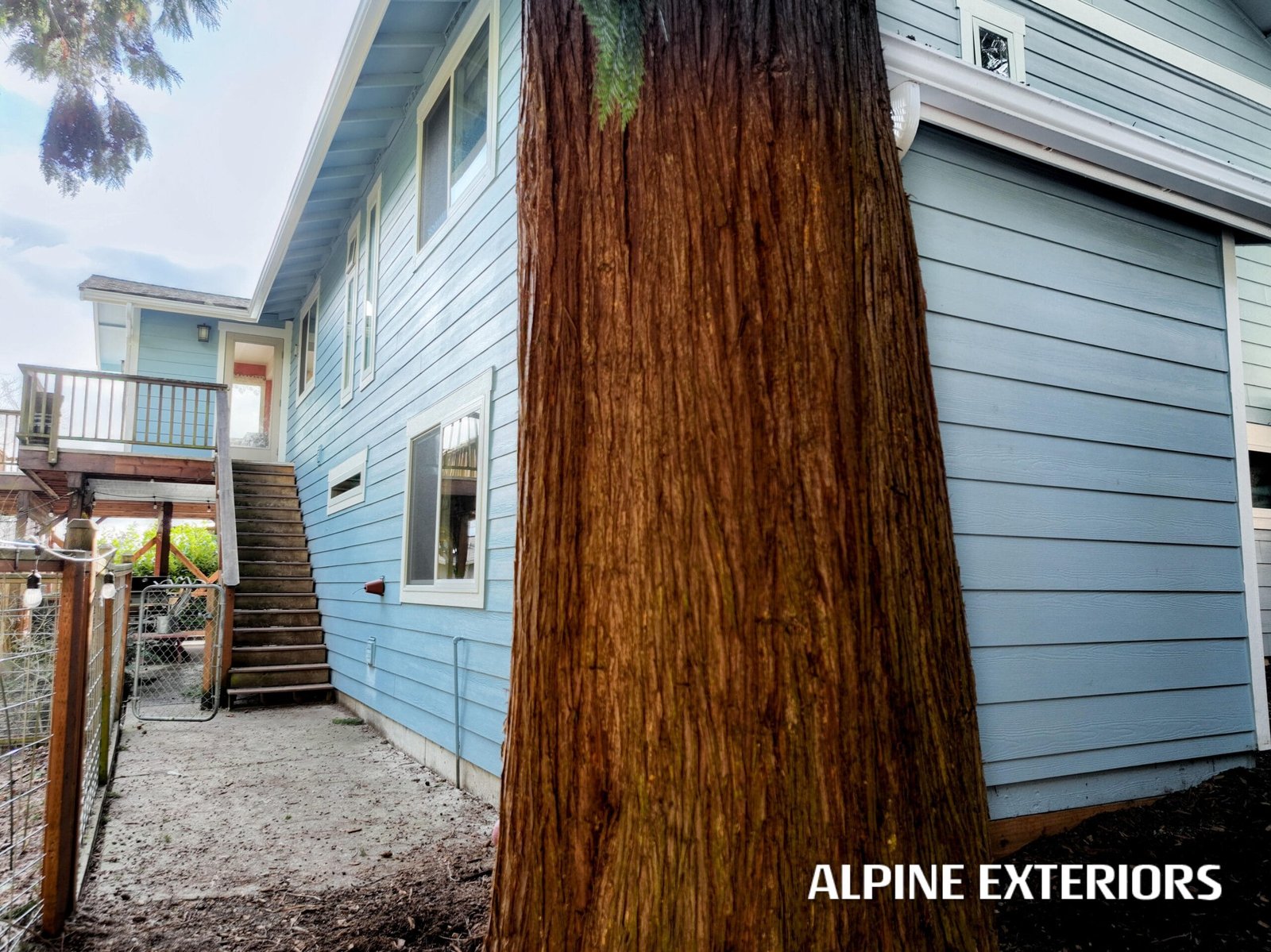
Bow sits in a spot that combines several conditions that don't often show up together. The town is close enough to Samish Bay and the Chuckanut shoreline that homes nearer the water pick up a mild but real salt air component, which over years can accelerate corrosion on exposed metal fasteners, flashing, and gutter hardware faster than it would further inland. At the same time, much of the housing stock around Bow sits under mature Douglas fir and cedar canopy, which is exactly the kind of deep, near-constant shade that lets moss establish on north- and east-facing roof slopes even when the rest of the roof gets enough sun to stay relatively clean.
Wind is the other factor that gets underestimated here. The Skagit flats are open, low-lying agricultural land, and wind that funnels down the valley or comes off the Strait of Juan de Fuca can hit exposed roof edges and ridge caps with more force than the calm, tree-sheltered feel of many Bow properties would suggest. That wind exposure matters most at the vulnerable points — ridge caps, hip lines, and any shingle already loosened by moss — which is part of why moss damage and wind damage often show up together rather than as separate problems.
Elevation and cold snaps play a smaller but still real role. Bow itself doesn't sit high enough to get the regular snow load that homes up toward Sedro-Woolley and the Cascade foothills deal with, but the area isn't immune to the occasional Arctic outflow event that brings a hard freeze or a few inches of snow with it. When that happens on a roof that's already carrying moss and trapped moisture, the freeze-thaw cycle can crack shingles or open up small gaps at flashing that summer weather would never expose. It's an occasional risk rather than an annual one, but it's real enough to factor into how a roof is maintained.
Finally, any reroofing or major roof work in this area falls under the Washington State Energy Code, which sets ventilation and insulation requirements that affect how a roof assembly is built, not just what shingle goes on top. Proper attic and roof ventilation isn't optional detailing — it directly affects how quickly moisture leaves the roof deck, which in turn affects how much of a foothold moss and rot get in the first place.
Most of what protects a roof in Bow is unglamorous and repetitive rather than a single big fix. A realistic maintenance approach looks like this:
On cost: a moss treatment and gutter service visit is a modest expense compared to a full reroof, generally in the low hundreds of dollars depending on roof size and access, while a full roof replacement on an average Skagit County home typically runs from the high five figures into the low six figures depending on material, roof complexity, and how much of the decking needs replacing underneath. Metal roofing costs more up front than composition shingle but holds up differently against moss and wind in a shaded, damp lot, so it's worth weighing against the specific conditions of the property rather than defaulting to whatever the last roof was.
It's also worth being honest about the limits of maintenance. No amount of cleaning will make a heavily shaded, north-facing slope on a wooded Bow lot behave like a sun-exposed roof in Mount Vernon — the moss will come back faster there no matter what, and that's a realistic expectation to set rather than a failure of maintenance. Alpine Exteriors generally recommends homeowners in heavily wooded areas plan on moss treatment as a recurring line item, not a one-time fix.
For roofs with significant shade from fir or cedar cover, once or twice a year is realistic, ideally before the fall rains start and again partway through winter if growth is heavy. Roofs with more sun exposure may only need attention every year or two. The right interval depends more on how much shade a specific slope gets than on a fixed calendar rule.
High-pressure washing can strip granules off composition shingles and force water under the shingle edges and flashing, which does more long-term harm than the moss it removes. A soft wash approach, or manual removal with a roof rake for heavier buildup, gets the same result without accelerating shingle wear.
Trimming genuinely helps — more sunlight and airflow across a roof slope slows how quickly moss reestablishes after a cleaning. It won't fully eliminate moss on a lot that's surrounded by mature trees, but homeowners who trim back overhanging limbs typically go longer between treatments than those who don't.
A roof with isolated moss damage, a few lifted shingles, or a single failed flashing point is usually a repair situation. Widespread granule loss, soft spots in the decking, or moss damage across multiple slopes generally points toward replacement being the more cost-effective option, since patching an aging roof in several places often costs more over a few years than replacing it once. An in-person inspection is the only reliable way to tell which situation a given roof is in.
If moss has taken hold on a shaded slope, your gutters can't keep up with the fall rains, or it's simply been a while since anyone looked closely at the flashing and ventilation, it's worth getting an honest inspection before the next wet season sets in. Alpine Exteriors is a licensed Washington contractor (license ALPINI751OW) working throughout Skagit, Island, and Whatcom counties, including Bow, Edison, Mount Vernon, Anacortes, and Burlington, and can walk a property to give a clear picture of what's maintenance, what's repair, and what's actually worth replacing. Reach out to schedule a roof evaluation for your Bow home.