
If your Big Lake home sits under fir or cedar cover, the north or east side of your roof is almost certainly growing moss right now, and that moss is the single biggest threat to your roof's lifespan out here. The fix isn't a once-a-decade re-roof — it's a rain-and-shade maintenance routine that most Skagit County homeowners never get told about until shingles are already lifting.
Big Lake sits in a pocket of Skagit County where dense second-growth timber, the lake itself, and low afternoon sun angles combine to keep roof surfaces damp for days after a storm passes. Moss and algae need three things to establish on a roof: shade, moisture, and a surface texture they can grip — asphalt composition shingles, the most common roofing material in this part of Washington, provide all three once granules start to wear. Spores land on a shaded slope, the constant film of moisture from tree drip and fog lets them root between granules, and within a couple of years you have a visible mat working its way up from the eaves.
The problem isn't cosmetic. Moss holds water directly against the shingle mat instead of letting it run off, which accelerates granule loss and, over a few seasons, lets moisture wick under the shingle edges and into the underlayment and decking. On a roof that's otherwise sound, unmanaged moss can shave years off the usable life of the roofing material — not because the shingles were bad, but because they were never allowed to dry out between rains. We've opened up decking on Big Lake homes where the shingles looked only moderately mossy from the ground but the plywood underneath had already gone soft along the eaves.
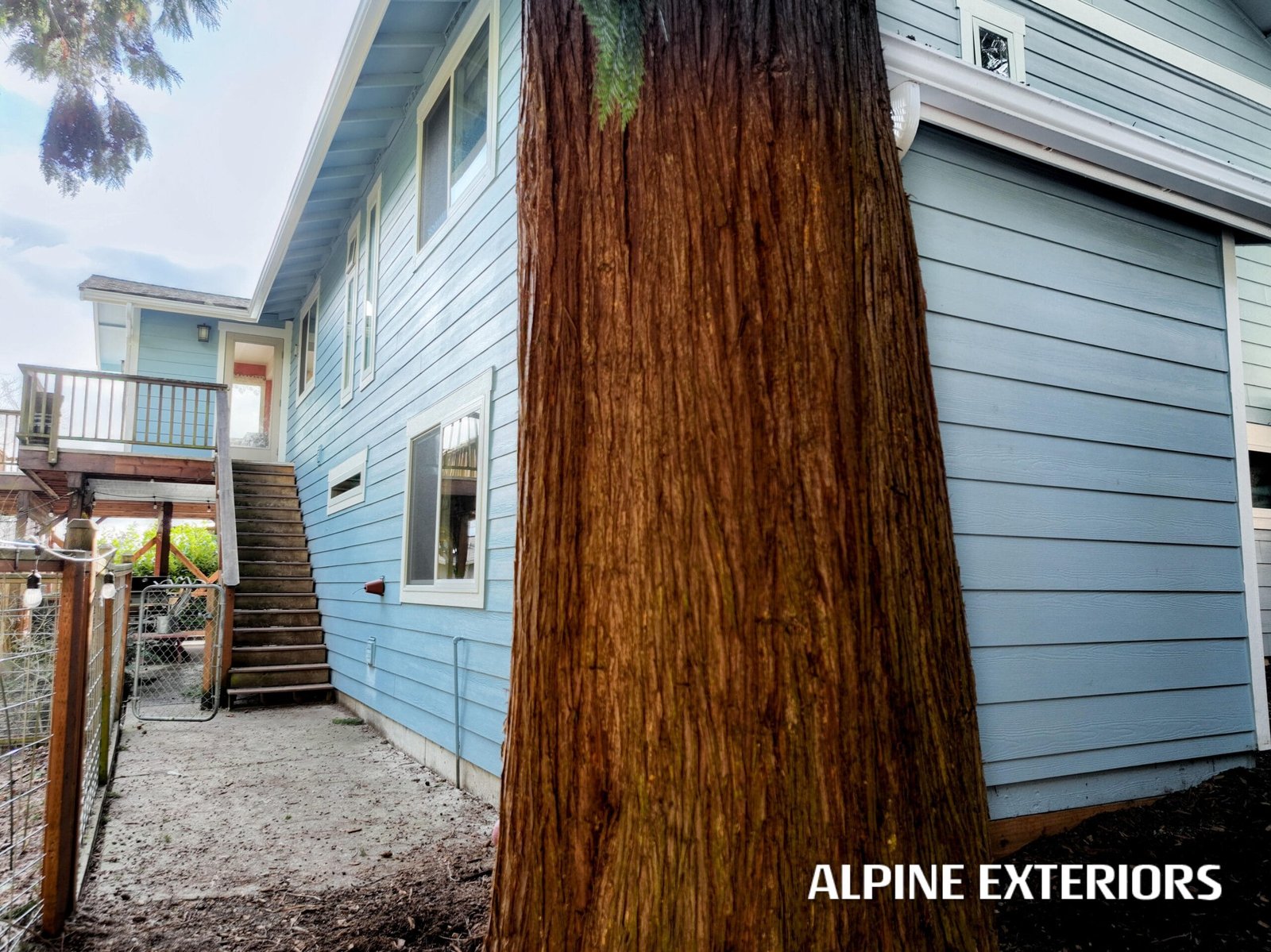
Big Lake isn't coastal, so it doesn't deal with the salt-air corrosion issues that Camano Island or Anacortes homeowners have to think about, and it's low enough in elevation that heavy snow loads are rare. But it has its own specific mix of conditions that shape how a roof should be built and maintained here:
Most of what protects a Big Lake roof is unglamorous and needs to happen on a schedule, not just when something looks wrong.
Alpine Exteriors handles roofing, gutters, and the related decking and window work that often surfaces during a roof inspection — moisture problems rarely stay contained to just the roof once they've been present for a few seasons. As a Washington-licensed contractor (ALPINI751OW) working across Skagit, Island, and Whatcom counties, we see the same moss-and-moisture pattern repeat across Big Lake, Sedro-Woolley, and the wooded lots around Lake Cavanaugh, and the maintenance routine above is the same one we'd recommend to our own family in this area.
For a roof under significant conifer cover, a light moss treatment and debris removal roughly once a year is reasonable, with a full inspection every two to three years. Roofs in more open, sunnier parts of Skagit County can often go longer between cleanings, but heavy shade shortens that interval considerably.
Not on asphalt composition shingles. High-pressure washing strips the protective granules that shield the shingle's asphalt layer from UV and weather, which can shorten the roof's remaining life even though it looks clean immediately afterward. Low-pressure rinsing combined with manual moss removal and a zinc or copper treatment is the safer long-term approach.
Big Lake sees occasional wet snow and freezing conditions, but it's not a heavy snow-load area, so most homes don't need specialized snow-country roofing systems. What matters more is proper attic ventilation and ice-and-water-shield underlayment at the eaves and valleys, which protects against the ice-damming that can happen during a cold snap.
Overflow despite regular cleaning is often a sizing or slope problem rather than a debris problem — gutters sized for a smaller roof or installed with insufficient pitch can't keep up with Skagit Valley's steady winter rainfall, especially with the volume conifers shed into them. It's worth having the gutter system evaluated alongside the roof rather than assuming more frequent cleaning will solve it.
If you've noticed moss creeping up your roofline, a gutter that never seems to keep up, or you just haven't had an inspection in a few years, it's worth getting a straightforward look before small problems turn into deck-level repairs. Alpine Exteriors serves Big Lake and the rest of Skagit, Island, and Whatcom counties — including Mount Vernon, Anacortes, Burlington, Sedro-Woolley, La Conner, Stanwood, Camano Island, and Bellingham — for roofing, gutters, windows, and decks. Reach out for an inspection and an honest assessment of what your roof actually needs, not a sales pitch for a full replacement you don't need yet.