
After a windstorm moves through Edison, walk the outside of your house first and look for three things: lifted or missing roof shingles, gutters pulled away from the fascia, and any tree limb contact on the roof, siding or windows. If you find damage, photograph it before you touch anything, get a tarp on any exposed roof deck within a day or two to stop water intrusion, and call your insurance carrier and a licensed local contractor in the same week. Waiting is the single biggest mistake homeowners make, because a small wind-lifted shingle turns into a soaked attic and a much larger repair after two or three more rain events roll through off the Salish Sea.
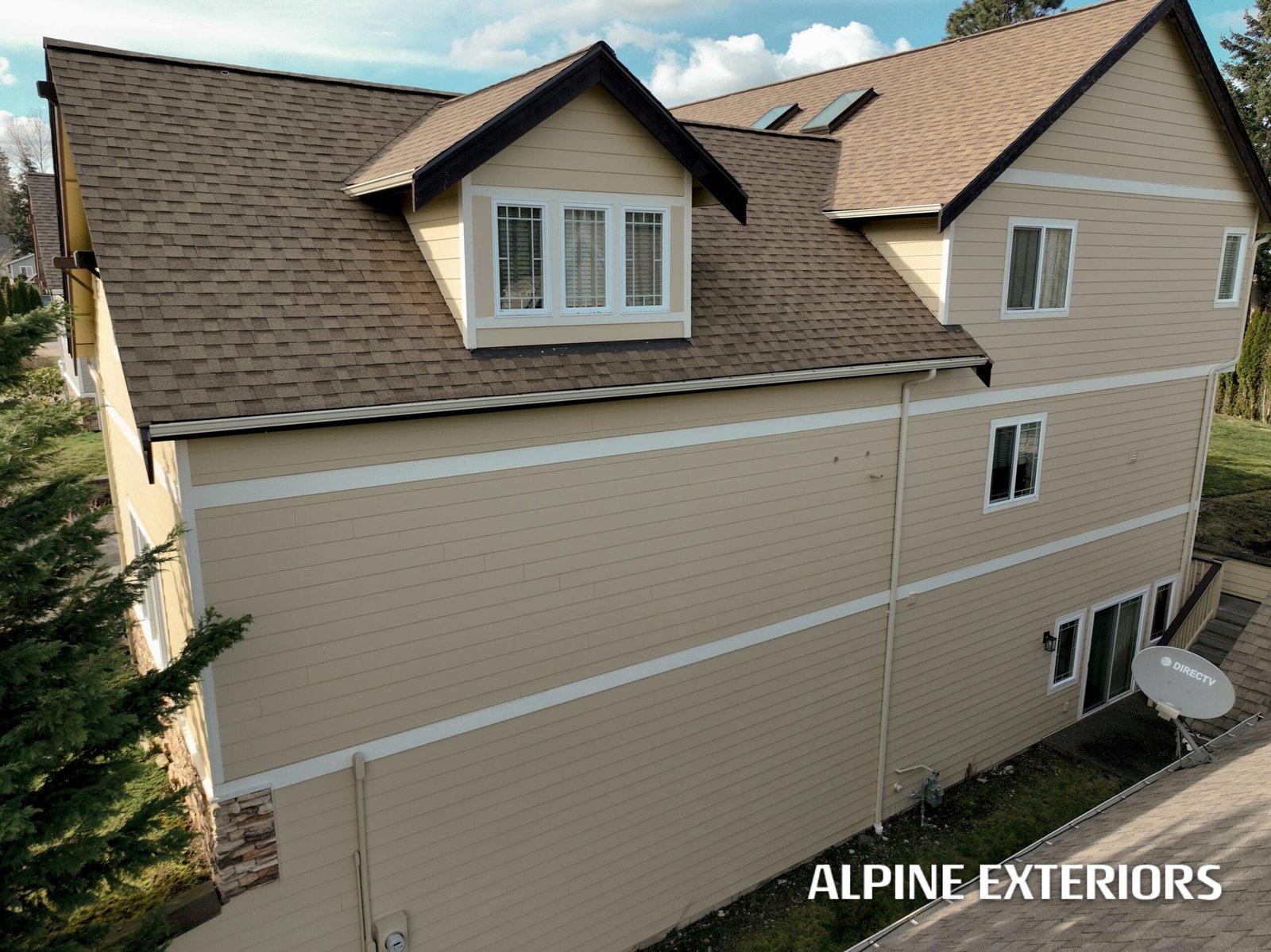
Edison sits low on the Skagit River delta between Samish Bay and the Chuckanut hills, which means the property is exposed on the open, flat side and can also catch funneled gusts where the terrain narrows near Bow Hill and the Chuckanuts. Wind damage here rarely looks like a torn-off roof section. More often it is a run of shingles with broken or lifted sealant strips along a ridge or a south or west-facing slope, a satellite dish or chimney flashing that has worked loose, or a gutter section that has pulled its fasteners out of rotted fascia board. Rain damage tends to show up second, days or weeks after the wind event, as a stain on a ceiling or a soft spot in siding where water has been finding its way behind a lifted piece of trim. Fallen limbs are the most visible kind of damage but not always the most serious — a limb that dents a gutter is a quick fix, while the same limb scraping across three courses of shingles as it falls can open up a leak path that will not show itself until the next heavy rain.
A thorough post-storm check covers the roof field, the ridge and hip caps, all flashing (chimney, skylight, wall-to-roof transitions), gutters and downspouts, siding and trim, window and door seals, and any deck or fence structure that took direct wind or limb impact. Decks are easy to overlook because the damage is often structural rather than cosmetic — a ledger board pulled slightly away from the house, or a post base that has shifted, won't always be obvious from a quick look but matters a great deal for safety.
Edison and the surrounding Skagit and Whatcom county lowlands see a specific combination of conditions that shapes how storm damage actually happens here. Winters bring long stretches of heavy, sustained rain rather than short intense downpours, so a roof with even a small compromised area stays wet for days at a time instead of drying out between storms — that is what turns a minor leak into rot, mold or a sagging ceiling. Wind here is persistent and directional, funneling across the open Skagit flats and off the Strait and Samish Bay, which is why homes on the exposed western and southern edges of Edison tend to see more shingle lift and siding stress than homes tucked closer to tree lines or the base of the Chuckanuts. Those same tree lines create the region's other quiet problem: shaded, north-facing roof slopes near mature conifers grow moss year-round, and moss holds moisture against the shingle mat, lifts tabs, and makes a roof measurably more vulnerable the next time wind gets underneath an edge. Salt air is a real factor for homes closer to Samish Bay and out toward the islands, where it accelerates corrosion on gutter fasteners, flashing and exposed metal trim faster than it would inland. The foothills toward Lake Whatcom and the Cascade approaches occasionally see wet snow or ice mixed into a windstorm, which adds weight to gutters and tree limbs already stressed by wind — a combination that is uncommon right in Edison itself but shows up often enough in the broader service area that it's worth checking for after any storm that brought a mix of precipitation. None of this is hurricane-level wind or hail the way other parts of the country deal with; it's a slower, wetter, more persistent kind of wear that rewards prompt small repairs and punishes delay.
Start with a visual check from the ground — binoculars are genuinely useful here — before getting on a ladder or roof, since wet, moss-covered or wind-loosened surfaces are not safe to walk in the hours after a storm. Look for shingles that are missing, curled, or a different color than the surrounding field (a sign the granule surface has been scraped off), for gutters sagging or separated from the house, for any limb resting on or near the roofline, and for water stains on interior ceilings or around window and door frames.
On the code side, if a storm forces a larger repair — replacing a full roof slope, a section of siding down to the sheathing, or storm-damaged windows — the replacement work has to meet current Washington State Energy Code requirements for insulation and air sealing, not just match what was there before. That's not a bad thing; it usually means the repaired section performs better than the original, but it's worth knowing going in so the estimate and the claim conversation both account for it. Alpine Exteriors works within those code requirements as a matter of course on every storm repair, and carries Washington contractor license ALPINI751OW for work across Skagit, Island and Whatcom counties.
It's also fair to say what a repair contractor can't do for you: no contractor can speed up your insurance company's claims process, and a legitimate one won't promise a specific settlement amount or claim to negotiate your policy on your behalf beyond providing an honest, itemized estimate and photo documentation. Be cautious of anyone going door to door immediately after a storm offering to handle your entire claim — that's a pattern worth being skeptical of, even when the damage described sounds accurate.
If you can see daylight through the roof deck from the attic, if a ceiling stain is actively growing or dripping, or if more than a few shingles are visibly missing or torn on a slope that faces the next incoming weather, tarp it before the next rain rather than waiting for an inspection appointment. A temporary tarp done correctly, weighted and sealed at the edges, buys you several days without the leak getting worse, and it's a small cost compared to what a soaked attic insulation layer or ceiling drywall replacement runs.
Most standard Washington homeowners policies cover sudden wind damage and limb impact, but coverage details, deductibles and whether a separate wind or storm deductible applies vary by policy and carrier, so the honest answer is to call your agent and ask directly rather than assume. Document the damage with photos before cleanup and get a written repair estimate, since adjusters generally want both the visual evidence and a contractor's assessment of scope before approving a claim.
Repeated damage in one location is almost always a sign of an underlying weak point rather than bad luck — commonly a shaded, moss-affected area where shingles have already lost their grip, a flashing detail that was never properly sealed, or a spot where wind consistently funnels harder because of a nearby tree line or the shape of the roofline itself. A full inspection after the immediate repair is worth doing specifically to find and fix that root cause, rather than patching the same spot again next season.
Straightforward like-for-like repairs, such as replacing a damaged section of shingles or a run of gutter, typically don't require a permit, but larger repairs involving structural framing, a significant portion of the roof, or window replacement usually do under the local building department's rules. A licensed contractor working in the area will know which threshold applies and pull the right permit as part of the job rather than leaving that for the homeowner to sort out.
If a recent windstorm, heavy rain, or a fallen limb has left your Edison home with roof, siding, window, gutter or deck damage, it's worth having it looked at before the next system rolls in off the Skagit flats. Alpine Exteriors serves Edison and the surrounding Skagit, Island and Whatcom county communities, including Mount Vernon, Anacortes, Burlington, Sedro-Woolley, La Conner, Stanwood, Camano Island and Bellingham, with storm damage inspections and repair estimates you can use for your insurance claim. Call to schedule a walk-through and get a clear, written picture of what needs attention now versus what can wait.