
Lake Stevens sits close enough to the Cascade foothills that its roofing needs split the difference between the soggy lowland conditions common across western Washington and the occasional heavier snow load you get as elevation climbs east of town. Homeowners here are dealing with long stretches of steady winter rain, shaded lots ringed by fir and cedar trees that keep moss growing on north-facing slopes year-round, and gusty weather that blows through the valley during fall and winter storms. None of that is dramatic compared to what other parts of the country deal with, but it adds up over the 20-to-40-year life of a roof, and the wrong material or a sloppy install will show it early. Alpine Exteriors works throughout Skagit, Island and Whatcom counties and fields regular questions from homeowners in neighboring Snohomish County communities like Lake Stevens who are trying to figure out which roofing system actually makes sense for their house before they start collecting bids.
For most Lake Stevens homes, a mid-to-high-grade architectural (dimensional) asphalt shingle or a standing seam metal roof will serve you best. Architectural shingles remain the most cost-effective option for the moss and moisture pressure common on tree-covered lots, especially when paired with copper or zinc strips at the ridge to slow moss regrowth. Standing seam metal costs more up front but sheds rain and snow cleanly, resists wind uplift better than shingles when installed with proper fastening, and typically outlasts asphalt by decades. Synthetic composite shakes are a reasonable middle option if you want the cedar look without the maintenance burden of real wood in a wet climate. Real cedar shake and clay or concrete tile are both workable but come with real trade-offs described below — they are not automatically the wrong choice, but they demand more from both the material and the installer in a region that gets this much rain.
Not every criterion that matters in a drier or hotter climate applies to Lake Stevens. We weighed each roofing option against the conditions that actually show up on jobs in this area:
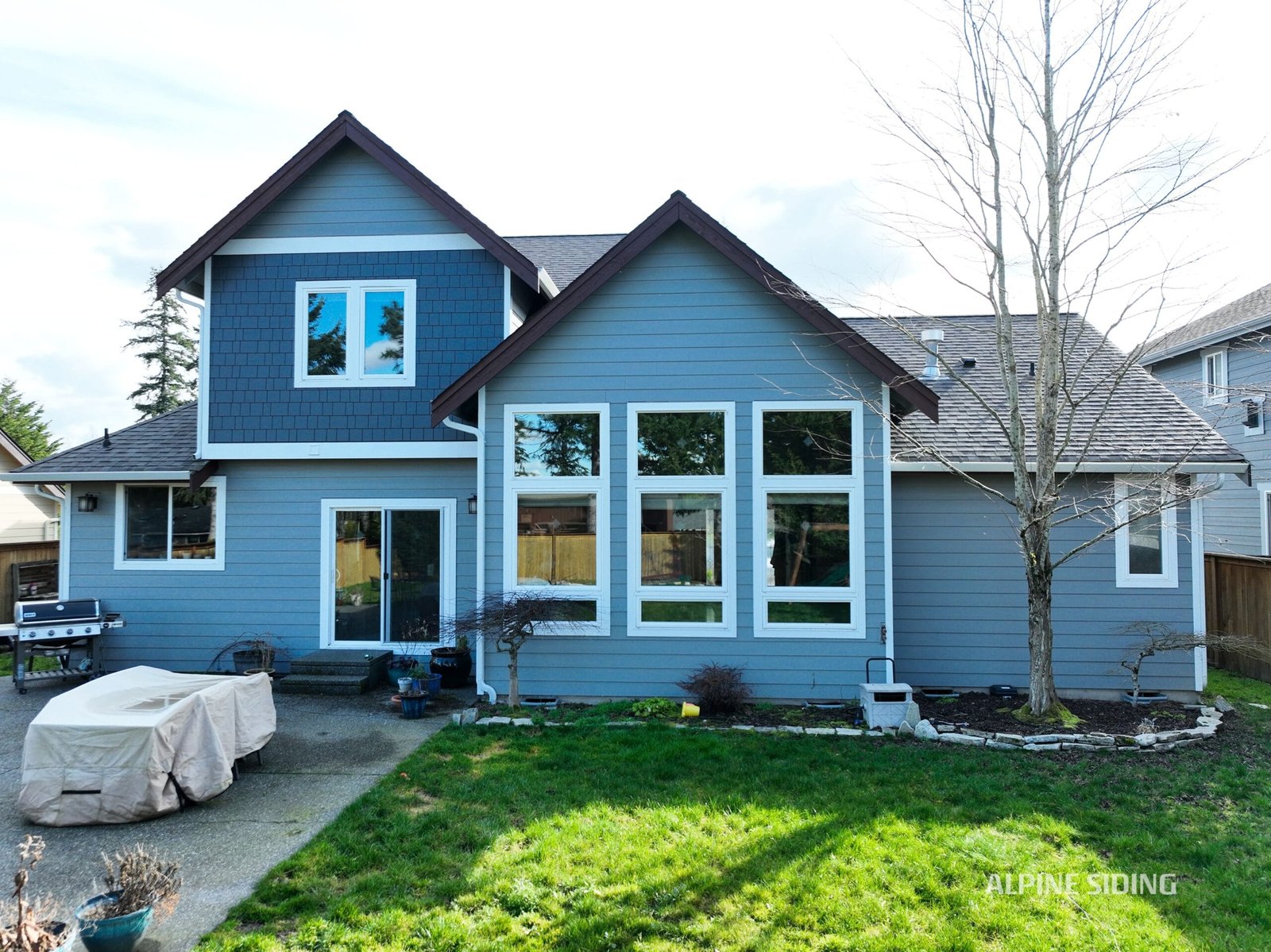
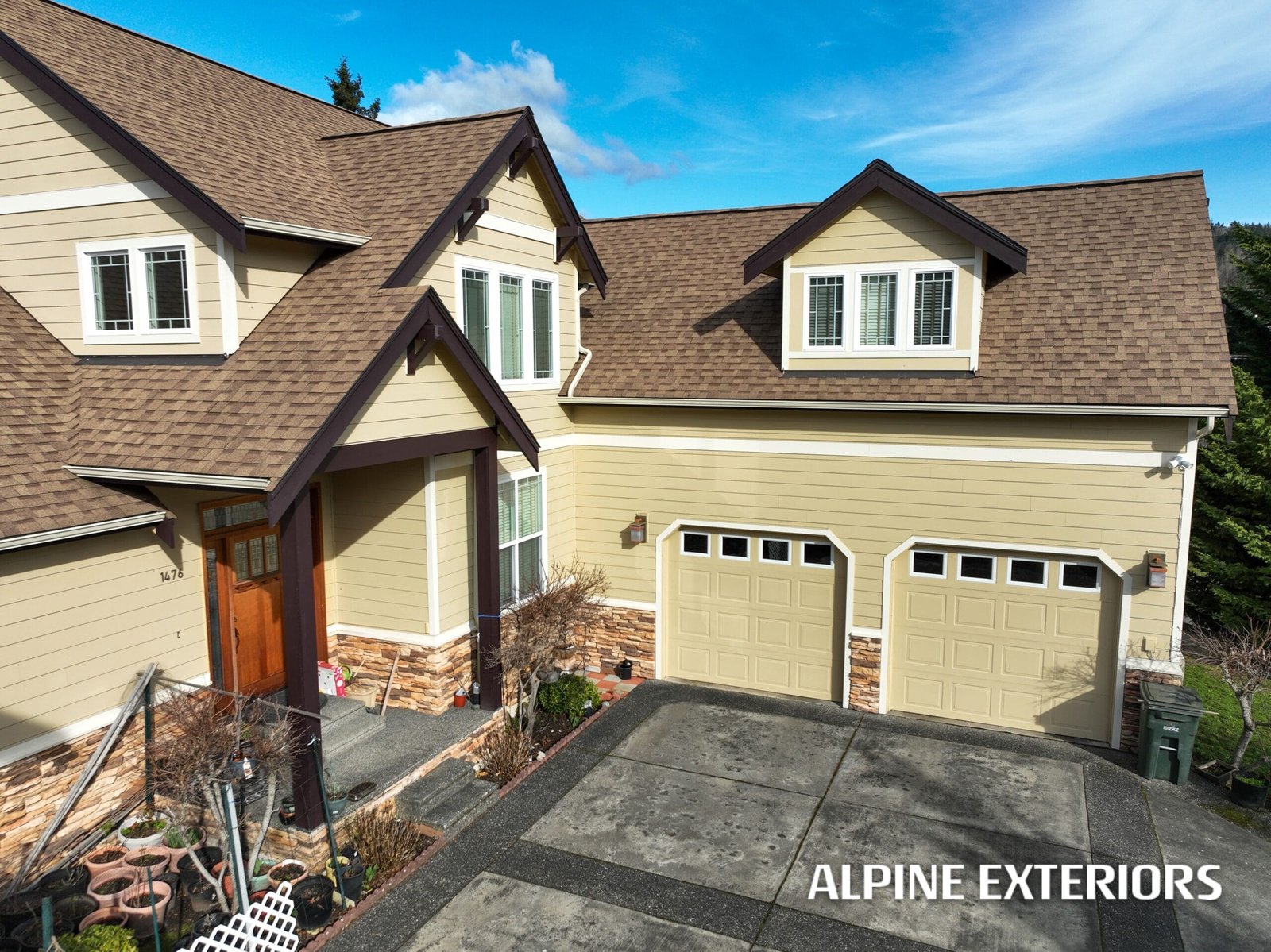
Architectural (or dimensional) shingles are the default choice for a reason: they're widely available, every local roofing crew knows how to install them correctly, and a quality product with a synthetic underlayment and proper ridge and valley flashing holds up well against the region's rain load. On shaded Lake Stevens lots, choosing a shingle with algae-resistant granules (usually copper-infused) meaningfully slows moss and streaking compared to a builder-grade shingle without that treatment.
Pros: Lower material and labor cost than metal or tile, wide color and style selection, straightforward repairs if a section is damaged, good wind ratings when a higher wind-rated product is specified and properly nailed.
Cons: Even algae-resistant shingles will develop moss on heavily shaded north slopes eventually and need periodic soft-washing or moss treatment; shorter lifespan than metal or tile, typically landing in the 25-to-35-year range depending on product line and how well the roof is ventilated; granule loss accelerates on roofs with inadequate attic ventilation, which traps heat and moisture against the underside of the deck.
Standing seam metal has become a common upgrade choice in this region, and for good reason on a lot with a lot of shade or a steep roof pitch. Its smooth, continuous panels give moss very little to grip onto, and its interlocking seams shed rain fast enough that ice buildup in a cold snap has less chance to back up under the roofing.
Pros: Excellent rain-shedding performance, strong resistance to moss and algae compared to any shingle product, long service life often in the 40-to-60-year range with a quality coating, better wind performance when panels are properly clipped and seamed.
Cons: Meaningfully higher upfront cost than asphalt, noise during heavy rain unless solid decking and proper underlayment are used, requires a crew experienced with metal detailing — a poorly installed standing seam roof with bad flashing at penetrations can leak worse than a mediocre shingle roof, and color-matching future additions or repairs can be harder years down the road.
Composite shake products, made from engineered polymer or rubber blends, are marketed as a way to get the cedar look without cedar's maintenance. In practice they perform reasonably well in this climate, though quality varies a lot between manufacturers.
Pros: Better moisture and rot resistance than real wood shake, typically carries a solid warranty, decent impact and wind resistance, doesn't need the periodic treatments real cedar requires.
Cons: Costs more than asphalt shingles and sometimes approaches metal pricing depending on the product line; long-term performance data is thinner than for asphalt or metal since these products haven't been on Pacific Northwest roofs for as many decades; appearance can look noticeably synthetic up close on some lower-tier products.
Cedar has deep roots as a regional roofing material and still shows up on older Lake Stevens homes and on owners who specifically want the look. It can be a legitimate choice, but it asks more of both the homeowner and the climate than the other options here.
Pros: Distinctive natural appearance that many homeowners specifically want, decent insulating value, can be a good match for older or craftsman-style homes in the area.
Cons: Wood is the material most vulnerable to the region's damp, shaded conditions — it needs regular treatment against moss, rot and moisture retention, and a neglected cedar roof degrades noticeably faster here than in a drier climate; typically the shortest lifespan of the options discussed if maintenance lapses; installation and any later repairs cost more than asphalt because fewer crews specialize in it well.
Tile roofing is uncommon in this part of Washington and it's worth explaining why, since it occasionally comes up in conversations about durable roofing.
Pros: Very long service life, excellent fire resistance, holds up well to wind when properly fastened.
Cons: Tile is heavy, and most Lake Stevens homes built with a standard shingle-weight roof framing were not engineered for tile's load — retrofitting typically requires structural reinforcement that adds significant cost; tile is also more prone to cracking under foot traffic or falling branches from mature trees, which is a real consideration on wooded lots; it is genuinely rare to see a licensed contractor recommend a full tile retrofit in this area given the cost-to-benefit trade-off versus metal.
A few choices consistently cause problems on roofs in this region, and it's worth naming them directly. Skip 3-tab shingles if you have any real budget flexibility — they carry a lower wind rating and shorter lifespan than architectural shingles for a relatively small cost difference, and they show wear and moss faster on shaded slopes. Avoid any reroof that doesn't address attic ventilation as part of the scope; the Washington State Energy Code sets ventilation and insulation expectations for a reason, and a roof installed over a poorly ventilated attic will trap moisture, accelerate moss growth, and shorten the life of whatever material sits on top of it regardless of how good that material is. Be cautious of any bid that skips ice-and-water shield membrane at eaves, valleys and around penetrations — it's inexpensive relative to the whole job and it's the detail that prevents the freeze-thaw and wind-driven rain problems this area sees from turning into interior leaks. And be wary of a contractor who proposes the same roofing system for every house without asking about your lot's tree cover, roof pitch, or which slopes face north — a one-size answer usually means they aren't actually accounting for your specific conditions.
It depends heavily on material and how shaded the lot is. A quality architectural asphalt shingle roof with good attic ventilation typically lasts in the 25-to-35-year range in this climate, while standing seam metal often reaches 40 to 60 years. Heavily shaded roofs with persistent moss tend to land toward the shorter end of any material's expected range unless the moss is actively managed.
Yes, especially on north or east-facing slopes under mature trees, which describes a lot of lots around Lake Stevens. Moss doesn't just look bad — it holds moisture against the roofing material and can lift shingle edges or work into seams over time, so it's worth a visual check once or twice a year even on a newer roof.
Any permitted reroof or new construction has to comply with the Washington State Energy Code, which sets requirements around insulation and attic or roof-assembly ventilation. This matters beyond just paperwork — proper ventilation is one of the main things that keeps moisture from building up under the roofing and shortening its life.
Alpine Exteriors is based in and primarily serves Skagit, Island and Whatcom counties, including Mount Vernon, Anacortes, Burlington, Sedro-Woolley, La Conner, Stanwood and Camano Island. For homeowners in nearby Snohomish County communities like Lake Stevens, it's best to reach out directly to confirm whether a project falls within current service range before assuming it's covered.
Choosing between asphalt, metal, synthetic shake, cedar or tile comes down to your specific roof pitch, tree cover, and budget — not a generic recommendation. Alpine Exteriors, licensed in Washington under contractor license ALPINI751OW, has spent years working through exactly these trade-offs on roofs across Skagit, Island and Whatcom counties. If you're weighing options for a home in the broader region, reach out for a straightforward walk-through of what actually makes sense for your roof, with honest pros and cons rather than a pitch for the most expensive system on the list.