
An exterior warranty is really two separate promises, not one. A manufacturer warranty covers defects in the roofing, siding, window, or decking material itself, while a workmanship warranty covers whether the contractor installed it correctly. Most warranty disputes trace back to a homeowner assuming one covers the other.
When a roof leaks two years after installation, the shingle manufacturer will usually inspect and ask a simple question: did the material fail, or did the installer make a mistake? If it's a flashing detail, a nail pattern, or a ventilation error, that's a workmanship issue, and the manufacturer's material warranty typically won't touch it. That's the gap a separate labor or workmanship warranty is supposed to close, and it's the one a homeowner has the most control over when choosing a contractor.
Material warranties vary by product and by manufacturer, and the fine print matters more than the length of time printed on the brochure. A few patterns show up across roofing, siding, window, and decking materials:
Windows add another layer: insulated glass units carry their own seal-failure warranty (usually the first sign of failure is fogging or condensation between the panes), separate from the frame and hardware warranty. Decking, especially composite decking, often has a fade-and-stain warranty that's narrower than the structural warranty on the boards themselves. Reading each product's warranty as its own document, rather than assuming "the roof is covered" as a blanket statement, avoids most of the surprises.
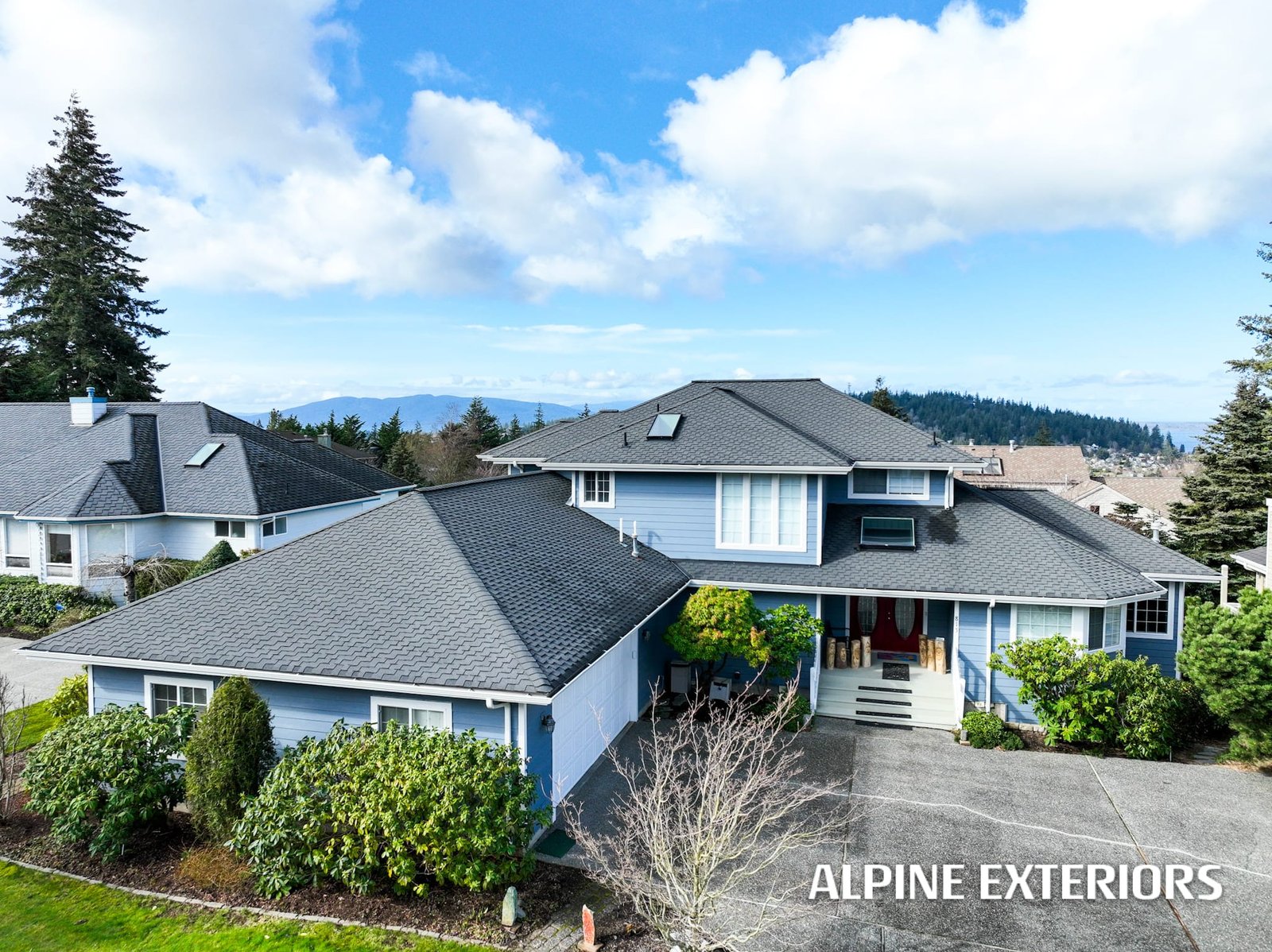
Warranty terms are written nationally, but how a roof, gutter system, or set of windows actually ages depends heavily on local weather, and Skagit, Island, and Whatcom counties have a specific set of conditions that don't show up the same way everywhere.
Heavy winter rain from roughly October through March is the baseline stressor here. It's not the volume of any single storm so much as the number of wet days in a row, which puts sustained pressure on flashing details, gutter capacity, and any seam or penetration that wasn't sealed correctly the first time. Homes in Mount Vernon, Burlington, and Sedro-Woolley with mature fir and cedar cover also see moss and algae growth on shaded, north-facing roof slopes, which most shingle manufacturers explicitly exclude or limit in their warranty language — moss damage is generally treated as a maintenance issue, not a material defect.
Wind is a real factor too, particularly in exposed, low-lying areas. Open exposure across the Skagit flats and stronger gusts off the Strait of Juan de Fuca affect homes in Anacortes, La Conner, and on Camano Island, where wind-driven rain can find weak points in siding laps and window flashing that would never get tested in a more sheltered location. Those same waterfront and near-water properties, plus much of Whatcom County toward Bellingham, deal with salt air, which accelerates corrosion on exposed fasteners, metal flashing, and gutter hangers faster than it would inland. Up toward the foothills near Sedro-Woolley and Stanwood, occasional ice and snow events add freeze-thaw stress and, in bad years, ice-damming risk at eaves and valleys if attic ventilation isn't right.
The Washington State Energy Code also shapes what a warranty even means for windows. Replacement windows have to meet current U-factor requirements for the county's climate zone, and the NFRC label on the window documents that performance. That label is often tied directly to the manufacturer's warranty registration, so a window installed without proper documentation can end up both out of code compliance and short of full warranty coverage — two separate problems from the same oversight.
A warranty is only as good as the paperwork behind it and the habits that keep it valid. A few practical steps make the difference between a warranty that actually pays out and one that turns into an argument:
None of this guarantees a warranty will cover every future problem — some issues genuinely fall outside any reasonable warranty, and that's worth saying plainly rather than promising otherwise. But most of the friction homeowners run into isn't the warranty being unfair; it's not knowing what it actually said in the first place.
Generally, no. A manufacturer's warranty covers defects in the product itself — a shingle that granulates prematurely, a window seal that fails on its own, siding that warps from a manufacturing flaw. If the problem traces back to how the material was installed, that falls under the contractor's workmanship warranty instead, which is why it's worth confirming both warranties exist and understanding where the line between them sits.
Moss and algae growth is typically treated as a maintenance issue rather than a material defect, which means most manufacturer warranties don't cover the cost of moss removal or the damage moss can cause over time if left unaddressed. On shaded, north-facing roofs common in Skagit and Whatcom county neighborhoods with heavy tree cover, periodic moss treatment and gentle cleaning are part of what keeps a roof warranty meaningful, since prolonged moss growth can eventually be cited as owner neglect if a related claim comes up.
Usually not. "Lifetime" in most roofing and siding warranties refers to the expected service life of the product for the original purchaser, not the physical life of the house, and it's frequently prorated after an initial full-coverage period. It's also common for lifetime terms to apply only to the original homeowner unless a transfer provision is specifically included, so it's worth reading exactly what "lifetime" is defined as in the specific document rather than assuming it means permanent, unconditional coverage.
It depends entirely on the specific warranty's transfer terms. Some manufacturer and workmanship warranties transfer to a new owner automatically or for a small administrative fee within a certain number of years after installation; others are non-transferable and end when the original homeowner sells. Keeping the original paperwork and letting your real estate agent know the transfer terms can matter at closing, since a transferable warranty on a roof, siding, or window system can be a genuine selling point.
If you're planning a roofing, window, deck, or gutter project anywhere from Bellingham down through Mount Vernon, Anacortes, and out to Camano Island, it's worth having someone walk you through exactly what's covered before work starts, not after something goes wrong. Alpine Exteriors provides written estimates that spell out both the manufacturer material warranty and our own workmanship warranty in plain language, so you know what you're getting and what it takes to keep it valid. Contact Alpine Exteriors to schedule an assessment and get warranty terms in writing for your specific project.