

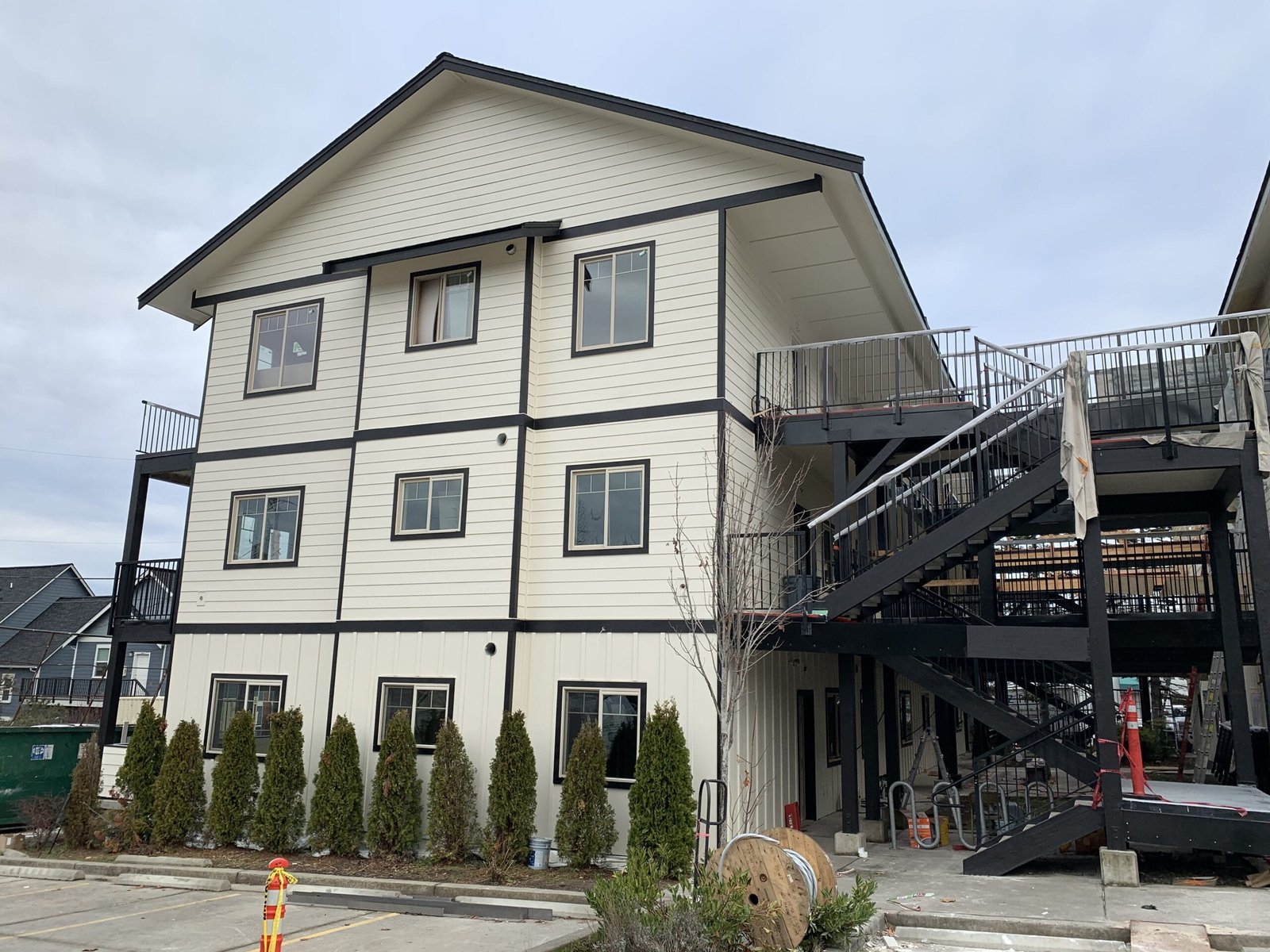
For most homes tucked into town in Mount Vernon, Burlington or Sedro-Woolley, a good double-pane, low-E window that meets the Washington State Energy Code will hold up fine and keep the budget reasonable. Triple-pane earns its keep on the more exposed lots — waterfront and bluff-facing homes in Anacortes, La Conner, Camano Island and the west-facing edges of Whatcom County, where sustained wind off the Strait of Juan de Fuca and the open Skagit flats pushes harder on glass and frames for more hours of the year. The honest version of this decision isn't 'which pane count is better' — it's 'how exposed is this specific wall, and what's it worth to you to quiet it down and firm it up.' Alpine Exteriors walks that site-by-site rather than defaulting everyone to the upgrade.
A double-pane window is two panes of glass with a sealed air or argon-filled space between them, usually finished with a low-E coating that reflects heat back into the room in winter and blocks some solar gain in summer. Paired with a vinyl or fiberglass frame and decent weatherstripping, a quality double-pane unit meets the prescriptive U-factor targets in the Washington State Energy Code for most residential applications in this climate zone, and it's what the large majority of replacement window jobs in Skagit and Whatcom counties still use.
In a typical in-town lot — shielded somewhat by neighboring houses, trees or a rise in the land — double-pane performs well. It handles our normal winter rain, the periodic windstorms that roll through in fall and winter, and the daily temperature swings without drama. The tradeoffs are real, though: on a wall that takes wind head-on for hours at a time, a double-pane unit will transmit more of that noise into the room than a triple-pane one, and on the coldest nights of the year — the kind that show up more often as you get closer to the foothills near Sedro-Woolley — interior glass temperatures drop enough that some condensation on the inside pane isn't unusual, especially in bathrooms and kitchens with more humidity in the air.
Double-pane is also simply lighter. That matters for retrofit jobs into older, lighter-built frames, and it keeps installation more straightforward when a home's existing rough openings and header framing weren't sized with heavier glass in mind.
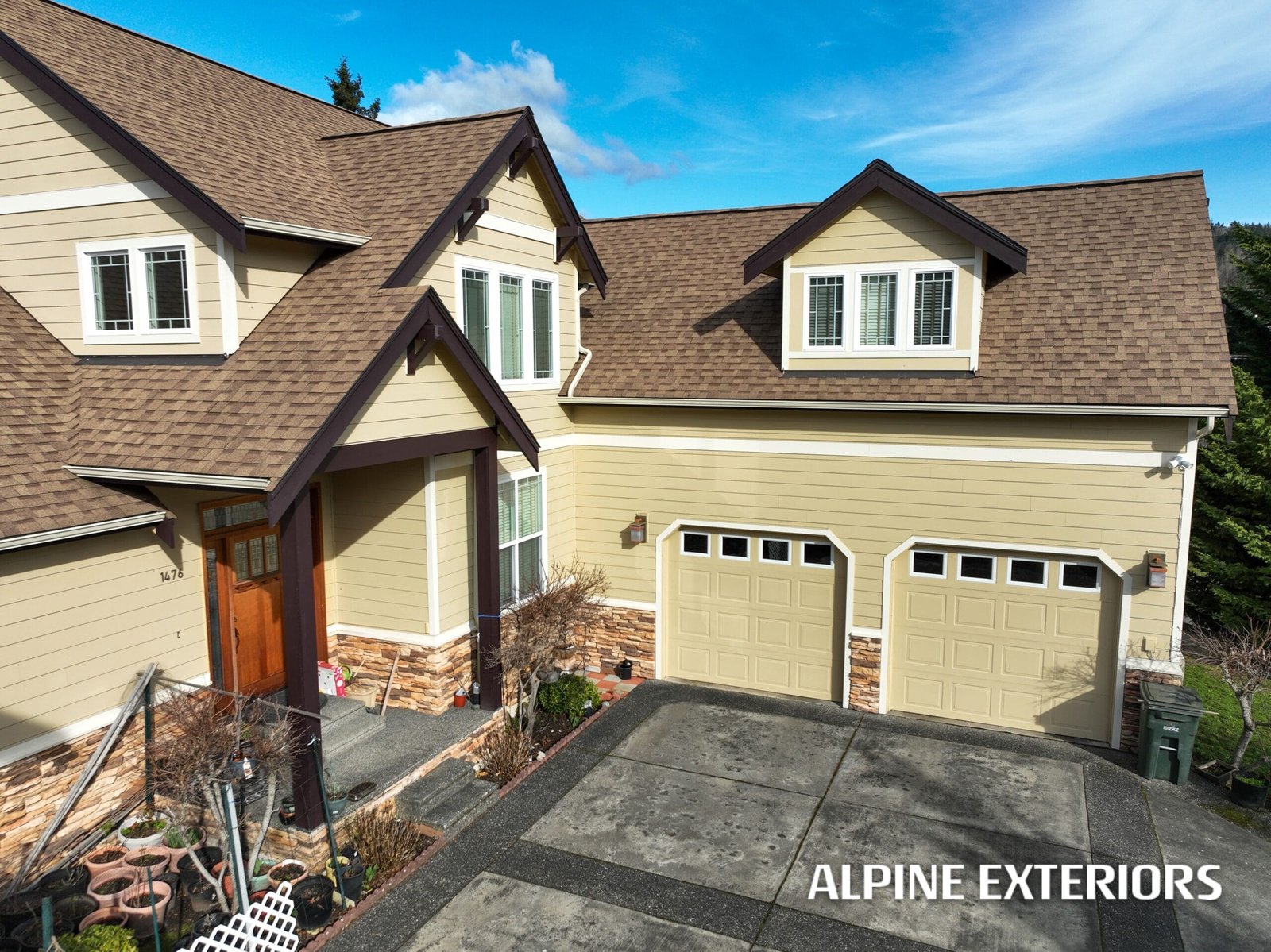
Triple-pane adds a third pane and a second sealed gas-filled cavity, which does two things: it further slows heat transfer through the glass, and it adds mass and an extra air gap that noticeably cuts down on noise transmission — a real benefit on a lot that catches steady wind off the water or across open farmland, where the constant low rumble against the glass gets old. On waterfront and bluff-exposed sites in Anacortes and Camano Island, and on the more open, wind-exposed stretches of the Skagit flats near La Conner and Stanwood, that noise reduction is often the thing homeowners notice most, more than the incremental energy savings.
The extra pane also raises interior glass surface temperature in cold weather, which helps in the foothill-adjacent parts of Whatcom and Skagit counties that see occasional snow and hard frost — condensation risk on the interior pane drops accordingly. Salt-laden air near the water is tougher on exposed metal hardware and frame fasteners regardless of pane count, so triple-pane doesn't solve that on its own; good frame material and hardware choice still matter as much as the glass package on island and waterfront properties.
The drawbacks are worth stating plainly. Triple-pane sashes are noticeably heavier, which means the frame, hinges and hardware all need to be rated for that added weight — cutting corners on frame quality to save money while upgrading the glass defeats the purpose. Heavier sash weight can also be a real retrofit issue in older homes with lighter original framing, sometimes requiring more carpentry work at install than a straight double-pane swap. Lead times tend to run longer since triple-pane units are special-order more often than stock double-pane sizes, and on a sheltered in-town lot, the added cost frequently buys less noticeable benefit than it would on an exposed site.
| Double-Pane | Triple-Pane | |
|---|---|---|
| Cost (installed, per window) | Roughly $500–$1,100 depending on size, frame material and grille pattern | Roughly $700–$1,600 depending on size, frame material and grille pattern — the gap narrows on smaller windows and widens on large picture units |
| Lifespan | Typically 20–30 years before seal failure or hardware wear becomes noticeable | Similar glass lifespan to double-pane; the extra seal (two sealed cavities instead of one) is one more place a seal can eventually fail, though quality units hold up well |
| Maintenance | Standard — occasional weatherstripping and hardware checks, glass cleaning, watching for seal fog as a sign of failure | Same routine upkeep, plus attention to hinge and hardware wear given the added sash weight over time |
| Appearance | Slightly slimmer sight lines; glass edge is less visible from an angle | A touch more visible glass edge and spacer thickness up close; largely unnoticeable from normal viewing distance once installed |
Exposure is the deciding factor more than any other single thing. A home in a sheltered part of Mount Vernon or Burlington, tucked among other houses and mature trees, is unlikely to see enough sustained wind load or noise to justify triple-pane on every elevation — a well-installed double-pane window meeting Washington State Energy Code targets does the job and keeps the budget available for other priorities. The calculation shifts on open, wind-facing walls: waterfront homes in Anacortes and La Conner, bluff-top lots on Camano Island, and west- or north-facing walls in the more exposed parts of Whatcom County toward Bellingham's shoreline all take more direct, sustained wind than an inland lot a few miles away.
For those exposed elevations, we typically recommend triple-pane on the walls actually taking the wind and reserving double-pane for the sheltered sides of the same house — a mixed approach that puts the added cost where it earns its keep rather than spreading it evenly across a building that doesn't need it uniformly. It's also worth remembering that pane count alone doesn't make a window wind-worthy: frame material, installation flashing, and anchoring into structurally sound framing matter as much as the glass package itself, particularly on the more open stretches of the Skagit flats where gusts build up with nothing to slow them down. Alpine Exteriors evaluates each elevation's actual exposure — not just the county it's in — before recommending one option over the other.
Not directly. The glass package affects insulation and noise, but what actually resists wind load and pressure is the frame material, the glass thickness and tempering rating for the opening size, and how solidly the unit is anchored into the surrounding framing. A well-built double-pane window installed correctly can outperform a poorly installed triple-pane one on an exposed wall, so frame quality and installation deserve at least as much attention as pane count.
They significantly reduce it by keeping the interior glass surface warmer, but no window eliminates condensation entirely if a home is running high indoor humidity — from cooking, showers, or a tight, poorly ventilated house — during a hard frost. Triple-pane helps more than double-pane in the coldest weather, but bathroom fans and general ventilation still matter.
No. The Washington State Energy Code sets performance targets, most commonly expressed as a maximum U-factor for windows, and quality double-pane low-E units can meet those prescriptive targets in most residential applications in this climate zone. Triple-pane is a step beyond code minimum, not a code requirement, and either option can be specified to comply depending on the overall home energy path chosen.
It varies by window size, frame material and how many openings are involved, but triple-pane commonly runs meaningfully higher per window than double-pane, with the gap widening on larger units. A mixed approach — triple-pane on exposed, wind-facing elevations and double-pane on sheltered sides — is often the more cost-effective way to get the benefit where it matters without paying the premium on every window in the house.
Every lot in Skagit, Island and Whatcom counties handles wind and weather a little differently, and the right glass package depends on which walls actually take the exposure — not a blanket rule for the whole county. Alpine Exteriors (WA contractor license ALPINI751OW) will walk your specific elevations, talk through where double-pane is plenty and where triple-pane earns its cost, and put together options that fit your home and your budget rather than a one-size answer. Reach out to schedule a window evaluation for your Mount Vernon, Anacortes, Bellingham or island-area home.



