
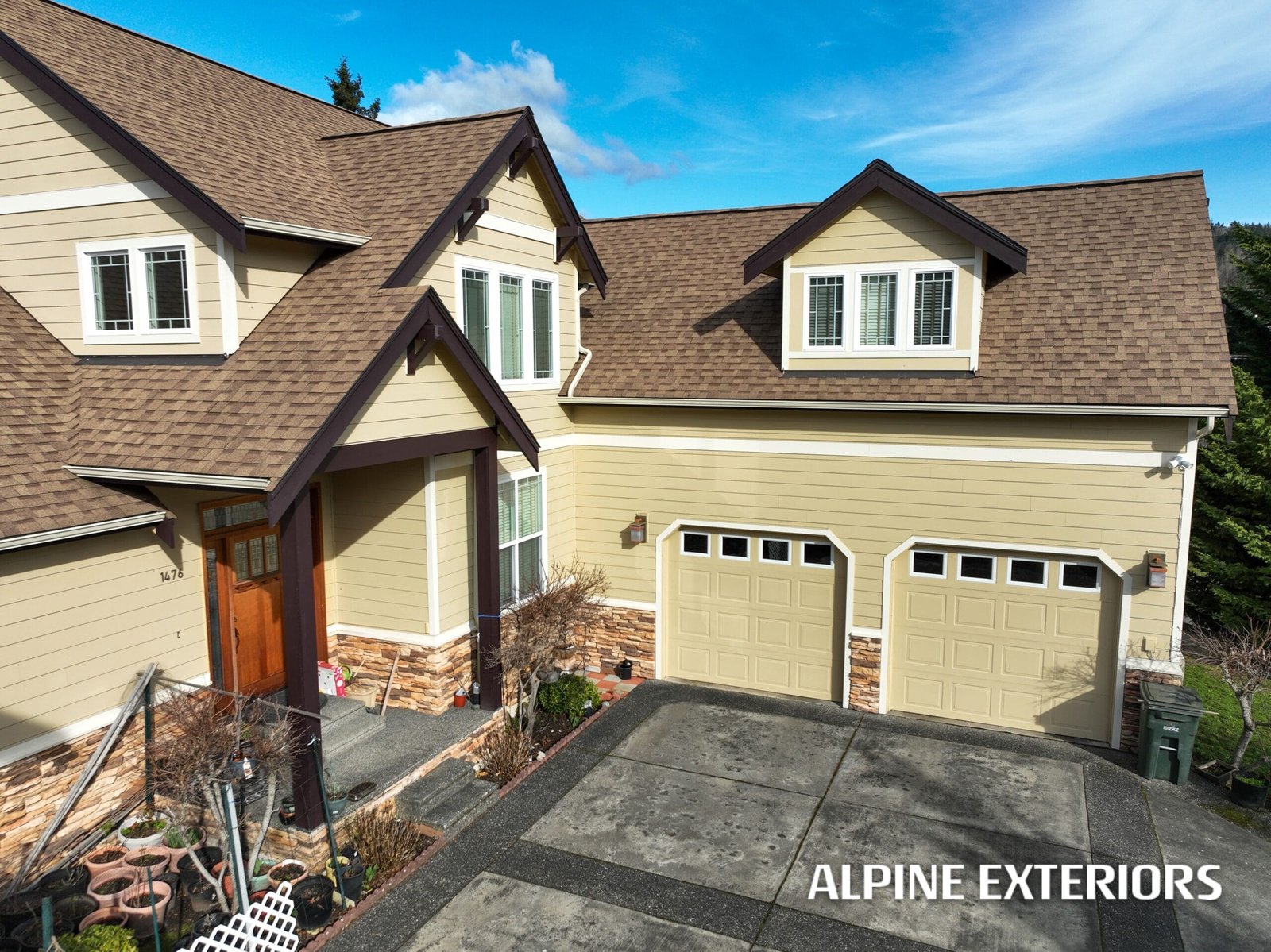
A drip edge is a thin strip of formed metal installed along the eaves and rakes of a roof, under the shingles and over the fascia, so that runoff sheds cleanly into the gutter instead of curling back underneath the roofing or dripping down the fascia board. In a region that sees as much sustained winter rain as Skagit, Island, and Whatcom counties do, it is one of the cheapest, least glamorous roof components and also one of the most consequential to leave out or install wrong.
Water does not always fall straight down off a roof edge. Surface tension pulls a thin film of water back along the underside of a shingle or the edge of a fascia board, a behavior roofers call "capillary action" or, more plainly, water running uphill along a surface it's clinging to. A drip edge breaks that path. The metal's outward-turned lip gives water a hard edge to let go of, so it drops into the gutter or off the roof cleanly rather than wicking back toward the wood.
Without that break, water can travel back under the shingle edge and soak into the roof deck, the fascia board, and eventually the sub-fascia and rafter tails. None of that damage shows up right away. It shows up two, five, or ten winters later as soft, spongy fascia, black staining under the eaves, or rot in the roof sheathing that only gets discovered when someone climbs up to look or a contractor pulls the gutters off for replacement. A drip edge also protects the roof deck's edge from wind-driven rain getting up and under the first course of shingles, and it gives the shingles themselves a firm surface to overhang, which keeps that first row from sagging or curling over time.
It's worth being honest about what a drip edge is not. It is not a substitute for good gutters, proper attic ventilation, or ice-and-water shield in the valleys and eaves where those are called for. It is one piece of a roof edge system that also depends on correct shingle overhang, properly lapped underlayment, and gutters that are pitched and cleaned so they actually carry water away instead of backing it up. A drip edge installed over failing fascia or into gutters that are pitched wrong will still leak. It's a necessary piece, not a cure-all.
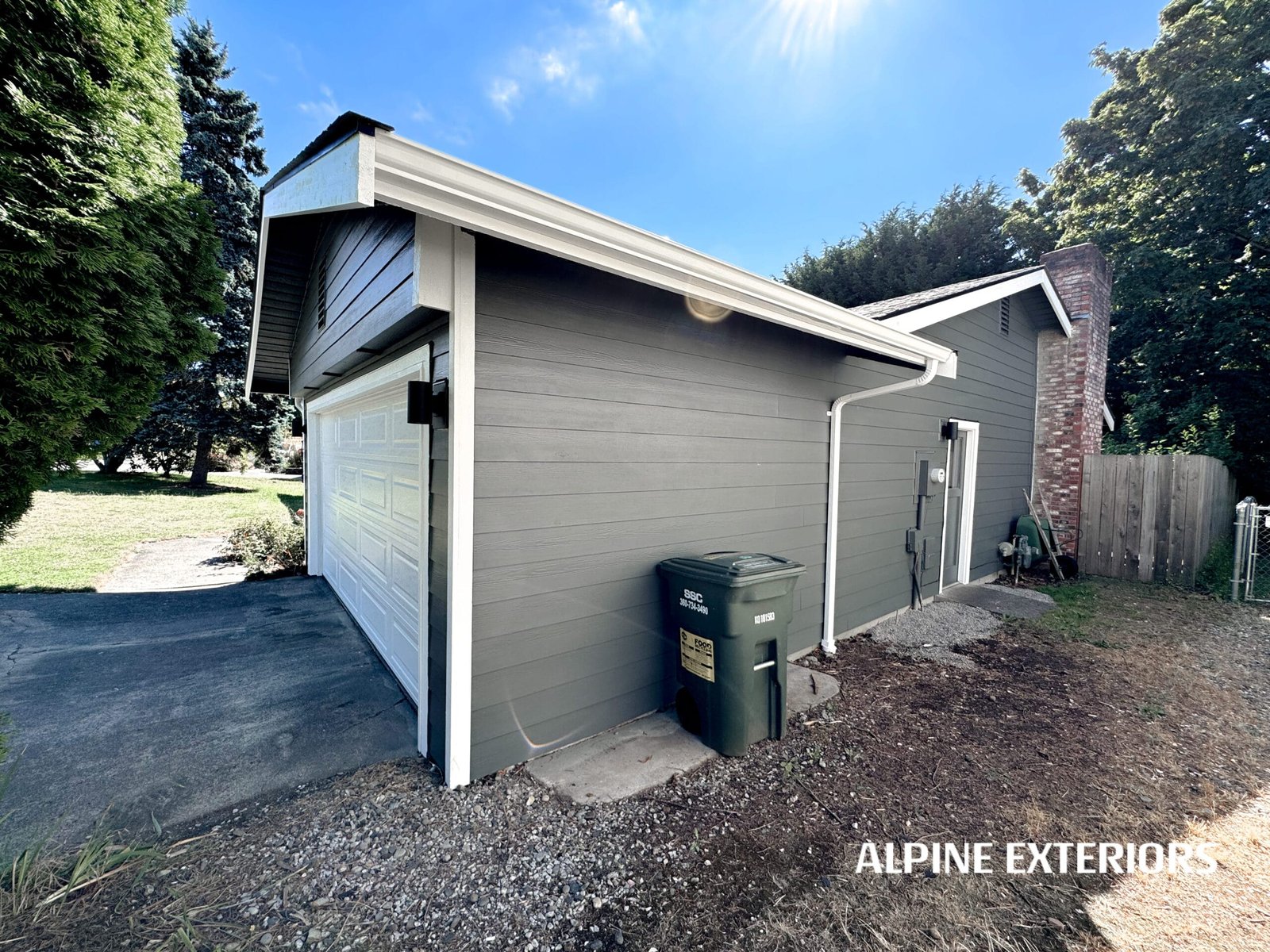
Skagit, Island, and Whatcom counties get a specific combination of weather that makes roof-edge details matter more than they would in a drier climate. The Pacific Northwest's defining feature here isn't intensity, it's duration — long stretches of steady, moderate rain from fall through spring, sometimes for days without a real break. That kind of rain doesn't overwhelm a roof the way a short, heavy downpour does; it tests every seam and lap over and over, for months at a time, which is exactly the condition that exposes a missing or poorly lapped drip edge.
Wind is also part of the picture, though not in the hurricane sense some other regions deal with. Homes out on the Skagit flats, around Bow, Edison, and Conway, and along the shoreline in Anacortes and on Camano Island catch steady wind off the flats and the Strait of Juan de Fuca that drives rain sideways into eaves and gutters more often than in sheltered inland areas. That wind-driven rain is precisely what a properly lapped drip edge is designed to handle at the roof's most vulnerable edge.
Shaded, north-facing roofs under the fir and cedar canopy common around Sedro-Woolley, La Conner, and the wooded lots outside Bellingham grow moss more readily than open, sun-exposed roofs. Moss holds moisture against the shingles and roof edge far longer than the surrounding roof surface dries, which accelerates the exact wicking and rot process a drip edge is meant to prevent. A roof with heavy moss buildup at the eaves and a missing or corroded drip edge is a much worse combination than either problem alone.
On Camano Island and along the shoreline near Anacortes and La Conner, salt-laden air off the water speeds up corrosion on metal roof components, including drip edge, flashing, and gutter hardware. A drip edge that would hold up for decades a few miles inland can pit and fail faster right on the water, which is a real factor in choosing metal gauge and finish for homes in those areas.
The foothills toward Concrete and the higher ground east of Sedro-Woolley see occasional snow and freeze-thaw cycles that the lowland cities mostly don't. Snow that sits on a roof edge and melts and refreezes daily puts extra stress on the eave detail, which is another reason a solid drip edge and, where called for, ice-and-water shield underlayment matter more the further inland and uphill you get.
Most homeowners never look closely at their drip edge because it's a thin strip of metal tucked under the shingles, easy to ignore until something else forces attention to the roof edge. A few practical steps are worth taking:
The Washington State Building Code, which incorporates the International Residential Code with state amendments, calls for drip edge at eaves and rakes on asphalt shingle roofs, so a full re-roof done under permit today should include it as standard practice rather than an upgrade. The gap shows up on older homes, additions, or repairs done without a permit, where the detail was sometimes skipped to save a little time and material. Retrofitting drip edge onto an existing roof without removing the shingle courses at the edge is possible but limited — it can help, but it isn't the same as having it properly lapped under the underlayment and shingles from the start, so it's a reasonable stopgap rather than a permanent fix.
Cost is genuinely modest relative to the rest of a roofing project. Drip edge material itself is inexpensive per linear foot, and on a full roof replacement the labor to install it correctly is a small fraction of the total job. Where the cost adds up is in retrofits that require partial tear-off, or in choosing heavier-gauge or higher-end corrosion-resistant metal for waterfront properties. Homeowners planning a re-roof or gutter replacement in Mount Vernon, Burlington, Stanwood, or anywhere in the service area should ask their contractor directly whether drip edge is included at both eaves and rakes and what material is specified, rather than assuming it's automatically covered.
A partial retrofit is possible in some cases, usually by carefully lifting the first course or two of shingles at the eave and sliding new drip edge underneath, but it's a limited fix compared to installing it properly during a tear-off, when it can be lapped correctly with the underlayment from the start. It's worth doing if a roof is otherwise sound and just missing this one detail, but it shouldn't be assumed to perform identically to a proper new installation.
Yes. Standard galvanized steel drip edge can corrode noticeably faster in salt-laden coastal air than the same material a few miles inland. Aluminum or a heavier, better-coated steel is often a smarter choice for waterfront and island properties, even though it may cost a bit more upfront, because replacing corroded edge metal later means disturbing the shingles and gutters all over again.
No, a drip edge doesn't prevent moss growth on its own — moss forms because of shade, moisture, and organic debris on the roof surface, not because of what's happening at the edge. What a sound drip edge does is limit the damage moss-related moisture can cause once it reaches the eave line, by giving that water a clean path off the roof instead of a route back underneath the shingles.
Visible rust or pitting on the exposed metal edge, staining or soft spots on the fascia board directly below it, or paint that's peeling in a line along the eaves are the clearest signs from the ground. A closer inspection, ideally from someone getting up on or near the roof, can confirm whether the metal has separated from the fascia, corroded through, or was never properly lapped with the underlayment in the first place.
If you're not sure what's happening at your roof's edge, or you're planning a re-roof or gutter replacement anywhere from Mount Vernon and Burlington to Anacortes, La Conner, Camano Island, or Bellingham, Alpine Exteriors can take a look and tell you plainly what's there and what it would take to fix it. Alpine Exteriors is licensed in Washington under contractor license ALPINI751OW and works throughout Skagit, Island, and Whatcom counties on roofing, gutters, windows, and decks. Reach out for an on-site look at your roof edge and a straightforward assessment before your next re-roof or gutter project.