
If you're replacing all three at once, the roof goes first, windows go in second, and siding goes on last, because siding is supposed to close over new window flanges and a finished roofline, not the other way around. Get the order backwards and you'll likely pay to pull off and redo trim, flashing, or siding a second time. There's one common exception: if your roof is sound and only needs a few more years, windows still go before siding for the same reason — flashing continuity.
A roof and its flashing details — valleys, step flashing along dormers and chimney chases, and especially kickout flashing where a roof edge meets a sidewall — need to be finished before siding is installed tight against those transitions. Kickout flashing is a small L-shaped piece that directs roof runoff away from the wall instead of behind it, and it's one of the most common failure points on homes we see in this region, particularly on additions and dormers built without one. If siding goes on first, that flashing either gets skipped or installed after the fact by cutting into finished siding, which rarely seals as well as doing it in the right order.
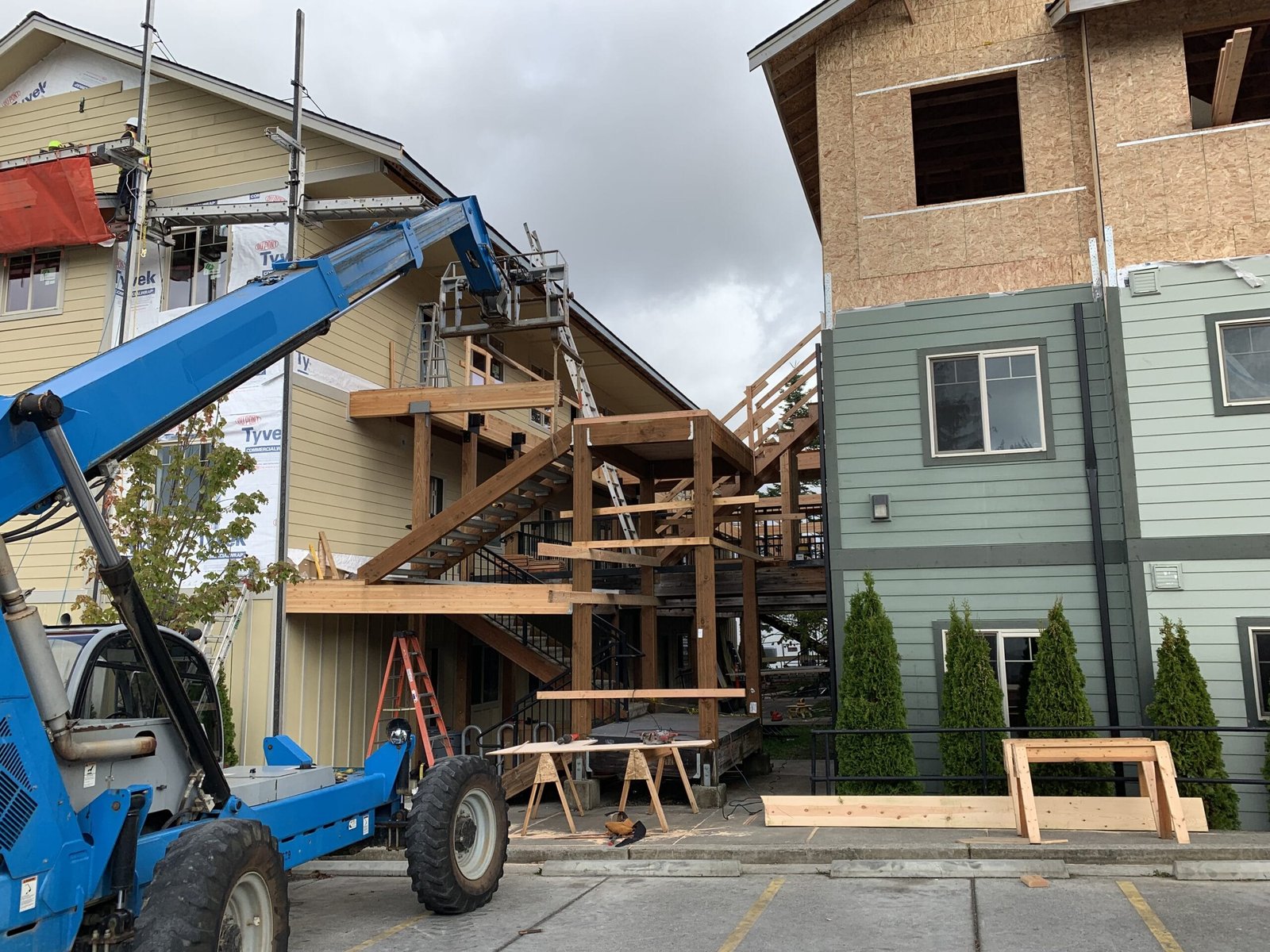
Windows come next because the window flange has to integrate with the weather-resistive barrier (WRB) wrapped on the wall sheathing, and siding trim — whether it's lap siding, cedar shakes, board-and-batten, or fiber cement — is cut and flashed to die into that window opening. Install siding first and a window installer either has to cut siding away sloppily or leave gaps that get caulked instead of properly flashed. Caulk is a maintenance item, not a waterproofing detail, and in a climate that sees rain for months at a stretch, that difference shows up as rot within a handful of years, not decades.
Gutters usually follow the roof, since fascia work and drip edge placement affect how the gutter hangs, but whether gutters go before or after siding depends on whether the fascia is being wrapped in metal or replaced — that's a detail worth confirming with whoever is running the job. Painting, caulking, and trim touch-up are always last, after every other trade has had a chance to scuff, drill, or bump the finished surfaces.
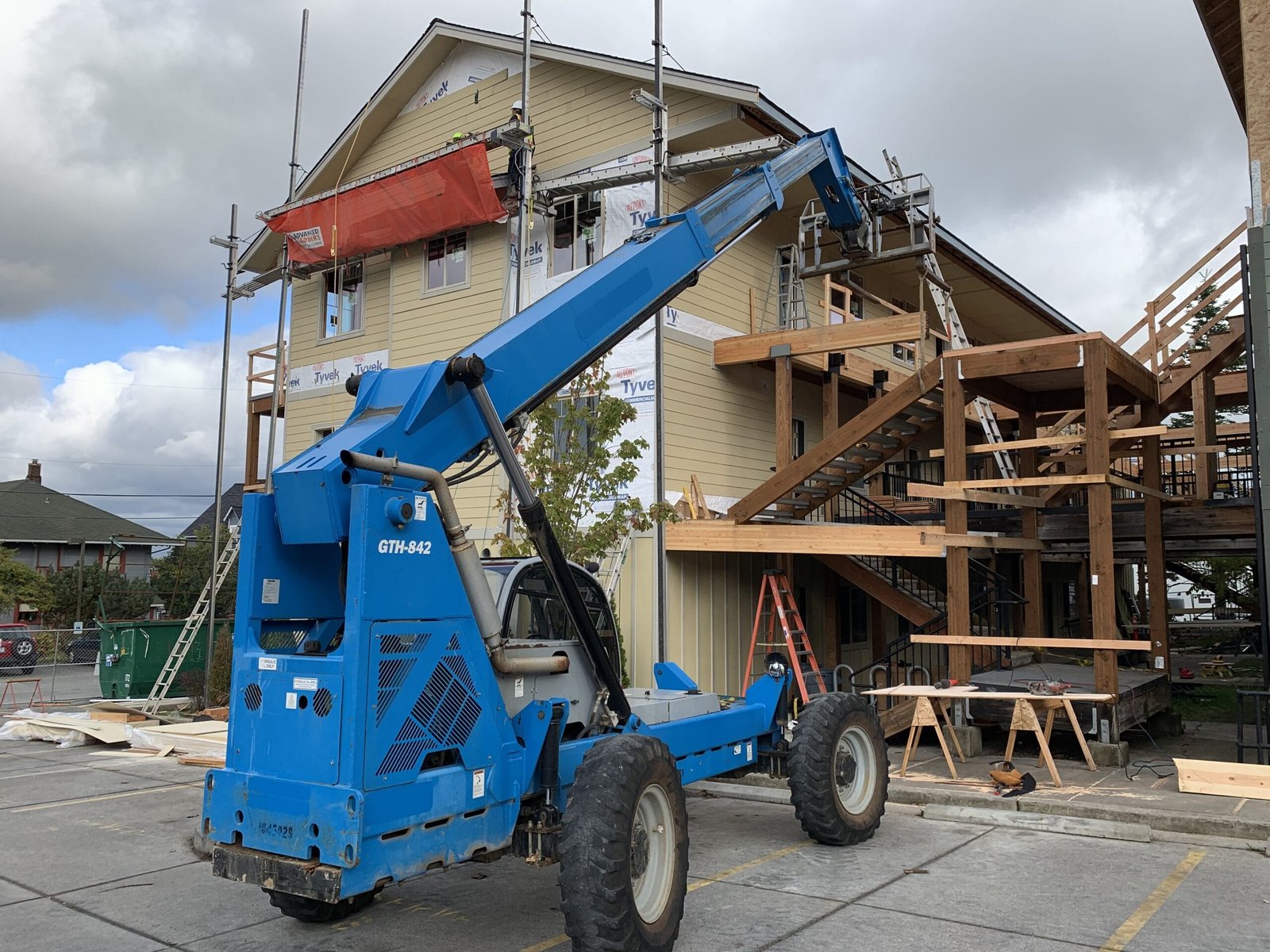
Sequencing rules aren't just theory here — the Skagit, Island, and Whatcom county climate punishes shortcuts faster than a drier region would.
Start by deciding whether you actually need all three trades now or whether staggering them over a couple of years makes more financial sense. Staggering isn't wrong — plenty of homeowners replace a roof one year and siding and windows a couple of years later — but it does mean paying for mobilization, cleanup, and material minimums more than once, and it can leave a mismatch between old and new trim details in the meantime.
If you're doing a combined project, it's worth having one contractor either perform or closely coordinate all three trades rather than hiring three separate specialty contractors on independent schedules. Hand-offs between separate crews are exactly where kickout flashing gets forgotten and where nobody takes responsibility for a leak that shows up two winters later. Alpine Exteriors runs roofing, siding, windows, and gutters as one crew for this reason — it removes the finger-pointing that happens when three companies each installed one piece of the same wall assembly.
Ask directly about kickout flashing at roof-to-wall intersections, what fastener material is being used if you're on Camano Island, Anacortes, or anywhere near saltwater, and whether ice-and-water shield is included if you're closer to the foothills. Try to schedule envelope-opening work — tear-off, sheathing repairs, window swaps — outside the heaviest rain months when your project timeline allows it, though a good crew can manage a wet-season job with proper temporary protection if that's the only window you have.
Finally, confirm permits and inspections before work starts. Skagit, Island, and Whatcom counties and their cities each have their own permitting requirements, and some inspections are timed to see flashing or insulation before it's covered — scheduling those inspections into the sequence, rather than around it, avoids delays that leave a wall open longer than it should be.
Yes — if your roof is genuinely sound and not part of the current project, siding can be installed against the existing roofline without a problem, since the flashing at those transitions is already in place. The sequencing concern only applies when the roof itself is also being replaced as part of the same project.
Usually yes, at least at the window openings themselves. Window flashing tape and pan flashing at the sill are typically replaced as part of any proper window installation, even if the siding around the opening stays untouched and just gets carefully reattached or patched.
It depends heavily on house size and weather, but a full roof-siding-window project on a typical single-family home often runs several weeks when sequenced properly, with the roof phase usually the fastest and siding the longest. Wet-season scheduling can add time if work needs to pause during heavy rain.
In most jurisdictions here, yes — window replacements generally need to meet current Washington State Energy Code U-factor requirements and may require a permit and inspection, even on a like-for-like swap. Your contractor should confirm this with the specific county or city before work starts.
Getting the order right on a roof, siding, and window project is mostly about avoiding rework and keeping the wall assembly weathertight through a wet Pacific Northwest winter. Alpine Exteriors, WA contractor license ALPINI751OW, handles roofing, siding, windows, and gutters for homeowners across Mount Vernon, Anacortes, Burlington, Sedro-Woolley, La Conner, Stanwood, Camano Island, and Bellingham, and can walk through a sequencing plan specific to your house, its exposure, and its budget before any tear-off starts. Reach out to talk through what your home actually needs and in what order.