

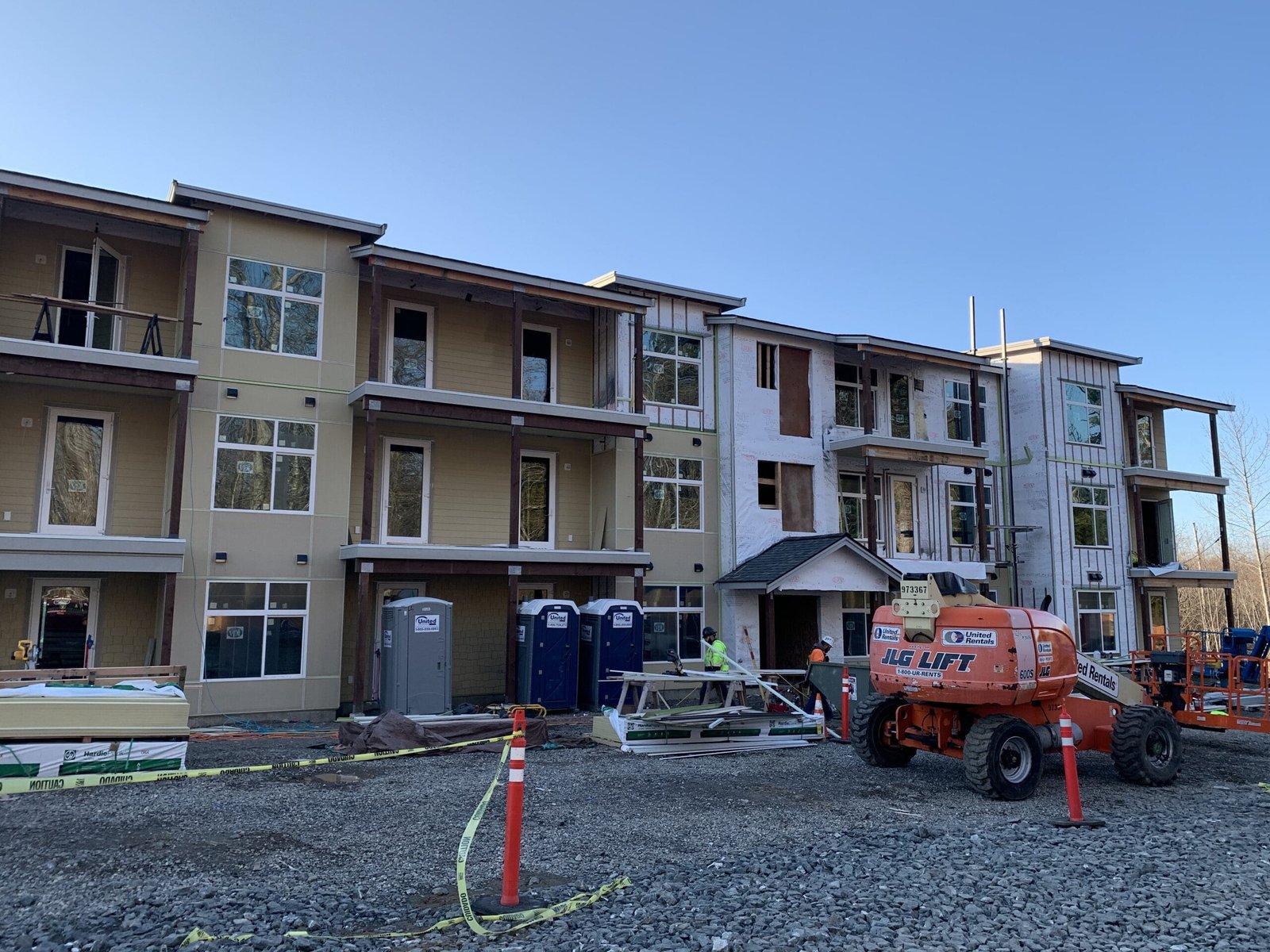
Windstorms in this corner of Washington rarely make national news, but the combination of wind, saturated ground and marine exposure does real damage year after year. Gusts funnel across the open Skagit flats between Mount Vernon and Burlington with almost nothing to slow them down, then pick up again off the water for homes in Anacortes, La Conner, Camano Island and along Bellingham's shoreline. None of this is hurricane weather, but a fall or winter frontal system moving through at 45 to 60 mph, arriving on top of ground that has already absorbed weeks of Pacific Northwest rain, is enough to loosen root plates, rack fence panels, and peel back roofing that was already weakened by moss and age. This checklist reflects the failure points Alpine Exteriors sees most often once a storm moves through the area.
The islands and coastal towns add a second variable: salt-laden air off the Sound and the Strait accelerates corrosion on fasteners, flashing and hardware faster than it would inland in Sedro-Woolley or Stanwood. Meanwhile, shaded roof slopes on wooded lots throughout the region tend to grow moss between storms, and a wind event can shift or tear that moss mat loose, taking granules and sometimes whole shingle tabs with it. Up toward the foothills, occasional ice and snow add freeze-thaw stress to anything already cracked or lifted. Walking the exterior methodically after a windstorm, before the next system arrives, is the cheapest damage-control step a homeowner has.
Note: if window or door damage is severe enough to warrant replacement rather than repair, the new units need to meet current Washington State Energy Code requirements for this climate zone, which is worth confirming with whoever does the work.
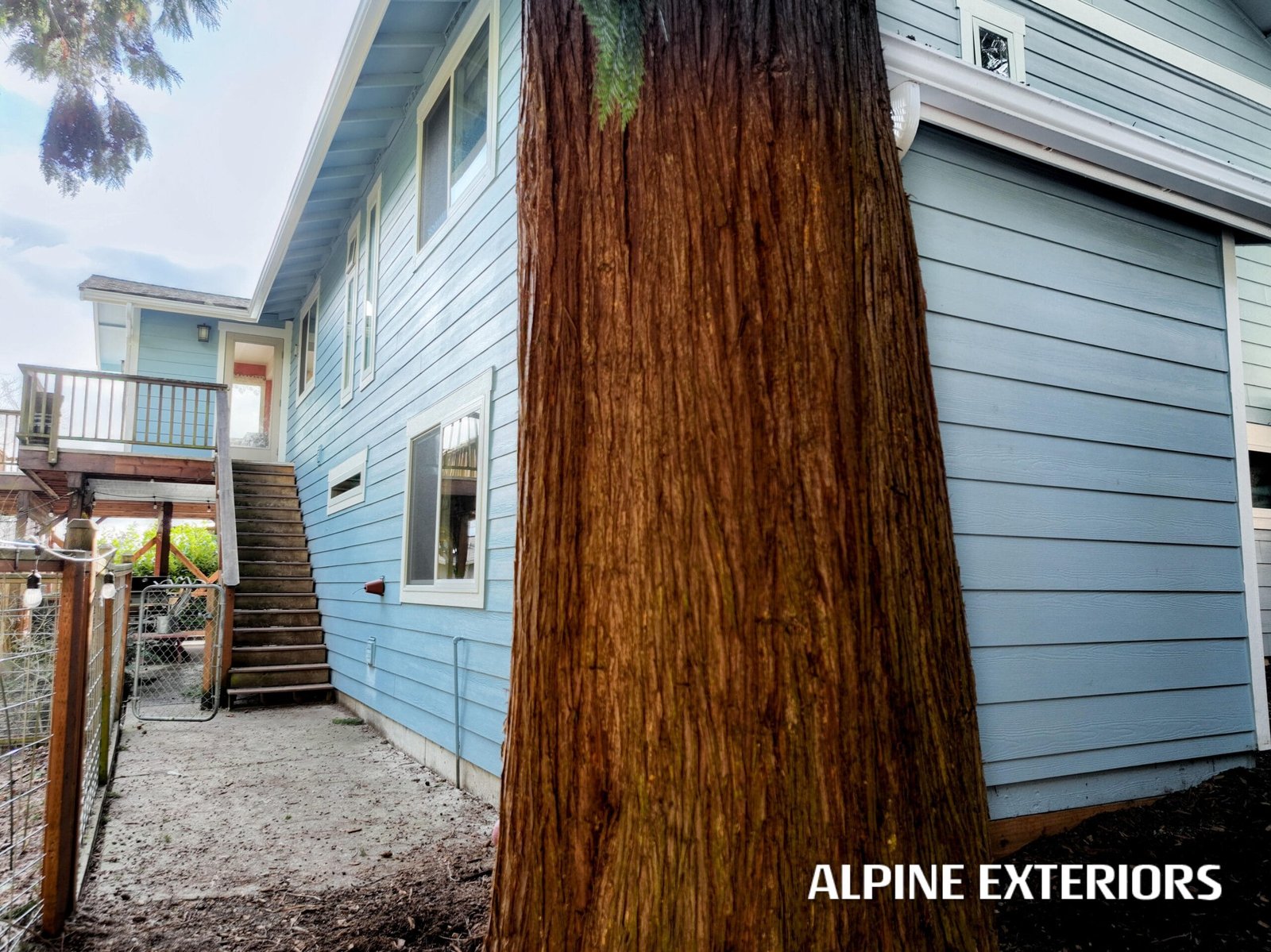
Start with safety, not repair. If a line to the house looks down or a meter base is damaged, stay clear and call the utility before doing anything else. Don't get on a wet or moss-covered roof to inspect it up close; that combination is slicker than it looks from the ground, and a fall risk isn't worth confirming what a pair of binoculars or a phone camera can already tell you.
For anything actively letting water in, a temporary tarp or plastic sheeting secured well past the damaged area is reasonable as a stopgap, but it should be treated as exactly that. A tarp is not a repair, and in a region that gets sustained winter rain for months at a time, tarps shift, wind gets under an edge, and water finds its way in around the staples or nails used to secure them. Photograph everything before you cover it, from a few different angles and with something for scale, since that documentation matters for insurance whether or not you end up filing a claim. If a downed tree or limb is resting on the structure, leave it alone until someone qualified has assessed the load it's putting on the roof or deck framing; removing it wrong can make a bad situation worse.
Some of the items above are fine to monitor for a season if they're minor and stay dry. Others aren't. Call a licensed contractor if you see any structural movement, active water intrusion anywhere inside the home, more than a handful of missing or lifted shingles, exposed underlayment, or damage anywhere you'd have to get on a ladder or the roof to reach safely. It's also worth having a professional look at a roof that turns out to have significant moss damage once the storm exposes it, since that's usually evidence of a maintenance gap that predates the wind event and will keep causing problems until it's addressed. Alpine Exteriors inspects storm damage across Skagit, Island and Whatcom counties and can tell you honestly whether something is a minor fix, a bigger repair, or just cosmetic.
As soon as it's safe to be outside and daylight allows, ideally before the next rain system arrives. Back-to-back frontal systems are common here in fall and winter, and a small opening in flashing or siding that sits through a second or third storm tends to become a much larger repair than it would have been if caught early.
A ground-level or binocular check from several angles is fine and often tells you what you need to know. Actually walking the roof deck is a different matter, especially with moss, moisture, or steep pitches common on homes in this region, and it's reasonable to leave that part to someone with the right footing and equipment.
Many policies do cover sudden wind damage, but coverage details, deductibles and exclusions vary by carrier and by policy, and pre-existing issues like long-term moss damage are often treated differently than fresh storm damage. Photograph damage promptly and read your specific policy, or call your agent, rather than assuming any general answer applies to your situation.
Yes. Homes in Anacortes, La Conner, and along Camano Island's shoreline tend to see faster corrosion on exposed fasteners, flashing and hardware than homes further inland. After a windstorm, it's worth looking a little more closely at rust staining and fastener condition on these properties, since corrosion can weaken a connection well before it becomes a visible failure.
If your post-storm walk-around turned up anything on this list, or you'd simply rather have a second set of eyes before the next system rolls in, Alpine Exteriors offers exterior inspections for homeowners throughout Mount Vernon, Anacortes, Burlington, Sedro-Woolley, La Conner, Stanwood, Camano Island and Bellingham. We're licensed in Washington under contractor license ALPINI751OW and we'll tell you plainly what needs attention now, what can wait, and what's just cosmetic. Reach out to set up an inspection before the next round of weather comes through.



