
Bow sits where the Skagit flats meet Samish Bay, tucked between Chuckanut Mountain's shaded evergreen slopes and open farmland that catches wind straight off the water. That combination — persistent shade, salt-tinged marine air, heavy winter rain, and open-field wind gusts — puts a specific kind of wear on a roof that homeowners further inland don't deal with in the same way. A roof that would hold on a few more years in a drier, more sheltered town can fail early here if moss, moisture, and wind have been working on it season after season. Knowing what to look for, and when a problem is actually urgent, saves homeowners from both nasty surprises and unnecessary replacement.
Asphalt shingles are coated with a layer of protective granules that shield the underlying asphalt from UV exposure and rain. As shingles age, those granules loosen and wash off, and in Bow they tend to collect in gutters after any real rain event — which, over a Skagit County winter, is often. A little granule loss on a newer roof is normal. Heavy, ongoing granule loss on a roof more than 12–15 years old is a sign the shingle's waterproofing layer is thinning out and losing its ability to shed water.
When shingles curl up at the corners or cup in the center, it usually means the asphalt has dried out and lost flexibility, often accelerated by repeated wet-dry cycles typical of our winter rain followed by summer sun. Curling shingles no longer lie flat against each other, which lets wind get underneath them — a real concern given how exposed some Bow properties are to gusts crossing the open flats. Once shingles start curling across a wide area of the roof, it's rarely an isolated repair; the whole field of shingles is usually aging at a similar rate.
Bow's tree cover and marine humidity make it prime moss territory, particularly on north-facing roof planes that stay damp and shaded for much of the year. Moss isn't just cosmetic — its root structures work under shingle tabs and lift them slightly, creating a path for water to get underneath. Left unaddressed for several seasons, moss can shorten a roof's usable life significantly. Dark algae streaking is more of an appearance issue on its own, but heavy moss combined with granule loss usually means the roof underneath has been retaining moisture longer than it should.
This one is unambiguous: if you can see daylight coming through the roof boards from inside the attic, the roof deck has gaps or the sheathing has deteriorated enough to let light and, eventually, water through. It often shows up first near ridge vents, chimneys, or old skylight flashing. This is not a wait-and-see situation.
A roofline that dips, waves, or feels soft when walked on (by a professional, not a homeowner climbing a ladder) usually points to water-damaged sheathing or rafters underneath. In our climate, this is most often the result of a slow leak that went unnoticed for a season or two — moss-blocked drainage or failed flashing letting water sit against the deck rather than running off. A visible sag is a structural concern, not just a cosmetic one.
Bow and the surrounding Skagit flats get exposed to real wind, especially in fall and winter storms funneling down from the Strait of Georgia and across open farmland with little to break the gusts. After a windstorm, it's worth checking for shingles that have lifted, cracked, or gone missing entirely, along with bent or loosened ridge caps. A few missing shingles after one storm can often be repaired. Repeated wind damage over several storm seasons usually means the shingles' seal strip has weakened across the whole roof, and they'll keep lifting in every future wind event.
A brown ring on a ceiling, peeling paint near an exterior wall, or a musty smell in an upstairs closet all point to water getting past the roofing system somewhere. By the time water shows up inside the living space, it has usually already been sitting in the attic or wall cavity for a while. In homes built or re-roofed before current attic ventilation practices under the Washington State Energy Code, poor airflow can also trap moisture against the underside of the deck, which shows up as staining or mold even without an active leak — worth mentioning to whoever inspects the roof.
Most asphalt shingle roofs in this climate are realistically good for somewhere in the range of 20 to 25 years, sometimes less on heavily shaded, moss-prone slopes, sometimes more on well-ventilated, sun-exposed ones. Age alone isn't a reason to replace a roof that's still performing. But a roof in that age range that also shows granule loss, curling, or storm damage has usually used up its useful life — repairs at that point tend to be short-term fixes on a roof that's already declining.
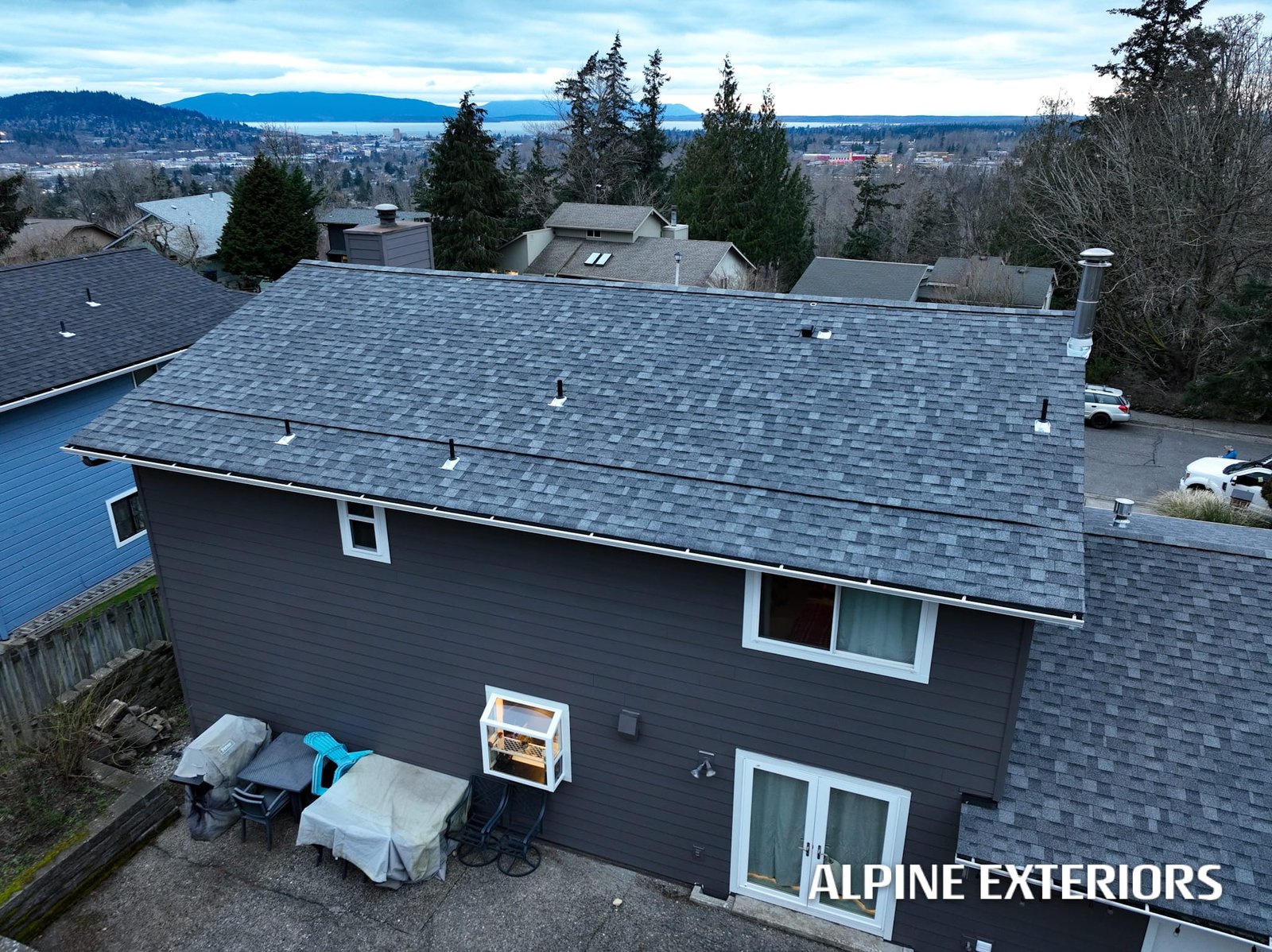
Not every sign on this list means calling someone the same day. Active leaks, daylight through the deck, sagging sheathing, or missing shingles that expose the underlayment after a storm are urgent — each additional rain event makes the damage worse and more expensive to repair. These should be looked at within days, not months, especially heading into Skagit County's wetter fall and winter stretch.
Moss buildup on a shaded slope, granule loss on a roof under 15 years old, or minor curling on a small section of shingles are things that can usually wait for a scheduled inspection rather than an emergency call. That said, "can wait" doesn't mean "ignore" — moss and granule loss get worse every season they're left alone, and what's a manageable cleaning-and-repair job this year can become a full replacement conversation two or three winters from now.
The most useful first step is a physical inspection rather than guessing from the ground. A roof can look fine from the driveway and still have failing sheathing underneath, or look rough with moss staining but still have plenty of structural life left. Alpine Exteriors inspects roofs across Skagit, Island, and Whatcom counties — including Bow, Mount Vernon, Anacortes, Burlington, Sedro-Woolley, La Conner, Stanwood, Camano Island, and Bellingham — and gives a straight answer on whether a roof needs a targeted repair, a partial re-roof, or a full replacement, along with a cost range rather than a guess. If a replacement does make sense, it's worth discussing ventilation and moisture control at the same time, since correcting those issues under current Washington State Energy Code guidance can meaningfully extend the life of whatever roof goes on next. Alpine Exteriors holds Washington contractor license ALPINI751OW and can walk through options for shingle type, ventilation upgrades, and moss-resistant roofing choices suited to a shaded, marine-influenced property like many in the Bow area.
Cost depends heavily on roof size, pitch, material choice, and how much of the decking needs to be replaced underneath. Asphalt shingle replacements on a typical Skagit County home often run from the high single thousands into the mid five figures, with steeper or more complex rooflines and any deck repair pushing costs higher. A firm number only comes after an inspection, since hidden deck damage is common on older, moss-affected roofs.
Often, yes — if the shingles underneath are still structurally sound, a professional moss treatment and gentle cleaning (not high-pressure washing, which can strip granules and shorten shingle life) can buy several more years. The exception is when moss has been present long enough to lift shingle tabs and let water underneath; at that point cleaning removes the moss but not the damage it already caused.
Washington building code allows a second layer of shingles over one existing layer in some cases, but it's rarely the better choice on an older Bow roof, since it hides the condition of the deck underneath and can trap moisture that's already accumulated from years of shaded, damp exposure. Most reputable replacements in this area are done as a full tear-off so the deck can be inspected and any rot repaired before new roofing goes down.
A straightforward residential re-roof in the Bow area typically takes one to three days of actual work once materials are on site, though scheduling around our wetter months can add delays since roofing crews avoid installing over damp decking. Homes with steep pitches, multiple roof planes, or deck repair needs take longer.
If any of these signs sound familiar — granules in the gutters, moss on the north slope, a soft spot near the ridge, or shingles that didn't survive the last windstorm — it's worth getting a second set of eyes on it before the next rain event. Alpine Exteriors serves homeowners throughout Skagit, Island, and Whatcom counties, including Bow, and can inspect a roof, explain what's actually going on, and lay out honest options and cost ranges for repair versus replacement.