
La Conner sits low against the Swinomish Channel, surrounded by farmland and tidal flats, which means homes here take on a specific combination of weather stress: long stretches of steady winter rain off the Skagit flats, wind that runs unobstructed across open fields and water, and enough moisture in the air year-round to keep moss thriving on north-facing and shaded roof sections. None of that is exotic, but it does mean gutters in this part of Skagit County work harder than gutters in a drier climate, and it shapes what a reasonable installation actually costs. This page walks through realistic ranges, the variables that move those ranges up or down, and how to read a quote so you're comparing apples to apples.
Gutter installation pricing is typically quoted by the linear foot, then adjusted for material, profile, roof height, and the amount of ancillary work (downspouts, fascia condition, and drip edge). For a typical La Conner home, a full gutter replacement — not just a patch or a section — tends to land in a broad range once you include downspouts and basic trim work. Larger homes, steeper rooflines, or a switch to a heavier-gauge material will push toward the top of any range; a smaller footprint with standard aluminum in a common size will sit toward the bottom.
| Cost Factor | Low End | High End |
|---|---|---|
| Standard aluminum gutters (5-inch K-style), per linear foot installed | Lower | Moderate |
| Seamless aluminum vs. sectional | Slightly higher for seamless | Higher still for larger seamless runs |
| Steel or copper gutters | Noticeably higher | Substantially higher |
| Downspouts (each, including extensions) | Lower | Moderate, more for multiple long runs |
| Gutter guards or leaf protection | Moderate add-on | Higher for premium mesh or micro-guard systems |
| Fascia repair or replacement (per section found rotted) | Moderate | Higher if rot is extensive |
| Roof height / pitch surcharge (two-story or steep roofs) | Modest increase | Significant increase for multi-story or steep-slope access |
These are ranges, not quotes. The only way to get an actual number for a specific La Conner address is a site visit and measurement, because roofline length, the number of corners and outlets, and existing fascia condition all vary house to house.
A few region-specific factors tend to have an outsized effect on the final price here. First is moss and organic buildup: many La Conner properties have tree cover or sit close enough to the channel that shaded roof sections stay damp longer, which accelerates moss growth and debris accumulation in gutters. If a crew has to remove years of packed moss and grit before they can even assess the fascia underneath, that adds labor time that a homeowner in a drier, more open lot might not pay for. Second is wind exposure. Homes on more open ground toward the flats, or anywhere with a clear fetch off the water, may benefit from heavier hangers spaced more tightly, which is a modest but real add to material cost. Third is fascia and sheathing condition — in a climate with sustained winter rain, gutters that have been overflowing or pulling away from the house for a season or two often mean the wood behind them has soaked and softened, and that repair gets priced separately from the gutter installation itself. Finally, roof height and pitch matter everywhere, but La Conner's mix of older single-story homes near downtown and larger two-story properties on the outskirts means this factor swings quite a bit from one quote to the next.
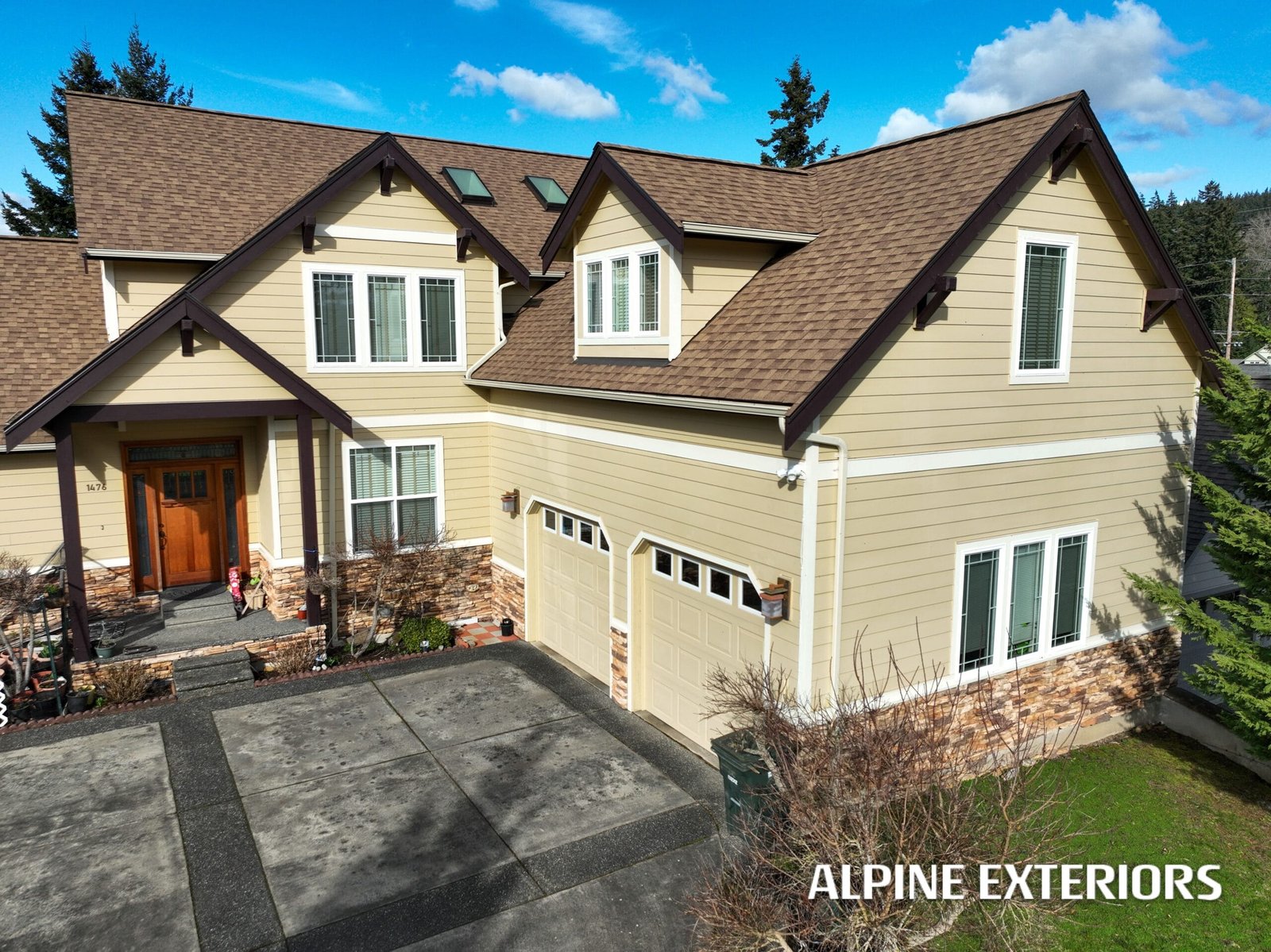
A complete gutter quote from Alpine Exteriors, or from any contractor doing this work properly, should spell out more than just a per-foot price. Look for these line items:
If a quote is just a single lump-sum number with no breakdown, it's worth asking the contractor to itemize it. That's not a sign of dishonesty on its own, but it makes comparing bids much harder and can hide where the money is actually going.
The lowest number on paper isn't always the better deal. When comparing bids for gutter work in La Conner, check that each contractor is quoting the same gutter size (5-inch versus 6-inch K-style is a common difference that changes both cost and capacity), the same downspout count, and the same scope of fascia repair. A bid that looks significantly cheaper sometimes just excludes the fascia work another contractor flagged, or uses thinner-gauge aluminum. Ask each contractor directly whether their price includes removal and disposal of the old gutters, and whether they're pulling a permit if the work involves structural fascia replacement. It's also reasonable to ask how they handle downspout sizing and outlet placement for heavy rain events — with the volume of winter rain this region gets, undersized downspouts or too few outlets can lead to overflow at the corners even when the gutter itself is installed correctly. Finally, confirm licensing. Alpine Exteriors holds Washington state contractor license ALPINI751OW, and any contractor working on your home should be able to provide their license number without hesitation.
Gutter replacement is generally treated as home maintenance rather than an insurance claim, since it's typically driven by age, wear, or moss and debris damage rather than a single sudden event. If gutters were damaged by a specific wind storm or a falling limb, it's worth checking with your homeowner's insurance carrier to see whether that particular event is covered, but routine replacement due to age or buildup usually isn't a claimable loss. On the financing side, many contractors, including Alpine Exteriors, can discuss payment plan or financing options for larger exterior projects, especially when gutter work is bundled with roofing or siding replacement. If you're also updating insulation, roofing, or window components as part of a larger project, it's worth asking whether that combined work needs to meet current Washington State Energy Code requirements, since code compliance can affect material choices and, in turn, the overall budget.
For a typical single-family home in La Conner, gutter installation usually takes one day, sometimes stretching into a second day if there's significant fascia repair, a complex roofline with many corners, or if old gutters need to be fully removed and disposed of first. Weather can also push the timeline out, since installers generally prefer a dry window to work in.
Gutter guards aren't mandatory, but given the moss and tree debris common on shaded La Conner roofs, many homeowners find they reduce how often gutters need to be manually cleared. They're not maintenance-free, though — even guarded gutters benefit from periodic inspection, since fine grit and moss spores can still work past some guard designs over time.
Standard 5-inch K-style aluminum gutters handle most homes in this area adequately, but homes with larger roof planes, steeper pitches, or a history of overflow during heavy winter rain often do better with 6-inch gutters and larger downspouts, since the added capacity reduces the chance of water spilling over the front edge during a sustained storm.
Seamless aluminum gutter has fewer joints, which means fewer potential leak points over time, and it tends to look cleaner on the fascia line. For most La Conner homes it's a reasonable upgrade over sectional gutter, though the cost difference is usually modest enough that many homeowners choose it as the default rather than treating it as a luxury option.
Ranges are useful for budgeting, but the only way to know what gutter installation will actually cost at your La Conner address is to have someone measure the roofline, check the fascia, and account for your specific exposure to wind and moss. Alpine Exteriors serves La Conner along with the rest of Skagit, Island, and Whatcom counties, and can walk through those specifics on-site before putting together an itemized quote.