
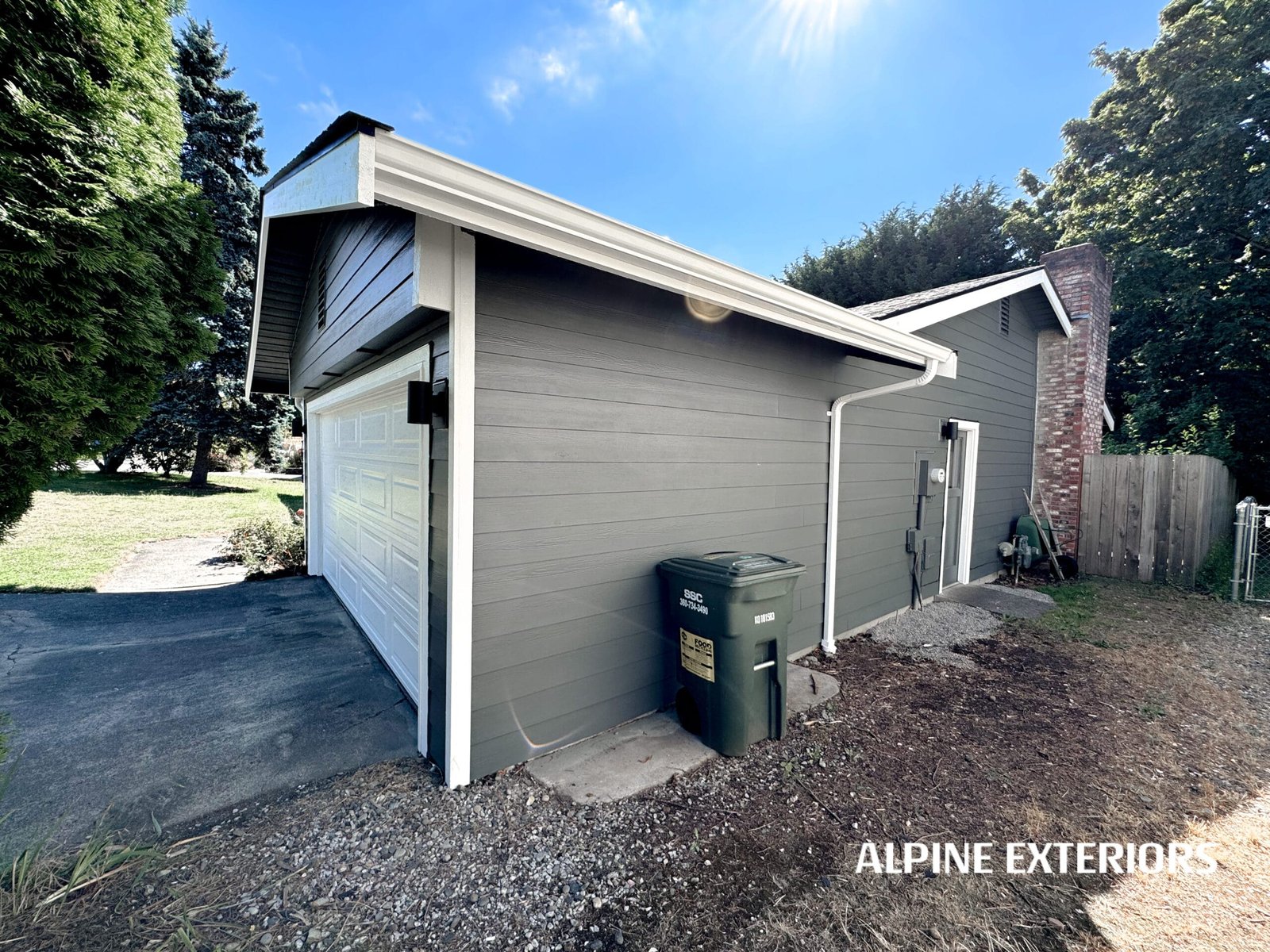
Standard 5-inch gutters and a single downspout are often undersized for Orcas Island's heavy winter rain, and they clog fast under the island's fir and cedar canopy. Sizing gutters correctly, guarding against needle debris, and routing downspout discharge well away from crawlspace vents are the three things that actually prevent the overflow, siding stains and under-house moisture that island homeowners deal with most.
Orcas Island sits partly in the rain shadow of the Olympics, which keeps annual totals lower than the nearby Cascade foothills, but the rain that does fall tends to arrive in intense, multi-day systems off the Strait of Georgia and the Salish Sea rather than as gentle, spread-out drizzle. A 5-inch K-style gutter with one 2x3 downspout can keep up with a light shower on a simple roof plane and still overflow at the corners during a hard December or January storm, especially on the larger rooflines common on island homes with wide covered porches, dormers, and detached shops. Upsizing to 6-inch gutters with 3x4 downspouts on the main roof, or simply adding a second downspout to a long run instead of relying on one, is often the difference between water that leaves the roof cleanly and water that sheets down the siding during the worst weather of the year.
Most Orcas Island lots carry a heavy stand of Douglas fir, western red cedar, and often madrona, and all three drop debris into gutters nearly year-round rather than in one tidy autumn window. Fir needles are a particular problem because they are small enough to pack into a downspout outlet and elbow, forming a dense mat that standard leaf-guard mesh does not stop nearly as well as it stops broadleaf leaves. A gutter that looks clear from the ground can still have a plugged outlet a few feet along its run, and that hidden clog is usually where water finally finds a gap in the fascia and starts working its way into the wall or soffit.
The last piece is what happens to water once it leaves the downspout. Many Orcas Island homes, especially older ones near the waterfront or along county roads without curb-and-gutter drainage, are built over crawlspaces rather than full basements. Dense clay-and-till soil in places, limited storm drainage infrastructure, and ground that doesn't percolate as quickly as sandy mainland soil all mean that a downspout discharging within a few feet of the foundation feeds water straight toward the crawlspace vents. That moisture doesn't evaporate quickly under a house shaded by fir canopy, and it becomes the starting point for the rot, mold, and pest issues that show up more often on the island than on comparable mainland homes.
A handful of conditions set San Juan County apart from a typical mainland Skagit or Whatcom County gutter job, and each one changes how a system should be designed rather than just installed.
A few practical steps cover most of what actually prevents damage on an Orcas Island property:
Alpine Exteriors, Washington contractor license ALPINI751OW, sizes and installs gutter and drainage systems for island homes with these specific conditions in mind rather than defaulting to whatever configuration is standard on a mainland job.
Not on every roof, but on any roof larger than a simple single-plane structure, or on long runs feeding a single downspout, 6-inch gutters with 3x4 downspouts carry meaningfully more water during the intense winter storms that come off the Strait, and they clog more slowly with fir needle debris because the larger trough holds more material before flow is blocked.
Most Orcas Island homes under heavy fir or cedar canopy need cleaning at least twice a year, once after the main autumn needle drop and once in spring, and properties with especially dense tree cover sometimes need a mid-winter check as well, since needles keep falling in smaller amounts throughout the wet season.
Yes. Downspouts discharging within a few feet of the foundation are one of the most common contributors to crawlspace moisture on the island, because water that should leave the property instead saturates the soil right next to the vents. Extending discharge points and improving grading around the foundation is often as important as anything done to the gutters themselves.
Homes closer to the shoreline do tend to see faster corrosion on lower-grade aluminum, steel hangers, and cheap fasteners than equivalent homes inland in Skagit or Whatcom County. That's why fastener grade and gutter material matter more here, and it's worth asking a contractor what hardware they use before installation rather than after problems appear.
If your gutters overflow during winter storms, clog with fir needles faster than you can keep up, or you're seeing signs of moisture under the house, Alpine Exteriors can size, install and service a gutter and drainage system built for San Juan County conditions rather than a generic mainland setup. Reach out to schedule an assessment of your roof edge, gutters, downspouts and crawlspace drainage together, since on Orcas Island those four things function as one system, not four separate repairs.