
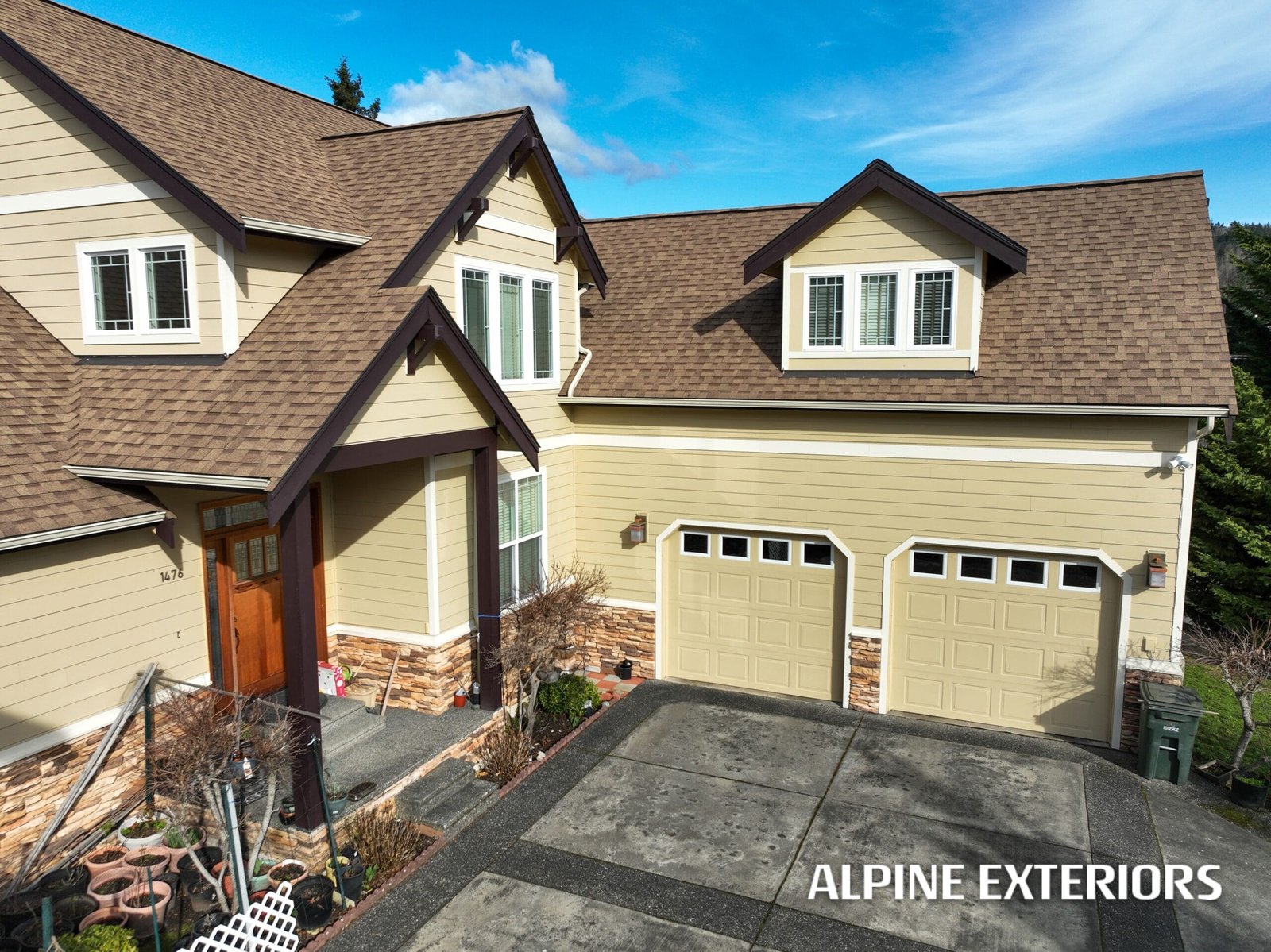
In Lake Stevens, the roof problems that actually shorten a roof's life almost always trace back to moss holding moisture against the shingles and gutters that can't keep up with a wet Snohomish County winter. Staying ahead of both — with regular moss removal, clear gutters, and a roof inspection every year or two — is the single most cost-effective thing a homeowner here can do for their home.
Composition shingle roofs are rated to shed water, not to sit under a mat of moss and wet organic debris for months at a time. When moss establishes itself on a north-facing slope or under a stand of Douglas fir, it does two things that matter. First, it holds moisture directly against the granule surface of the shingle long after the rest of the roof has dried out, which accelerates granule loss and, over years, lets water find its way under shingle edges and into the underlayment. Second, moss roots and rhizoids work into the seams between shingle tabs, gradually lifting them just enough to let wind-driven rain in during a storm. Neither of these happens overnight; a moss problem that started three winters ago is usually the one causing a leak now, not last month's storm.
Gutters compound the issue. Lake Stevens sits under heavy tree cover — fir, cedar, maple, alder — and needles, seed pods and leaf litter build up in gutters through fall and into winter. A gutter that's even half-clogged during a heavy rain event backs water up under the drip edge and into the fascia board, which is a slower but more expensive problem to fix than the moss itself. We see more fascia and soffit rot from clogged gutters here than from any other single cause, and it's almost always preventable with a fall and a mid-winter cleaning.
None of this is exotic. It's the ordinary wear pattern for a wet, wooded corner of the Pacific Northwest, and it responds well to routine maintenance rather than dramatic intervention. The homes that hold up best over 20-plus years aren't the ones with the most expensive roofing material — they're the ones where someone actually gets up there, or hires someone to get up there, on a schedule.
Lake Stevens gets less name-brand notoriety than the Skagit Valley or the San Juans, but its roofing conditions are shaped by a specific mix of factors worth naming directly:
What doesn't apply here, and what we'd rather not pad a page with, is coastal salt air or the kind of sustained high wind you get on the outer coast or the islands further north. Lake Stevens roofs fail from moisture and moss cycling, not from wind-driven material failure, so that's where the maintenance attention should actually go.
None of the following requires replacing a roof that's otherwise sound. It's a maintenance rhythm, and it's the same rhythm we recommend to homeowners across our Skagit, Island and Whatcom county service area, adjusted for how much shade and tree cover a given property has.
Alpine Exteriors does this kind of inspection and moss-and-gutter maintenance work as routinely as we do full roof replacements, and honestly, the maintenance visits are the ones that save homeowners the most money over time — a $150–$400 gutter and moss service is a lot cheaper than the fascia repair or interior water damage that follows two or three years of neglect. We'd rather tell a homeowner their roof has another five to eight good years in it with regular care than sell a replacement it doesn't need yet.
On shaded, north-facing slopes under conifer cover, plan on a moss check and light treatment at least once a year, typically in early fall before the wet season sets in. Sunnier or south-facing slopes may go two to three years between treatments. The honest answer is that it depends heavily on how much direct sun a given roof plane gets — two roofs on the same street can need very different schedules if one backs up to trees and the other doesn't.
It's not just cosmetic, but it also isn't an emergency the first season it appears. Thin, new moss growth is mostly a moisture and appearance issue. The risk builds as moss thickens over a few years, lifts shingle tabs, and holds water against the roofing material through the wet season — that's when it starts contributing to granule loss and, eventually, leaks at the affected area. Catching it early is genuinely the difference-maker.
Not dramatically. The framing and material choices are largely the same composition shingle, metal, or occasionally cedar systems used across Snohomish and Skagit counties. The meaningful differences are in ventilation detailing for the Washington State Energy Code and in slightly more attention to eave and valley flashing given the occasional freezing rain or snow event from the nearby foothills, rather than anything structural.
If the existing gutters are aluminum, properly pitched, and free of rust-through or sagging sections, they can often stay through a re-roof and just get reattached with new drip edge and flashing integration. If they're already showing signs of pulling away from the fascia or holding standing water, replacing them at the same time as the roof avoids paying for a second round of ladder and labor costs later.
If you're in Lake Stevens or elsewhere in Snohomish or Skagit County and want an honest read on where your roof actually stands — moss, gutters, flashing, ventilation, all of it — Alpine Exteriors can walk the roof with you and lay out what needs attention now versus what can wait. We're licensed in Washington under contractor license ALPINI751OW, and we'd rather give you a maintenance plan that gets a few more good years out of your current roof than push a replacement you don't need yet. Reach out to schedule an inspection.