
If you're seeing water stains around a skylight, frost on the underside of your roof sheathing, or musty smells from the attic hatch, the cause in most Lake Stevens homes is condensation, not a roof leak. Warm, moist indoor air is reaching a cold attic or a poorly flashed skylight shaft and turning back into liquid water on contact with cold wood or metal — and the fix almost always involves balancing intake and exhaust ventilation before anyone touches the skylight itself.
A vented attic works on a simple principle: cool, dry outside air enters low (through soffit or eave vents), rises as it warms slightly, and exits high (through a ridge vent, gable vents, or box vents near the peak). That constant, gentle airflow keeps the underside of the roof deck close to outdoor temperature and carries away the small amount of water vapor that always migrates upward from a living space, even through a well-air-sealed ceiling. When that airflow is blocked, undersized, or unbalanced — a common find in homes built in the 1980s and 90s around Lake Stevens, before current energy code ventilation ratios were standard — the attic can't shed moisture fast enough. In winter, that moisture condenses as frost on nail tips and sheathing on the coldest mornings, then drips or reabsorbs into the wood as temperatures rise during the day. Over a season or two, that cycle feeds sheathing rot, blackened insulation, and mold on rafters, usually discovered only when a homeowner pulls insulation back for an unrelated repair.
Skylights add a second, more direct path for the same problem. A skylight shaft is a tunnel of framing running from the ceiling drywall up through the attic to the roof deck. If that shaft isn't insulated and air-sealed along its full length, it becomes a cold surface inside a warm house — and warm, humid air condenses on cold surfaces the same way a glass of ice water sweats on a summer day. Homeowners often assume a skylight is leaking rain when the real problem is condensation running down the inside of the shaft and staining the drywall corners, especially over a bathroom, laundry room, or kitchen where humidity is highest. The skylight unit itself, and its exterior flashing, can be in fine condition while the shaft underneath it is the actual failure point.
The Washington State Energy Code (WSEC), which governs residential construction and re-roofing scope of work statewide, sets minimum ventilation ratios for vented attic assemblies and insulation requirements for the building envelope, including skylight shafts and cathedral ceiling assemblies. Meeting code isn't just a permitting formality here — it's the baseline that keeps a Snohomish County attic dry through a wet, mild-but-persistent Pacific Northwest winter.
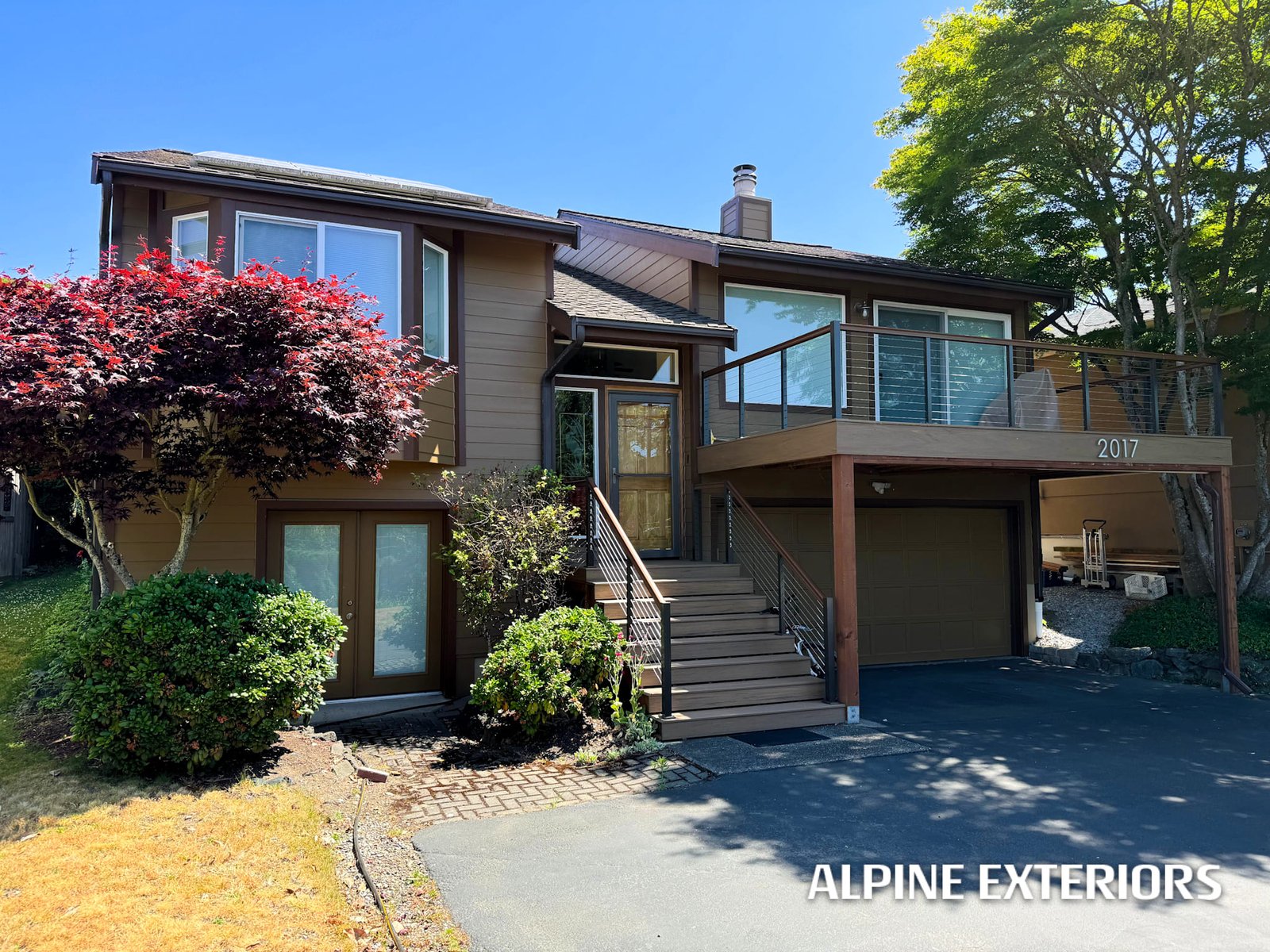
Lake Stevens doesn't deal with hurricane-force wind events or extended deep freezes, but the climate here creates its own specific set of ventilation and moisture problems that a generic national guide won't cover:
Start in the attic, not on the roof. On a cold morning, before the sun has warmed the space, look at the underside of the roof sheathing near the ridge and around any skylight shafts. Frost, dark staining, or a musty smell are the tell. Check that soffit vents aren't blocked by blown-in insulation piled against the eaves — this is one of the single most common ventilation failures found in older Lake Stevens homes, where decades of added attic insulation gradually buried the low intake vents without anyone noticing.
Next, look at the bathroom and kitchen exhaust fans. If they vent into the attic instead of straight through the roof or wall to the outside, they're pumping warm, saturated air directly into the space you're trying to keep dry, which will overwhelm even a correctly built ventilation system. This is a cheap fix relative to the damage it prevents, and it's worth confirming even if the attic itself looks fine right now.
For skylights specifically, don't assume a stain means the glazing or seal has failed. Have someone check the shaft insulation and the interior trim for gaps where warm air can reach the cold shaft walls, and have the exterior flashing inspected as a separate item — step flashing and skylight curb flashing wear and shift over time, especially under heavy winter rain, and they're a distinct failure mode from condensation even though the symptom (a stain around the skylight) looks identical from inside the house.
If moss has built up on shaded roof sections, don't pressure-wash it off yourself; that can drive water under shingles and strip granules, shortening the roof's remaining life. A gentler removal method paired with zinc or copper strips near the ridge, which release trace metal ions that discourage regrowth as rainwater washes over them, is the more durable approach for shaded Lake Stevens lots that will just grow moss back within a season or two otherwise.
When it's time for a re-roof, treat ventilation and skylight shaft insulation as part of the project scope, not an afterthought. Alpine Exteriors evaluates net free ventilation area against current attic insulation levels and Washington State Energy Code minimums as part of every roofing estimate in the Lake Stevens area, because installing new shingles or a new skylight over an attic that's still under-ventilated just resets the clock on the same moisture problem. It's also worth being honest about cost: proper ventilation retrofits (adding soffit intake, upgrading to a continuous ridge vent, re-insulating a skylight shaft) typically add a modest amount to a re-roofing or skylight replacement project rather than doubling it, but skipping that work to save money up front is usually the more expensive choice once sheathing rot or mold remediation enters the picture.
A true roof leak usually tracks with a specific rain event — you'll notice a new stain during or shortly after a heavy downpour, and it often follows a path from a specific point of entry like a nail hole, cracked flashing, or worn shingle. Condensation tends to show up on cold, clear mornings rather than during the storm itself, appears as frost or general dampness across a wider area of sheathing rather than a single tracked stain, and is often accompanied by a musty attic smell. If you're unsure, an inspection during dry weather that still shows moisture in the attic is a strong sign the cause is condensation rather than a leak.
Often, yes. If the skylight glazing and exterior flashing are in good condition, the fix is usually adding insulation and an air barrier along the skylight shaft, and correcting whole-house humidity sources like unvented bathroom fans, rather than replacing the unit itself. Replacement becomes necessary when the skylight is older, single-glazed, or the seal between the glass panes has failed, which shows up as permanent fogging between the layers of glass rather than surface condensation that clears once the air dries out.
The Washington State Energy Code sets minimum net free ventilation area as a ratio of attic floor space, split between low intake (soffit) and high exhaust (ridge or gable) vents, and that ratio is the baseline for any re-roofing or attic work here. The right number for a specific house depends on the attic's size, roof shape, and current insulation levels, which is why a walkthrough is more useful than a rule of thumb pulled from a different climate.
Not necessarily. Moss growth on shaded, north-facing roof sections in Lake Stevens is mostly a function of tree cover and slow drying time after our long wet stretches, and it can occur on a perfectly well-ventilated roof. That said, heavy moss can trap moisture against the shingles and mask early signs of a leak, so it's worth having it checked and removed carefully rather than assuming it's purely cosmetic.
If you're dealing with stains around a skylight, a musty attic smell, or moss that keeps coming back on a shaded roof section, it's worth having someone look at the whole system — roof, ventilation, and skylight shafts together — rather than patching one symptom at a time. Alpine Exteriors is a licensed Washington contractor (license ALPINI751OW) serving Lake Stevens and the surrounding Snohomish County area, alongside our home region of Skagit, Island and Whatcom counties, and we build ventilation and skylight work to current Washington State Energy Code requirements as part of every roofing project. Reach out for an on-site assessment before your next re-roof or skylight replacement, and we'll walk you through exactly what your attic needs and why.