
In Edison and the rest of unincorporated Skagit County, replacing windows means satisfying the Washington State Energy Code's fenestration requirements, pulling a Skagit County building permit for anything beyond a strict like-for-like swap, and picking a frame material that can shrug off marine-zone wind and rain without constant upkeep. Expect vinyl replacement windows to run roughly $600 to $1,200 installed per opening, fiberglass and wood-clad units higher, and a whole-house job on a typical Edison farmhouse or ranch to land somewhere between $8,000 and $25,000+ depending on how many windows, their size, and what's found underneath the old trim once it comes off.
Those are planning ranges, not quotes — the real number depends on how many openings need full-frame replacement versus a simpler insert job, whether the sheathing behind the old windows turns out to be sound or soft, and which frame material and glass package you choose. A short farmhouse with eight standard double-hungs is a very different project than a two-story home with several large picture windows facing the wind.
The Washington State Energy Code (WSEC) sets the baseline every replacement window in Skagit County has to clear, whether the work is done under a permit or not. Skagit County — including Edison, since it's unincorporated and permitted directly through the county rather than a city — has adopted the current WSEC residential provisions, which set a maximum U-factor for windows under the prescriptive compliance path. In practice this means the replacement units you buy need an NFRC label showing a U-factor at or below the threshold your jurisdiction has adopted for the marine climate zone that covers Skagit County — commonly cited as U-0.30 in recent code cycles, though the exact number tied to the current adopted edition is worth confirming with the county before you order product, since code cycles do get updated. Solar heat gain coefficient (SHGC) matters less here than it would somewhere sunnier, but it's still listed on the label and still part of the compliance picture.
There's more than one way to show compliance. Most straightforward replacements go in under the prescriptive path — you simply install windows that already meet the U-factor cap, done. If a home has an unusual mix of glazing, or a remodel is bundling windows with other envelope changes, a UA or performance-based compliance path can trade a slightly weaker window for better performance elsewhere in the building envelope, but that route needs energy code documentation, not just a receipt for the windows themselves. For a straight swap of existing openings, prescriptive compliance is almost always the simpler and cheaper route.
On permits: Skagit County's Planning and Development Services office is the permitting authority for unincorporated communities like Edison (as opposed to incorporated cities such as Mount Vernon or Anacortes, which run their own permit desks). A pure like-for-like window replacement — same size opening, same rough opening, no structural change — is sometimes eligible for a simplified over-the-counter process, but it still needs to be reviewed for energy code compliance, and if the replacement changes egress (a bedroom window that has to meet emergency escape and rescue opening sizing) or touches structural framing, it needs a full permit and inspection. Contractors who tell you 'no permit needed, ever' for window work in Skagit County are usually wrong, or are quietly betting you won't get caught. Alpine Exteriors pulls permits on Edison-area window jobs as a matter of course rather than skipping the step to save a week.
Frame material is the other big decision, and it's worth being honest about tradeoffs rather than pushing one answer. Vinyl is the affordable, low-maintenance default — it won't rot, doesn't need paint, and performs fine thermally, but it can look and feel less substantial than other options and, on very large openings, can flex more than a stiffer frame. Fiberglass costs more up front but holds paint well, resists expansion and contraction better across our wet winters and warm-enough summers, and tends to outlast vinyl in frames under real stress from wind load. Wood-clad windows look the best on older Edison farmhouses and Craftsman-era homes but need the exterior cladding maintained and are the most expensive option to replace if a seal fails down the road. Aluminum-frame windows are the least common choice for houses here — they conduct cold and, without a thermal break, can struggle to meet the energy code's U-factor requirement at all, which rules them out for a lot of prescriptive-path replacements.
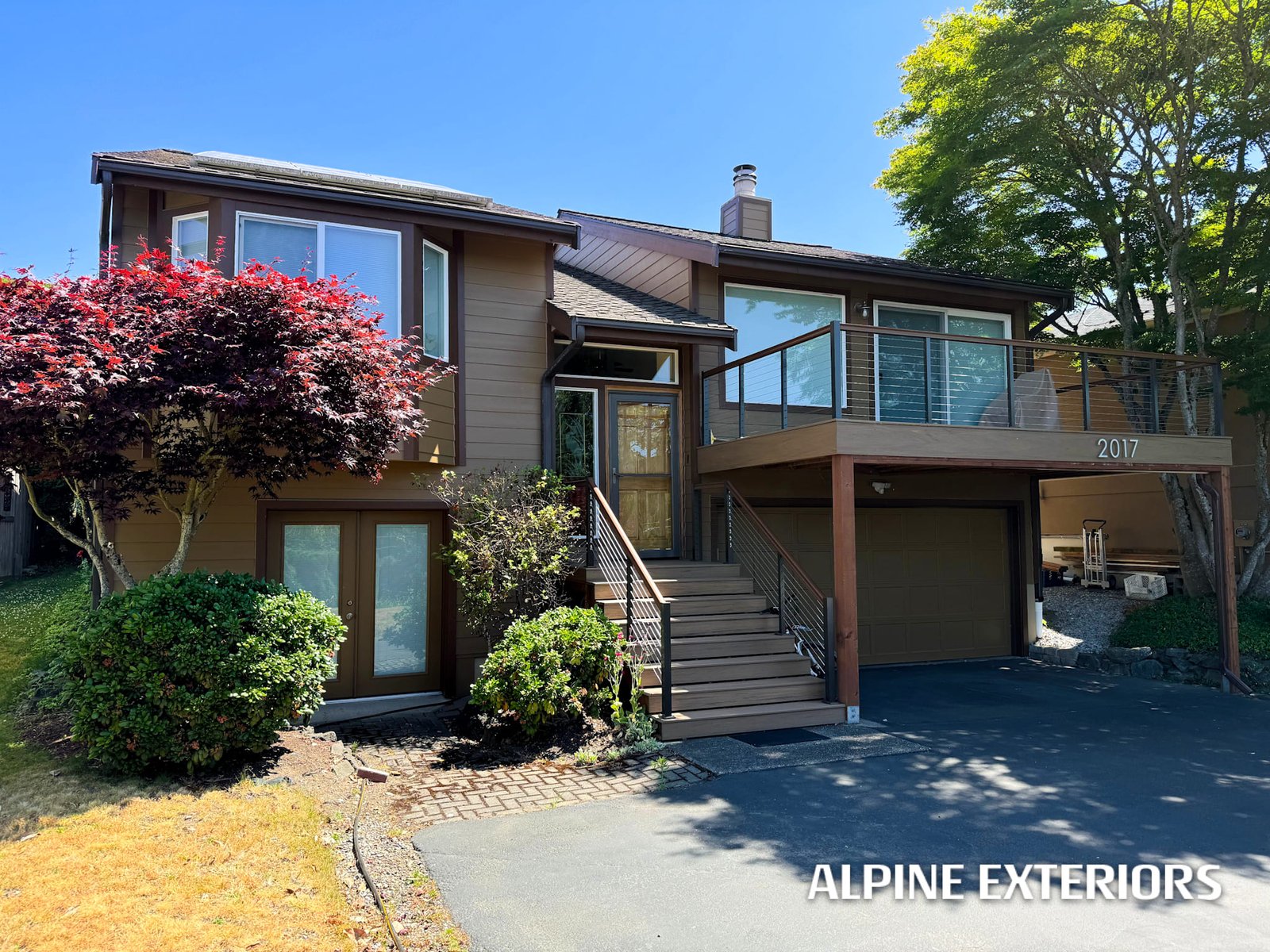
Edison sits out on the Skagit flats, close to Samish Bay, in open farmland with very little windbreak between the house and the water. That matters for window replacement in a couple of concrete ways. First, sustained wind off the flats and off the bay puts real pressure on large window units, especially picture windows and sliding patio doors on the west and southwest sides of a house — a frame that's marginal on structural rating can flex, whistle, or eventually leak at the corners under that kind of steady load, so it's worth confirming a window's design pressure rating on bigger openings rather than assuming any big-box unit will hold up the same as a standard-sized one. Second, the air here carries a faint but real salt component off the bay and the broader Puget Sound, which over years can accelerate corrosion on cheaper hardware — hinges, locks, and balance mechanisms — even though this isn't the aggressive salt exposure you'd see right on the open coast or on the outer islands.
The bigger factor for window performance is simply how much rain this area gets between roughly October and March. Skagit County's wet season isn't dramatic the way a storm event elsewhere might be, but it's persistent, and persistent wind-driven rain finds any gap in flashing or sealant that a drier climate would never expose. Old, original single-pane windows on Edison farmhouses often have decades of small compromises in their flashing and sill pans, and by the time a homeowner notices water staining on interior trim, moisture has usually already been working on the sheathing behind it for a while. That's a big part of why full-frame replacement sometimes reveals rot that a quick visual inspection from outside never would have caught.
Two conditions that matter elsewhere in the Alpine Exteriors service area matter less here. Edison is low-lying and open, not shaded, so moss buildup — a real issue for north-facing roofs in wooded parts of Skagit and Whatcom counties — isn't really a window-replacement concern. And while the foothill communities further east and toward Sedro-Woolley see occasional ice and snow loads that stress roofing and gutters, Edison's flat, low-elevation position means it rarely sees more than a light dusting; window selection here is driven far more by wind and rain than by cold-weather load.
Start by pulling the NFRC label off any window you're considering — literally look at it — and confirm the U-factor meets or beats what Skagit County currently requires under the Washington State Energy Code before you commit to a product line, rather than trusting a salesperson's summary. If a contractor can't produce that number or point you to the label, that's worth pausing on.
Second, get a straight answer on full-frame versus insert (pocket) replacement before pricing anything. Insert replacement — where the new window goes into the existing frame — is cheaper and faster but only makes sense if the existing frame and sill are solid and square. On an older Edison home where rain has had thirty or forty years to find its way into a sill, a full-frame replacement that lets the contractor actually see and repair the wall assembly is usually the more honest recommendation, even though it costs more.
Third, budget in a contingency for hidden damage rather than treating the initial quote as the ceiling. It's common, not rare, to open up an old window opening in this area and find soft sheathing or a rotted sill that wasn't visible before demolition. A contractor who won't discuss this possibility up front, or who quotes a number that assumes everything underneath is perfect, isn't giving a realistic picture.
Fourth, confirm licensing and permit handling before signing anything. Washington contractors are required to carry a state contractor license, and it's reasonable to ask for the license number and verify it's active. Alpine Exteriors holds Washington contractor license ALPINI751OW and handles the Skagit County permit application directly on window jobs in Edison, rather than leaving that step to the homeowner.
Finally, think about timing. Exterior window work goes faster and with fewer weather-related delays when it's scheduled outside the heart of the wet season — late spring through early fall gives more dry-weather windows to get old units out and new ones sealed in before a storm rolls through. It's not a hard rule, and window replacement does happen year-round here, but a homeowner with flexibility on timing can usually avoid the worst of the scheduling friction that winter rain creates for any exterior trade.
In most cases, yes, or at minimum the work needs to be reviewed for energy code compliance through Skagit County Planning and Development Services, which handles permitting for unincorporated communities including Edison. A true like-for-like swap in the same rough opening sometimes qualifies for a lighter review, but anything that changes a window's size, alters a bedroom's egress opening, or touches structural framing requires a standard permit and inspection. Don't rely on a contractor's word that windows never need permits here — confirm it with the county or with a contractor who pulls permits as standard practice.
Skagit County falls under the Washington State Energy Code's marine climate zone provisions, and the prescriptive path sets a maximum window U-factor that recent code cycles have generally held around U-0.30, though the exact figure depends on which edition of the code is currently adopted. Rather than relying on a remembered number, check the NFRC label on any window you're considering and confirm with the county or your contractor that it clears the currently adopted threshold before you order product.
There isn't a single right answer, but there are real tradeoffs. Vinyl is the affordable, low-maintenance choice and performs fine on most standard openings; fiberglass costs more but resists the flexing and expansion that steady wind and temperature swings can cause, especially on larger units; wood-clad frames look best on older farmhouses but require more upkeep on the exterior cladding. Aluminum without a thermal break is generally a poor fit here because it struggles to meet the energy code's U-factor requirement at all.
Replacing old single-pane or poorly sealed windows with code-compliant, properly installed double-pane units does reduce heat loss and drafts, and most homeowners notice less cold radiating off the glass in winter and less condensation on the interior surface. That said, windows are one piece of a home's overall envelope — attic insulation, air sealing, and duct condition often matter just as much or more to a heating bill, so it's worth being realistic that window replacement alone won't fix a drafty, poorly insulated house on its own.
If you're weighing window replacement on an Edison-area home, the honest first step is having someone look at the actual openings — not just quote off square footage — since the difference between an insert job and a full-frame replacement, and whether there's hidden rot behind the old trim, drives most of the real cost. Alpine Exteriors serves Edison as part of its Skagit, Island, and Whatcom county service area, handles the Skagit County permit process directly, and can walk through frame options, energy code compliance, and realistic cost ranges for your specific house before any work begins. Reach out for an on-site assessment and a written estimate that accounts for what your windows actually need, not a generic per-window number.