
For most homes in Skagit, Island and Whatcom counties, yes — sound soffit and fascia are worth doing, because they protect the one part of the roof system that fails quietly and expensively when it's ignored. Whether it's worth doing right now, versus watching it for another season, depends on the actual condition of what's already on your house, not on a general rule.
Soffit and fascia rarely fail all at once. They soften, discolor, or pull away from the rafter tails over several wet seasons, and by the time the damage is visible from the ground, there's usually already some rot or pest entry behind it. That's the real argument for addressing it proactively rather than waiting for a leak to force the issue — not marketing, just how wood and moisture behave in this climate.
Fascia is the vertical board that runs along the edge of the roofline, usually where the gutter attaches. Soffit is the material underneath the roof overhang, closing the gap between the fascia and the side of the house. Together they finish the roof edge, but they also do real structural and functional work: fascia gives the gutters something solid to hang from and takes the direct hit from wind-driven rain, while soffit protects the rafter tails and roof sheathing from behind while providing an intake path for attic ventilation.
That ventilation role matters more than most homeowners realize. A vented soffit paired with proper ridge or roof venting lets an attic breathe — pulling in cooler air low and letting warm, moist air escape high. Without that intake air path, attics in our climate tend to hold moisture, which shows up as sheathing discoloration, mildew smell, or, in colder snaps, frost on the underside of the roof deck. Ventilation and insulation levels here are governed by the Washington State Energy Code, and a soffit that's been painted shut, packed with insulation, or replaced with solid material during a past repair can quietly undercut the code-required airflow even if the rest of the roof looks fine.
Material choice matters too. Wood fascia and soffit look right on older farmhouses and craftsman-style homes common around Mount Vernon and Sedro-Woolley, but they need paint or stain maintenance to survive our wet winters. Aluminum-wrapped fascia and vinyl or aluminum soffit cost more upfront but need essentially no maintenance and hold up well against consistent moisture. As a rough guide, homeowners in this area typically see repair costs in the low hundreds for a short damaged section, and full soffit-and-fascia replacement running somewhere in the range of $8 to $20 per linear foot depending on material, height, and how much of the underlying framing needs repair. Those are planning ranges, not quotes — the only way to get an accurate number is a physical look at the roofline.
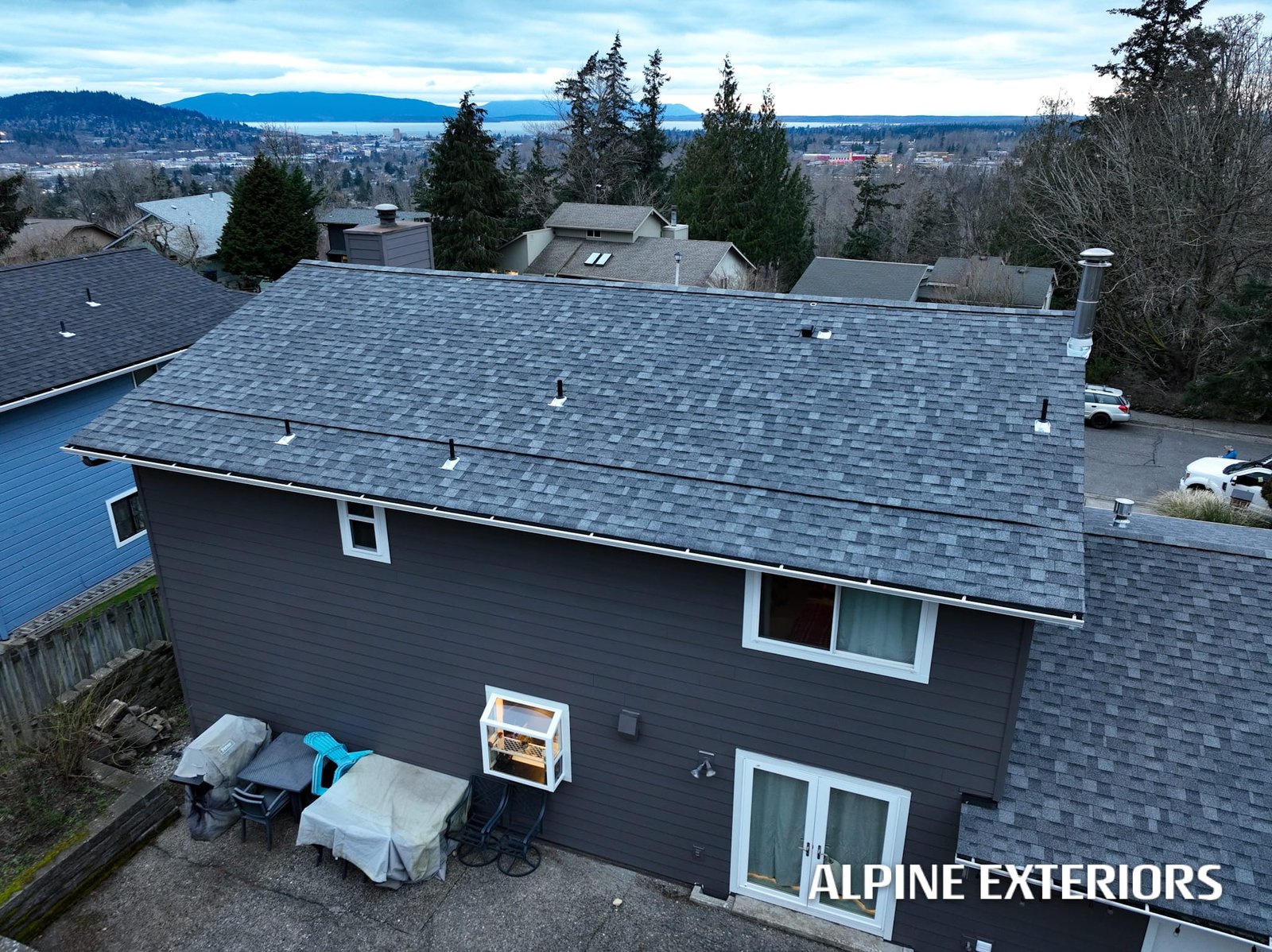
Skagit, Island and Whatcom counties don't deal with hurricanes or extreme heat, but the conditions that do apply here are persistent in a way that adds up over years rather than showing damage in a single event.
None of these conditions are dramatic on their own, but stacked together over the life of a roof, they explain why soffit and fascia in this region tend to fail from moisture and steady exposure rather than from a single storm event.
Start with an honest look, not a guess. Walk the perimeter of the house on a dry day and check for a few specific things: soft or spongy fascia when pressed with a thumb, soffit panels that sag or show daylight gaps at the seams, paint that's bubbling or peeling in a straight line along the roof edge, and gutters that have pulled away or sag between hangers. Any of those point to moisture already behind the surface, not just a cosmetic issue.
From there, the decision is usually between a targeted repair and a full replacement of that run:
Timing matters here more than in drier climates. Late summer through early fall — after the dry season sets in but before the heavy fall rains start — is the best window to do this work, since it lets any repaired framing dry out fully before it's closed back up and gives paint or sealant time to cure properly. Waiting until mid-winter to address visible soffit damage usually means working around active rain, which is harder to do well.
Finally, match the material to where the house sits. A home on open flats near Burlington or La Conner benefits from solid, well-fastened fascia that can take wind-driven rain; a waterfront property on Camano Island or near Anacortes benefits more from corrosion-resistant fasteners and aluminum components; a shaded lot near Sedro-Woolley benefits from keeping gutters clear so moss and debris don't sit against the fascia. A licensed contractor who works across this specific area — not just a generic install — should be able to point out which of these applies to your house during a walk-around, and Alpine Exteriors can do that assessment as a standalone visit if you're not ready to commit to work yet.
Fascia is the vertical trim board at the roof edge that gutters typically mount to; soffit is the horizontal or angled material underneath the roof overhang that closes off the underside. Almost every home in this region has both, even if they're not obviously visible from the ground, and they work as a pair — fascia handles the vertical exposure and gutter load, soffit handles ventilation and protects the rafter tails from underneath. It's uncommon to need one without the other, since damage to one often means the other has been exposed to the same moisture.
Partial repair is often reasonable if the rest of the fascia and soffit is sound and the damage is contained to one area, such as under a gutter that overflowed for a season. The tradeoff is a visible seam or slight color mismatch where old and new material meet, especially with painted wood. If more than one section shows soft spots, or the house has original wood trim that's never been replaced, doing the full run at once usually costs less per foot than repairing in stages over several years and gives a more uniform, weathertight result.
It matters, though not in the way people often assume. The benefit isn't primarily about summer cooling — it's about keeping attic moisture and temperature under control through our long wet season, which protects insulation performance and roof sheathing over time. The Washington State Energy Code sets ventilation and insulation expectations for a reason: an attic that can't breathe properly tends to hold moisture, which reduces insulation effectiveness and can shorten the life of the roof deck itself, regardless of how efficient your heating system is.
Look at where the moss concentrates and whether water is draining past it or pooling against the roof edge. Moss that's confined to the upper or middle sections of a shaded roof plane is mostly a roofing and gutter-clogging concern; moss or heavy algae staining that reaches all the way down to the fascia line, combined with darkened or soft-feeling fascia in that same spot, is a sign that moisture is sitting against the wood longer than it should. At that point it's worth having someone check the fascia condition directly rather than just cleaning the moss and assuming the problem is solved.
If you're weighing whether soffit and fascia work makes sense for your home in Mount Vernon, Anacortes, Burlington, Sedro-Woolley, La Conner, Stanwood, Camano Island, Bellingham or anywhere else in Skagit, Island or Whatcom County, the most useful next step is a direct look at your roof edge rather than another article. Alpine Exteriors, WA contractor license ALPINI751OW, inspects soffit, fascia, gutters and roofing together so you get a straight answer about what actually needs attention now versus what can reasonably wait — and a cost range based on your house, not a generic estimate. Reach out to schedule a walk-around before the fall rains set in.