
Big Lake sits in unincorporated Skagit County between Mount Vernon and Sedro-Woolley, and a lot of the homes ringing the water were built decades ago to take advantage of the view. That means many of the decks out there are original or close to it, and they've spent years soaking up the region's heavy winter rain, sitting under fir and cedar canopy that keeps shaded boards damp, and occasionally riding out a hard frost when cold air settles into the valley. When a deck starts to feel spongy underfoot, the railing posts wiggle, or boards have gone gray and splintery, replacement questions follow close behind: what should this actually cost, what's driving that number, and how do you tell a careful quote from one that's cutting corners you won't see until the first wet winter. This guide lays out realistic price ranges for deck replacement around Big Lake, the variables that push a project toward the low or high end, and what a trustworthy proposal should spell out before any contract is signed.
There isn't one number that fits every deck on the lake, because a 200 square foot pressure-treated platform at ground level and a 500 square foot composite deck with stairs down a sloped waterfront lot are two completely different projects. As a starting point, most full deck replacements in the Big Lake area land somewhere between the low five figures for a modest, low-to-grade wood deck and well into the twenty, thirty, or even forty thousand dollar range for larger composite decks with multiple levels, built-in railing systems, or stairs handling significant elevation change down toward the water. Material choice alone can roughly double the cost per square foot, and anything that touches the substructure — rotted joists, undersized footings, a ledger board that was never properly flashed — adds to the number once the old decking comes off and the crew can actually see what's underneath. The table below breaks out the main cost factors so you can see where the money tends to go.
| Cost Factor | Typical Low | Typical High | Notes |
|---|---|---|---|
| Pressure-treated wood decking | Lower end per square foot | Moderate per square foot | Least expensive material, but shortest realistic lifespan in a wet climate without regular maintenance |
| Cedar decking | Moderate per square foot | Higher per square foot | Natural rot resistance but still needs sealing to handle Skagit County's rain |
| Composite or capped composite decking | Higher per square foot | Highest per square foot | Higher upfront cost, minimal staining or sealing over the deck's life |
| Substructure and framing (joists, beams, posts) | Modest add if framing is sound | Substantial add if reframing is needed | Often the biggest surprise once old decking is removed |
| Footings sized for local soil and frost depth | Minor if existing footings are reusable | Significant if new footings are required | Governed by the Washington State Building Code; lakeside soil conditions can require deeper or additional footings |
| Railing system | Basic code-height wood railing | Cable, glass, or composite railing | Guardrail height and baluster spacing are set by code, not preference |
| Stairs and landings | Single short run | Multiple runs on sloped lots | Common on Big Lake properties that step down toward the water |
| Demolition and haul-away | Small deck, easy access | Large deck or difficult site access | Waterfront and wooded lots can limit equipment access and add labor time |
| Permit and inspection fees | Set by Skagit County | Varies with project scope | Most full deck rebuilds require a permit; ask your contractor to confirm before work starts |
A handful of site-specific and design factors explain most of the spread between a low-end and high-end deck replacement in this area:
A vague, one-line estimate makes it hard to know what you're actually paying for, and it makes comparing bids nearly impossible. A quote worth signing should spell out:
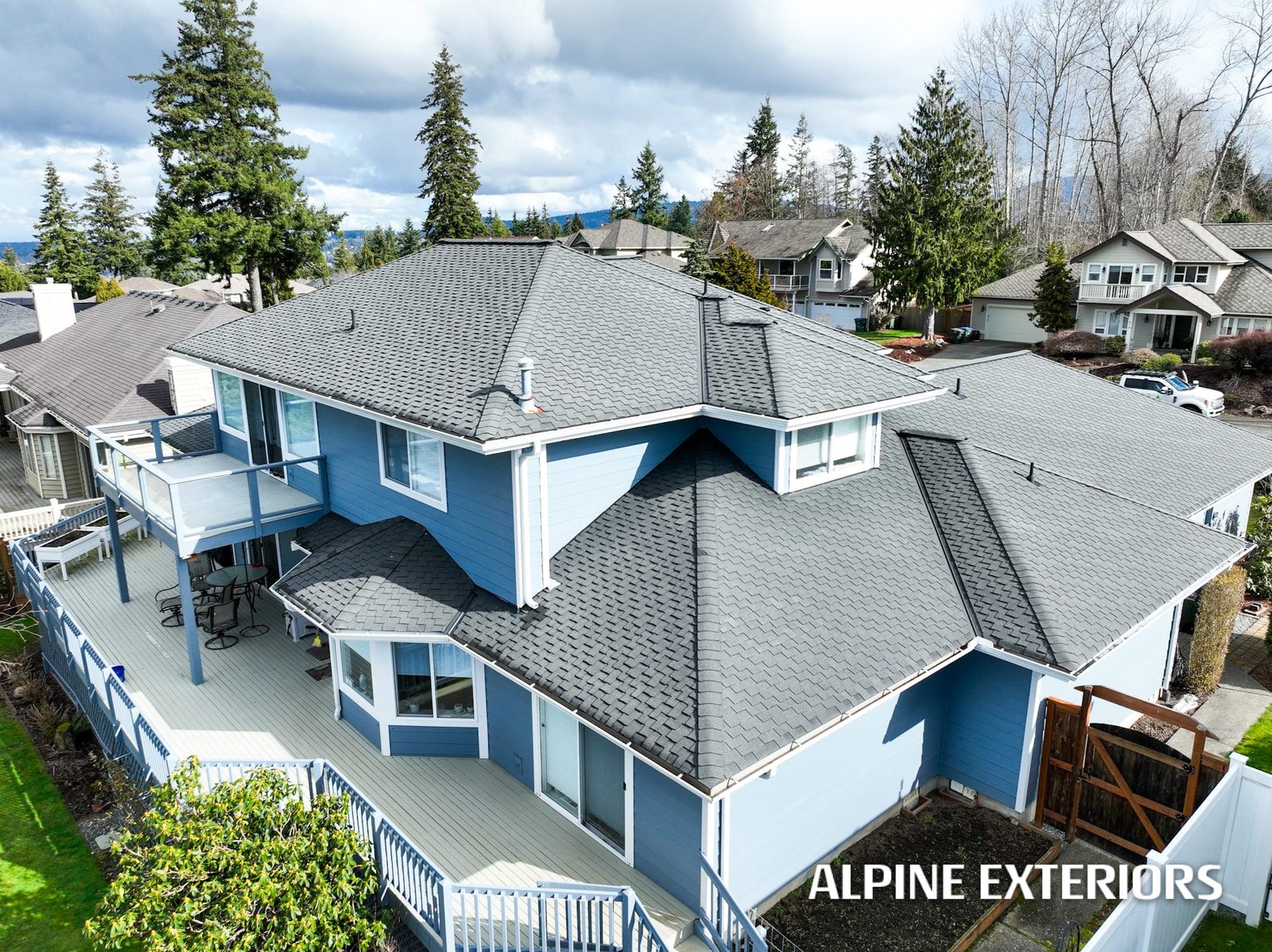
Alpine Exteriors provides written scopes along the lines described above for deck replacement work in the Big Lake area, and includes its Washington contractor license number, ALPINI751OW, on proposals so homeowners can verify it independently before committing.
The lowest number on paper isn't always the better deal, and the highest number doesn't automatically mean better work. A few practical steps make comparisons more honest:
Many contractors, including Alpine Exteriors, can point homeowners toward third-party financing options for larger deck replacement projects, which spreads the cost into monthly payments rather than one lump sum. Terms and approval depend on the lender and your own credit situation, so it's worth comparing more than one option rather than accepting the first offer presented. On the insurance side, homeowners policies vary widely in how they treat deck damage from a fallen tree limb, wind, or long-term water intrusion versus general wear and rot, and coverage for bringing an older deck up to current code during a rebuild isn't automatic — it's worth a direct conversation with your insurance agent before assuming a claim will cover the full cost of replacement. None of this is insurance or financial advice; it's a starting point for the questions worth asking before you budget the project.
Timelines depend heavily on size, material, and weather, but most single-level deck replacements in the Big Lake area take anywhere from a few days to a couple of weeks once permits are in hand. Larger, multi-level projects or ones that turn up unexpected framing repairs can run longer, and the region's frequent rain during the fall and winter months can add delays that a summer project wouldn't face.
Most full deck replacements, especially those involving new footings or a deck elevated above a certain height, require a permit through Skagit County. Some very small, low, ground-level repairs may fall outside that requirement, but it's worth confirming with the county or your contractor before work begins rather than assuming a project is exempt.
Sometimes, if they're sound and sized appropriately for the new deck's load and current code requirements. But footings and framing on older Big Lake decks were often built to different, looser standards, and years of ground moisture can weaken posts and footings in ways that aren't visible until the old decking is removed. A contractor should inspect and confirm reusability rather than assume it.
There's no single right answer — pressure-treated wood is the most affordable option but needs regular sealing and inspection to resist rot given how much rain the area gets, cedar offers natural resistance but still needs upkeep, and composite decking costs more upfront but generally requires the least ongoing maintenance. The better fit depends on your budget, how much upkeep you're willing to do, and how shaded the deck site is, since shaded, damp areas are where moss and mildew take hold fastest.
Cost ranges are a useful starting point, but the only way to know what your specific deck replacement will actually cost is to have someone look at the framing, the footings, the ledger connection, and the site itself. Alpine Exteriors serves Big Lake and the rest of Skagit County, along with Island and Whatcom counties, and can walk through the deck in person, explain what's driving the price on your particular project, and put together a written, itemized quote so you know exactly what you're comparing before you decide who does the work.