
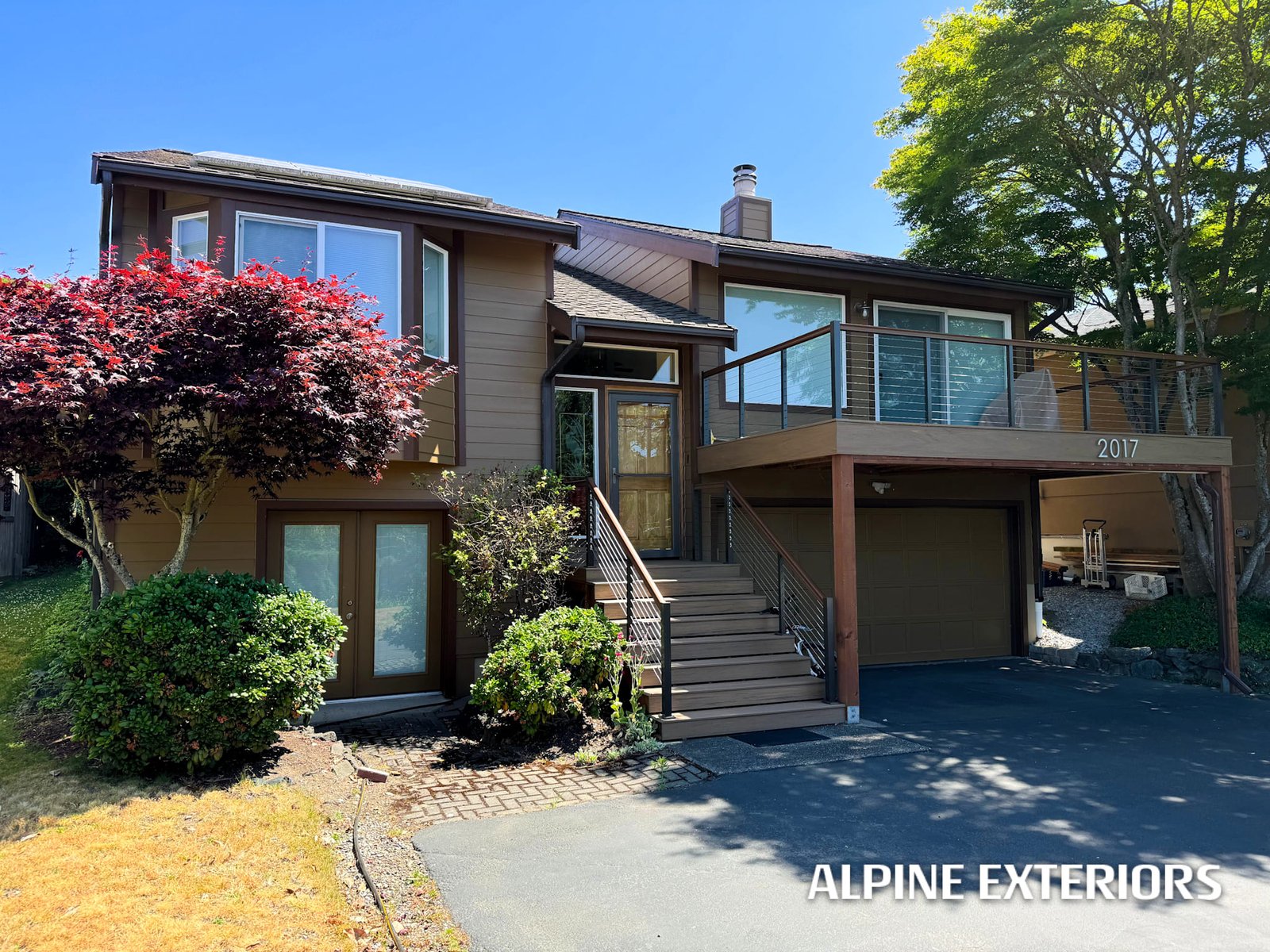
After a windstorm or heavy rain event, walk the perimeter of your Darrington home and look up before you look down: missing or lifted shingles, a bent gutter, a fresh scrape on the siding, or a limb resting on the roofline are the visible clues that something needs a closer look. Most storm damage in this part of Snohomish County isn't dramatic — it's a handful of loosened shingles or a cracked vent boot that turns into a slow leak over the following weeks if nobody catches it.
The instinct after a bad night of wind is to check for the big, obvious problem — a downed tree or a hole in the roof. Those get handled fast because they're impossible to ignore. The damage that actually costs homeowners the most is the kind that looks minor from the ground: a shingle tab folded back but not torn off, a gutter pulled slightly away from the fascia, or granules collecting in the downspout. None of that stops water from getting in eventually, and none of it is easy to see without walking the roof or using a ladder and binoculars from a safe distance.
Darrington sits at the base of some of the steepest terrain Alpine Exteriors works near, and the storms that move through the Sauk and Stillaguamish valleys bring a specific combination of problems rather than one single threat.
None of this is hurricane-force wind damage — Darrington doesn't see that kind of event — but the cumulative effect of repeated wind and rain over a wet Pacific Northwest winter does real, compounding damage if it isn't addressed piece by piece.
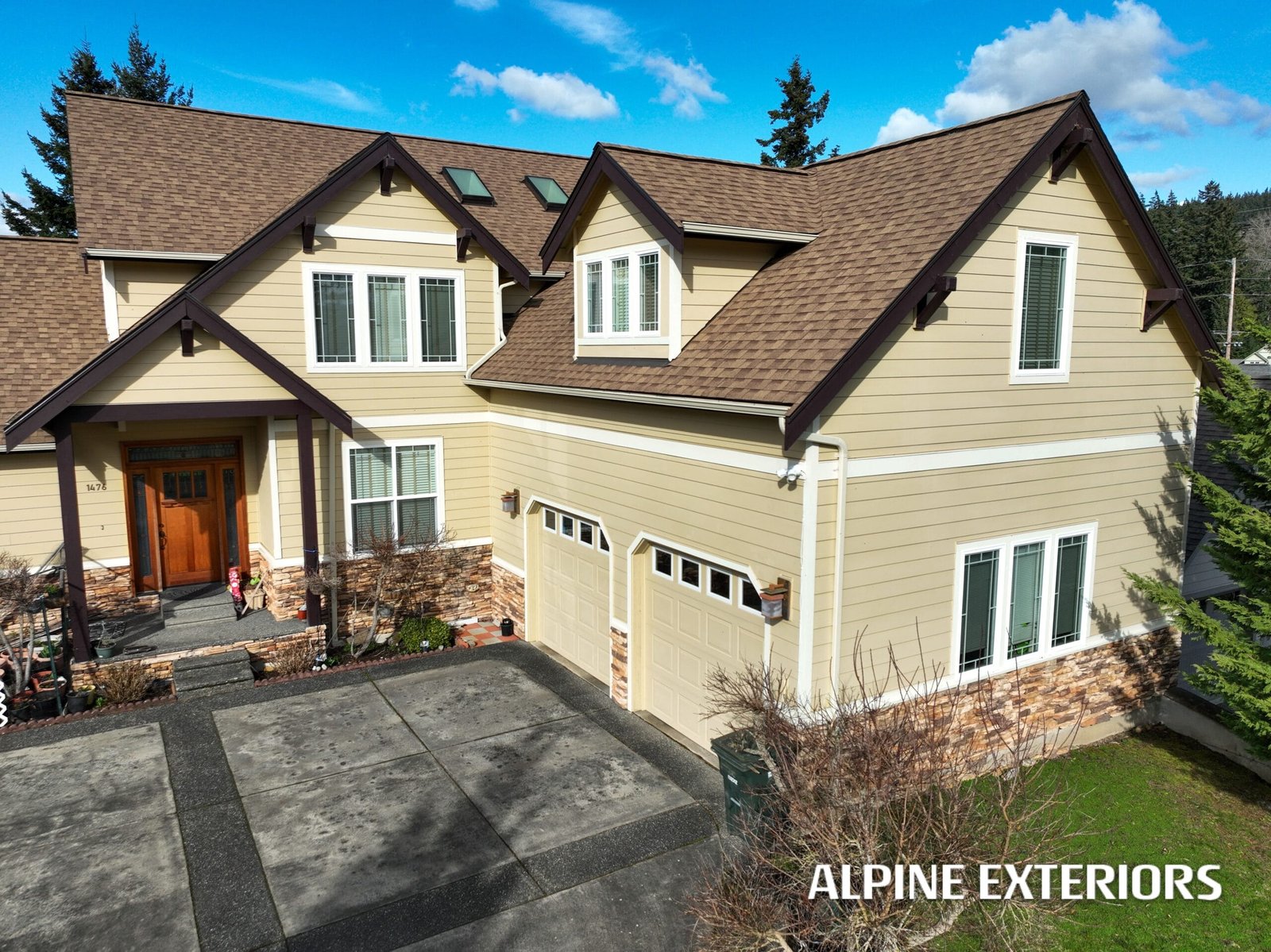
Most of Alpine Exteriors' service area sits on the Skagit flats or along the coast, where wind is steady and comes off open water or farmland. Darrington is different. It sits well up the Sauk River valley in the foothills of the North Cascades, ringed by steep, heavily timbered terrain, and that geography changes how storms behave on a roof.
First, the tree exposure is heavier here than almost anywhere else Alpine Exteriors works. Homes closer to town on the Skagit flats or the islands might worry about a stray limb from a single yard tree; Darrington properties are often adjacent to working timberland or mature second-growth forest, so falling limb risk during any wind event is a bigger, more constant factor. Second, elevation matters. Darrington sits high enough that a winter storm bringing rain to Mount Vernon or Burlington can arrive as snow or a rain-on-snow event locally, and that combination — heavy wet snow followed by rapid warming and rain — puts more weight and more water on a roof structure than rain alone ever would. Ice damming isn't a routine occurrence here the way it is in true mountain climates, but it happens often enough in cold snaps that eave and gutter design matters more than it does down on the valley floor.
Third, moss and moisture retention are a bigger long-term issue on shaded, tree-lined lots. A roof tucked under conifers dries out slower after every storm, and moss that's been allowed to build up doesn't just look bad — it holds water against the roofing material and lifts shingle edges, which is exactly the kind of pre-existing weakness that turns an ordinary wind event into a leak. Homes with mostly shaded, north-facing roof planes in Darrington tend to need moss treatment and gutter clearing more often than a comparable roof out on the open flats near La Conner or Stanwood.
Finally, access and timing matter in a way they don't in denser parts of the service area. Darrington is a longer drive out SR-20 from Alpine Exteriors' core Skagit and Whatcom County territory, and after a significant regional storm, road debris or high water on the corridor can delay a contractor visit by a day or more. That's a real, practical drawback worth planning around — it argues for getting a tarp on early rather than waiting, since a callback might not happen the same day it would closer to Mount Vernon or Sedro-Woolley.
The sequence matters more than any single step. Skipping documentation or calling a contractor before calling the insurer (or vice versa, depending on your policy) can cost you money or slow the claim down.
It's also worth being honest about what a storm repair will and won't fix. If a roof was already at the end of its service life or a gutter system was undersized before the storm, patching storm damage brings it back to "pre-storm condition," not "new." Sometimes that's a fine outcome for the budget; sometimes it means the storm repair is a good moment to talk about a fuller replacement instead of paying twice.
Most standard Washington homeowner policies cover sudden, accidental damage from wind, falling trees or limbs, and wind-driven rain that gets in through a storm-created opening. Coverage details, deductibles and whether gradual damage (like a slow leak from long-neglected moss buildup) is excluded vary by policy, so the safest step is to call your insurer and ask specifically what your policy covers before assuming either way.
As soon as it's safe to do so, ideally the same day. Insurers expect homeowners to take reasonable steps to prevent further damage once they're aware of an opening, and every additional rain event that gets into exposed sheathing or insulation adds to the repair cost and can complicate a claim. In Darrington specifically, factor in that a contractor visit may take longer to schedule than it would closer to Mount Vernon, so temporary protection matters even more.
It depends on the pattern of damage, not just the count of missing pieces. A few isolated shingles lost near a ridge or edge can often be replaced in kind if the surrounding roofing is sound and reasonably close in age. But if the storm exposed weak spots that already existed — worn flashing, moss-compromised sections, an aging roof nearing the end of its lifespan — a spot repair may not hold, and it's worth having a contractor look at the whole roof rather than just the visible gap.
Water stains or a musty smell in the attic or on ceilings over the following weeks, since leaks from storm-loosened flashing or shingles don't always show up immediately. It's also worth checking gutters and downspouts once debris settles, since a gutter pulled loose during the storm can quietly dump water against the foundation for months before anyone notices the pooling or settling that results.
If a recent storm left your Darrington home with missing shingles, a damaged gutter, or a limb strike on the roof, it's worth getting a straightforward, no-pressure look before you sign anything with a traveling storm crew or settle a claim based on the adjuster's report alone. Alpine Exteriors serves the wider Skagit, Island and Whatcom County area and reaches Darrington along the SR-20 corridor, working roofing, siding, windows, decks and gutters under Washington contractor license ALPINI751OW. Call to schedule an inspection, get a clear explanation of what's actually damaged versus what's cosmetic, and get a written scope you can use with your insurance claim either way.