
Camano Island is unincorporated, so there is no "City of Camano Island" building department to call. Permits for reroofing, roof structure changes, and most exterior construction go through Island County Planning and Community Development in Coupeville. If your project is a full tear-off and replacement, a change to the roofline, added skylights, or any work that exposes the roof deck or rafters, plan on pulling a permit before the crew shows up, not after the first bundle of shingles lands on your driveway.
The gray area is repair work. Patching a section of damaged shingles, replacing a handful of blown-off tiles after a windstorm, or resealing a flashing detail around a chimney is often treated as maintenance and may not need a separate permit. But "small repair" versus "reroof" is the county's call, based on the scope and percentage of the roof surface affected, not a line the homeowner or even the contractor gets to draw on their own. When a project sits close to that line, it is worth a five-minute call to the county before work starts rather than a stop-work order after it does.
For most residential reroofs, the contractor submits a permit application describing the scope of work, the roofing material going on, and the value of the job, along with proof of a current Washington contractor registration and, where applicable, structural details if the roof deck or framing is changing. Island County reviews the application, issues the permit, and the fee is generally scaled to the value of the work rather than a flat rate — simple like-for-like reroofs are usually a lighter lift than a permit that also involves new sheathing, structural repairs, or a change in roof pitch or ventilation.
Inspections depend on scope. A straightforward reroof where the existing roof deck stays intact may only require a final inspection once the new roofing material is installed. A project that opens up the sheathing, adds new decking, or changes the roof structure typically adds an in-progress inspection — the county wants to see the sheathing, underlayment, and flashing details before they're covered by the finish roofing material, because that's the point where problems are cheap to fix and expensive to find later. Your contractor should be the one scheduling these inspections and should be able to tell you, before you sign anything, which inspections your specific project will need and roughly when they'll happen in the build sequence.
One detail that trips homeowners up: a permit that never gets a final inspection and sign-off stays open in the county's system. That can surface years later during a home sale, when a title company or buyer's inspector finds an unclosed permit and asks for it to be resolved before closing. Closing out the permit properly when the job finishes is not optional paperwork — it's what keeps the roof "legal" on record.
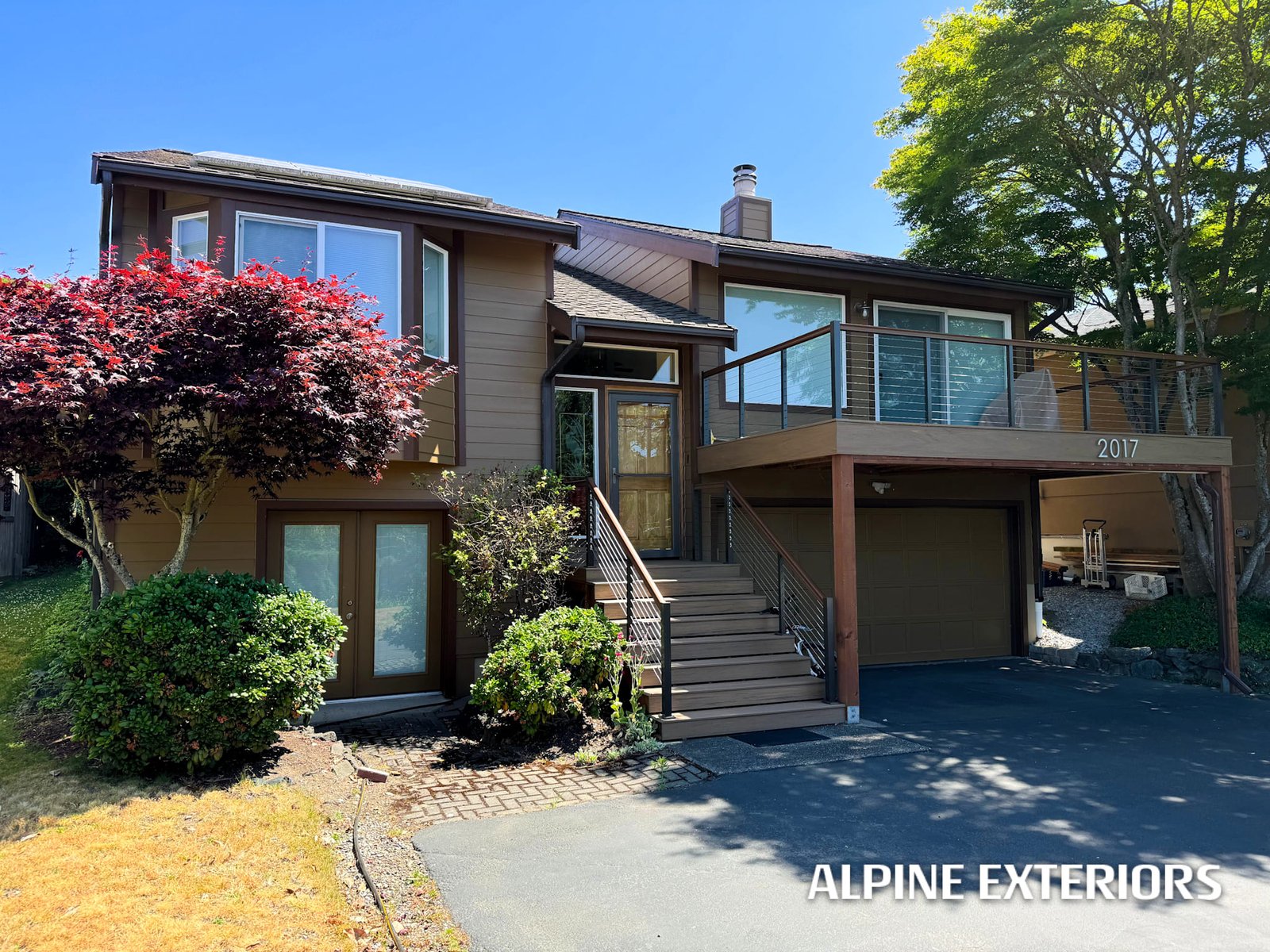
Camano sits surrounded by water — Saratoga Passage, Port Susan, and Skagit Bay — and that changes what a roof has to hold up against compared with an inland job in Mount Vernon or Burlington. Salt-laden air off the water accelerates corrosion on exposed metal: nails, flashing, gutter hangers, and vent stacks that would last decades inland can start showing rust streaks noticeably sooner on a waterfront or bluff-facing Camano home. That's a real argument for stainless or coated fasteners and corrosion-resistant flashing on island properties, even though it adds a bit to the material cost.
Wind exposure is also higher on open, waterfront lots than it is a few miles inland. A roof on a bluff facing Saratoga Passage sees steadier, harder wind than a similar roof tucked into trees in Sedro-Woolley, and that affects how shingles, ridge caps, and starter courses should be fastened and how carefully the edges and hips are detailed. On the flip side, much of interior Camano is heavily wooded, and shaded, tree-covered roofs here grow moss just as readily as anywhere else in this part of Washington — the difference is that damp, salty air can make that moss and the underlying moisture problem a little more persistent once it takes hold.
There's also a permitting wrinkle specific to waterfront property: Island County's Shoreline Master Program, adopted under the state Shoreline Management Act, applies to development within shoreline jurisdiction, generally defined as the area within 200 feet of the ordinary high water mark of marine shorelines. A straightforward like-for-like reroof on an existing house usually qualifies as routine maintenance and repair, which is typically exempt, but a project that also enlarges the roof, adds dormers, or otherwise changes the building footprint on a waterfront lot may need to be checked against shoreline rules before the county issues the building permit. It's a step inland properties in Mount Vernon or Anacortes proper simply don't have to think about.
Heavy winter rain runs are a fact of life across all of Skagit and Island counties, and Camano is no exception — underlayment quality, valley flashing, and gutter sizing matter more here than in drier climates, and it's part of why the Washington State Energy Code's requirements around the building envelope come into play whenever a reroof opens up the deck and gives a contractor access to add or upgrade attic insulation.
Before signing a contract, confirm with Island County — or have your contractor confirm in writing — whether your specific project needs a permit and which inspections apply. Don't take a verbal "you won't need one" at face value on anything beyond a small patch repair; get it in writing or get the county's own answer.
Verify the contractor's Washington state contractor registration and bond and insurance coverage before work starts, and ask who is pulling the permit. In Washington, it's common and appropriate for the contractor to pull the permit under their own registration, but the homeowner's name is still on the property record, so it's worth confirming the permit gets filed and, eventually, closed out.
If the job involves opening the roof deck, ask what insulation and ventilation upgrades the Washington State Energy Code will require as part of that work — a reroof is often the one practical window to add insulation without tearing into finished ceilings from inside, and skipping it means waiting for the next full reroof, decades away, to fix it.
Budget for permit fees as part of the project cost, not a surprise add-on. Depending on job value and complexity, Island County permit and plan review fees for a residential reroof typically run from a couple hundred dollars up to several hundred for larger or structurally involved projects — ask your contractor for the specific number tied to your scope rather than assuming a flat figure. Alpine Exteriors builds the permit into the proposal up front for Camano Island jobs, rather than leaving it as a line item that shows up after the contract is signed.
Finally, keep every document the process generates — the permit, the inspection sign-offs, photos of the underlayment and flashing before they're covered, and the material warranty. That paperwork is what protects you at resale and what a future roofer needs if a repair or warranty claim ever comes up.
If it's a full tear-off and replacement of the roofing material, yes — that's treated as a reroof and needs a permit through Island County, even when the underlying deck and structure aren't changing. A small patch, like replacing a few damaged shingles after a windstorm, is more often treated as repair work that doesn't require a separate permit, but the county — not the contractor — makes that determination, so it's worth confirming for anything beyond a minor patch.
For a standard residential reroof with no structural changes, review is usually straightforward and can move in a matter of days to a couple of weeks, though timing shifts with the county's current workload and how complete the application is when submitted. Projects that involve structural changes, added square footage, or shoreline jurisdiction review tend to take longer because they require additional review steps before the permit can be issued.
It depends on the scope. A like-for-like reroof on an existing house within 200 feet of the ordinary high water mark is generally treated as routine maintenance and repair, which is usually exempt from additional shoreline permitting. If the project also changes the building footprint, adds height, or otherwise goes beyond simple replacement, it's worth having the county confirm shoreline status before the building permit is issued, since that review happens separately from the standard building permit process.
At minimum, expect a final inspection once the new roofing is complete. If the project opens up the roof deck — new sheathing, structural repairs, or added insulation that requires the county to verify the assembly — expect an additional in-progress inspection before the roofing material goes on and covers that work. Your contractor should tell you up front which inspections your specific job needs and handle scheduling them with the county.
Permits and inspections aren't the interesting part of a new roof, but skipping them, or hiring a contractor who treats them as optional, is how homeowners end up with an unresolved permit hanging over a home sale years later. Alpine Exteriors is a licensed Washington contractor (license ALPINI751OW) that handles roofing, windows, decks, and gutters across Skagit, Island, and Whatcom counties, including Camano Island, La Conner, Stanwood, and the surrounding communities, and pulls and closes out the permits on every reroof it manages. If you're weighing a roof replacement or repair on Camano Island, reach out to Alpine Exteriors for an assessment that accounts for the island's wind, salt air, and shoreline rules from the start, not after the contract is signed.