
In most cases, yes. Because Big Lake is an unincorporated community, permits for roofing work there are issued by Skagit County Planning & Development Services rather than by a city building department. A full tear-off and replacement almost always needs a permit; a small patch repair usually doesn't, but the line between the two is drawn by the county, not by the homeowner or the roofer.
This surprises some homeowners who assume that because their address says Mount Vernon or Sedro-Woolley on their mail, a city office handles their permit. Big Lake, like Clear Lake and several other rural pockets of the county, sits outside all four incorporated city limits (Mount Vernon, Burlington, Sedro-Woolley, and La Conner), so it falls under county jurisdiction for building, land use, and permitting purposes. Knowing that up front saves a wasted call to the wrong office.
Skagit County, like most Washington jurisdictions, adopts the International Residential Code and International Building Code with state amendments, along with the Washington State Energy Code. Under that framework, a roofing permit is generally required for work such as:
Work that typically does not require a permit includes minor repairs, such as replacing a handful of wind-damaged shingles, resealing a vent boot, or patching a small area of flashing. But "typically" is doing some work in that sentence, because valuation thresholds and interpretations can shift, and a repair that starts small can turn into a full tear-off once a roofer opens the section and finds rot. The honest answer is that it's worth a quick call to the county, or letting your roofing contractor make that call, before assuming a repair is permit-exempt.
One code detail that catches people off guard: if a reroof opens up the roof deck, the Washington State Energy Code's insulation and air-sealing provisions can come into play, particularly on older Big Lake homes that were built before current energy standards. That doesn't mean every reroof triggers an energy-code review, but it means a contractor who's only thinking about shingles and nails, and not about what's happening at the attic and eaves, can miss a requirement that the county inspector will not.
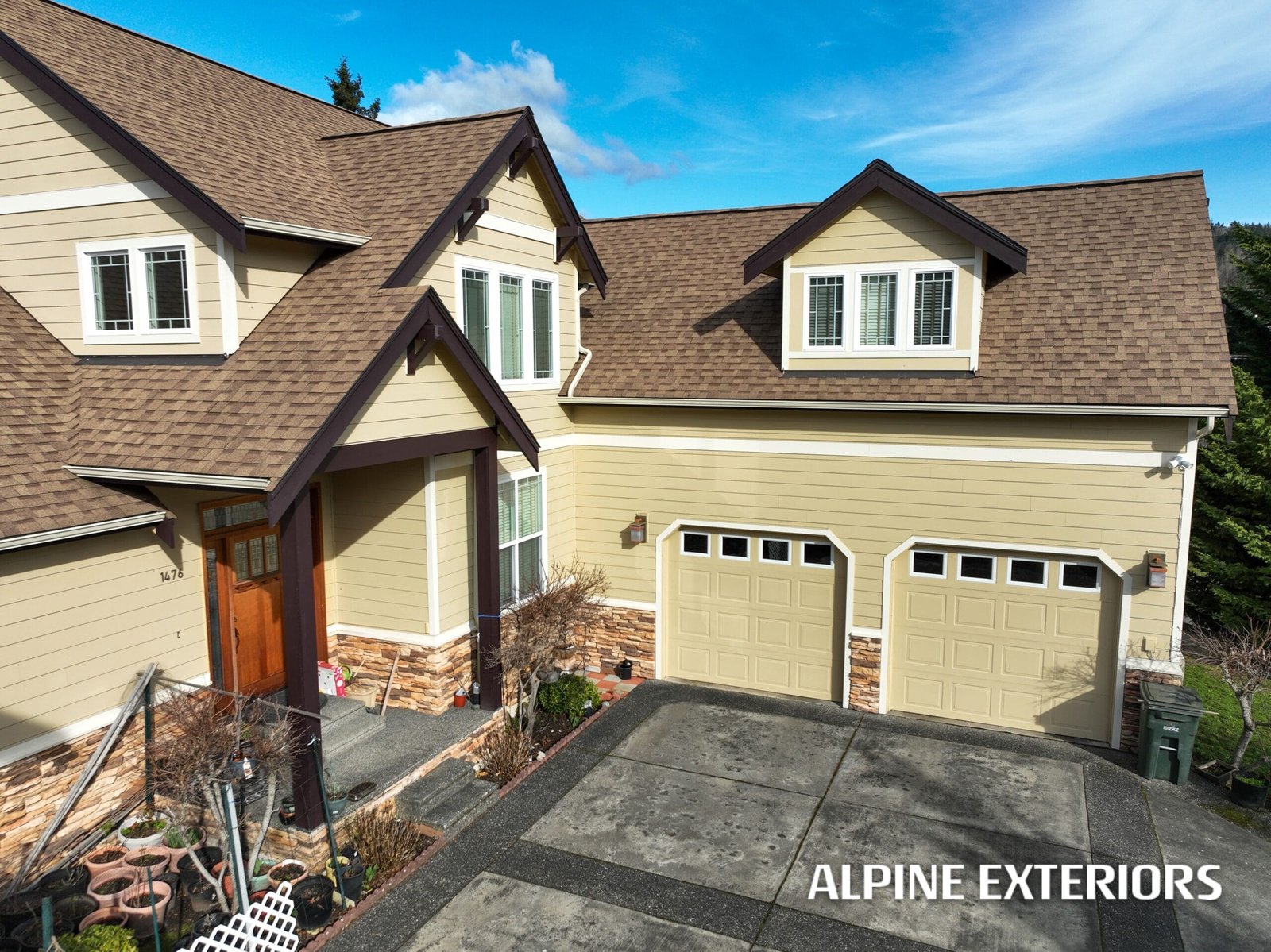
Permit rules are the same code language everywhere in the county, but what drives the actual condition of a Big Lake roof, and therefore whether a project ends up needing a permit at all, is local. Big Lake sits in the foothills east of Mount Vernon, ringed by conifer stands that shade large sections of many roofs for much of the day. That shade, combined with the region's heavy winter rain, is exactly the recipe for persistent moss growth. Moss doesn't just look bad; it holds moisture against the roofing material and, over years, against the decking underneath, which is one of the most common reasons a "simple reroof" turns into a full tear-off with sheathing replacement once the old roofing comes off and rot is exposed.
Wind is a factor too, though a different one than on the islands or the open Skagit flats closer to the water. Big Lake gets less direct exposure to wind off the Strait of Juan de Fuca than Anacortes or Camano Island does, but it still sees the gusty windstorms that move through the county in fall and winter, and fastening patterns and underlayment choices matter here just as they do anywhere else in Skagit County. Salt air corrosion, which is a real consideration for Alpine's island customers, is not a meaningful factor at Big Lake since it's an inland freshwater lake community, so that's one variable homeowners here don't need to worry about.
The foothills location also means Big Lake sees occasional snow and ice in a way that lower, flatter parts of the county sometimes don't, especially in cold snaps that settle into the valley. That makes ice-dam prevention at the eaves, and proper ice and water shield installation, a genuinely relevant detail for a Big Lake reroof, not just boilerplate advice copied from a colder climate.
The practical path for a Big Lake reroof looks like this:
One honest drawback worth naming: permitted work takes longer than an unpermitted patch job, and if a tear-off exposes rotted decking, the scope and cost can grow beyond the original estimate. That's not a reason to skip the permit, since unpermitted roofing work can complicate a home sale or an insurance claim later, but it's a real trade-off homeowners should walk into with open eyes rather than be surprised by mid-project.
Skagit County Planning & Development Services handles roofing permits for Big Lake and other unincorporated parts of the county. It is not handled by Mount Vernon, Sedro-Woolley, or any other nearby city, even if your mailing address references one of those towns, since Big Lake itself sits outside all of their city limits.
Usually not, if the work is limited to patching a small section, replacing a few shingles, or resealing flashing. A full tear-off and replacement, or any work that involves replacing roof decking or altering framing, generally does need a permit, and the safest move is to confirm with the county or your contractor before assuming a repair is exempt.
Most permitted reroofs in Skagit County involve at least two inspection points: one before the new roofing material is installed, to check underlayment, ice and water shield placement at the eaves, and the condition of the deck, and a final inspection once the roof is complete. Inspections need to be scheduled in advance, so a contractor experienced with county permitting will build that lead time into the project timeline.
Yes, a homeowner can apply for an owner permit in most cases, but it puts the responsibility for meeting code and scheduling inspections directly on the homeowner rather than the contractor. Most Big Lake homeowners find it simpler to have their licensed contractor pull the permit, since the contractor already knows what the county will be checking for.
A roofing permit shouldn't be an afterthought, especially on a Big Lake roof where moss, moisture, and the occasional ice event all shape what an inspector will actually be looking for. Alpine Exteriors, WA license ALPINI751OW, works throughout Skagit County, including Big Lake, Mount Vernon, Burlington, Sedro-Woolley, and La Conner, and can walk you through what your specific roof will need before the county gets involved. If you're weighing a repair against a full reroof, or just want a straight answer about whether your project needs a permit, reach out to Alpine Exteriors for an on-site look and a clear scope of work.