

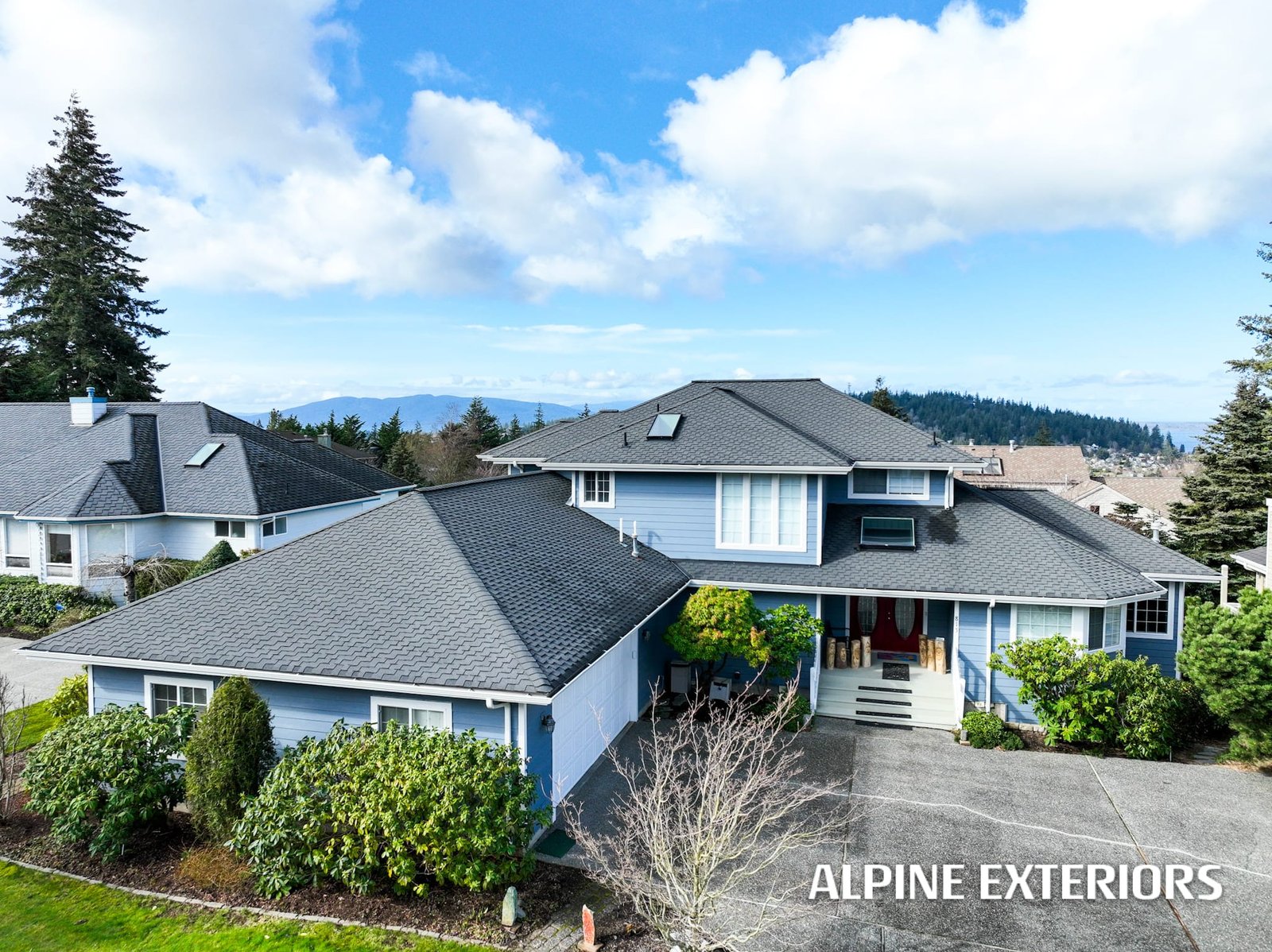
After a windstorm moves through the Big Lake area, walk the outside of your house before you decide whether you're looking at a weekend fix or an insurance claim. Check the roof, gutters, siding, windows and any deck for four kinds of damage: wind-lifted or missing shingles, gutters pulled loose or dented by falling branches, siding cracked or punctured, and window glass or flashing damaged by a limb strike or driving rain. If you find any of those, take photos immediately, arrange a temporary cover for open areas, and get both your insurer and a licensed local contractor involved before you start cleanup.
Big Lake's mix of dense fir and cedar canopy, low-lying shoreline lots and open pasture to the west means storm damage here rarely looks like one clean event. It's usually a combination — saturated ground loosening tree roots, wind finishing the job, and rain finding every gap the wind created.
Wind damage on Skagit County roofs tends to start at the ridge, the hips and the edges where uplift is strongest, and it often shows up first as a shingle tab that's cracked or standing proud rather than one that's fully gone. Once the seal is broken, wind-driven rain works underneath at the next storm, and the leak that shows up on a ceiling weeks later traces back to a wind event nobody thought was serious at the time. Valleys and any roof penetration — plumbing vents, skylights, chimney flashing — are the other common failure point, because Western Washington's rain arrives as prolonged, saturating volume rather than short intense bursts, and it finds any flashing that's aged, under-lapped or already lifted by wind.
Gutters take a beating from both wind and falling debris. A gutter section pulled away from the fascia, a downspout crushed or torn loose, or fasteners backed out are all storm-typical, and if they're not caught they let roof runoff dump directly against the siding and foundation through the next several rain events. Siding damage is usually impact-related — a limb, a wind-thrown branch, hail is rare here but debris isn't — and even a small crack or punctured panel becomes a moisture path during the winter rain season. Windows are less commonly destroyed outright, but a cracked pane, a bowed frame, or flashing knocked loose around the window opening will let water track down into the wall cavity long after the storm has passed. Decks, especially older ones built before more recent code updates, can take direct hits from falling limbs, and prolonged soaking after a storm accelerates rot in ledger boards, joists and post bases that were already marginal.
| Component | Common storm damage | What to check |
|---|---|---|
| Roofing | Lifted or missing shingles, cracked ridge caps, torn flashing | Ridge, hips, valleys, and around any vent or chimney |
| Gutters & downspouts | Pulled fasteners, dents, crushed or detached sections | Attachment points to fascia, downspout elbows and outlets |
| Siding | Impact cracks, punctures, separated seams | Areas near mature trees, corners, and panel joints |
| Windows | Cracked glass, loosened flashing, interior water staining | Sills, corners of the frame, and caulk lines |
| Decks | Limb strikes, soaked and softened framing, loosened railings | Ledger board attachment, post bases, joists under the decking |
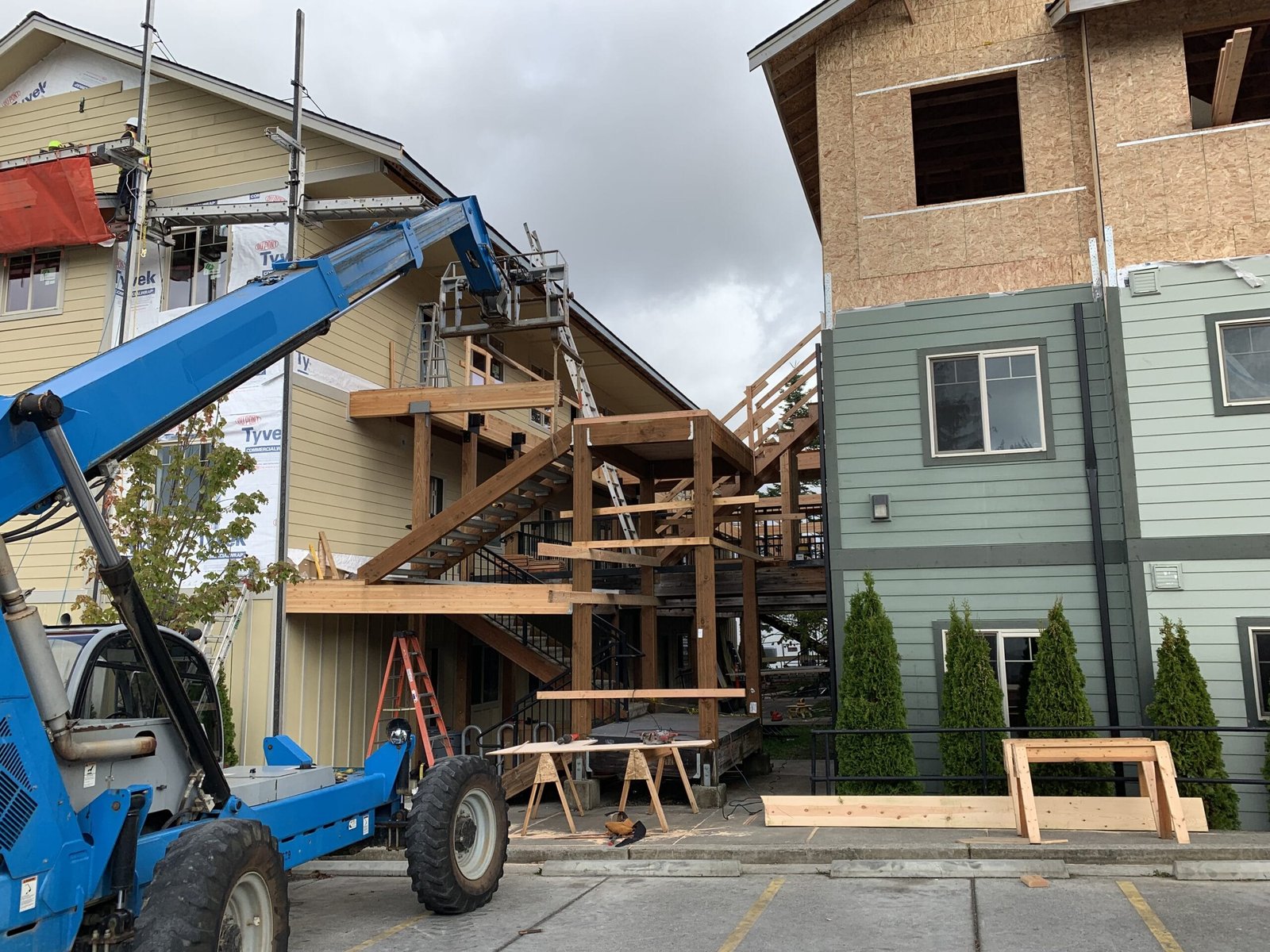
Big Lake sits in a pocket where mature Douglas fir, western red cedar and red alder ring much of the shoreline and the surrounding rural lots. Those trees are beautiful and they're also shallow-rooted relative to their height, which means the real risk during a windstorm usually isn't the wind alone — it's wind arriving after days of heavy rain have already saturated the soil. That combination is what topples a fir or shears off a heavy limb onto a roof or deck, more often than steady wind pressure damaging the structure by itself.
The wind itself tends to funnel down through the Skagit Valley and off the higher ground toward Lake Cavanaugh and the foothills, so open shoreline lots and cleared pasture edges around Big Lake often see stronger gusts than a similar house tucked into a denser Mount Vernon or Burlington neighborhood. On the flip side, homes shaded under heavy tree cover around the lake deal with a different chronic issue: moss and algae growth on north-facing and shaded roof slopes, which holds moisture against the roofing material year-round and accelerates wear even without a single storm event. A roof that's already compromised by moss is more vulnerable to wind and rain damage than a clean one, so the two issues compound each other over a season.
Properties on the higher, north side of the Big Lake area toward the foothills occasionally see snow and ice accumulate in ways that lakefront and valley-floor homes don't, which adds freeze-thaw stress to gutters and can put extra load on older decks. None of this is hurricane-force wind or storm-surge flooding — that's not a real risk profile for this area — but the steady combination of saturated ground, funneled wind, heavy shoulder-season rain and shaded moss growth is a genuinely different failure pattern than what a contractor working in a drier or more open climate would expect to see.
Safety comes first. Stay away from any downed power line, and don't assume a line is dead just because it's not sparking. If a tree or large limb is resting on the roof or an exterior wall, treat it as unstable until someone experienced can assess it — don't climb up to inspect or remove it yourself.
Once it's safe, document everything before you clean up or make repairs: photos and video of the damage from multiple angles, including anything on the ground like broken branches, displaced shingles or gutter sections. Insurers want to see the damage as the storm left it, so resist the urge to fully clear debris before that's done.
Put a temporary tarp over an open roof area or board over a broken window as soon as you reasonably can. Most homeowner policies require you to take reasonable steps to prevent further damage, and a properly placed tarp can be the difference between a roofing repair and a full interior remediation job two weeks later when the next rain moves through.
Contact your insurance company to open a claim, and separately, get a local contractor out for an independent inspection and written estimate. This matters because the insurance adjuster's scope of loss and a contractor's estimate to actually do the repair correctly don't always match — adjusters are working from a general damage estimate, not always accounting for what it costs to properly tie new shingles or siding into existing material, or what current work has to include under the Washington State Energy Code if a significant portion of the roof or wall assembly is being replaced. Alpine Exteriors has walked homeowners through that gap before, helping put together the documentation needed to request a fair supplement when the initial adjuster estimate falls short of what the repair actually requires.
Be realistic about what's worth filing a claim for. Minor moss buildup, a few worn shingle tabs, or cosmetic gutter dings from ordinary wear aren't storm losses in the eyes of most policies, and filing a claim for something under or near your deductible usually isn't worth it. Save the claim process for damage that's clearly storm-caused and material — a torn-off gutter section, a punctured roof deck, a cracked window from debris impact, or structural damage from a fallen limb.
Finally, be cautious about contractors who show up door-to-door right after a regional storm offering immediate repairs. It's reasonable to want fast service, but verify any contractor is licensed and locally based before signing anything. Alpine Exteriors holds Washington contractor license ALPINI751OW and works throughout Skagit, Island and Whatcom counties, including the Big Lake area, so homeowners here have a local option with a permanent address and a license number that can be verified through the state.
If the damage is clearly tied to a specific wind or rain event and involves more than minor cosmetic wear — a torn gutter, a punctured roof, cracked siding, or damage from a fallen limb — it's usually worth reporting. If the estimated repair cost is close to or under your deductible, or the issue looks more like gradual wear (aging shingles, long-term moss buildup) than sudden storm impact, a claim may not pay out and could still affect future premiums, so it's worth getting a contractor's estimate before deciding.
In most standard homeowner policies, sudden damage from a falling limb is a covered peril, whether the tree was on your property or a neighbor's. What varies by policy is coverage for removing the tree itself if it didn't damage a covered structure, and whether you have replacement cost or actual cash value coverage, which affects how much you're paid and when. Read your specific policy or ask your agent directly, since coverage details differ between carriers.
Timelines vary a lot depending on how many homes in the region were affected by the same storm. A single-property claim with a straightforward adjuster inspection can move to repair within a few weeks. After a widespread windstorm hits Skagit County, both insurance adjusters and contractors can be backed up, which is exactly why temporary protective measures like tarping matter — they buy time without letting damage get worse while you wait your turn in the queue.
If a significant portion of the roof assembly is being replaced rather than just patched, the work generally needs to meet the current Washington State Energy Code requirements in effect at the time of the permit, which can include insulation and ventilation details that weren't required when the home was originally built. Many policies include an ordinance-or-law provision that helps cover these code-required upgrades, but it's not automatic in every policy, so it's worth confirming with your insurer early in the claims process rather than after the work is scoped.
If a recent windstorm or heavy rain event has left your Big Lake home with roof, gutter, siding, window or deck damage, it's worth getting a professional set of eyes on it before you decide how to handle it with your insurer. Alpine Exteriors, WA contractor license ALPINI751OW, works throughout Skagit, Island and Whatcom counties — including Mount Vernon, Sedro-Woolley, Anacortes and the Big Lake area — and can provide a straightforward inspection and written estimate to help you document damage, understand what actually needs to be repaired, and move through the claims process with clear information instead of guesswork.



