

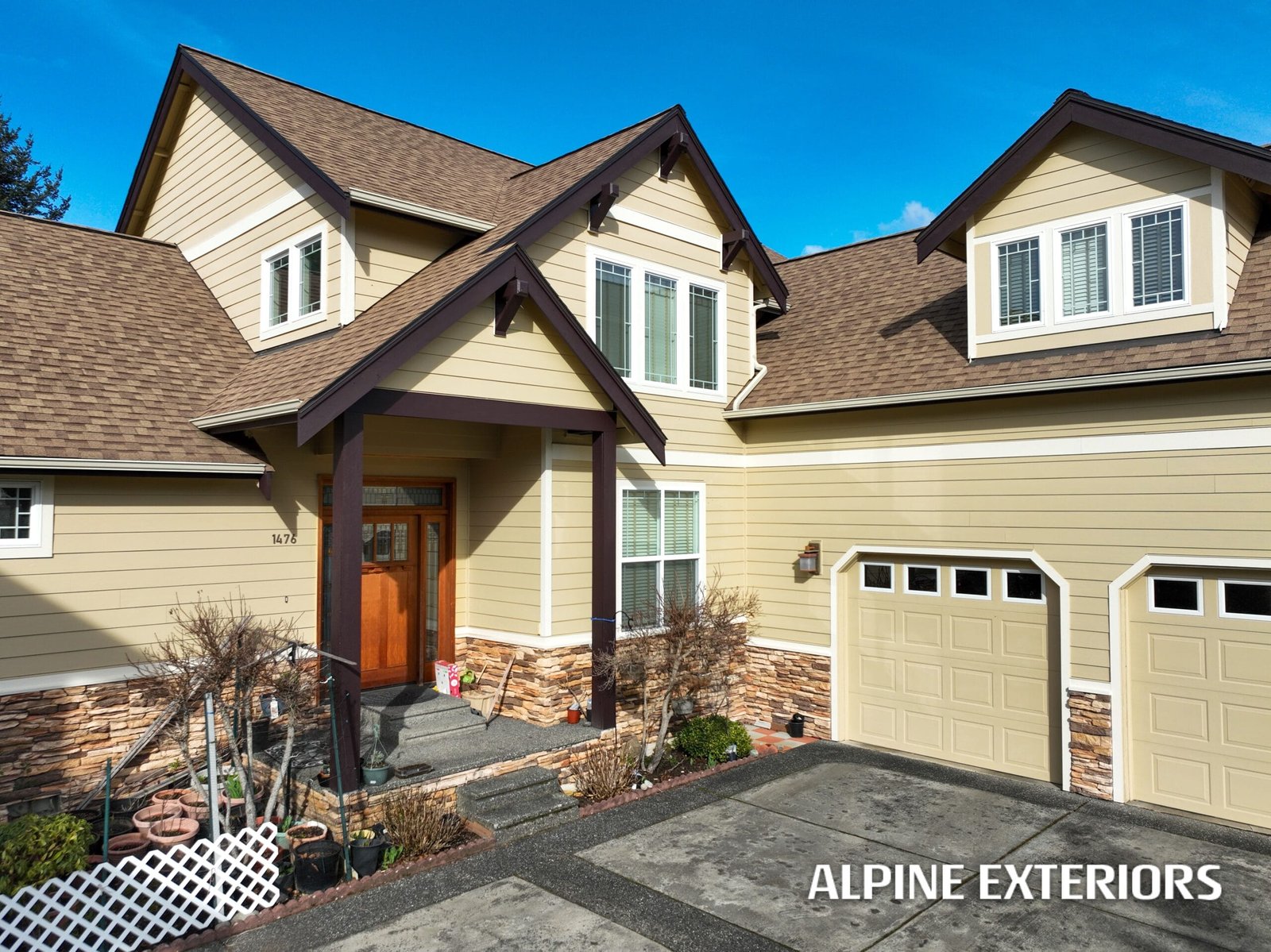
Orcas Island asks more of a roof than most inland Washington neighborhoods do. Homes here sit under heavy winter rain rolling off the Strait of Georgia and Rosario Strait, live under thick fir and madrona canopy that shades roof planes for months at a stretch, and take on a steady dose of salt air off the water. Some lots are wide open to wind off the water; others are tucked into the trees and fight moss instead. There is no single "best" roof for every Orcas Island address, but there is a short list of materials that consistently hold up to this specific mix of conditions, and a longer list of choices that look fine in the brochure and disappoint within a decade. This page walks through both, honestly, with the trade-offs left in.
For most Orcas Island homes, the two strongest all-around choices are standing seam metal roofing and a high-wind-rated architectural (dimensional) asphalt composition shingle with algae/moss-resistant granules. Metal earns its keep on shaded, moss-prone lots and on homes exposed to open water and wind because it sheds rain fast, doesn't give moss anything to grip, and shrugs off gusts when it's properly fastened. Architectural asphalt earns its keep on tighter budgets and on roofs where phased repair after a windstorm needs to be simple and fast, since almost any Puget Sound roofing crew can source and match it. Synthetic composite shake is a reasonable middle ground where a covenant or an owner wants a traditional shake look without real cedar's maintenance burden. Real cedar shake still has a place on sun-exposed, well-ventilated planes with disciplined upkeep, but it is the material most likely to disappoint on a shaded, damp Orcas Island roof. None of this is a guarantee of performance — install quality, ventilation, and ongoing maintenance matter as much as the material itself.
Six things actually move the needle for a roof on Orcas Island, and we weighed every option against all six rather than picking a single "best" spec sheet number:
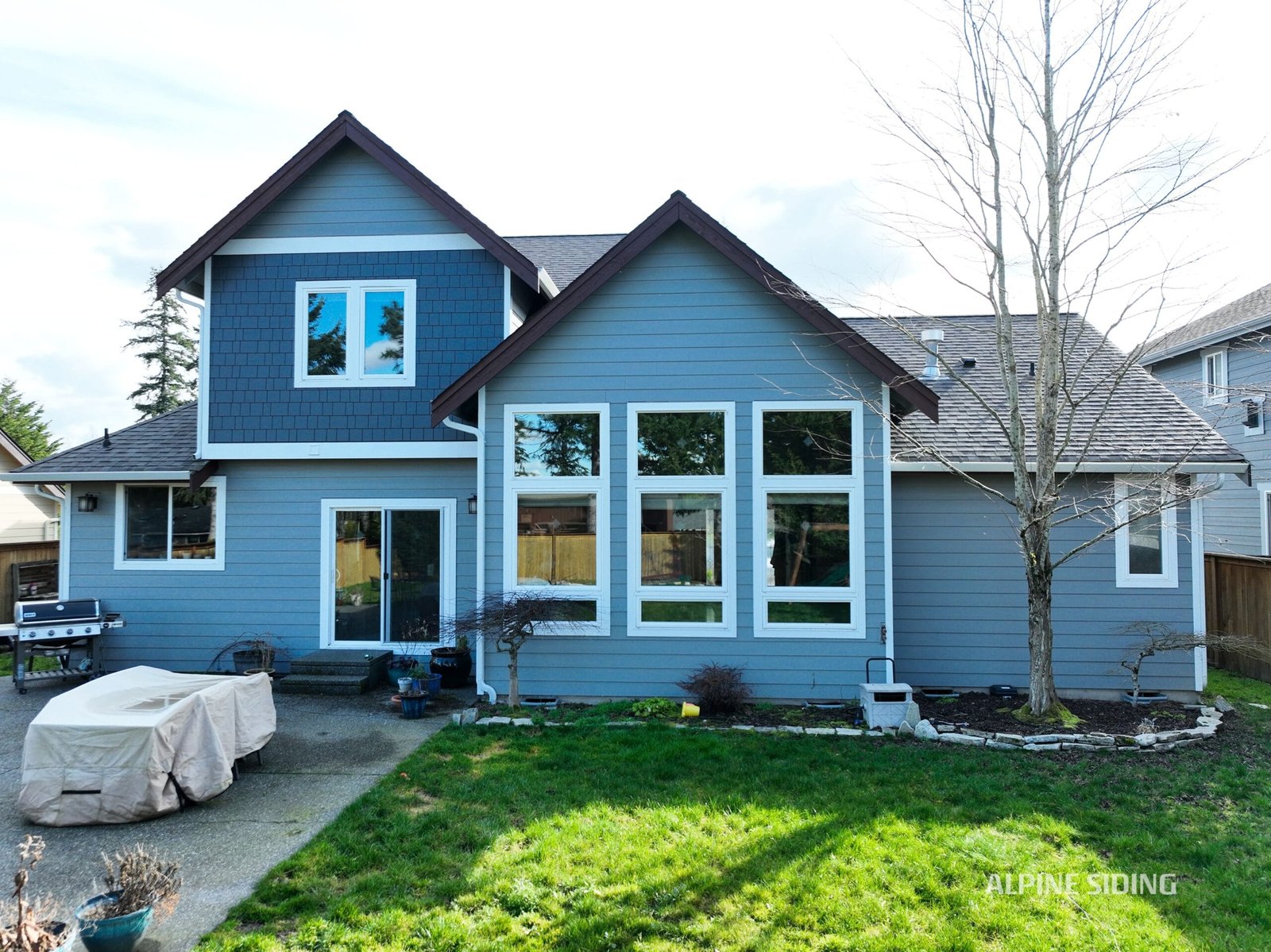
Metal is the strongest overall performer for the specific mix of rain, shade and wind that Orcas Island homes deal with. Its smooth, continuous panels give moss spores nowhere to establish the way a rougher shingle surface does, so shaded north-facing roof planes stay cleaner longer with less scrubbing and treatment. Properly fastened standing seam also carries strong wind uplift ratings, which matters on open, water-facing lots. Long service life means fewer re-roofs over a home's lifetime, which is worth something on an island where every re-roof means scheduling a crew and materials around the ferry.
The honest downsides: metal costs more upfront than asphalt, and the quality of the installation depends heavily on a crew that actually knows metal detailing — panel seams, valley work, and penetration flashing done wrong are where metal roofs fail, not the panel material itself. Rain noise can be an issue without the right underlayment, and falling branches from the surrounding tree cover can dent softer panel gauges. It's also a heavier freight item to bring across on the ferry than a pallet of shingles, which affects both cost and lead time.
A quality dimensional shingle rated for high wind exposure remains a sound, budget-conscious choice, particularly on roof planes that get reasonable sun and don't fight constant shade. Material and freight costs are lower than metal, nearly every regional roofing crew can install and repair it without specialty training, and algae/moss-resistant granule lines (often copper- or zinc-infused) genuinely help slow moss colonization compared to a standard shingle. If a windstorm damages a section, patch repair is straightforward because the product is common in Puget Sound distribution.
The trade-off is service life: in a climate this wet, asphalt shingles are the shortest-lived of the mainstream options here, and shaded slopes will need moss treatment and gutter clearing on a real schedule to hit even that lifespan. On exposed, wind-heavy lots, only shingles with a genuine high-wind rating and the fastening pattern to match should be considered — standard-rated products are more prone to lifting at the edges and ridge in sustained gusts off the water.
For homeowners who want the traditional shake look that a lot of San Juan County homes were originally built with, but without real wood's maintenance demands, synthetic composite shake is worth a look. It resists moss and rot far better than real cedar, comes in lighter than most tile options, and generally carries a decent wind rating. It satisfies architectural covenants that call for a shake-style roof without the upkeep that comes with the real material.
It's a newer product category, though, so field data on how it holds up after two or three decades in salt air specifically is thinner than what exists for metal or asphalt. It costs more than architectural asphalt, can read as slightly synthetic up close compared to real cedar, and fewer contractors keep it in regular stock, which can stretch lead times around ferry scheduling.
Cedar is part of the traditional look of a lot of Orcas Island architecture, and it's a breathable, individually repairable material — a damaged shingle can be swapped without disturbing the rest of the roof. On a sun-exposed, well-ventilated roof plane with an owner committed to periodic moss treatment and cleaning, cedar can still perform reasonably well.
But this is the material most exposed to this region's specific weak point. Heavy winter rain combined with deep shade from surrounding fir and madrona keeps cedar damp for extended periods, and damp wood under shade is exactly where moss and rot take hold fastest. Add salt-laden air accelerating general weathering, and cedar becomes the highest-maintenance, shortest-effective-life option on a shaded island lot — even though it may be the lowest-maintenance option on a fully sun-exposed one. The right answer often comes down to which kind of lot the home actually sits on, not a blanket recommendation either way.
Plenty of island homes have a low-slope porch roof, dormer, or addition where a pitched-roof material simply isn't the right tool. TPO or EPDM membrane roofing handles sustained rain well on those sections and adds less weight than a shingled buildup would. It is not, however, a substitute for a proper pitched-roof material across the main roof — where it shows up on a job quote for anything but a genuinely low-slope section, that's worth asking about.
On shaded, moss-prone lots or open sites facing sustained wind off the water, metal's resistance to both problems often justifies the higher material and installation cost, especially when it's weighed against fewer re-roofs over the life of the home. On a sun-exposed, moderately sheltered lot, a high-wind-rated architectural asphalt shingle can deliver good performance for meaningfully less money, so the answer genuinely depends on where the specific roof sits, not just the budget.
Moss is a real and recurring issue on shaded Orcas Island roofs, driven by tree cover and sustained winter moisture rather than by any one manufacturer's product being defective. Metal and treated composite products resist it better than untreated wood or standard asphalt, but no roofing material is immune if gutters stay clogged and shaded planes never get cleaned or treated — maintenance matters as much as material choice here.
Homes on open, water-facing lots exposed to sustained wind off the Strait benefit from choosing products with a genuine high-wind rating and installing them with the fastening pattern that rating assumes — a standard-rated shingle installed to minimum spec is more prone to edge and ridge lift in those conditions. Sheltered, tree-buffered lots see less of this exposure and have more flexibility in product selection.
Nearly everything for the job, from underlayment to panels to the crew itself, moves across on the ferry, typically staged through the Anacortes terminal. Commonly stocked materials like standard architectural shingle lines and mainstream metal panel profiles keep a project on schedule; less common or heavy-freight products can add real lead time, which matters most if the tear-off happens during the wet season and the roof needs to be dried in quickly.
Every one of these trade-offs plays out differently depending on a roof's exposure, shade, pitch and age, which is why a walk of the actual roof beats a generic recommendation every time. Alpine Exteriors is a Washington-licensed roofing, window, deck and gutter contractor (license ALPINI751OW) based on the mainland side of the San Juan ferry route, serving Skagit, Island and Whatcom counties from Mount Vernon and Anacortes out to Bellingham, Camano Island and beyond. If you're weighing roofing options for a home on Orcas Island or elsewhere in San Juan County, reach out to Alpine Exteriors for an honest, site-specific assessment of what will actually hold up on your roof, not just a generic material recommendation.



