

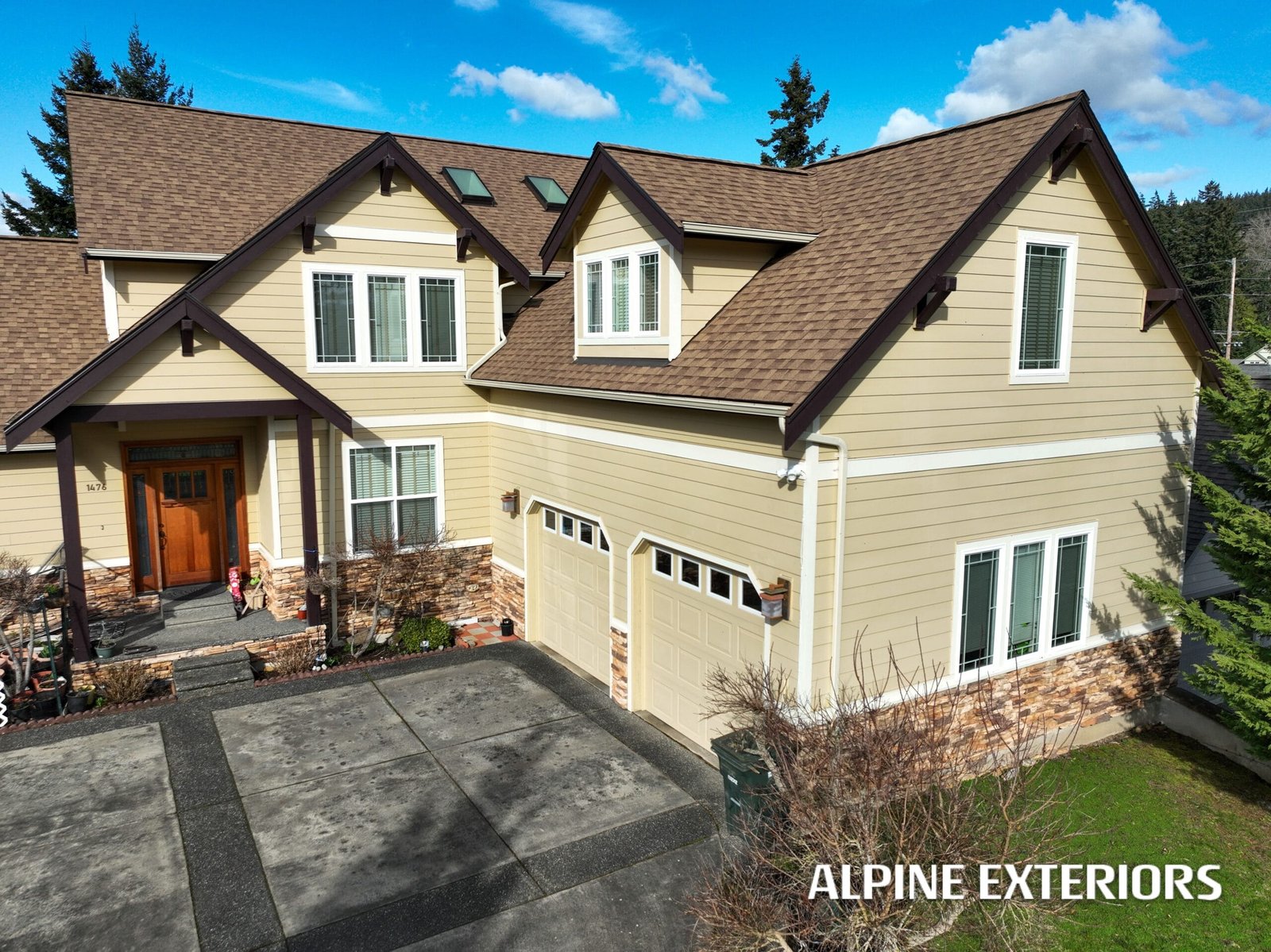
For most Lopez Island homes, a wind-rated architectural (dimensional) asphalt composition shingle is the best balance of upfront cost, availability and performance. It handles the gusts that funnel across the island from the Strait of Juan de Fuca and Rosario Strait, it's straightforward for a crew to install in a single ferry-scheduled trip, and it meets the wind-uplift ratings most manufacturers now build into their standard product lines. If the home sits on an open water-facing bluff, has a low-slope section, or the owner wants a fifty-year-plus roof and is willing to pay more upfront, standing-seam metal is the better long-term pick — it sheds moss better than any other common material and shrugs off salt air when the fasteners and flashing are specified correctly. Cedar shake still has a place on historic or architecturally traditional Lopez homes, but it asks for more upkeep than most part-time island residents can realistically keep up with. There is no single "best" roof for every lot on Lopez — the right call depends on how exposed the site is, how much shade the roof sits under, and how often the owner is actually on the island to notice a problem developing.
San Juan County properties, and Lopez Island in particular, put a roof through a specific combination of stresses that doesn't match a generic "best roofing materials" list. We weighed each option against the conditions that actually show up here:
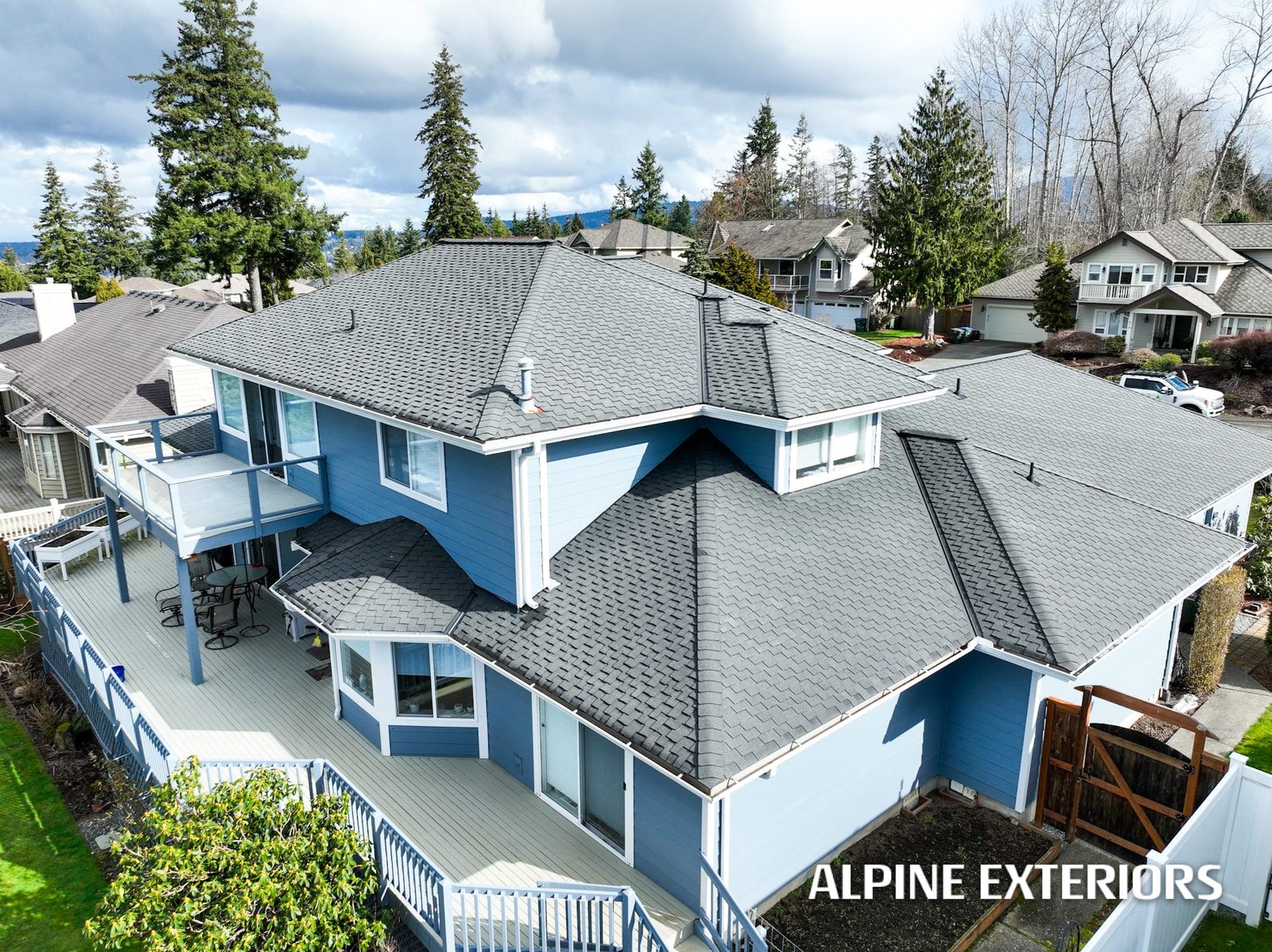
Architectural (also called dimensional or laminate) asphalt shingles are the default choice across Skagit, Island and San Juan counties, and for good reason. Modern products carry wind-resistance ratings well above older three-tab shingles, they come in algae-resistant formulations that slow — though don't eliminate — moss and lichen growth, and they're familiar enough that most roofing crews can install them quickly and correctly, which matters when a crew only has a limited window on the island before the next ferry back.
Pros: lower material cost than metal or cedar, wide color selection to match Lopez's mix of farmhouse and Craftsman-style homes, straightforward repair if a section is damaged by a fallen branch, and a good wind rating when installed with the correct nailing pattern and starter strip.
Cons: shorter service life than metal, typically in the 20-to-30-year range depending on product and exposure rather than 40-plus; shaded, north-facing slopes on tree-covered Lopez lots will still grow moss over time even with algae-resistant granules, meaning periodic moss removal is part of ownership; asphalt is also the least tolerant of the three main materials when it comes to salt spray on directly exposed metal flashing, so flashing detail quality matters more here than on a typical mainland job.
Standing-seam metal is increasingly common on newer builds and remodels along the San Juan Islands' waterfront, and it earns that reputation. The smooth, continuous panels give moss very little to grip, it handles wind uplift well when properly clipped, and a quality metal roof with the right coating can run several decades before it needs replacement — appealing on a property where nobody wants to schedule another reroof around ferry logistics anytime soon.
Pros: excellent wind performance, sheds moss and needles far better than shingles or shakes, long service life, a good match for cool-roof and reflectivity considerations under the Washington State Energy Code in some assemblies, and it holds up well to salt air when specified with a marine-grade or coastal-rated finish and stainless or coated fasteners.
Cons: notably higher upfront cost than asphalt, and that cost is compounded on Lopez by the need to barge or ferry panel stock and specialized seaming equipment to the site; it can also be noisier in heavy rain unless installed over solid sheathing with proper underlayment; and if the wrong fastener or flashing metal is paired with the panel metal, galvanic corrosion becomes a real risk in a salt-air environment — this is a detail that needs to be specified correctly, not assumed.
Cedar has real history on the San Juans and Lopez in particular, where a lot of older farmhouses and cabins were originally roofed in shake. It still has a place, especially on historically-styled homes where the look matters to the owner.
Pros: a natural look that fits the island's older architecture better than any manufactured material, decent insulating value, and a roof that, when well-maintained, ages in a way many owners find attractive rather than worn.
Cons: this is the highest-maintenance option for exactly the conditions Lopez has the most of — shade and steady winter moisture. Cedar left untreated in a shaded, damp spot will grow moss and can start to rot at a faster rate than in a drier climate, and it needs periodic cleaning and treatment to keep that from happening. It's also a poor fit for a part-time or vacation property where nobody is around to catch early moss growth before it becomes a bigger problem. Cost is generally higher than asphalt and can approach metal depending on grade and installation complexity.
Many Lopez homes have a mix of pitched roof and a low-slope section — over a porch, a bump-out addition, or a shed-roof studio. Asphalt shingles and metal panels aren't rated for low-slope application, so those areas need a membrane roof like TPO (thermoplastic polyolefin) or a similar synthetic single-ply system.
Pros: purpose-built for low-slope drainage, seams can be heat-welded for a genuinely watertight installation, reflective white or light-colored membranes help with summer heat gain, and it's a reasonably fast install for a small crew, which fits island logistics well.
Cons: it's a specialty install — not every roofing crew is equally experienced with membrane welding, so contractor selection matters more here than with shingles; membrane roofs also show foot-traffic wear and puncture damage more readily than a pitched roof, which matters if the low-slope section doubles as an outdoor deck or is walked on for maintenance.
A few choices that work fine elsewhere are a poor match for Lopez Island's specific conditions:
Salt air is a slow, cumulative corrosion problem rather than a sudden storm risk here. Homes within roughly a mile of shoreline should specify stainless or coated fasteners, marine-rated flashing metal, and — for metal roofing — a coastal-rated panel finish. Homes further inland or more sheltered by tree cover have more flexibility in fastener and flashing choice, though it's still good practice to avoid the cheapest galvanized hardware island-wide.
Yes, particularly on shaded, north-facing slopes. Moss holds moisture against the roofing material, and on asphalt shingles it can work under tabs and lift granules over time, which shortens the effective service life even if the shingle itself hasn't failed. Regular gentle moss removal (not pressure washing, which can strip granules) and keeping nearby branches trimmed back to improve airflow both help. Metal roofing is the most moss-resistant option if this is a persistent concern on a particular lot.
The Washington State Energy Code governs the insulation and air-sealing requirements that apply whenever a reroof project opens up the attic or roof assembly — for example, insulation R-values at the ceiling or roof deck and ventilation requirements that keep moisture from being trapped in the assembly. It doesn't dictate which roofing material to use, but the ventilation and insulation details it requires directly affect how well a roof resists the moss, moisture and occasional ice conditions Lopez sees. Any reroof that touches insulation should be scoped against current code requirements before work starts, not treated as a shingle swap only.
Materials and crews both have to travel by ferry, so a Lopez Island roofing project is scheduled differently than a similar job on the mainland. Contractors familiar with San Juan County work typically plan material deliveries and crew trips together to minimize the number of ferry runs, and they build in buffer for weather delays that can affect sailing schedules. It's worth asking a contractor directly how they plan logistics for island jobs before committing, since this affects both timeline and total cost.
Alpine Exteriors serves homeowners across Skagit, Island and Whatcom counties — including Mount Vernon, Anacortes, Burlington, Sedro-Woolley, La Conner, Stanwood, Camano Island and Bellingham — and works with San Juan County property owners on projects reachable by ferry, including Lopez Island. If you're weighing asphalt against metal for a shoreline lot, dealing with moss on a shaded roof, or just need a straight answer about what a low-slope section actually needs, Alpine Exteriors can walk the property, explain the tradeoffs in plain terms, and put together a scope that accounts for the island's wind, salt air and rain rather than a generic mainland spec. Alpine Exteriors holds Washington contractor license ALPINI751OW — reach out to schedule a look at your roof and get a straightforward assessment of your options.



