
Arlington sits at the edge of the territory Alpine Exteriors already works in every week — just south of our Stanwood and Camano Island crews and close enough to the Skagit flats that the same weather rules apply. Homes here deal with the same steady Pacific Northwest rain load, the same shaded-lot moss pressure, and the same gusty outflow winds that funnel down the Stillaguamish and Skagit valleys. Roofs a little further east, up toward the foothills, also see occasional wet snow and freeze-thaw cycles that flatland roofs rarely face. None of that is hurricane weather, but it is enough to separate a roof that lasts from one that fails early. This guide walks through the roofing types that actually make sense for an Arlington-area home, judged on how they hold up to this specific climate, not on marketing claims.
For most Arlington homes, a well-installed architectural (dimensional) asphalt shingle roof remains the practical default: it handles the rain, resists wind uplift when installed with the right nailing pattern, and is the easiest material to find qualified local crews and matching materials for if a repair is ever needed. Standing seam metal is our top upgrade recommendation for homeowners who want a longer service life and better shedding of moss and moisture on shaded, tree-covered lots, and it performs well in wind. Synthetic shake gives you the look of cedar without cedar's moisture and moss problems, and is worth considering on homes where curb appeal or a rustic aesthetic matters. Traditional cedar shake can still work, but only with realistic expectations about maintenance in a climate this wet. Low-slope membrane roofing (TPO or modified bitumen) is the right call for additions, porch roofs, and dormers with minimal pitch, not for main roof planes. There is no single "best" roof for every house on this list — the right pick depends on your roof's pitch, how much shade and tree cover it sits under, and your budget for either an upfront premium or ongoing maintenance.
We weighed each option against the conditions that actually determine how a roof performs in this part of Snohomish and Skagit County, rather than generic national ratings:
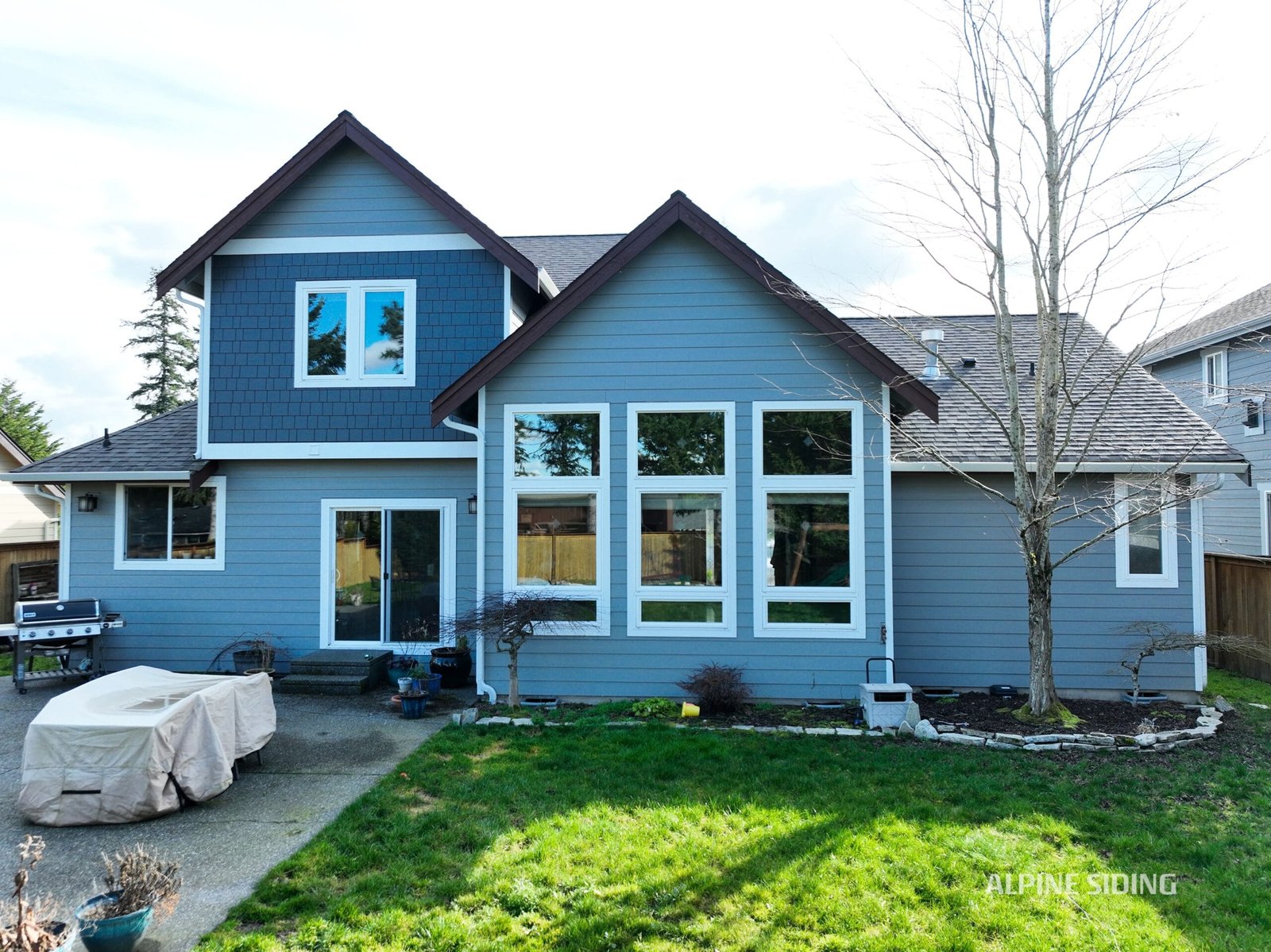
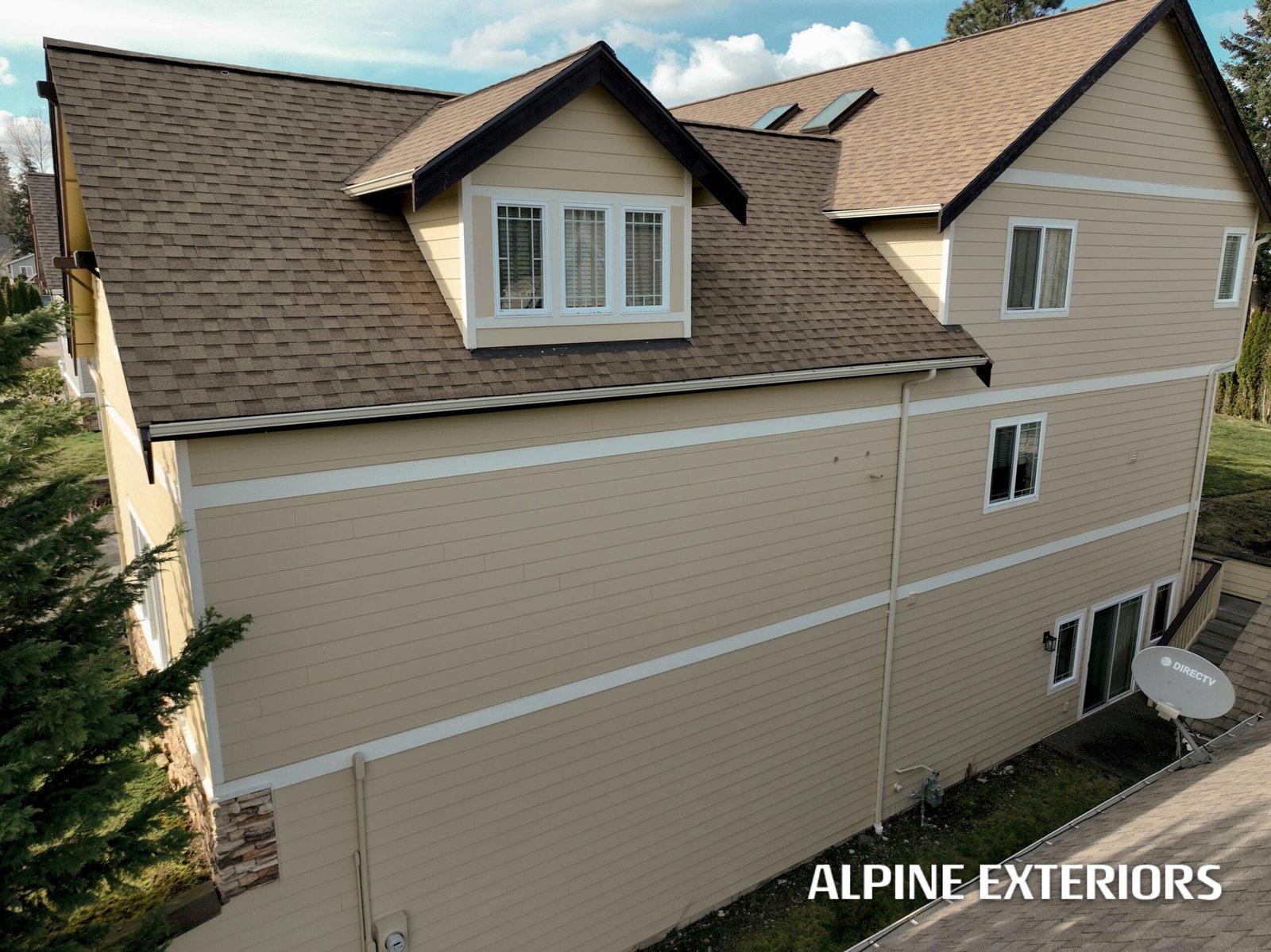
Architectural (also called dimensional or laminate) asphalt shingles are the most common roofing material on homes throughout Skagit, Island, and Whatcom counties, and Arlington is no exception. They're a reasonable middle-of-the-road choice for this climate when installed correctly, with proper underlayment, ice-and-water shield at eaves and valleys, and adequate nailing for the wind exposure of the specific roof.
Pros: Moderate upfront cost compared to metal or cedar; wide range of colors and profiles; straightforward repairs since shingles are widely stocked; decent wind ratings are available on higher-tier product lines; most roofing crews in the region are experienced installing them correctly.
Cons: Standard asphalt shingles are more prone to moss and algae growth on shaded, north-facing roof planes than metal or coated products, and moss removal has to be done carefully to avoid granule loss. Lower-tier 3-tab shingles have weaker wind ratings than architectural lines and are a poor match for exposed sites near open fields or water. Asphalt roofs also have a finite lifespan in this wet climate that's shorter than metal, even with good maintenance.
Standing seam metal has become increasingly popular on newer builds and remodels in this part of Washington, and for wet, tree-shaded lots it's often the strongest long-term performer. The smooth, continuous panel sheds water and needles quickly and gives moss much less to grip onto than a shingled surface.
Pros: Excellent water shedding and moisture resistance; much lower susceptibility to moss buildup than asphalt or wood; strong wind performance when panels are properly fastened and seamed; long service life that can outlast two or more asphalt reroofs over the life of the home; sheds heavy wet snow well rather than holding it.
Cons: Meaningfully higher upfront cost than asphalt shingles; requires an experienced metal roofing crew, since a poor seam or fastening job undermines most of the material's advantages; can be noisier in heavy rain without proper underlayment and decking; matching an addition or repair years later can be harder if the original panel profile or color is discontinued.
Synthetic composite shake and slate products are engineered to mimic the look of natural cedar shake or slate while resisting moisture absorption far better than the real thing. On homes in Arlington and nearby communities like Sedro-Woolley or Stanwood where a rustic or traditional look matters for curb appeal, this is often a smarter compromise than real wood.
Pros: Resists moss and rot far better than natural cedar because the material doesn't absorb water the way wood does; holds color and shape over time without splitting or cupping; generally strong wind and impact ratings; lower ongoing maintenance than real wood shake.
Cons: Costs more than standard asphalt shingles, sometimes approaching metal roofing pricing depending on the product line; fewer local installers have deep experience with every synthetic product on the market, so choosing an experienced crew matters more here than with asphalt; product quality varies significantly between manufacturers, so this is not a category where the cheapest option is a safe bet.
Cedar shake has a long history in the Pacific Northwest and still shows up on older homes and some new builds in the region for its natural look. It's worth including honestly, but it comes with real trade-offs in a climate this wet.
Pros: Distinctive, natural appearance that many homeowners specifically want; breathable material that can perform reasonably well when installed with adequate spacing and ventilation; a traditional match for older or craftsman-style homes.
Cons: Wood shake is genuinely more vulnerable to moss and moisture damage than any of the other options on this list, especially on shaded roof planes under fir or cedar tree cover, which describes a large share of lots around Arlington and the surrounding foothills. It requires more frequent inspection, moss treatment, and occasional shake replacement to reach a normal service life. Insurance carriers in Washington increasingly scrutinize wood roofing, and premiums or eligibility can be affected. For most homeowners who aren't committed to the wood aesthetic specifically, synthetic shake now delivers a similar look with meaningfully less maintenance.
Many Arlington-area homes have a section of low-slope roof somewhere — a porch, a dormer, an addition, or a garage tie-in — even if the main roof is steep-pitched. Standard shingles aren't rated for slopes below a certain pitch, and that's where membrane roofing belongs.
Pros: Purpose-built for the drainage and ponding challenges of low-slope sections; TPO in particular resists moss growth well due to its smooth, reflective surface; modified bitumen is a proven, durable option for additions and older low-slope sections.
Cons: Not a substitute for steep-slope shingle or metal roofing on the main house; seams and flashing details require an installer who specifically understands low-slope systems, since a poorly detailed seam is where the great majority of low-slope roof leaks originate; membrane roofs are typically a smaller, specialized part of an overall reroof rather than a whole-house solution here.
A few choices come up often enough in this region that they're worth calling out directly. First, avoid basic 3-tab asphalt shingles on any roof plane with real wind exposure, such as an open lot near the Skagit flats or a hillside with a clear wind corridor; the lower wind rating simply isn't matched to the gusts this area sees during fall and winter storms. Second, avoid skipping ice-and-water shield membrane at eaves, valleys, and around penetrations — this is where the vast majority of moisture intrusion happens on Northwest roofs, and it's an inexpensive safeguard to omit. Third, be cautious of any roof design or product that ignores moss on shaded, tree-covered lots; moss isn't just cosmetic here, it holds moisture against the roof deck and accelerates rot and granule loss on every material except metal and true synthetic composites. Fourth, avoid unlicensed or uninsured installers, particularly for metal or low-slope work where a small detailing mistake can cause a slow leak that isn't obvious until it's caused real damage; verify any contractor's Washington state license before signing a contract. Finally, don't reroof without checking how the assembly interacts with the ventilation and insulation requirements in the Washington State Energy Code — an otherwise good roofing job can still trap moisture in the attic if intake and exhaust ventilation aren't addressed at the same time.
It depends heavily on tree cover and roof orientation, but as a general rule, shaded or north-facing roof planes should be inspected for moss at least once a year, with treatment or gentle cleaning done as soon as growth is visible rather than after it has spread. Roofs in full sun with little overhanging canopy can often go longer between treatments, while heavily shaded lots near creeks or wooded areas may need attention more than once a year.
There's no hurricane-level wind requirement in this part of Washington, but homes on more exposed sites — open fields near the Skagit flats, hilltops, or waterfront lots — benefit from choosing a shingle or panel product with a higher wind rating and confirming the installer is using the fastening pattern that matches that rating. This matters more for site exposure than for any single jurisdiction-wide rule.
Yes, in most cases. Even when a project is a straightforward tear-off and reroof rather than a full remodel, the Washington State Energy Code's provisions around attic insulation levels and roof/attic ventilation can come into play, especially if the existing ventilation is inadequate or insulation is being disturbed. A qualified roofing contractor should be able to explain how these requirements apply to your specific project before work begins.
Most single-family reroofs in this region take anywhere from one to a few days for asphalt shingles, longer for metal or synthetic products that require more precise installation, and longer still if weather delays are factored in during the wetter months. Costs vary widely based on roof size, pitch, tear-off complexity, and material choice, so it's worth getting a specific on-site estimate rather than relying on a general per-square figure; asphalt shingle reroofs are typically the least expensive option, with metal and premium synthetic products commanding a real cost premium in exchange for longevity.
Every roof in the Arlington area is a little different depending on tree cover, pitch, and exposure to wind off the flats, so the right material for your neighbor's house isn't automatically the right one for yours. Alpine Exteriors, Washington contractor license ALPINI751OW, serves this corner of the state from our base covering Skagit, Island, and Whatcom counties, including nearby Stanwood and Camano Island, and we're happy to take a look at your specific roof and give you an honest read on what it actually needs. If you're weighing asphalt against metal, wondering whether your shaded roof plane needs a moss plan, or just want a straightforward inspection before winter rains set in, reach out to Alpine Exteriors and we'll walk the roof with you before recommending anything.