
If you own a home in Arlington, the single biggest threat to your roof isn't a storm — it's the slow, quiet combination of shade, moss and months of steady rain that Snohomish County gets every fall through spring. Left alone, moss lifts shingle edges and holds water against the roof deck, which is how a twenty-year roof turns into a twelve-year roof. The fix isn't complicated, but it does have to be consistent, and it has to be matched to how your particular roof is exposed to sun, tree cover and prevailing weather.
Arlington sits in the Stillaguamish River valley, ringed by conifer forest and close enough to the Cascade foothills that many lots carry heavy tree canopy right up to the roofline. That combination — filtered or blocked sun plus near-constant fall and winter moisture — is exactly what moss needs to establish itself. Moss spores don't need soil; they just need a damp, shaded surface to grip, and a composition shingle roof with a few years of granule wear on it is an easy target. Once a colony takes hold, it spreads under the shingle tabs rather than just on top of them, which is the part homeowners often miss. From the ground, a mossy roof looks like a cosmetic problem. Up close, the moss is usually holding a thin film of water against the shingle and the felt or synthetic underlayment beneath it, day after day, for months. That's what causes granule loss, curling, and eventually soft spots in the decking — not the moss itself, but the moisture it traps.
Gutters compound the problem. Snohomish County's rain isn't usually violent, but it's long — Arlington gets a steady run of soaking, low-intensity rain from November through March, sometimes with only a few dry days in a stretch. A gutter system that's even partially clogged with fir needles or bigleaf maple leaves will overflow behind the fascia during a normal December rain, not just a rare downpour. That overflow saturates the fascia board and can work its way into the roof edge and soffit over a season or two, well before anyone notices a leak inside the house.
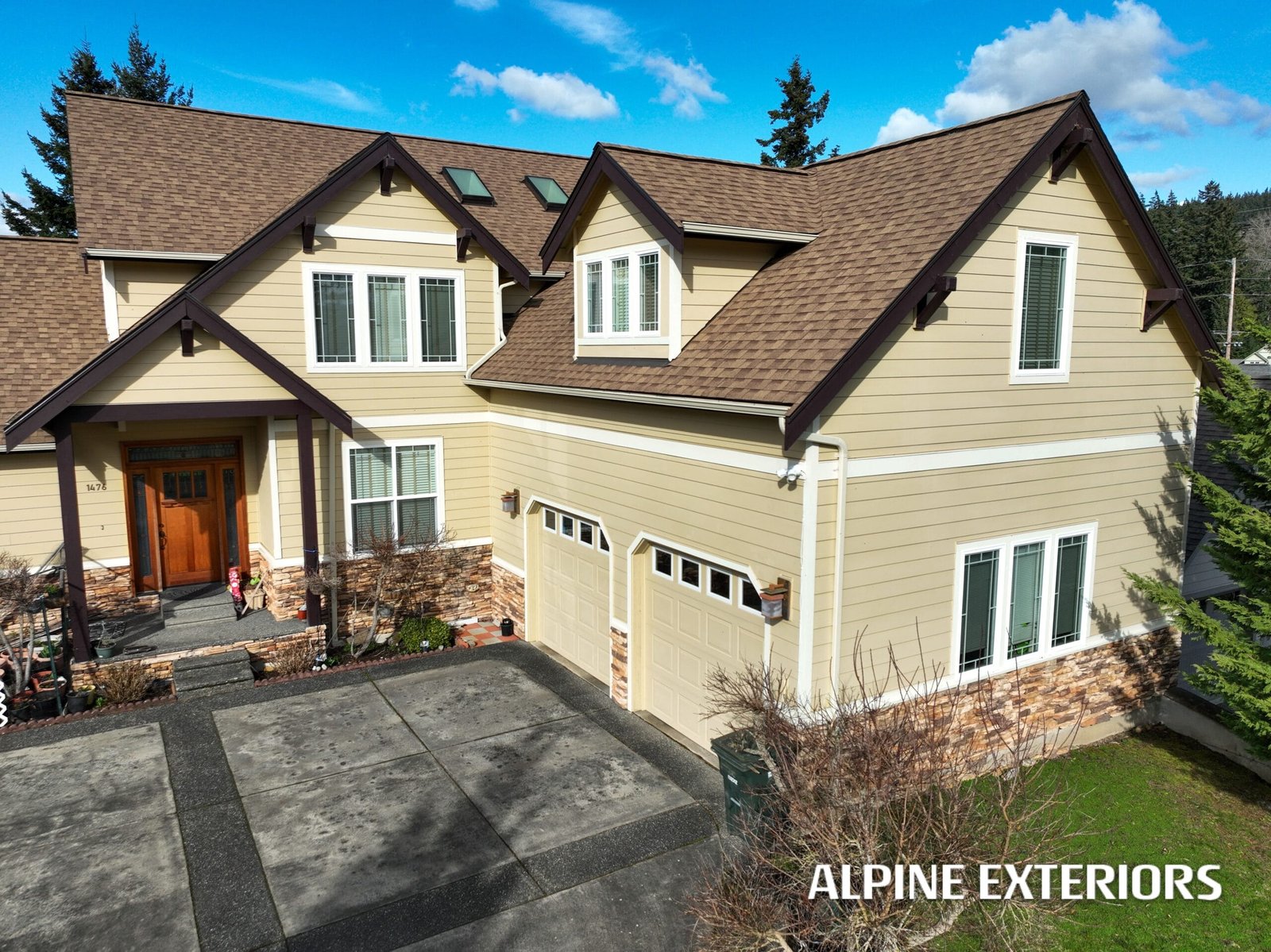
Arlington's roofing challenges aren't dramatic, and that's part of what makes them easy to underestimate. There's no hurricane season here and no hail belt to design around. The realistic list of things that actually shorten a roof's life in this part of Snohomish County is shorter and more specific:
What doesn't apply here is just as important to say plainly: this isn't a hurricane or wind-mitigation-code region, there's no hail season to speak of, and homes inland from the water — including most of Arlington — don't deal with the salt-air corrosion that a waterfront home on Camano Island or Whidbey Island has to manage. Don't let anyone sell you an upgrade meant for a coastal or storm-belt climate; it isn't the problem you actually have.
Most of what protects a roof in Arlington is unglamorous and seasonal, not a one-time fix.
None of this requires a full roof replacement in most cases. A roof with a solid, well-installed underlayment and decent shingle life left can usually be cleaned, treated and maintained for years past when moss first shows up. Replacement becomes the right call when the decking has gone soft, when granule loss is severe across large sections, or when the roof is old enough that repair costs start rivaling replacement. Alpine Exteriors inspects roofs honestly on that basis — we'd rather tell an Arlington homeowner their roof has a few good years of maintenance left than sell a replacement it doesn't need.
On shaded, tree-covered lots, plan on a moss treatment and light cleaning every one to two years; sunnier, more exposed roofs may go three or four years between treatments. The right interval depends more on shade and tree cover than on the age of the roof, so two houses on the same street can need very different schedules.
Not on composition shingles. High-pressure washing strips the protective granules that shield the shingle from UV and rain, which shortens the roof's life even as it makes it look clean. A soft wash with an appropriate moss treatment, followed by hand removal of dead moss, gets the same visual result without the damage.
Not special materials, but correct sizing and slope matter more here than in a dry climate. Undersized gutters or gutters with too little slope will overflow during a normal Arlington winter, not just in an unusual storm, so it's worth having gutter capacity checked against your roof's actual drainage area rather than assuming a standard size is enough.
It can, mainly around insulation and ventilation whenever a roof is opened up for replacement or major repair, since the code sets minimum requirements for the building envelope. It doesn't dictate gutter sizing or moss treatment directly, but a contractor doing roof work on an Arlington home should be accounting for it when the deck or insulation is exposed.
If you're looking at moss, gutter overflow, or a roof that's due for an honest look before another wet season, Alpine Exteriors can walk your roof, tell you what's actually going on, and lay out real options — maintenance, repair, or replacement — without pushing you toward more than you need. We're licensed in Washington under ALPINI751OW and serve homeowners throughout Skagit, Island and Whatcom counties as well as the surrounding Snohomish County communities near Stanwood and Arlington. Reach out to schedule a roof inspection before the next round of fall rain sets in.