

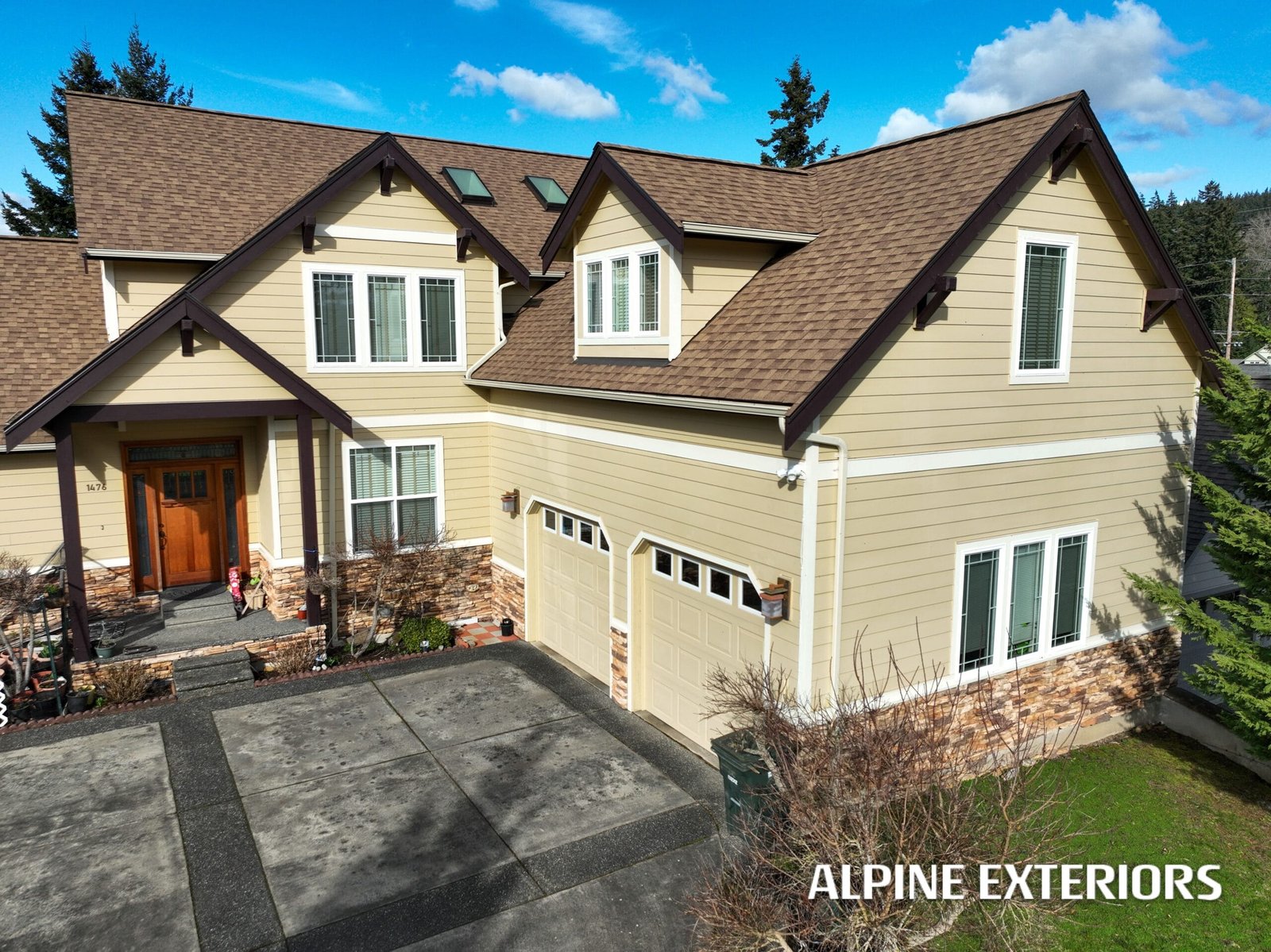
Lyman sits in the Skagit River valley where the flatland gives way to the Cascade foothills, a few miles from Sedro-Woolley and within easy reach of Mount Vernon and Burlington. It's a small enough community that homeowners here often can't find local pricing anywhere, and they end up guessing based on numbers from Seattle or from a national website that has no idea what a foothills winter does to a window. This page walks through realistic cost ranges for window replacement in and around Lyman, what actually moves the number up or down, and how to evaluate a quote so you're comparing apples to apples. Alpine Exteriors has quoted and installed windows throughout Skagit, Island and Whatcom counties, and the ranges below reflect what we actually see on real jobs in this area, not a national average.
Window replacement pricing is quoted per window and then totaled for the project, and the spread between a modest vinyl slider and a large, high-performance wood-clad casement is wide. For a typical single-family home in Lyman doing a full or near-full window replacement, most homeowners should expect a per-window range that runs from the low end for a standard vinyl double-hung or slider in a straightforward opening, up to several times that for larger units, premium materials, or openings that need structural or siding repair to finish properly. Whole-house projects scale from there depending on how many openings the home has and how many of them are oversized, custom-shaped, or hard to access.
A few things specific to the Lyman area push these numbers around more than they would in a milder or more sheltered location. The foothills get colder and see more occasional snow and ice than the valley floor closer to the Sound, so glazing packages and frame insulation get more scrutiny here than they might for a similar house in Anacortes. Winters are also wet for months at a time, which means flashing, sill pans and sealant work around each opening matter as much as the window unit itself — skimping there is how homeowners end up with rot behind the trim two winters later. None of this is unique to Alpine Exteriors' opinion; it's just what the climate here does to a wall assembly if the water management isn't right.
| Cost Factor | Low End | High End |
|---|---|---|
| Frame material (vinyl vs. fiberglass vs. wood-clad) | Standard vinyl, mid-grade | Fiberglass or wood-clad with premium hardware |
| Window size and configuration | Small, single-hung or slider | Large picture windows, bay/bow, custom shapes |
| Glass package (energy code compliance) | Code-minimum double-pane, Low-E | Triple-pane or upgraded Low-E/argon for foothill exposure |
| Installation type | Insert/retrofit into existing frame | Full-frame tear-out with new flashing and trim |
| Structural or water-damage repair | None found, clean opening | Rotted sheathing, sill or framing replacement needed |
| Access and site conditions | Ground-floor, easy staging | Second story, steep lot, limited driveway access |
| Number of openings | One or two windows | Whole-house replacement, 15+ openings |
Beyond the table above, a handful of realities specific to this part of Skagit County tend to move a Lyman quote higher or lower than a generic estimate. Homes built before the 1990s in this valley were often finished with materials and flashing details that don't hold up to decades of wet Pacific Northwest winters, so full-frame replacements here uncover water damage at the sill or header more often than contractors see in newer subdivisions closer to Mount Vernon. That's not a scare tactic — it's simply common enough that a contractor who tells you every opening will be clean before they've opened a single wall is guessing, not quoting.
Wind is a second factor. Lyman doesn't get the sustained wind that the Skagit flats or the Strait side of Anacortes and the islands see, but gusty weather still moves through the valley, and it affects how well a window performs if it's undersized on air infiltration ratings or poorly sealed at install. Homeowners upgrading from older aluminum-frame windows often notice this immediately — drafts and condensation on cold mornings are usually a sign the old units were never really sealed to the opening in the first place.
Third, the Washington State Energy Code sets minimum performance requirements for replacement windows, generally expressed as U-factor and, in some cases, solar heat gain coefficient depending on orientation and the rest of the building's envelope. Code-compliant windows are not optional add-ons; they're the baseline any licensed contractor should be pricing to. If a quote comes in unusually low, it's worth asking directly whether the glass package specified actually meets current code for this climate zone, because cutting corners there either fails inspection or leaves you with a colder house and a higher heating bill for the life of the windows.
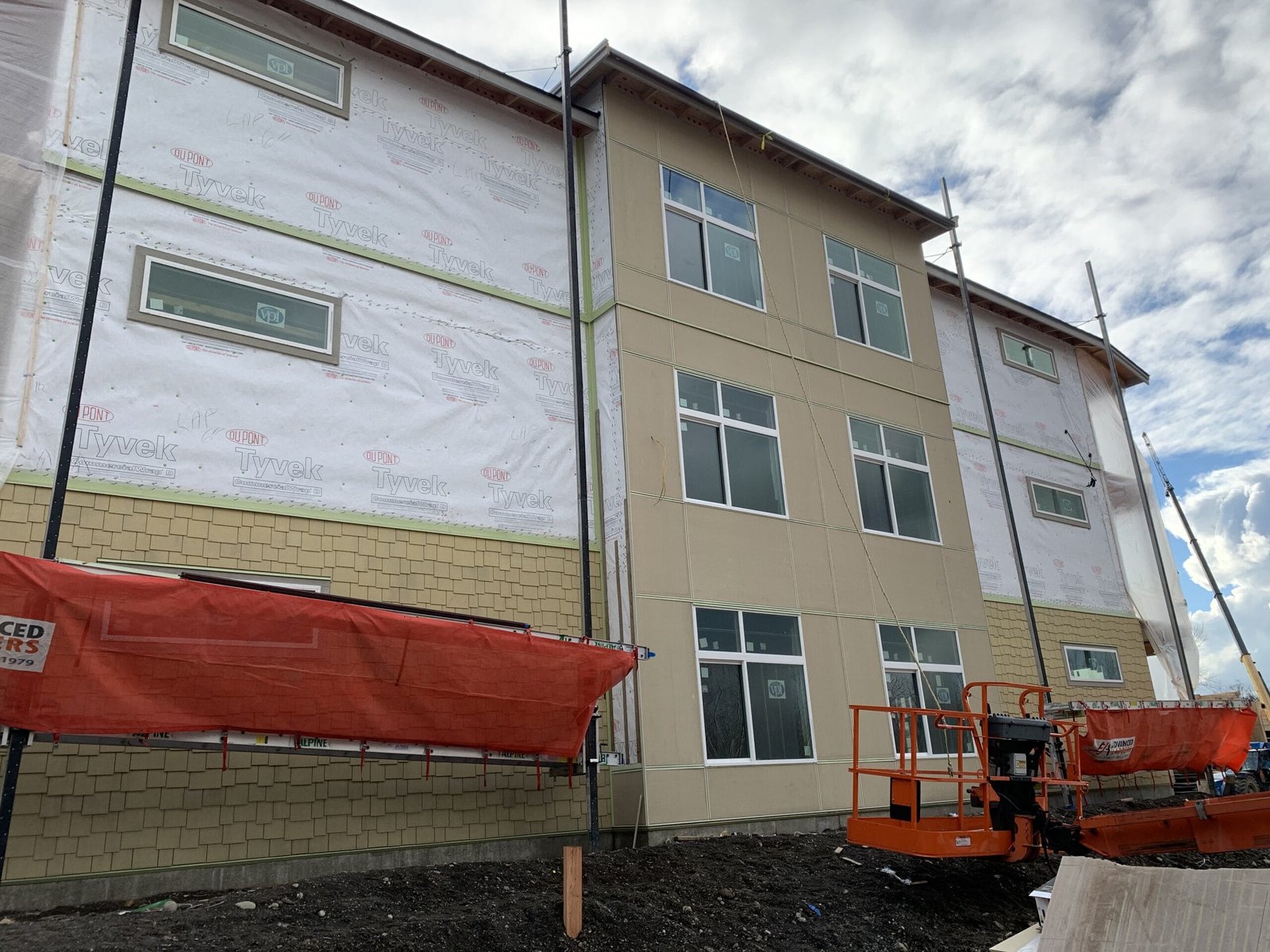
A complete, trustworthy quote for window replacement in the Lyman area should spell out more than a single lump-sum number. Look for the frame material and manufacturer named specifically, the glass package and its documented U-factor so you can confirm energy code compliance, whether the installation is insert or full-frame, and what happens if the crew finds rot or damage once trim is removed — including how that would be priced if it comes up. It should also specify who handles disposal of the old windows and debris, what the workmanship warranty covers versus the manufacturer's product warranty, and a realistic timeline given weather. Winter installs in this area are workable but need to be scheduled and sequenced carefully around wet weather so openings aren't left exposed longer than necessary. Alpine Exteriors, WA contractor license ALPINI751OW, writes quotes this way specifically so homeowners aren't guessing what they've actually agreed to.
The biggest mistake homeowners make comparing window quotes is lining up the bottom-line totals without checking whether the scope is actually the same. One contractor's number might include full-frame replacement with new flashing and trim, and another's might be an insert-only price that looks cheaper but leaves the original, possibly failing frame in place. Ask each contractor for the same breakdown: frame material and brand, glass package and U-factor, installation type, and what's excluded. If one quote is dramatically lower than the others, it's worth asking directly what's different rather than assuming it's simply a better deal — it may reflect a lower-grade glass package that won't meet the energy code, an insert install where a full-frame job is really needed, or a lowball number meant to be revised upward once work starts. It's also reasonable to ask any contractor for their WA contractor license number and to verify it's active before signing anything; Alpine Exteriors operates under license ALPINI751OW and expects to be asked.
Most window replacement in this area is a homeowner-funded improvement rather than an insurance claim, since ordinary window aging and drafts aren't typically covered perils. The exception is when windows are damaged by a covered event, such as a storm, falling tree limb, or impact — in those cases, document the damage with photos before any repair work and check with your insurer about the claims process before assuming replacement will be out of pocket. For projects that aren't insurance-related, financing options vary by contractor and lender, and some homeowners choose to phase a whole-house project over two winters to spread out cost rather than replacing every opening at once. If energy efficiency is the main driver, it's worth asking whether any utility rebate programs are currently active in the area, since these change from year to year and aren't something a contractor can guarantee in advance.
Doing the whole house in one project usually brings the per-window price down because setup, crew mobilization and disposal costs are spread across more units, but phasing the work over a year or two can make sense if it fits your budget better — just expect the per-window rate to be a bit higher when the project is split up.
Double-pane, Low-E glass that meets Washington State Energy Code requirements is the standard baseline and works fine for most homes here; triple-pane is an upgrade worth considering on north- or west-facing walls that take the brunt of winter weather, but it isn't a requirement for code compliance.
It can. Homes in this valley that are a few decades old sometimes have water-damaged sill or header framing hidden behind the trim, and that isn't visible until the old window is out — a contractor who has priced full-frame replacements in this area should be able to explain how they handle that discovery rather than pretending it won't happen.
Timelines depend on the number of openings and whether it's insert or full-frame work, but homeowners should plan for the project to run over multiple days rather than one, and for scheduling around wet weather windows during the winter months so openings aren't left exposed longer than necessary.
Every home in the Lyman area is a little different — age, orientation, existing frame condition and how much sun or wind a wall gets all change the right approach and the real cost. If you want a number based on your actual windows rather than a national average, Alpine Exteriors serves Lyman as part of its Skagit County service area alongside Mount Vernon, Burlington, Sedro-Woolley and the surrounding communities, and can walk your home, point out anything the quote needs to account for, and put together a written estimate under WA contractor license ALPINI751OW.



